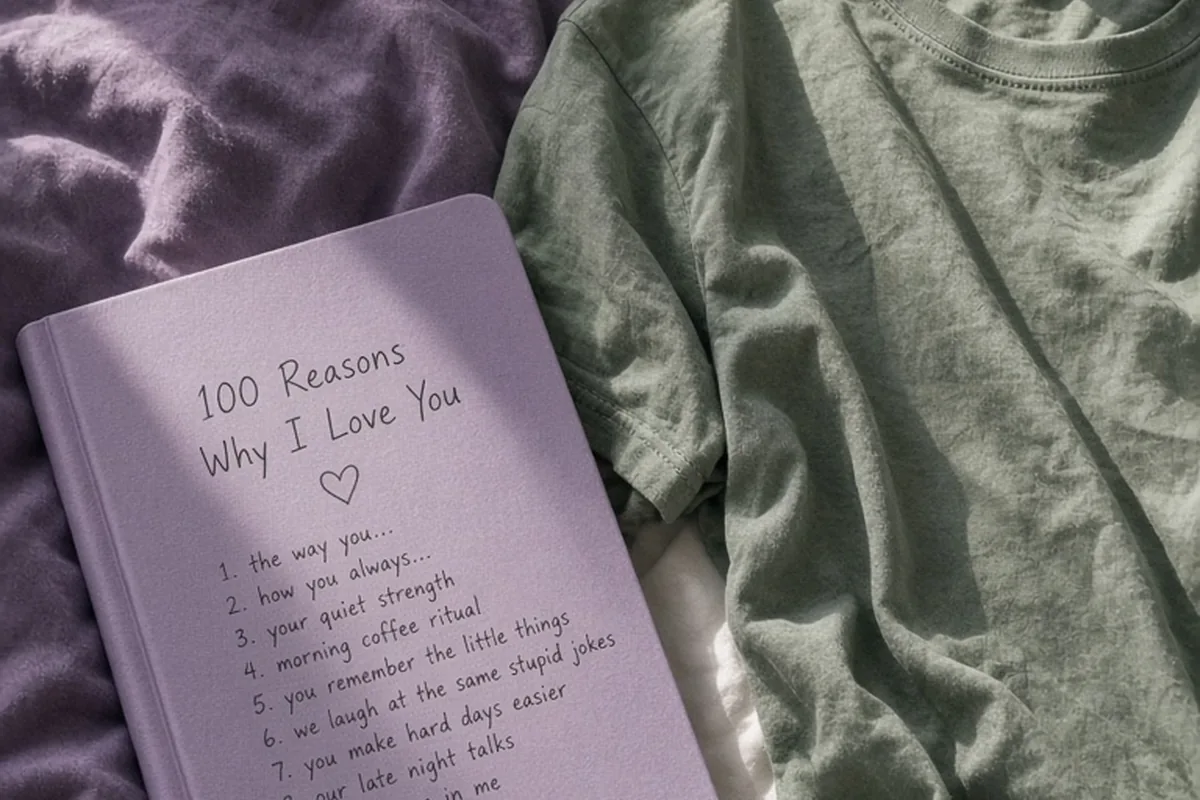
Writing a list of reasons why you love your partner works best when you move beyond generic compliments and focus on specific memories, everyday habits, emotional security, and shared milestones. By organizing your thoughts into distinct themes—such as how you handle challenges together, small daily acts of care, and your hopes for the future—you create a deeply personal tribute that communicates authentic affection and lasting commitment.
Creating a comprehensive list of romantic appreciation gives you a structured opportunity to pause and notice the quiet, valuable ways your partner enriches your life every single day.
Structuring a Personalized Reasons List Across Meaningful Themes
Sitting down to draft an extensive appreciation list without an organizing framework often leads to mental fatigue and repetitive phrasing. When people attempt to write dozens of entries in one sitting without a clear direction, they frequently fall back on broad, generic statements like 'you are kind' or 'you are funny.' While well-intentioned, these statements fail to capture the unique texture of your specific partnership. Dividing your brainstorming into structured categories—such as character strengths, shared history, daily routines, and emotional safety—ensures the final compilation feels well-rounded, thoughtful, and deeply personal.
To build a balanced structure, assign a specific number of entries to each category before you begin writing. For instance, dedicate fifteen entries to how your partner supports your personal ambitions, fifteen to your favorite shared travel memories, twenty to their endearing everyday quirks, and twenty to the way they handle difficult conversations. This thematic approach prevents the list from feeling monotonous and prompts you to recall moments you might otherwise overlook. The slight trade-off is that categorizing requires dedicated planning rather than spontaneous scribbling, but the resulting depth makes the gesture substantially more meaningful.
Highlighting Micro-Habits and Everyday Moments of Care
Long-term romantic connection is sustained through small, uncelebrated routines rather than occasional grand gestures. Acknowledging the subtle ways your partner demonstrates consideration in daily life proves that you are actively paying attention to their effort. When a partner realizes you notice the quiet things they do without expecting applause, it creates a powerful feeling of validation and mutual appreciation.
When writing entries centered on daily life, focus on exact sensory details and specific actions rather than broad praise. Instead of writing 'I love how helpful you are,' write 'I love the way you always make sure my coffee mug is clean and ready on difficult mornings' or 'I love how you lower the volume on the television when you notice I am reading.' These precise snapshots show your partner that their everyday presence brings tangible comfort to your life. The key is to celebrate these actions as gifts of affection rather than establishing a rigid expectation that they must always perform them.
Acknowledging How Your Partner Fosters Emotional Safety and Trust
A healthy romantic bond relies on the knowledge that both individuals can express vulnerability, admit mistakes, and experience stress without fearing judgment or withdrawal. Recognizing the emotional security your partner provides honors the psychological foundation of your relationship. When you articulate why you feel safe in their presence, you reinforce the mutual trust that allows intimacy to flourish over time.
Frame these entries around communication, patience, and conflict resolution. Examples include writing 'I love that you listen to my frustrations without immediately jumping to fix them,' 'I love how calm and steady you remain when unexpected plans fall apart,' or 'I love that I can tell you when I feel insecure without feeling dismissed.' Acknowledging these qualities reinforces healthy relationship dynamics. When addressing vulnerable moments, ensure your entries celebrate established safety rather than subtly referencing unresolved disagreements or passive-aggressive grievances.
Celebrating Shared History, Milestones, and Private Humor
Every enduring relationship develops its own private culture composed of inside jokes, unexpected travel mishaps, and defining milestones. Incorporating these shared memories into your list anchors your affection in the tangible history you have built together. It reminds your partner of the resilience you have shown as a team and the joy you have generated across different seasons of life.
Use vivid markers to bring past experiences to life. Instead of writing 'I love our vacations,' write 'I love the memory of us getting completely lost in the rain and finding that tiny bakery' or 'I love our tradition of debating movie plots until late at night.' These references act as emotional anchors, instantly reconnecting your partner to the warmth of those specific occasions. While honoring the past is vital, ensure your list maintains a balance between nostalgic reflections and appreciation for who your partner is in the present.
Expressing Gratitude for Mutual Growth and Future Alignment
A fulfilling partnership creates space for both people to evolve individually while growing closer as a unit. Highlighting the ways your partner inspires you, supports your personal boundaries, and respects your autonomy shows that you value them as an independent person. It frames your bond as an active collaboration built on mutual encouragement.
You can capture this dynamic by writing about shared goals, shared values, and mutual support. For example, consider entries like 'I love how our values align when making difficult life choices,' 'I love that you encourage me to take time for my own hobbies,' or 'I love dreaming about the home we are building together.' When writing about the future, ensure your entries align with mutually established comfort levels and shared agreements, avoiding assumptions about major life milestones that have not yet been openly discussed.
Selecting Thoughtful Presentation Formats and Delivery Settings
The way you present your list can enhance the emotional impact of your words. Depending on your partner's personality and preferences, you might compile the reasons into a leather-bound journal, write individual notes placed inside a decorative glass jar for them to read gradually, or create a series of numbered envelopes. A physical format provides a tactile, enduring keepsake that your partner can revisit whenever they need encouragement.
Pay careful attention to the environment in which you deliver your gift. Presenting an intensely personal compilation during a noisy social gathering or a rushed morning can make the recipient feel pressured or self-conscious. Choose an unhurried, private moment where your partner has the time and emotional space to absorb the sentiment at their own pace. Allowing them to read through the list privately or together without distractions honors the vulnerability of the gesture.
Illustrative Scenarios
Moving Past Generic Compliments
Marcus wanted to create a heartfelt anniversary gift for his partner, Elena, but found himself stuck writing repetitive phrases like 'you are pretty' and 'you are kind' after reaching fifteen items. Feeling frustrated, he worried his effort seemed superficial. Instead of forcing broad praise, Marcus reviewed his phone calendar and photos from the past year to trigger specific memories. He began writing down concrete moments: how Elena brewed herbal tea when he lost his voice, how she cheered him on before a licensing exam, and their shared laughter over a ruined dinner. Grounding his list in real, tangible memories unlocked dozens of authentic entries that Elena deeply cherished.
Key point: Focusing on concrete, shared moments replaces generic flattery with meaningful evidence of genuine attentiveness.
Navigating Delivery and Setting
Jordan spent three weeks compiling a full journal of reasons why he loved his partner, Taylor. During a crowded birthday dinner with extended family, Jordan presented the heavy volume and asked Taylor to read several pages aloud. Taylor felt overwhelmed by the sudden spotlight, creating an uncomfortable silence. Recognizing the mismatch between the intimate gift and the public setting, Jordan gently suggested setting the journal aside until they returned home. Later that evening in private, Taylor read through the pages with genuine gratitude and tears of joy, appreciating the vulnerability once the social pressure was removed.
Key point: Intimate expressions of affection resonate most deeply when delivered in private settings that allow the recipient to process them comfortably.
Frequently asked questions
How long does it typically take to write a full list of reasons why you love someone?
Drafting an extensive list usually takes several days or weeks if you want to avoid clichés and repetitiveness. Spreading the brainstorming process over time allows you to notice everyday moments naturally and write entries as they occur. Jotting down brief observations in your phone notes during the week makes the final compilation much easier to assemble.
What should I do if I get stuck while brainstorming reasons?
When you hit a creative block, review your calendar, old photographs, or message history to trigger forgotten memories. You can also shift your focus toward distinct categories, such as your partner's unique sense of humor, how they handle stress, or specific kindnesses they have shown to others. Changing your perspective often unblocks new ideas.
Can an extensive reasons list work well early in a relationship?
A reasons list can be meaningful early on if the scale and depth match your current level of commitment. In newer relationships, focusing on early impressions, shared interests, and memorable dates keeps the gesture sincere without creating emotional pressure. Keeping the tone observant and lighthearted ensures both partners feel comfortable.
Is it better to write the reasons by hand or type them?
Handwriting adds a personal, tactile warmth that makes the gesture feel intimate and deliberate. However, typing the list is perfectly acceptable if you want to create a printed keepsake book or if legibility is a concern. The sincerity and specificity of your words matter far more than the medium you select.
Your next step
Begin by jotting down five specific, unprompted observations about your partner today, focusing on small actions or recent shared moments that brought you genuine joy.