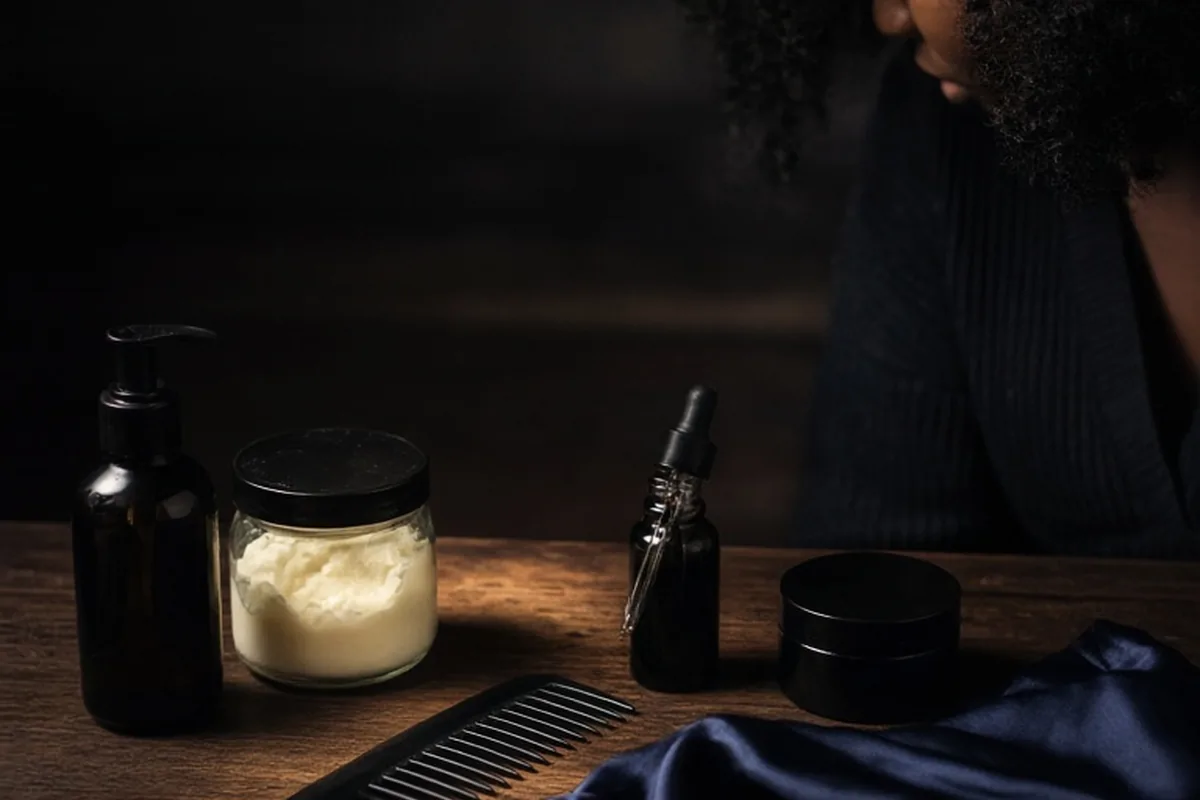
To care for 4C hair effectively, prioritize water-based hydration, consistent moisture sealing, and minimal physical tension. Cleanse the scalp with a gentle sulfate-free shampoo, detangle only when saturated with conditioner, and lock in hydration using a leave-in conditioner paired with a rich butter or oil. Protecting your delicate ends through low-manipulation styling and sleeping on satin or silk preserves moisture and prevents unnecessary breakage over time.
Type 4C hair features tight, dense zig-zag patterns with fragile strands that require intentional, gentle care to thrive and retain length.
Hydrating 4C Coils Through Layered Moisturizing Methods
Because 4C hair possesses tight bends and turns, natural sebum produced by the scalp struggles to travel down the entire length of each hair shaft. This structural characteristic leaves the strand prone to dryness, making external moisture application essential for day-to-day elasticity. True moisture comes exclusively from water or water-based products, whereas oils and heavy butters function as sealants designed to trap that hydration within the hair cuticle rather than hydrate the fiber on their own.
To keep your coils supple between wash days, adopting a structured layering technique is one of the most reliable approaches. The liquid-oil-cream method or its variation, the liquid-cream-oil technique, provides a framework for sealing. Begin by thoroughly misting your hair with pure water or applying a water-first leave-in conditioner to damp strands. Follow this immediately with a penetrating plant-based oil or a nourishing botanical cream, finishing with a dense sealant like shea butter or castor oil to close the cuticle layer.
Pay careful attention to how your specific strand porosity responds to different product weights. Low porosity 4C hair often benefits from lighter leave-in sprays and warm water during application to open resistant cuticles, whereas high porosity coils typically require heavier creams to prevent moisture from evaporating within hours. Adjusting product viscosity ensures your coils remain soft and flexible without building up greasy residue that attracts dust and lint.
Gentle Cleansing and Scalp Maintenance Without Stripping Natural Oils
A healthy hair regimen begins with an optimized scalp environment, yet frequent use of harsh surfactant shampoos can rapidly deplete 4C hair of its natural moisture. Cleansing every one to two weeks with a hydrating, sulfate-free shampoo removes sweat, environmental pollutants, and surface debris while preserving the lipid barrier of your strands. If product buildup is minimal, alternating wash cycles with a cleansing conditioner can refresh the scalp between deeper wash sessions.
Clarifying remains a necessary step, even for dry textures, because heavy butters and styling gels eventually coat the hair shaft and block fresh water from entering. Using a clarifying shampoo once every four to six weeks removes accumulated mineral deposits and product residues, resetting the hair surface so subsequent deep conditioners can absorb properly. Always follow a clarifying session with an intensive, moisture-rich deep treatment to restore lost softness.
Scalp care extends beyond washing into regular stimulation and monitoring for irritation. Massaging the scalp with clean fingertips for a few minutes daily encourages localized blood circulation and helps distribute natural oils. Avoid applying heavy pomades or thick petroleum-based greases directly onto the scalp tissue, as these can clog follicles and cause itching or flaking, creating an unhealthy foundation for new growth.
Detangling Fragile Coils Safely to Minimize Breakage
Detangling 4C hair dry is one of the primary causes of mechanical breakage and snapped ends. Because tight coils interlock naturally, separating dry fibers creates intense friction that forces weak points along the strand to fracture. Safe detangling requires patience, generous product lubrication, and systematic sectioning to ensure each curl is gently freed without unnecessary strain.
Divide your hair into at least four to six manageable quadrants, securing each section with a soft clip. Thoroughly coat the hair with a slippery conditioner or dedicated detangling lotion that provides ample glide. Begin working through tangles using your fingers first, carefully separating individual knots and feeling for small sheds trapped within the coil. Finger detangling allows you to locate and release snarls that a tool might otherwise rip through.
When introducing a mechanical tool, select a wide-tooth comb or a flexible-bristle detangling brush designed for textured hair. Always start combing at the very ends of the hair, slowly working your way up toward the roots in small increments. If you encounter resistance, stop and apply more water or conditioner rather than pulling through the knot, ensuring the hair maintains elasticity throughout the entire process.
Deep Conditioning and Balancing Moisture with Protein
Deep conditioning should be treated as a non-negotiable step in every 4C hair wash routine. A quality deep conditioner infuses the inner cortex of the hair with moisturizing emollients and restructuring agents that daily leave-in products cannot replicate. Incorporating gentle indirect heat, such as a thermal heat cap or warm steamer, helps lift the cuticle scales slightly, allowing conditioning ingredients to penetrate deeply into tightly coiled fibers.
Maintaining structural integrity requires a balanced interplay between moisture and protein. Moisture provides elasticity and flexibility, preventing hair from becoming brittle, while protein fortifies the keratin structure of the strand to resist physical stress. If your hair feels mushy, overly stretchy, or fails to snap back when extended, it may be experiencing moisture overload and require a mild hydrolyzed protein treatment.
Conversely, if your coils feel stiff, dry, and snap with minimal tension, your hair likely suffers from protein overload and requires intensive moisture therapies without added keratin or wheat proteins. For most healthy 4C hair profiles, deep conditioning with a moisture-dominant formula on every wash day and incorporating a light protein treatment once a month establishes a resilient equilibrium.
Protective Styling and Nighttime Care for Length Retention
Retaining length with 4C hair depends heavily on protecting the oldest, most delicate part of the hair: the ends. Protective and low-manipulation styles, such as two-strand twists, flat twists, box braids, cornrows, and simple buns, keep the ends tucked away from clothing friction, dry air, and frequent handling. These styles allow the hair to rest while minimizing daily manipulation that wears down the strand over time.
However, protective styles must be installed and maintained responsibly to avoid traction damage. Ensure that tension along the hairline and nape remains loose, as excessive pulling can inflame hair follicles and lead to traction alopecia. Keep styles in for reasonable durations, generally four to six weeks depending on the style complexity, and continue to hydrate your natural hair underneath with light leave-in sprays while wearing braids or twists.
Nighttime protection is equally critical for preventing moisture loss and mechanical friction while you sleep. Cotton pillowcases absorb natural oils and hydration directly from your hair strands, creating rough friction that leads to morning tangles and breakage. Encase your hair in a satin or silk bonnet, or sleep on a high-grade silk or satin pillowcase to preserve moisture levels and keep styling intact.
Trimming Schedules and Managing Single-Strand Knots
Single-strand knots, often called fairy knots, occur when an individual 4C strand loops and ties itself into a knot during normal movement and shrinkage. While completely unavoidable due to the natural curvature of tight coils, excessive knotting can catch neighboring strands and produce larger snarls during cleansing and styling. Keeping hair stretched through twists, braids, or banding reduces the frequency of single-strand knot formation.
Establishing a thoughtful trimming routine prevents split ends from traveling upward along the hair shaft. Because 4C hair has strong shrinkage, determining the ideal trim schedule should be based on how the ends feel rather than an arbitrary calendar count. Inspect the ends every three to four months; if they feel rough, tangle constantly during detangling, or exhibit split ends, it is time for a micro-trim.
When trimming at home, always invest in sharp, professional hair-cutting shears dedicated solely to hair. Dull household scissors crush and tear the hair shaft rather than delivering a clean cut, creating fresh split ends immediately after trimming. Trimming your hair while it is stretched in small, moisturized twists ensures even cuts and allows you to isolate damaged tips cleanly.
Frequently asked questions
How often should 4C hair be washed for optimal health?
Most people with 4C hair find success washing their hair once every 7 to 14 days. This frequency removes product buildup and hydrates the hair fiber without stripping natural scalp oils through excessive exposure to water and cleansers.
Can 4C hair grow long without chemical treatments?
Yes, 4C hair grows at a standard rate comparable to other hair types, but its tight curl pattern produces noticeable shrinkage that obscures length. Retaining length requires consistent moisture, gentle detangling, and protective styling to prevent the ends from breaking off faster than new growth emerges.
What is the best way to moisturize dry 4C hair between washes?
Lightly mist your coils with water or an aloe-infused liquid spray until damp, apply a dime-sized amount of leave-in conditioning cream to distribute through the sections, and seal the hydration in with a few drops of natural oil or a small dab of shea butter.
Why does 4C hair tangle so easily?
The tight zigzag and coil structure of 4C strands creates frequent contact points between adjacent hairs. When combined with dryness or product residue, these strands easily wrap around one another, forming knots unless kept moisturized, lubricated, and occasionally stretched.
Your next step
Assess your current wash routine today and schedule your next wash day with dedicated time for sectioned detangling and a 20-minute deep conditioning session under heat.