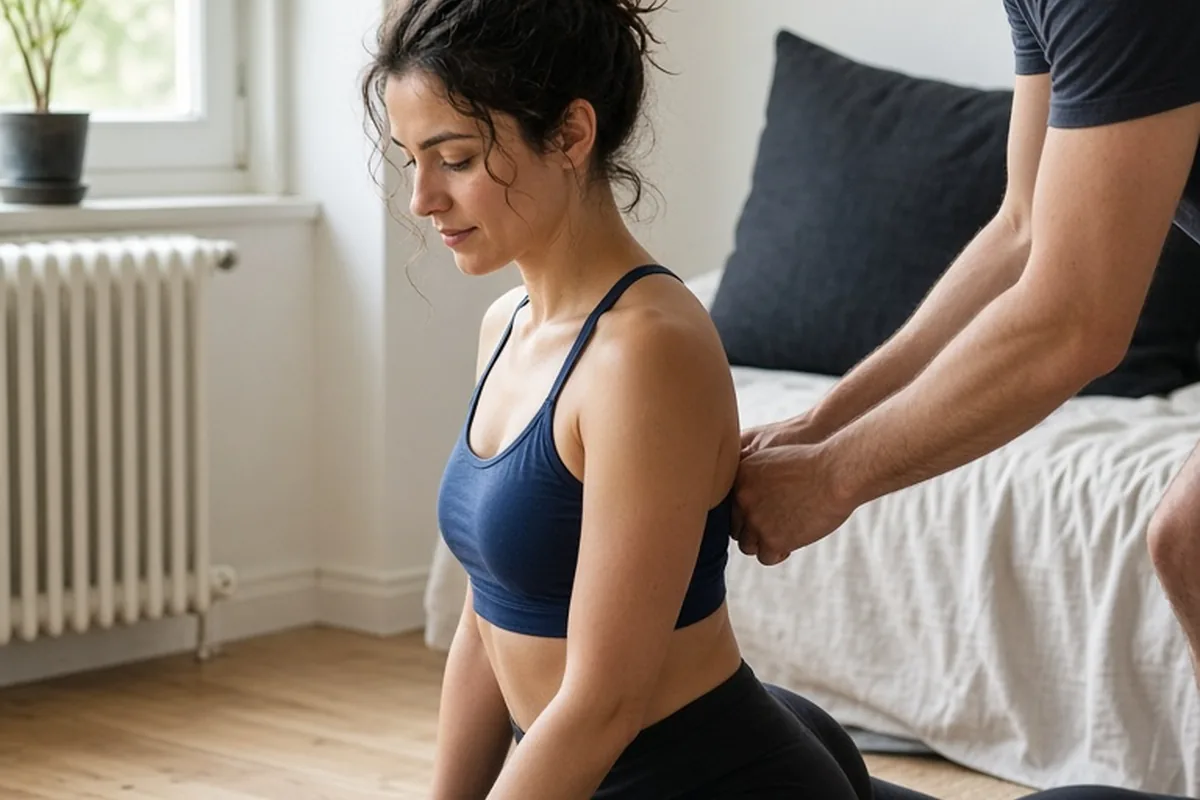
Practicing targeted yoga poses can enhance your sex life by strengthening the pelvic floor, increasing blood circulation, improving hip flexibility, and reducing everyday stress. Postures like Bridge, Cat-Cow, Pigeon, Happy Baby, and Cobra build core stability and body awareness. This physical ease translates into greater endurance, easier physical comfort during intimacy, and a calmer mental state that makes connecting with a partner more rewarding.
Physical intimacy often reflects how comfortable we feel in our own bodies. When long workdays, tight muscles, or mental fatigue take over, confidence and physical enjoyment naturally decline. Adding gentle, intentional movement helps bridge that gap without complicated routines or unrealistic expectations.
Bridge Pose to Strengthen the Pelvic Floor and Core
Bridge Pose, known traditionally as Setu Bandhasana, is one of the most effective postures for activating the posterior chain while waking up the pelvic floor muscles. When you lie on your back with knees bent and lift your hips toward the ceiling, you engage your glutes, hamstrings, and lower abdominal stabilizers. This activation increases localized blood flow throughout the pelvic basin, which plays a direct role in sexual responsiveness, stamina, and muscular control for all bodies.
To practice Bridge Pose effectively, lie flat on your back with your feet hip-width apart and planted firmly on the floor, close enough that your fingertips can graze your heels. Press down through the soles of your feet as you smoothly raise your pelvis, keeping your thighs parallel rather than letting your knees splay outward. Hold the position for five to ten deep breaths, feeling the gentle contraction across your lower body before slowly lowering one vertebra at a time.
A practical benefit of this posture in the bedroom is the muscular endurance it builds for sustained positioning and hip elevation. However, a common mistake is overextending the lumbar spine by forcing the hips too high, which can compress the lower back. Focus on creating a straight, supportive line from your shoulders to your knees rather than arching aggressively.
Cat-Cow Stretch for Spinal Mobility and Pelvic Awareness
The flowing sequence between Cat and Cow poses (Marjaryasana-Bitilasana) introduces smooth mobility to the spine while teaching dynamic pelvic tilting. Many people spend their days sitting in static desk chairs, leading to a rigid lower back and a disconnected relationship with their pelvic alignment. Moving rhythmically between an arched and rounded spine restores natural fluidity, making rhythmic movement during intimacy feel effortless rather than stiff.
Begin on all fours with your wrists directly under your shoulders and your knees directly under your hips. As you inhale, drop your belly toward the mat, lift your chest, and tilt your tailbone upward into Cow Pose. As you exhale, press the floor away, round your spine toward the ceiling, and tuck your pelvis inward into Cat Pose. Repeat this cycle smoothly for one to two minutes, coordinating each movement directly with the natural pace of your breath.
This exercise develops somatic awareness, helping you identify whether your pelvis is locked in an anterior or posterior tilt during daily movement. The primary limitation of Cat-Cow is that it offers minimal resistance training; its value lies entirely in mobility, breath coordination, and neuromuscular awareness rather than building heavy muscular strength.
Pigeon Pose to Relieve Deep Hip and Groin Tightness
Pigeon Pose (Eka Pada Rajakapotasana) targets the deep external rotators of the hip, including the piriformis and surrounding connective tissue. The hips frequently store physical tension from repetitive sitting as well as emotional stress from busy routines. When hip mobility is restricted, exploring diverse physical positions can lead to joint strain or premature fatigue, creating unnecessary hesitation or distraction between partners.
To enter the posture safely, start from a plank or tabletop position and bring your right knee forward behind your right wrist, angling your right foot toward your left hip. Extend your left leg straight back along the floor, keeping your hips square to the front of your mat. Slowly lower your torso forward onto your forearms or a supportive block as your body allows, breathing deeply into the sensation in your outer right hip for thirty to sixty seconds before switching sides.
The benefit of releasing these tight muscle groups is an expanded range of motion and greater ease when shifting positions during intimate moments. The trade-off is that Pigeon can place uncomfortable torque on the front knee if the joint is forced. If you feel any sharp or pinching sensation in the knee, modify the stretch by practicing a reclined figure-four pose on your back instead.
Happy Baby Pose for Pelvic Floor Relaxation and Flexibility
While strengthening the pelvic floor is frequently emphasized, learning how to fully release and lengthen those same muscles is equally critical for sexual comfort and pleasure. A chronically tight or hypertonic pelvic floor can cause discomfort, restricted blood flow, or difficulty reaching peak physical sensation. Happy Baby Pose (Ananda Balasana) gently opens the inner thighs, groin, and lower back while encouraging the pelvic muscles to soften completely.
Lie on your back, draw your knees toward your chest, and grip the outside edges of your feet, your ankles, or the backs of your thighs with your hands. Open your knees wider than your torso and gently pull downward so your shins stay perpendicular to the floor with your feet flexed. Keep your head, neck, and the entire length of your spine resting flat against the floor as you take slow, full breaths into your lower belly.
Beyond its mechanical benefits for flexibility and pelvic relaxation, Happy Baby encourages a lighthearted, uninhibited attitude toward your body. A common challenge is keeping the tailbone grounded; if your lower back curls off the floor, simply hold behind your knees instead of reaching for your feet to maintain proper spinal alignment.
Cobra Pose to Expand the Chest and Support Spinal Endurance
Cobra Pose (Bhujangasana) is a classic backbend that opens the chest, shoulders, and abdomen while strengthening the entire spinal column. Modern habits like looking down at smartphones and slouching over keyboards cause the chest to collapse inward, which can limit lung capacity and contribute to self-conscious posture. Opening the front of the body fosters an open physical presence and improves overall upper-body stamina.
Lie face down with your legs extended straight behind you and the tops of your feet pressing into the floor. Place your hands flat beneath your shoulders with your elbows tucked close to your ribs. Inhale as you gently lift your head, chest, and upper ribs away from the mat, using the strength of your back muscles rather than pushing entirely with your arms. Keep your neck long by gazing slightly downward and forward.
Practicing Cobra regularly counteracts physical fatigue and provides the back strength necessary for supporting your own weight during intimacy without straining your shoulders. However, avoid pinching the lumbar spine by clenching the glutes excessively or forcing a deep bend too quickly. Focus on gentle elongation throughout the entire spine.
Harnessing Breath Control to Manage Arousal and Reduce Anxiety
Physical postures represent only half of what yoga offers; deliberate breath regulation (pranayama) is equally transformative for a satisfying sex life. Performance anxiety, self-doubt, or daily stressors trigger the sympathetic nervous system, shifting the body into a subtle fight-or-flight state. This physiological response restricts blood flow to peripheral areas and distracts the mind, making mutual connection much harder to access.
By practicing steady, deep diaphragmatic breathing—such as inhaling for four counts and exhaling for six counts—you stimulate the vagus nerve and activate the parasympathetic nervous system. This biological shift slows your heart rate, relaxes tense muscle groups, and allows you to stay grounded in the present moment. Applying this breathing pattern before and during intimate encounters helps regulate arousal levels and prevents feelings of being rushed or overwhelmed.
Integrating conscious breathing requires practice and patience, especially if you tend to hold your breath when concentrated or excited. It is helpful to practice breathwork during solo stretching sessions first, so that deep, rhythmic respiration becomes an automatic response rather than another mental task to manage during intimate moments.
Building a Sustainable Routine Without Performance Expectations
Consistency produces far better results than occasional, intense workouts when using yoga to improve physical wellness and intimacy. Dedicating ten to fifteen minutes three or four days a week to these five fundamental postures is sufficient to notice improvements in hip mobility, core awareness, and general energy levels. Treating this practice as an ongoing form of self-care removes the pressure of expecting immediate or miraculous transformations overnight.
You can practice these postures solo to build personal confidence and physical comfort, or you can invite your partner to join you for a low-stakes stretching session. Sharing quiet, physical movement in a comfortable environment creates non-sexual physical intimacy, which often serves as a natural foundation for deeper connection and mutual trust later on.
Keep your expectations realistic and respect your body's daily boundaries. Some days your hips or lower back will feel more restricted than others, and forcing a stretch past the point of comfortable tension can lead to muscle soreness or injury. Focus on steady, enjoyable progress rather than reaching perfect aesthetic postures.
Illustrative Scenarios
Overcoming Desk Fatigue and Physical Stiffness
Marcus, a 35-year-old analyst, found that long hours sitting at his desk left his lower back tight and his physical energy drained by the evening. During intimacy with his partner, he often felt stiff and distracted by muscular discomfort, which he mistakenly interpreted as a permanent loss of physical stamina. Instead of withdrawing or relying on quick fixes, Marcus began a ten-minute morning routine focused on Bridge and Cat-Cow poses. Within a few weeks, his spinal mobility improved, and by communicating openly with his partner about his routine, he felt more relaxed, capable, and physically present in the bedroom.
Key point: Addressing daily physical stiffness through consistent, targeted movement restores bodily confidence and removes physical distractions during intimacy.
Quieting Performance Anxiety Through Mindful Stretching
Jordan, a 28-year-old designer, frequently experienced racing thoughts and performance pressure that made it difficult to relax and enjoy intimate moments. He tended to stay entirely in his head, leading to tension throughout his hips and shallow breathing. Rather than avoiding vulnerability, Jordan started practicing Pigeon and Happy Baby poses before bed, pairing the stretches with slow, extended exhales. Focusing purely on the physical sensations in his body helped down-regulate his nervous system. This simple evening habit allowed him to transition smoothly out of work mode and connect naturally with his partner.
Key point: Pairing deep hip-opening stretches with calm breathwork eases mental pressure and helps you remain grounded in the moment.
Frequently asked questions
How long does it take for yoga to make a noticeable difference in the bedroom?
Most people notice improved flexibility, reduced lower back tension, and greater bodily awareness within two to three weeks of consistent practice. Long-term benefits like increased muscular endurance and improved pelvic floor control generally develop over several months of regular movement.
Do I need to practice yoga with my partner to experience the benefits?
No, practicing independently is completely effective for developing personal stamina, flexibility, and stress management. However, practicing gentle stretches together can be an enjoyable way to share non-demanding physical connection and unwind as a couple.
What should I do if a hip-opening pose causes knee or joint pain?
You should immediately back out of any posture that causes sharp, pinching, or joint-specific pain. Modify the stretch using supportive props like cushions or yoga blocks, or substitute the pose with a gentler alternative such as a reclined figure-four stretch.
Your next step
Choose two or three of these poses today, such as Cat-Cow and Bridge, and spend five quiet minutes exploring your breath and movement without any pressure for perfection.