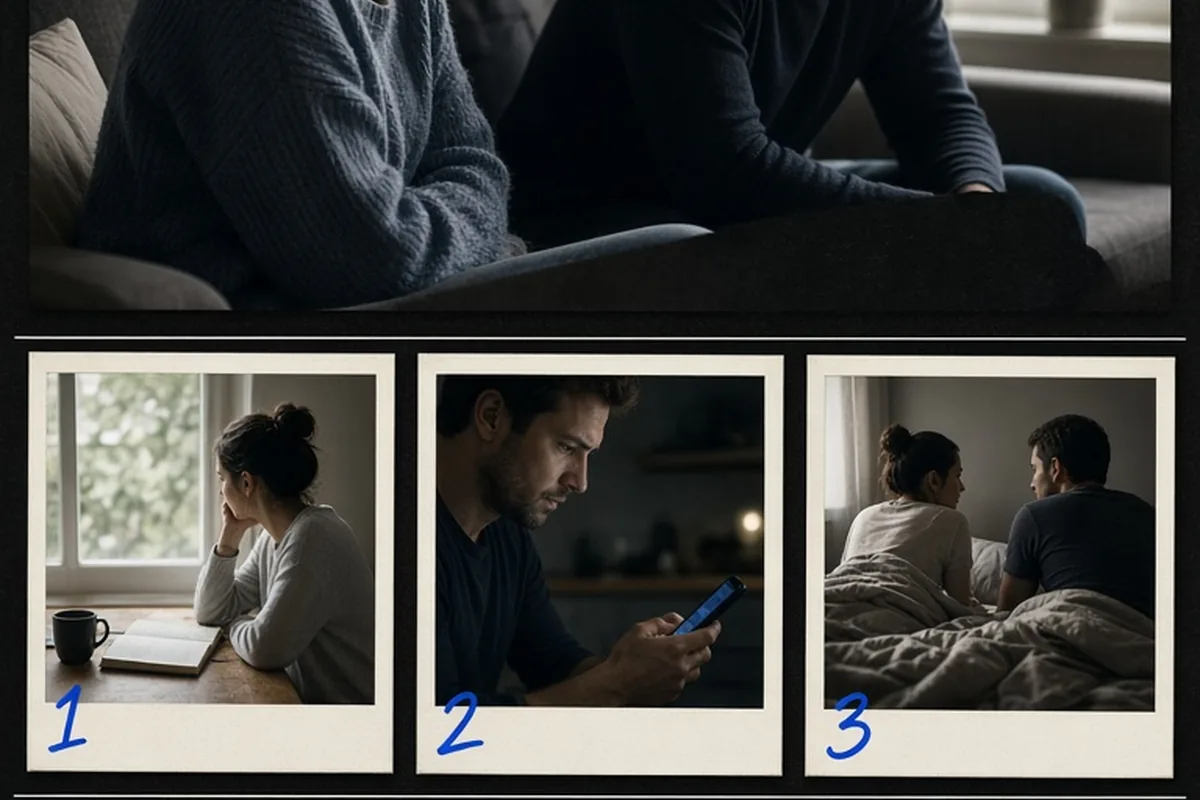
When a partner falls out of love, the shift typically appears as persistent emotional withdrawal, chronic indifference toward your daily life, a steep decline in physical and emotional affection, reluctance to resolve conflicts or plan for the future, and treating shared time as an obligation. Recognizing these patterns helps you assess the relationship honestly, protect your dignity, and initiate a direct conversation.
Noticing a subtle chill in a partnership can feel disorienting and painful. Rather than jumping immediately to worst-case assumptions or ignoring your instincts, looking closely at recurring behavioral patterns gives you the clarity you need to understand where the connection truly stands.
Emotional Withdrawal and the Disappearance of Curiosity
One of the clearest indications that a man's feelings have shifted is a sustained loss of curiosity about your inner world. In a thriving relationship, partners naturally check in on each other's experiences, listen to stories from work, and remember emotional highs and lows. When love fades, this curiosity is often replaced by flat polite responses or complete indifference. He may stop asking how your day went, show little reaction when you share meaningful news, or direct every interaction toward purely transactional logistics like bills and household chores.
This withdrawal rarely happens overnight. It typically starts when active listening turns into passive presence, where he is physically in the room but mentally unavailable, often buried in his phone or hobbies. The key is to notice whether this silence is accompanied by a reluctance to share his own thoughts. When a partner no longer confides his fears, ambitions, or daily frustrations with you, he has quietly disconnected the bridge of mutual emotional intimacy. A useful way to test this dynamic is to share something personal and observe whether he engages with genuine interest or simply waits for the conversation to end.
It is important to remember that temporary exhaustion or deep work-related stress can mimic emotional detachment. The difference lies in duration and intent: a stressed partner usually acknowledges their preoccupation or returns to the conversation once the immediate pressure lifts, whereas someone whose feelings have dissipated maintains this distance indefinitely without concern for the emotional gap it creates.
Chronic Irritability and Low Tolerance for Conflict Resolution
When love and goodwill diminish, a partner's tolerance for minor quirks and relationship friction drops significantly. You might find that habits he once found endearing or barely noticed now trigger eye-rolling, sharp remarks, or disproportionate annoyance. Instead of approaching disagreements with a desire to understand and repair, his responses become defensive, dismissive, or openly contemptuous. Conflict shifts from collaborative problem-solving into an exercise in assigning blame or shutting down entirely.
In this state, constructive communication stalls because he no longer views the relationship as an investment worth fighting for. When you bring up a legitimate concern, he might use stonewalling—refusing to speak, walking away mid-sentence, or responding with cold shrugs—to avoid emotional labor. Alternatively, he may deflect by turning your concern back on you, claiming you are overly dramatic or demanding. The underlying message of this behavior is that maintaining peace or understanding your perspective no longer carries value for him.
A critical limitation in identifying this sign is distinguishing between poor communication habits and a genuine loss of affection. Some individuals have avoidant tendencies or lack healthy conflict management skills even when they care deeply. However, when irritability is persistent and paired with an absolute refusal to engage in repair attempts over several months, it strongly points toward a fundamental loss of emotional investment.
A Steep Decline in Meaningful Affection and Physical Intimacy
Shifts in physical closeness often mirror underlying emotional changes. While sexual frequency naturally fluctuates over time due to hormonal cycles, health, and schedule changes, the total disappearance of non-sexual affection is frequently a telltale marker. Casual hugs, holding hands while walking, spontaneous kisses on the cheek, and gentle eye contact are instinctive expressions of warmth. When romantic love recedes, these small, involuntary gestures are typically the first things to stop.
When physical intimacy does occur, it may feel mechanical, routine, or entirely devoid of emotional resonance. You might sense that he is going through the motions rather than connecting with you as a person. In other instances, any physical touch may be repelled, with excuses consistently made about being tired, warm, or preoccupied. The emotional cost of this dynamic is substantial, as it often leaves the other partner feeling rejected and lonely even while sharing the same bed.
Before concluding that physical distance means the end of love, consider whether untreated physical health challenges, medication side effects, or depression might be suppressing his libido and energy. If open inquiries about his health and well-being are met with defensiveness rather than vulnerability, the emotional disconnect is likely the primary driver rather than a temporary physical slump.
Reluctance to Make Future Plans and Shared Commitments
A partner who loves you views you as a permanent fixture in his future. When a man stops feeling connected, planning ahead feels uncomfortable because it creates obligations he is unsure he wants to keep. He may become deliberately vague when discussing vacations several months out, hesitate to commit to upcoming family events, or avoid long-term conversations about living arrangements, finances, or life goals.
Notice how he handles both minor scheduling and major milestones. For example, if buying tickets for a concert three months away causes hesitation, or if he continually tells you to hold off on planning holidays together, he may be mentally keeping his exit options open. In conversations about his personal dreams—such as career transitions or relocating—he may start using 'I' instead of 'we,' subtly signaling that his future vision no longer automatically integrates your life with his.
The trade-off here is that some people are naturally spontaneous and dislike structured planning regardless of relationship status. To evaluate this accurately, compare his current behavior to his baseline from earlier in the relationship. If he used to eagerly coordinate trips and speak about the future with enthusiasm, a sudden retreat into noncommittal language is a significant change in stance.
Treating Relationship Effort and Shared Time as an Obligation
Mutual desire drives quality time in healthy relationships. When affection declines, shared activities start feeling like chores on a checklist rather than moments of mutual enjoyment. He may prioritize spending every free evening with friends, absorbing himself in solo video games, or staying late at work, choosing almost any alternative over one-on-one time with you. When you do spend time together, he might seem distracted, constantly checking the clock or his messages.
Furthermore, the burden of initiating dates, organizing schedules, and maintaining relationship traditions often falls entirely on your shoulders. If you stop suggesting activities, you may find that days or weeks pass without him initiating any shared experiences. When he does agree to join you, his demeanor might project subtle resentment, making you feel as though you pressured him into being there.
Be careful not to mistake genuine scheduling constraints for intentional avoidance. The distinguishing factor is proactive rescheduling: a partner who wants to be with you but is genuinely busy will propose an alternative time, whereas a partner who has lost interest will welcome the cancellation and offer nothing in its place.
Distinguishing Relationship Burnout from Lost Feelings
Before determining that love has permanently evaporated, it is critical to evaluate the context of your lives. High-pressure external factors—such as caring for an aging parent, financial insecurity, severe workplace burnout, or mental health struggles—can temporarily shut down a person's capacity for emotional expression. Under extreme stress, an individual may retreat into self-preservation mode, appearing cold, silent, and disconnected without actually having lost their love for their partner.
To tell the difference, examine how he treats other areas of his life and how he responds when you offer direct support. A partner experiencing situational burnout will usually acknowledge their exhaustion, express regret for being absent, and welcome supportive measures. Conversely, a partner who has fallen out of love generally directs their withdrawal specifically at the relationship, maintaining vibrant energy for hobbies and friends while remaining cold and closed off exclusively with you.
A helpful strategy is to create a low-pressure environment for a brief period. If reducing household demands and offering space yields a return of warmth and communication, burnout was likely the culprit. If the distance widens further into active neglect, the issue is rooted in the bond itself.
How to Have a Direct Conversation and Protect Your Self-Respect
Lingering in uncertainty while trying to decipher mixed signals takes a heavy toll on your mental health and self-esteem. When you recognize multiple recurring signs of detachment, the most self-respecting response is to initiate a calm, direct, and structured conversation. Avoid waiting for an explosive argument to voice your observations; choose a quiet, neutral moment where neither of you is rushed or distracted.
Frame the discussion around clear behavioral observations rather than accusatory statements. You might say, 'I have noticed that we spend very little intentional time together lately, and there seems to be a lot of distance between us. I want to talk honestly about how you are feeling about our relationship.' State what you have experienced, ask him directly where his heart is, and then give him the space to answer without immediately jumping in to rescue the conversation or smooth over uncomfortable silences.
Be prepared for the reality of his response. If he confirms that his feelings have changed, or if he refuses to engage and dismisses your concerns entirely, you gain the clarity necessary to make a conscious choice about your future. Staying in a relationship that lacks mutual love and effort will gradually erode your confidence, whereas facing the truth allows you to step forward toward relationships built on genuine reciprocity.
Illustrative Scenarios
Recognizing Avoidance During Routine Evening Routines
Elena noticed that over five months, her partner David stopped sitting with her after dinner. Instead, he would immediately put on noise-canceling headphones to play games or watch videos in another room, offering one-word answers whenever she spoke. Elena initially assumed David was tired from his promotion, so she tried harder by cooking elaborate meals and avoiding any heavy topics. However, the emotional silence only widened, and David began spending weekends out with coworkers without inviting her. Elena decided to stop overcompensating and asked him directly about the shift. David admitted that he felt the romantic spark had gone and that he had been avoiding the conversation out of guilt.
Key point: Attempting to fix emotional withdrawal by working harder around a disengaged partner often delays necessary clarity; addressing patterns directly reveals the true state of the bond.
Addressing Disconnection Without Playing Mind Games
Marcus realized that his long-term partner was no longer affectionate, rarely initiated physical contact, and had begun declining invitations to attend family gatherings. Marcus felt tempted to pull away entirely and use the silent treatment to test whether his partner would notice or fight for his attention. Recognizing that passive-aggressive tests would only create confusion, Marcus scheduled a dedicated discussion, stating clearly that the ongoing lack of affection and future planning was unsustainable for him. The conversation revealed that while his partner cared about him as a friend, romantic commitment had dissolved months prior.
Key point: Choosing honest, direct communication over relationship tests preserves your self-respect and delivers swift clarity when feelings have changed.
Frequently asked questions
Can a man fall back in love once his feelings have faded?
Rebuilding lost affection is possible only if both partners acknowledge the disconnect and actively commit to addressing underlying relationship issues or counseling. However, if one person has completely emotionally checked out and shows no desire to invest effort, love cannot be forced or rebuilt unilaterally.
What is the difference between falling out of love and the end of the honeymoon phase?
The end of the honeymoon phase brings a transition from intense infatuation to a steadier, deeper companionship characterized by mutual respect, shared planning, and consistent care. In contrast, falling out of love involves indifference, emotional withdrawal, resentment, and a distinct lack of interest in the partner's well-being.
Should I wait for him to end the relationship if he shows these signs?
Waiting passively for a disengaged partner to initiate a breakup often leads to prolonged emotional distress and damages your self-worth. If clear signs of detachment persist and he refuses to engage or work on the bond, you have the right to prioritize your emotional health and make the decision to walk away.
Why would someone stay in a relationship if they no longer love their partner?
People often remain in expired relationships out of convenience, fear of change, financial entanglements, shared routines, or guilt about hurting their partner. Staying does not automatically mean feelings remain; it frequently reflects comfort with familiarity or reluctance to handle a difficult breakup.
Your next step
Schedule a quiet, uninterrupted conversation this week to state your observations clearly, ask your partner where he stands emotionally, and decide your next step based on his willingness to engage.