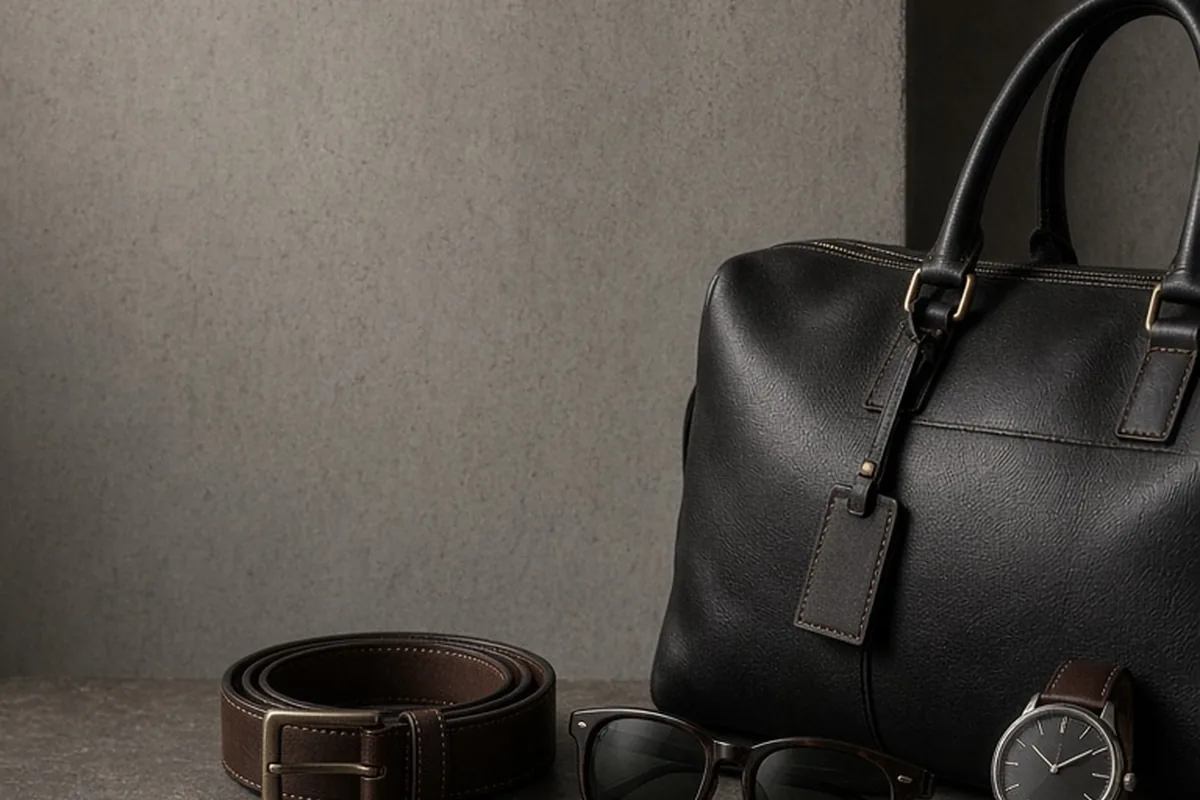
The most useful accessories for men are a quality watch, a leather belt that matches your shoes, a versatile bag, a slim wallet, and a few seasonal pieces like sunglasses and a scarf. Start with neutral colors, buy the best quality you can reasonably afford, and add one item at a time so each piece earns its place.
Accessories are the difference between being dressed and looking deliberately dressed. The good news is that a small, well-chosen rotation covers nearly every situation you will face.
Start With the Core Accessories Every Man Actually Uses
Before chasing trends, it helps to know which pieces do the heavy lifting. A short list of accessories covers the vast majority of daily life: a watch, a belt, a wallet, a bag, and sunglasses. These items appear in nearly every outfit, which means their quality is visible every single day. A cracked belt or a bulging wallet undermines an otherwise sharp outfit faster than almost anything else.
The reason to start here is simple math. If you wear a belt five days a week, a good one pays for itself in cost per wear within months, while a trendy piece you wear twice a year never does. A concrete example: a man in dark jeans, a white oxford, and a navy blazer looks finished when his brown belt matches his brown boots. Swap in a frayed black belt and the whole outfit reads as an afterthought. The trade-off is that building the basics first feels unglamorous, but it is what makes everything else you add later actually work.
- Watch: one versatile style on leather or metal that suits your daily dress code
- Belt: one black and one brown in full-grain leather, matched to your shoes
- Wallet: slim cardholder or bifold that does not distort your pocket
- Bag: one for work and one casual option for weekends or the gym
- Sunglasses: a classic frame shape with proper UV protection
Choosing a Watch That Fits Your Life
A watch is usually the anchor of a man's accessories because it is the piece people notice most and the one you wear most often. The right choice depends less on price than on honesty about your life. If you work in an office, a simple dial on a leather strap or steel bracelet covers nearly everything. If your weekends involve hiking, water, or rough use, a field or dive-style watch with a durable strap makes more sense. Size matters too: a case that overhangs your wrist looks borrowed, so most men do well in the 36 to 42 millimeter range.
Consider a practical example. A man who wears business casual five days a week gets far more use from a 38-millimeter watch on a brown leather strap than from a chunky chronograph he saves for special occasions. The trade-off worth accepting is versatility over variety early on: one watch that works with 90 percent of your wardrobe beats three that each work with 10 percent. Smartwatches are a legitimate choice if you use the features, but they read as tech rather than style, so many men keep a traditional watch for dates, weddings, and interviews.
Belts, Wallets, and the Small Leather Goods That Pull a Look Together
Small leather goods are where outfits quietly succeed or fail. The classic guideline is to match your leathers: brown belt with brown shoes, black with black, and a watch strap in the same family when possible. Belt width also signals formality. A slim belt with a small buckle belongs with dress trousers, while a wider, rugged belt suits jeans and work boots. Wallets follow the same logic of restraint: a slim cardholder or thin bifold keeps your silhouette clean, while an overstuffed wallet creates a visible bulge and wears out faster.
Here is how this plays out in real life. A man heading to a dinner in charcoal trousers and black derbies grabs his old brown belt because it is comfortable, and the mismatch draws the eye to exactly the wrong place. The fix costs little: one decent black belt solves it permanently. The limit to the matching rule is that modern style allows some flexibility, especially in casual settings, but tones should stay close. The trade-off is that cheap bonded leather cracks within a year, so spending a bit more on full-grain leather for items you touch daily is usually the economical move.
Bags for Work, Weekends, and Travel
A bag is both a tool and a signal, and the wrong one can clash with everything else you are wearing. For work, the choice depends on your dress code and commute. A leather briefcase or structured messenger bag suits an office with suits or business casual, while a clean, minimal backpack in canvas or nylon works for tech-casual environments and bike commutes. The key is that the bag looks intentional rather than like a leftover from college.
For weekends and travel, a simple duffel or weekender bag handles short trips better than a rolling suitcase, and a small crossbody or sling bag keeps essentials close on days when pockets are not enough. A concrete example: a man who carries a worn gym backpack into a client lunch looks unprepared even in a good blazer, while the same outfit with a slim leather brief reads as competent. The limit here is honesty about use. If you genuinely carry a laptop, gym clothes, and lunch daily, a larger backpack is the right call, and forcing everything into a stylish but tiny bag helps no one.
Seasonal and Occasion Pieces: Sunglasses, Hats, Ties, and Jewelry
Beyond the daily core, a handful of situational pieces rounds out a wardrobe. Sunglasses are the most useful: pick a classic shape that suits your face, such as wayfarer or aviator styles, and make sure they offer real UV protection rather than just dark lenses. Hats follow the seasons. A wool beanie earns its place in winter, a simple baseball cap works for casual summer days, and a flat cap or fedora can suit dressier cold-weather outfits if it matches your personal style rather than feeling like a costume.
Ties, pocket squares, and jewelry belong mostly to formal and semi-formal territory. A navy or burgundy tie and a plain white pocket square cover most weddings and interviews. With jewelry, restraint is the reliable path: a wedding band, one ring, or a single bracelet is plenty for most men, and metals should roughly match your watch and belt buckle. The limit is that jewelry is the easiest category to overdo. If you are new to it, add one piece, wear it for a few weeks, and decide from there rather than stacking everything at once.
How to Wear Accessories Without Overdoing It
The most common accessorizing mistake is not picking bad pieces but wearing too many good ones at once. A useful guideline is the one-focal-point rule: let a single item, usually the watch, be the star, and keep everything else quiet and functional. Matching metals helps too. If your watch is silver-toned, a silver belt buckle and a steel ring keep the look coherent, while mixing gold, silver, and gunmetal in one outfit tends to look accidental. Scale matters as well: the formality of your accessories should match the formality of the clothes.
A concrete example makes this clear. A wedding guest in a navy suit needs only a watch, a tie, and maybe a pocket square; adding a hat, lapel pin, bracelet stack, and statement sunglasses turns a sharp outfit into a costume. A practical test is to get fully dressed, then remove one accessory before leaving. The trade-off is real: restraint can feel boring if you enjoy expressive style, and personal flair is worth keeping. The balance is to pick one expressive piece per outfit rather than eliminating personality altogether.
Building Your Collection on a Budget
You do not need to buy everything at once, and you probably should not. The sensible order is to prioritize by frequency of use: belt and wallet first, then a watch, then a bag, then seasonal pieces. For items you touch daily, spending more on durable materials like full-grain leather and solid hardware usually saves money over time because replacements stop being a yearly event. For trend-driven pieces you might wear a handful of times, cheaper options are perfectly reasonable.
Care stretches every dollar further. Conditioning leather belts and bags a few times a year, storing watches away from moisture, and rotating shoes and belts so nothing wears out prematurely all extend lifespan significantly. Vintage and secondhand shops can also be excellent sources for quality leather goods and classic watches at a fraction of retail. The limit to keep in mind is that a low price on something you never wear is still wasted money, so buy for your actual life rather than an imagined one.
Illustrative Scenarios
The Interview Outfit That Almost Went Wrong
Take a composite example: Marcus, 29, had a final-round interview at a finance firm and planned to borrow his cousin's large gold watch to look successful. The night before, a friend pointed out that the flashy piece clashed with his conservative navy suit and might read as trying too hard. Marcus instead wore his own simple watch on a brown leather strap, matched his belt to his shoes, and swapped his bulky wallet for a slim cardholder. He reported feeling calmer because nothing about his outfit needed explaining.
Key point: In high-stakes rooms, quiet coordination beats statement pieces. Accessories should support your presence, not audition for attention.
Too Much of a Good Thing on a First Date
Consider an illustrative scenario: Devon, 34, wanted to make an impression on a first dinner date, so he stacked three rings, a chain, a beaded bracelet, a hat, and a heavy spray of cologne over an otherwise clean outfit. Halfway through dinner he caught his reflection and realized he looked like he was wearing a costume, and he spent the evening fidgeting with the rings instead of listening. For the second date he wore just his watch and one bracelet. The conversation flowed because he was comfortable.
Key point: Accessories should frame you, not compete with you. If a piece needs constant adjusting or explaining, it is working against the evening.
Frequently asked questions
What accessories should every man own first?
Start with the pieces you will use daily: a versatile watch, a leather belt that matches your most-worn shoes, a slim wallet, and a functional bag. Add sunglasses and seasonal items like a beanie or scarf as the weather demands.
How many accessories should a man wear at once?
Two to four functional pieces is a reliable range for most outfits, with at most one statement item. If you are unsure, get fully dressed and remove one thing before leaving.
Are expensive accessories worth the money?
For daily-use items like belts, wallets, and bags, higher-quality materials often cost less over time because they last years instead of months. For trendy or rarely worn pieces, budget options make more sense since cost per wear stays high either way.
How do I match accessories to an outfit?
Follow three simple guidelines: match your leathers, match your metals, and match the formality of your accessories to your clothes. Neutral colors like black, brown, navy, and silver are the safest starting points.
Your next step
This week, do a five-minute audit: lay out your watch, belt, wallet, and bag, check whether your belt matches your most-worn shoes, and replace or buy the single weakest piece first.