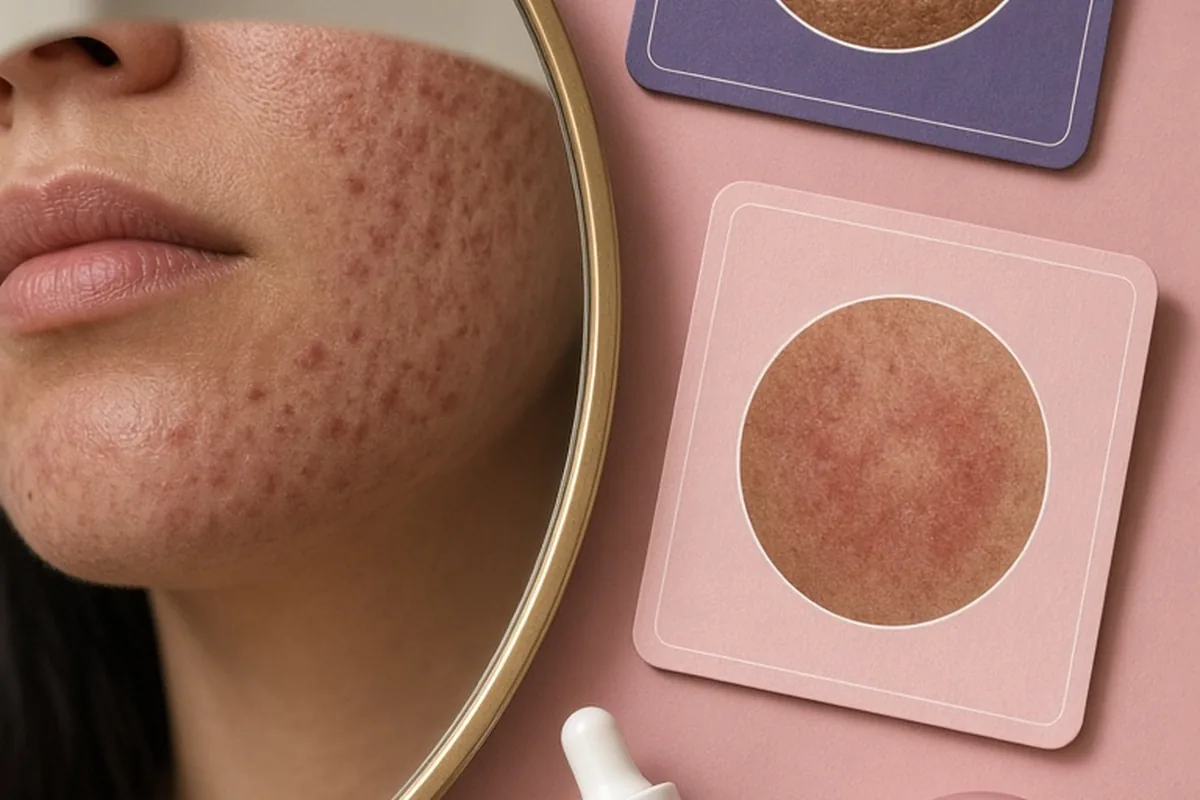
Treating acne scars for beginners starts with identifying whether you have flat discoloration or textural indentations. Flat red or brown marks typically respond to topical ingredients like retinoids, azelaic acid, and daily sunscreen over several months. Textural depressions or raised scars require structural collagen remodeling, which usually demands in-office clinical procedures such as microneedling, laser resurfacing, or chemical peels alongside an active acne management routine.
Navigating post-breakout skin can feel overwhelming when your mirror shows a mix of lingering redness, dark spots, and uneven texture. Understanding the fundamental differences between surface pigmentation and true dermal scarring allows you to choose practical remedies that match your skin's specific needs without wasting time or compromising your skin barrier.
Distinguishing True Scars From Post-Inflammatory Marks
A common point of confusion for beginners is the difference between genuine acne scars and post-inflammatory marks. When a blemish resolves, it frequently leaves behind a flat red, purple, or brown patch. In dermatology, red or purple spots on lighter skin tones are typically post-inflammatory erythema, caused by damaged microcapillaries near the surface. Brown or dark marks, more prevalent in melanin-rich complexions, are post-inflammatory hyperpigmentation, caused by an overproduction of melanin triggered by inflammation. Neither of these represents a structural scar because the skin surface remains completely smooth.
True acne scars involve permanent alterations to the underlying collagen architecture. When severe inflammation damages the deeper dermal layers, the body may heal by producing too little collagen, creating a depression, or too much collagen, creating a raised bump. You can determine what you are dealing with by running a clean fingertip over the area under good lighting. If the skin feels flat and level despite the color change, you are managing post-inflammatory pigment. If your finger drops into a pit or catches on a raised ridge, you are looking at true textural scarring, which requires a fundamentally different therapeutic approach.
Recognizing this distinction protects your skin and your budget. Applying expensive deep-resurfacing treatments to simple post-inflammatory erythema is unnecessary, while slathering mild brightening creams on deep structural pits will yield little textural change. Establishing an accurate baseline is the single most important preliminary step in building a successful skin-recovery strategy.
Identifying Atrophic and Hypertrophic Scar Textures
Textural acne scars fall into two broad categories: atrophic scars, which present as depressions or indentations, and hypertrophic scars, which appear as raised tissue. Atrophic scars represent the vast majority of acne-related textural changes and occur when localized tissue is lost during the inflammatory cascade of cystic or nodular blemishes. Hypertrophic and keloid scars, conversely, occur when an exaggerated healing response deposits excessive bundles of dense fibrous collagen.
Atrophic scarring is further divided into three main structural profiles: ice pick, boxcar, and rolling scars. Ice pick scars are narrow, deep, and sharply defined pits that resemble punctures from a tiny instrument. Boxcar scars are wider depressions with crisp, vertical edges, similar to shallow chickenpox marks. Rolling scars create broad, wave-like dips with sloped edges, resulting from fibrous bands anchoring the dermis to the underlying subcutaneous tissue. For example, skin with rolling scars often looks significantly more uneven under directional side lighting than under direct, flat light.
Understanding your specific scar morphology matters because individual scar shapes respond to different physical interventions. Ice pick scars reach deep into the dermis and often resist standard surface treatments, whereas rolling scars may require mechanical release of underlying tethering bands before the surface can smooth out. Hypertrophic scars, common on the jawline, chest, and back, require techniques that soften and flatten excess collagen rather than stimulate more of it.
Topical Ingredients for Fading Discoloration and Mild Texture
For beginners targeting post-inflammatory discoloration and subtle surface roughness, topical skincare products offer an accessible starting point. Active ingredients work primarily by accelerating cellular turnover, inhibiting melanin production, or soothing residual vascular inflammation. When introduced gradually, these topicals can visibly even out skin tone and improve overall epidermal radiance over a span of several months.
Retinoids, including over-the-counter retinol, retinaldehyde, and adapalene, serve as the foundational cornerstone for post-breakout care. They encourage healthy epidermal renewal and stimulate mild collagen synthesis over prolonged use, while simultaneously preventing new acne lesions from forming. Azelaic acid is another versatile option that reduces redness, calms active swelling, and gently targets the tyrosinase enzyme responsible for dark marks. Vitamin C (L-ascorbic acid or its stable derivatives) provides antioxidant defense while brightening lingering hyperpigmentation, and alpha hydroxy acids like glycolic or lactic acid gently loosen dead surface cells to smooth mild irregularities.
While topical ingredients excel at fading flat marks and refining general skin texture, they have strict physical limitations. No over-the-counter cream or serum can fill deep ice pick pits or dramatically elevate severe rolling depressions, because topicals cannot rebuild substantial subcutaneous tissue volume. Approaching active skincare with realistic expectations prevents frustration and discourages the risky habit of layering too many harsh acids, which can compromise the skin barrier and cause secondary breakouts.
Professional In-Office Procedures for Structural Scars
When dealing with moderate to deep atrophic or hypertrophic scars, professional dermatological procedures provide the mechanical and thermal energy needed to remodel deep collagen structures. In-office treatments induce a controlled micro-injury in the dermis, signaling the body to generate organized, healthy collagen networks that gradually lift depressions and smooth uneven contours.
Common clinical modalities include microneedling, laser resurfacing, chemical reconstruction, and minor surgical techniques. Professional microneedling uses fine, oscillating needles to puncture the dermis, making it a versatile option with relatively low downtime. Fractional lasers—both non-ablative for moderate texture and ablative for deeper remodeling—use microscopic columns of thermal energy to vaporize damaged tissue and stimulate new collagen. For ice pick scars, dermatologists frequently perform the TCA CROSS technique (trichloroacetic acid chemical reconstruction of skin scars), applying high-strength acid directly inside the pit to close it from the base up. Rolling scars often benefit from subcision, a procedure where a specialized needle cuts the fibrous tethers pulling the skin downward.
Clinical treatments require careful trade-off evaluations regarding cost, recovery downtime, and individual safety profiles. Ablative lasers, for example, deliver substantial textural improvements but involve several days to weeks of raw skin and redness, along with a higher risk of post-inflammatory pigmentation in deeper skin phototypes. In-office care is almost always an iterative process requiring three to six sessions spaced across several months rather than an instantaneous single-visit fix.
Adapting Your Scar Strategy to Your Specific Skin Type
A scar routine must harmonize with your broader skin type to avoid provoking new blemishes or creating barrier sensitivity. For oily and acne-prone skin, the ongoing priority is keeping pores clear while treating past damage. Lightweight gel textures, non-comedogenic serums, and dual-purpose actives like adapalene or niacinamide allow you to manage active congestion and scar pigmentation simultaneously without overwhelming your pores with heavy occlusives.
Dry and sensitive skin types require a barrier-first philosophy. Introducing strong exfoliating acids or potent retinoids on a depleted moisture barrier will only trigger irritation, flaking, and reactive pigmentation. Those with dry or easily sensitized complexions should fortify their regimen with ceramides, cholesterol, and glycerin, buffering active ingredients by applying moisturizer first or using low concentrations just two to three nights per week until tolerance is well established.
Skin of color requires extra vigilance regarding inflammation. Because melanocytes in darker skin tones react strongly to heat, physical trauma, and irritation, aggressive peels or unsuitable laser wavelengths can inadvertently induce prolonged post-inflammatory hyperpigmentation. Individuals with deeper skin tones should prioritize gentle chemical exfoliants like mandelic or azelaic acid, insist on conservative settings for any in-office treatments, and work with practitioners experienced in treating diverse skin phototypes safely.
Building a Safe Routine and Managing Expectations
A beginner-friendly routine for post-breakout recovery does not need to be complex; consistency and protection matter far more than an elaborate ten-step regimen. A reliable framework consists of a gentle cleanser, a single targeted treatment active, a supportive barrier moisturizer, and a broad-spectrum sunscreen with an SPF rating of 30 or higher. Sun protection is completely non-negotiable, as ultraviolet exposure directly stimulates melanin production in healing marks and breaks down nascent collagen fibers in remodeling scars.
Patience and sustainable pacing are essential when monitoring progress. Post-inflammatory redness and dark marks typically require anywhere from eight to sixteen weeks of steady care to show noticeable fading. Structural collagen remodeling from professional procedures takes even longer, often continuing to mature for three to six months following a treatment series. Tracking progress with consistent, well-lit photos taken once a month can help you evaluate subtle improvements that are easy to miss on a day-to-day basis.
Finally, beginners should understand that complete scar erasure is rarely the clinical goal; rather, significant softening, improved light reflection, and refined overall texture represent practical, attainable success. Setting realistic benchmarks prevents excessive product switching, protects your skin from overuse injuries, and ensures a steady path toward healthier-looking skin.
Frequently asked questions
Can over-the-counter skincare products get rid of deep, pitted acne scars?
Over-the-counter products cannot completely eliminate deep, pitted acne scars because creams and serums cannot replace lost subcutaneous tissue. Topicals can soften surface roughness and fade lingering discoloration, but structural indentations require professional collagen-remodeling procedures like microneedling, laser resurfacing, or subcision.
How long does it take for post-acne marks to fade completely?
Flat red or brown post-inflammatory marks usually take between two to six months to fade with consistent use of targeted topicals and daily sun protection. Without sun protection or if the skin is continually picked, discoloration can persist for a year or longer.
Should I treat my active acne or my acne scars first?
You should prioritize bringing active acne under control before investing in intensive scar treatments. Ongoing breakouts will continue to create new inflammation and scars, and many in-office procedures cannot be performed safely over active, inflamed lesions.
Why is sunscreen so important when treating post-acne marks?
Ultraviolet radiation stimulates melanin synthesis, which causes red and brown post-breakout marks to darken and remain visible for much longer. Additionally, UV rays degrade newly formed collagen, undermining your skin's natural repair efforts and diminishing the benefits of any corrective treatments.
Your next step
Assess your skin texture in natural light to determine whether your marks are flat discoloration or structural indentations, then establish a daily broad-spectrum SPF routine while introducing a single active like azelaic acid or a gentle retinoid.