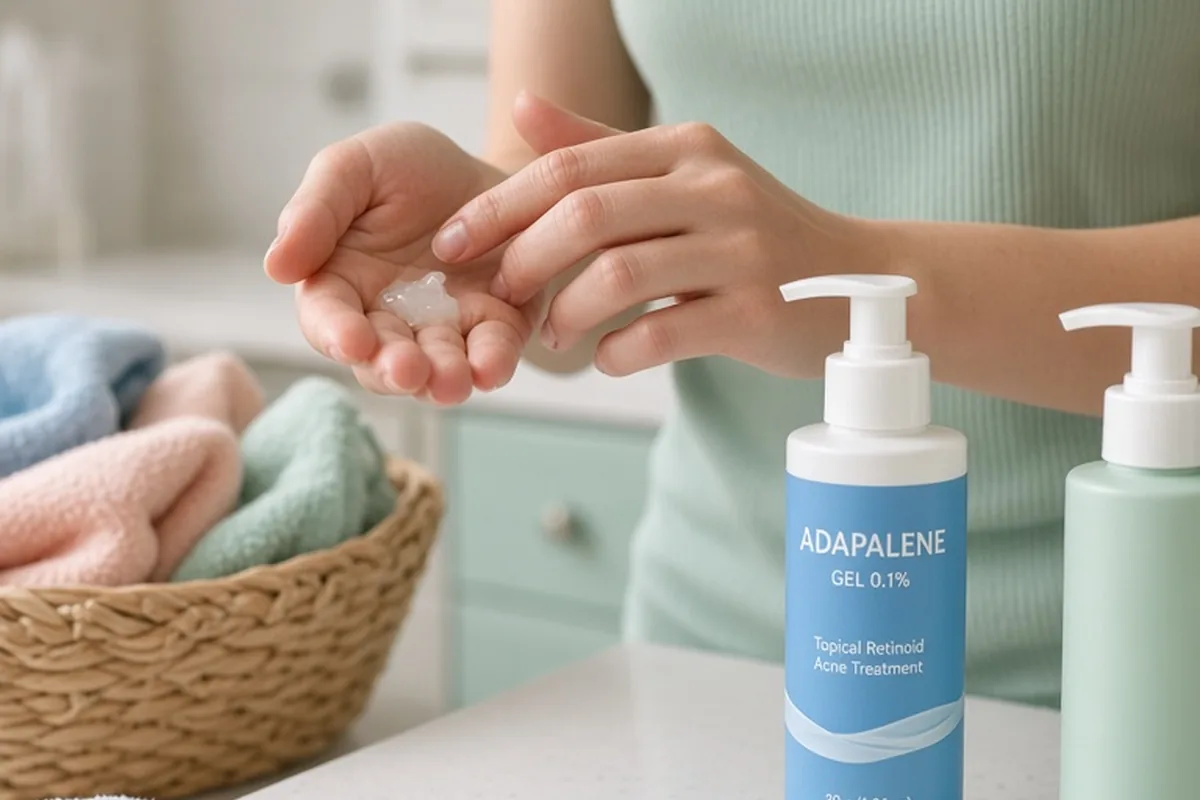
Adapalene is a topical retinoid that helps clear acne and smooth texture by regulating skin cell turnover and calming inflammation. Beginners should start by applying a pea-sized amount to dry skin two to three nights per week over a basic moisturizer, gradually increasing frequency as tolerance develops. Consistent use alongside gentle hydration and daily broad-spectrum sunscreen yields the best results while minimizing flaking.
Starting a new active skincare ingredient often brings a mix of hope and hesitation, especially when products promise clearer pores but warn of temporary redness and peeling. Knowing how to introduce adapalene slowly protects your skin barrier and gives you a steady path toward noticeable improvements.
Understanding How Adapalene Works on Acne and Texture
Adapalene is a synthetic, third-generation topical retinoid developed specifically to target the mechanisms behind acne vulgaris. Unlike traditional exfoliants that dissolve surface debris after it accumulates, adapalene penetrates deep into the hair follicle and sebaceous unit. It works by signaling skin cells to normalize their shedding process, which prevents dead keratinocytes from binding together with sebum to form microcomedones. By addressing the root formation of clogged pores before visible pimples emerge, it helps reduce both inflammatory papules and non-inflammatory blackheads or whiteheads.
Compared to first-generation retinoids like tretinoin, adapalene binds selectively to specific retinoic acid receptors in the skin, namely beta and gamma receptors. This selectivity allows it to deliver potent comedolytic and anti-inflammatory effects while typically causing less surface irritation and peeling. It is also more chemically stable in the presence of light and air. However, adapalene is not an overnight spot treatment; it requires weeks of continuous application across the entire acne-prone area to establish predictable cellular turnover.
Preparing Your Skin: The Essential Supporting Routine
Before applying your first dose of adapalene, you must evaluate the rest of your daily skincare routine. The most common mistake beginners make is combining adapalene with an aggressive lineup of existing acne treatments. Strong foaming cleansers, alpha hydroxy acids like glycolic or lactic acid, beta hydroxy acids like salicylic acid, and physical face scrubs should be paused entirely. Subjecting the skin barrier to multiple active exfoliants simultaneously increases the risk of moisture depletion, persistent stinging, and compromised barrier function.
A supportive routine for a beginner focuses exclusively on barrier maintenance, hydration, and sun defense. Your foundational regimen needs only three complementary products alongside adapalene: a mild, non-stripping cleanser that respects your natural lipid mantle; a nourishing, fragrance-free moisturizer containing barrier-repairing ingredients such as ceramides, glycerin, or hyaluronic acid; and a broad-spectrum sunscreen with an SPF rating of at least 30. Because retinoids accelerate cellular turnover, fresh skin layers are more susceptible to ultraviolet damage, making daily sun protection non-negotiable.
Application Step-by-Step: The Pea-Sized Rule and Buffering
Applying adapalene properly is all about moderation and precision. Begin by washing your face with lukewarm water and your gentle cleanser, then pat your skin completely dry with a clean towel. It is helpful to wait approximately ten to fifteen minutes before applying the medication, as damp skin absorbs topical actives much more rapidly, which can heighten stinging and redness. Dispense a standard pea-sized amount of adapalene gel onto your fingertip—this single small dollop is sufficient to cover your entire face.
Dot the gel evenly across your forehead, cheeks, chin, and the bridge of your nose, then spread it outward in a thin, uniform layer. Avoid placing the product directly on delicate areas such as the eyelids, the immediate under-eye region, the corners of the nose, and the lips, where the skin is thinner and prone to cracking. If you have dry or reactive skin, consider the 'sandwich' or buffering technique: apply a thin layer of moisturizer first, allow it to absorb for five minutes, apply your pea-sized amount of adapalene, and finish with a second layer of moisturizer to lock in hydration without neutralizing the medication's effectiveness.
Managing the Purge and Retinization Period
When you first introduce adapalene, your skin undergoes an adjustment phase known as retinization. During the initial two to six weeks, you may experience mild flaking, temporary redness, and an apparent flare-up of breakouts commonly called 'purging.' Purging happens because the accelerated cell turnover brings pre-existing, underlying microcomedones to the surface faster than they would have appeared on their own. While frustrating, this transient phase is a normal indicator that the medication is actively clearing out congested pores.
It is essential to distinguish between a standard purge and a damaged skin barrier. A normal purge manifests as small whiteheads or papules in areas where you routinely experience breakouts, and these spots typically resolve faster than standard acne lesions. In contrast, true barrier damage presents as persistent burning when applying even basic moisturizers, widespread rash-like redness, extreme tightness, or raw, peeling patches in areas where you never normally break out. If you notice symptoms of severe barrier distress, pause adapalene for several days and focus entirely on gentle hydration until the skin calms.
Customizing Adapalene for Your Specific Skin Type
Every skin type tolerates retinoid introduction differently, meaning your application cadence should match your skin's baseline resilience. If you have oily or thicker skin, your barrier may adapt relatively quickly. You can begin by applying adapalene every third evening for the first two weeks, step up to every other evening for weeks three and four, and eventually transition to nightly use if no irritation occurs. Oily complexions often benefit from lightweight lotion or gel-based moisturizers that provide hydration without feeling heavy.
For dry or sensitive skin, the approach requires greater patience and protective layering. Individuals with sensitive skin should maintain a schedule of two nights per week for at least three to four weeks, always using the buffering method beneath the retinoid. If your skin feels tight or dry the morning after application, skip the next scheduled dose to give your barrier extra recovery time. Selecting rich barrier creams with squalane, colloidal oatmeal, or panthenol will help counteract the natural drying tendency of the active gel.
Realistic Timeline of Results and Maintenance
Patience is the defining factor in successful retinoid therapy. During the first month, visible changes are predominantly related to skin adaptation, with little overall reduction in acne count. By weeks six to eight, inflammatory lesions generally begin to decrease in frequency and heal with less residual redness. Most clinical improvements in overall skin texture, post-acne pigmentation, and pore clarity become clearly apparent between weeks twelve and sixteen of consistent, regular use.
Once your skin achieves the desired level of clarity, continuing treatment is necessary to preserve those results. Because adapalene functions as a preventative therapy by perpetually keeping follicles clear, discontinuing it will gradually allow dead skin cells and sebum to accumulate again, potentially triggering new breakouts after several months. Long-term maintenance often involves applying adapalene three to four nights per week indefinitely, supported by your standard gentle routine.
Common Beginner Mistakes to Avoid
A frequent error among new users is applying a thicker layer of gel to stubborn pimples in an attempt to speed up healing. Adapalene does not work faster with higher volume; using more than a pea-sized amount simply oversaturates the skin surface, provoking intense peeling and irritation without adding therapeutic benefit. Similarly, you should avoid treating adapalene as a spot treatment, as it is formulated to prevent future microcomedones across the entire face rather than shrink an isolated blemish overnight.
Another common pitfall is giving up prematurely during the third or fourth week when purging peaks or results appear slow. Abandoning the product midway restarts the cellular turnover cycle, meaning any subsequent attempt will require going through the retinization process all over again. Additionally, forgetting daily sunscreen can lead to hyperpigmentation, as freshly exposed skin cells are particularly vulnerable to sun-induced darkening. Consistency, minimal friction, and sun protection remain your best tools.
Illustrative Scenarios
Adjusting Frequency for Sensitive Skin
A composite scenario involves an individual with combination skin who began applying adapalene gel every single night on bare skin right away. Within ten days, their cheeks became rough, red, and stung whenever they washed their face. Rather than abandoning the product entirely, they paused for five days to let the skin barrier heal with basic moisturizer, then resumed at a conservative schedule of two nights per week using the buffering technique under their moisturizer.
Key point: Slowing down application frequency and applying a protective moisturizer layer first allows sensitive skin to build retinoid tolerance comfortably without sacrificing long-term clearing benefits.
Frequently asked questions
Can I use adapalene alongside other acne ingredients like benzoyl peroxide?
While adapalene is chemically stable enough to be combined with benzoyl peroxide, beginners should avoid using both actives simultaneously to prevent excessive dryness and peeling. If you wish to use both, apply benzoyl peroxide wash in the morning and adapalene at night, or wait until your skin has fully adjusted to adapalene before introducing additional treatments.
How long does the adapalene purge typically last?
An adapalene purge generally lasts between four to six weeks, beginning around the second week of regular use. If new breakouts continue to worsen beyond the eight-week mark, or if the skin shows widespread irritation and burning, it may indicate barrier damage rather than a standard purge.
Should I apply adapalene in the morning or at night?
Adapalene should ideally be applied during your nighttime skincare routine on clean, dry skin. While it is more light-stable than older retinoids, applying it in the evening allows the product to work undisturbed overnight while reducing daytime sensitivity.
Can I apply adapalene on my neck or chest for body breakouts?
Adapalene can be used on the chest and back for acne, but the skin on the neck is significantly thinner and more sensitive than facial skin. If treating the neck or chest, use a minimal amount, buffer with a generous layer of moisturizer, and limit use to two nights per week initially.
Your next step
Assess your current skincare routine to eliminate harsh exfoliants, secure a gentle cleanser, moisturizer, and daily sunscreen, and schedule your first pea-sized adapalene application two nights per week.