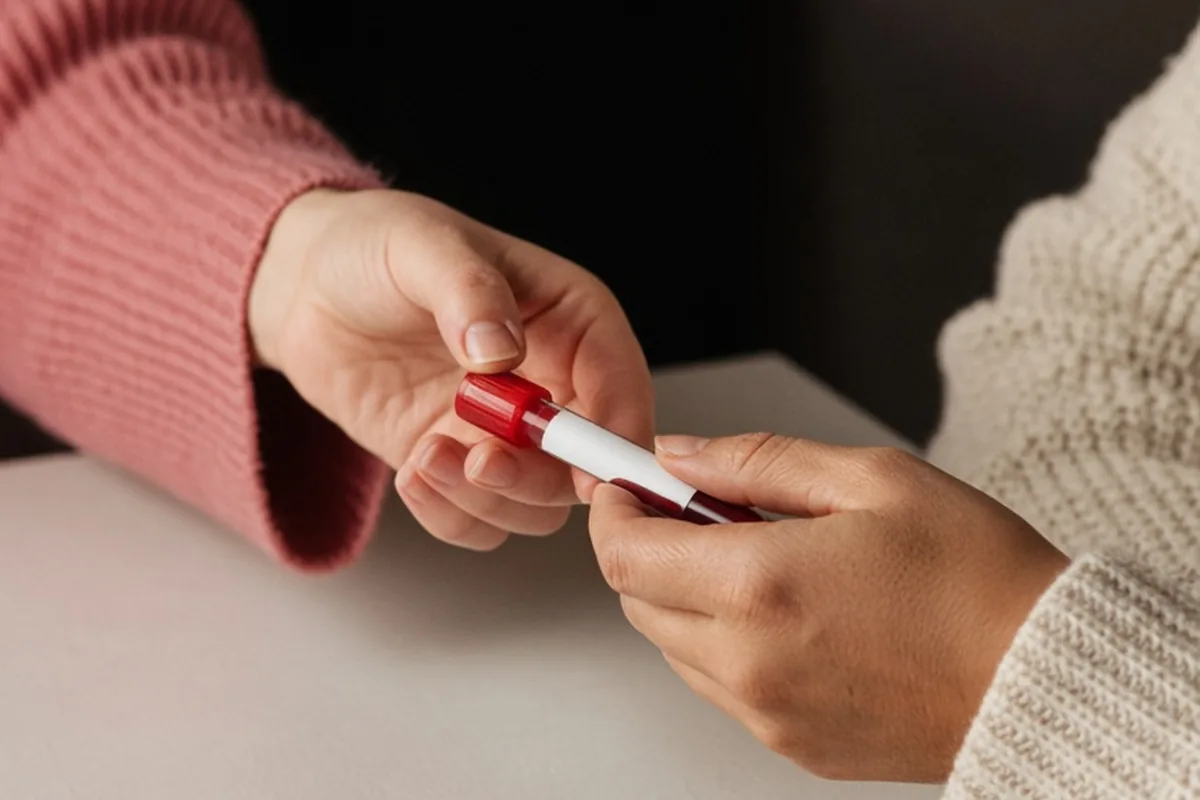
An anti-mullerian hormone (AMH) test cost depends on whether your doctor bills it through insurance, whether you pay an independent laboratory cash rate, or whether you purchase an at-home collection kit. Total expenses typically separate into a physician order fee, an in-person blood collection charge, and the specialized clinical assay fee. Because diagnostic coverage varies widely across private insurers and state mandates, obtaining your laboratory's billing codes directly is the only reliable way to confirm your exact out-of-pocket obligation before testing.
Navigating reproductive laboratory expenses can feel confusing when standard preventive care policies exclude fertility-related diagnostic workups.
Setting Up the AMH Blood Draw: Clinic Order vs. Direct Consumer Testing
The channel you select to order your anti-mullerian hormone assessment fundamentally determines how you are billed, who processes your sample, and whether your health plan covers any portion of the expense. When you establish care with an obstetrician, gynecologist, or reproductive endocrinologist, the physician submits a formal requisition to an in-network or affiliated diagnostic laboratory. Under this conventional clinical pathway, the cost is fragmented across multiple billing entities: your provider submits an office visit claim for the diagnostic evaluation, the phlebotomist or clinical site assesses an administrative draw fee for collecting the blood sample, and the reference laboratory bills separately for the quantitative immunoenzymatic assay.
Choosing direct-to-consumer testing alters this transaction into a consolidated upfront purchase. In this arrangement, an online diagnostic platform or specialty consumer testing company coordinates physician oversight through a contracted telehealth network and provides either a mail-order collection device or a requisition voucher for a nationwide commercial draw center. While direct consumer ordering eliminates surprise secondary billing from intermediate hospital networks, it almost universally requires immediate cash payment without insurance submission. Patients pursuing self-directed assessment should verify whether the testing provider supplies an itemized receipt with recognized diagnostic terminology if they plan to seek discretionary reimbursement through a health savings account or flexible spending account.
Further reading: ACOG: Evaluating Infertility
Navigating Insurance Preauthorization and Diagnostic Billing Codes
Commercial health plans frequently treat anti-mullerian hormone testing differently from standard metabolic or hematologic panels. While routine preventive screenings like cholesterol checks or cervical cytology enjoy full coverage under federal mandates, ovarian reserve testing often encounters strict diagnostic scrutiny. Insurers categorize lab claims according to specific diagnostic diagnostic codes alongside Current Procedural Terminology identifiers. If your physician enters a primary diagnostic code indicating an elective fertility check or family planning inquiry without documented clinical symptoms, the claim is routinely denied, leaving you fully responsible for the laboratory's non-discounted fee schedule.
Conversely, if an evaluation is initiated because of clinical indications such as irregular menstrual intervals, suspected polycystic ovary syndrome, or ongoing medical investigations into reproductive health conditions, coverage determinations may shift. Even when an insurer covers the laboratory test under an approved diagnostic banner, your specific deductible, copayment, or coinsurance obligations dictate your actual expense. Contacting your plan's member services department prior to the blood draw allows you to provide the exact procedural code and your provider's clinical rationale, confirming whether prior authorization is mandatory before the sample reaches the laboratory bench.
Further reading: ACOG: Evaluating Infertility
How Ovarian Reserve Panels Shift Your Overall Laboratory Bill
Ordering an anti-mullerian hormone check as an isolated assay rarely tells a complete clinical story, which is why clinicians frequently bundle it within a broader hormonal assessment. A comprehensive ovarian reserve evaluation typically pairs AMH with day-three follicle-stimulating hormone, luteinizing hormone, estradiol, and thyroid-stimulating hormone to evaluate the pituitary-ovarian endocrine axis. While reviewing these biomarkers simultaneously provides vital diagnostic context, each standalone test carries an independent laboratory analysis charge that compounds your financial obligation if your insurance excludes specialized endocrine profiling.
When your physician recommends evaluating multiple biomarkers simultaneously, clarify whether the reference laboratory processes them as an integrated profile or as piecemeal individual tests. Integrated panel configurations established by large reference labs occasionally carry discounted commercial cash rates compared to the cumulative total of unbundled orders. Inquiring about packaged laboratory options before the phlebotomist fills multiple collection tubes ensures that your clinical care team selects the most cost-effective requisition format available for your specific clinical needs.
Further reading: ACOG: Evaluating Infertility
At-Home Finger-Stick Testing Versus Professional Phlebotomy Venipuncture
The growth of at-home health screening has introduced dried blood spot collection kits as a retail alternative to traditional venipuncture at medical facilities. These kits instruct users to perform a finger prick at home, blot drops of blood onto specialized collection paper, air-dry the sample, and return it via postal mail to an accredited processing laboratory. Because dried blood cards eliminate the overhead of an in-person phlebotomy appointment, clinical facility surcharges, and dedicated blood centrifuging equipment, their retail price point is often marketed as a transparent, all-inclusive alternative.
However, dried blood spot methods carry technical trade-offs that can influence clinical value and result in unexpected retesting expenses. Finger-stick blood drops can suffer from sample hemolysis, insufficient fluid saturation, or ambient temperature fluctuations during transit, leading to rejected specimens or inconclusive findings that require purchasing a second kit. In contrast, standard venipuncture draws whole venous blood directly into specialized vacuum tubes, which are promptly centrifuged to isolate serum. Venous serum immunoassays remain the clinical gold standard utilized by hospital centers and reproductive specialists, meaning an unusual at-home result must almost always be verified via a standard clinical blood draw before a physician will base medical management on the findings.
Why AMH Results Often Lead to Additional Imaging and Follow-Up Visits
Evaluating anti-mullerian hormone levels is rarely a self-contained diagnostic event; rather, it functions as an initial data point that guides subsequent clinical steps. A low or elevated AMH finding routinely warrants an interpretive consultation with a gynecologist or a referral to a reproductive endocrinology practice. These specialist appointments carry distinct evaluation and management billing tiers that frequently exceed primary care visit copays. Budgeting for the financial reality of testing requires anticipating these follow-up discussions rather than viewing the laboratory receipt as your sole health care expense.
Furthermore, comprehensive assessment of ovarian status routinely incorporates an antral follicle count performed via transvaginal pelvic ultrasound. While an AMH blood test measures the aggregate hormonal output of microscopic growing follicles, the ultrasound provides real-time anatomical visualization of visible resting follicles alongside uterine architecture. Imaging procedures entail separate equipment fees, physician interpretation fees, and sonographer charges that substantially eclipse the cost of the initial blood draw. Patients exploring their reproductive status must consider the complete diagnostic pathway, ensuring they are financially prepared for the clinical imaging recommended to interpret ambiguous hormonal values.
Further reading: ACOG: Evaluating Infertility
Further reading: CDC: Assisted Reproductive Technology
Clarifying What Anti-Müllerian Hormone Measures Before Paying Out of Pocket
Before paying for an AMH test out of pocket, it is essential to understand precisely what the biological marker reflects and what it cannot determine. Anti-mullerian hormone is produced by the granulosa cells of preantral and small antral follicles within the ovaries, making it a reliable clinical indicator of relative ovarian reserve quantity. It provides valuable insight into how an individual might respond to gonadotropin stimulation during assisted reproductive technology cycles, helping fertility specialists select safe medication dosing to minimize complications like ovarian hyperstimulation syndrome.
However, commercial marketing frequently overstates the predictive utility of AMH for unassisted natural conception. Anti-mullerian hormone levels do not assess egg quality, fallopian tube patency, uterine receptivity, or male factor parameters, nor do they reliably forecast your immediate likelihood of conceiving without medical intervention during any given cycle. Investing out-of-pocket funds into an isolated test without an individualized clinical indication can produce unnecessary anxiety or false reassurance. Reviewing your reproductive objectives with a qualified clinician ensures you invest healthcare resources into diagnostic tools that actually inform your immediate family planning or medical choices.
Further reading: CDC: Assisted Reproductive Technology
Further reading: ACOG: Evaluating Infertility
Practical Financial Checkpoints Before Scheduling Your Lab Appointment
Securing an accurate financial estimate for an AMH test requires taking deliberate administrative steps before presenting your arm to a phlebotomist. Begin by asking your ordering healthcare provider for the specific laboratory billing code alongside the diagnosis code they intend to document on your requisition form. Next, verify which reference laboratory your clinic uses to analyze samples, as major commercial networks operate independently from hospital-based pathology departments, and each negotiates proprietary contracted rates with individual insurance carriers.
Equipped with these specific codes, contact your insurance benefits coordinator to verify whether your policy includes coverage for endocrine testing related to fertility assessment, or if coverage is strictly contingent on documented menstrual disorders. If your insurance plan denies coverage or if you carry a high-deductible policy, contact the reference laboratory directly and ask for their prompt-pay or self-pay discounted cash rate. Many commercial diagnostics networks offer substantially reduced out-of-pocket pricing for patients who settle laboratory charges at the time of service rather than routing them through a complex, rejected insurance claims cycle.
Frequently asked questions
Can I use funds from an HSA or FSA to pay for an AMH blood test?
Yes, diagnostic laboratory testing to evaluate physiological health, hormonal conditions, or underlying reproductive function is generally recognized as a qualified medical expense under health savings accounts and flexible spending accounts. Keep your formal itemized laboratory receipt, proof of payment, and any physician requisition form on file in case your account administrator requests substantiation.
Does an AMH test cost more when performed at a specific time in my menstrual cycle?
No, the financial cost of the test does not change based on timing, and unlike hormones such as estrogen or progesterone, AMH remains relatively stable throughout your cycle. You can complete the blood draw on any day of the month without incurring timing surcharges or requiring urgent holiday laboratory processing fees.
Why did I receive two separate medical bills after a single blood draw?
Receiving two invoices typically occurs when the medical practice that collects your specimen bills an administrative phlebotomy fee, while an external reference laboratory bills separately for the actual technical analysis. Always compare both statements against your insurer's Explanation of Benefits to avoid paying duplicate charges.
Your next step
Request the exact CPT code and diagnostic billing code from your ordering clinician today, then call your laboratory's billing office to confirm their self-pay cash rate alongside your insurer's out-of-pocket requirements before testing.