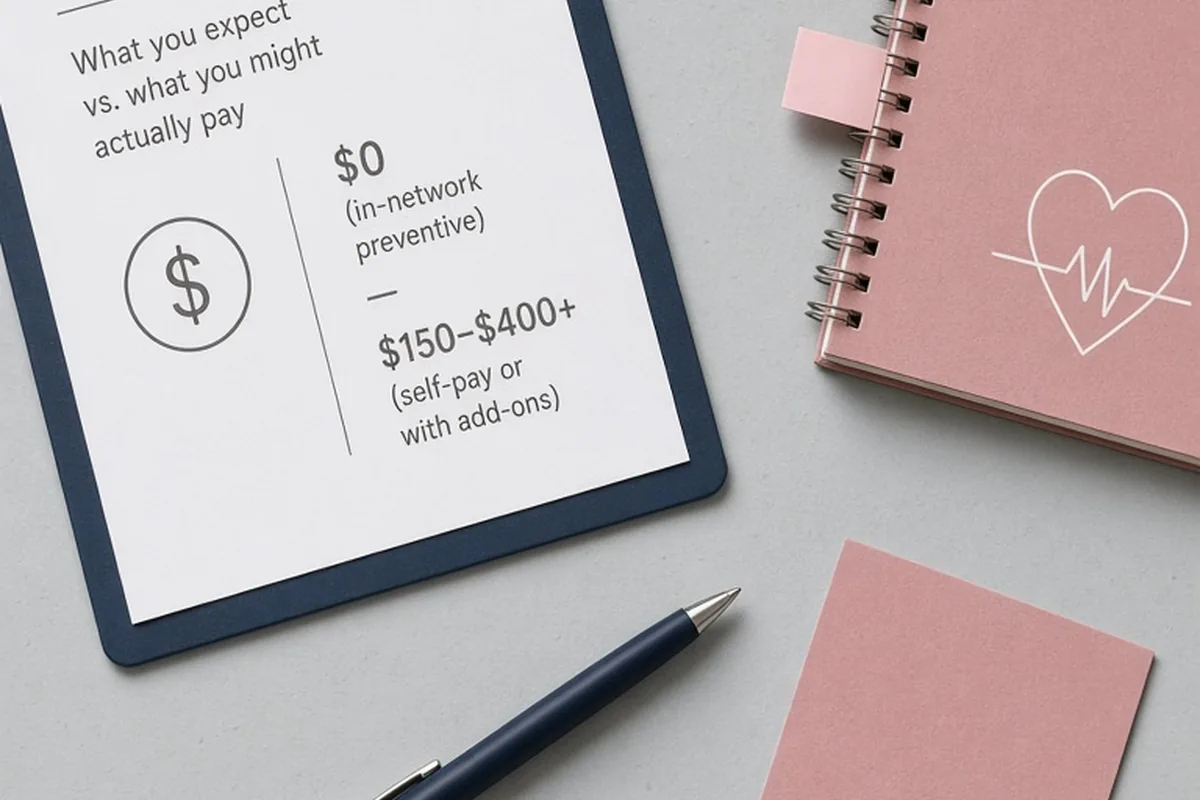
An annual physical can range from zero out-of-pocket cost under compliant insurance plans to several hundred dollars when paying self-pay rates or receiving non-preventive add-ons. Most non-grandfathered health plans cover one preventive wellness exam annually with an in-network clinician at no cost share. However, discussing new medical symptoms, ordering diagnostic laboratory tests, or visiting a hospital-owned facility often triggers separate copays, deductible charges, or facility fees.
Scheduling an annual checkup is one of the most common healthcare tasks adults undertake, yet medical billing rules frequently turn what patients expect to be a completely covered visit into a frustrating series of separate charges. Understanding the line between routine prevention and diagnostic care helps you protect your health while preventing surprises on your explanation of benefits.
How Preventive Care Billing Differs from Diagnostic Office Visits
In the United States healthcare billing framework, every medical service is classified under specific Current Procedural Terminology (CPT) codes and linked to International Classification of Diseases (ICD-10) diagnosis codes. Under the Affordable Care Act, non-grandfathered commercial insurance plans, individual marketplace policies, and expanded Medicaid programs are required to cover designated preventive health services without requiring a copayment, coinsurance, or deductible payment from the patient, provided the care is delivered by an in-network healthcare provider. For an annual checkup, clinicians typically submit preventive medicine codes (such as 99385 through 99387 for new adult patients or 99395 through 99397 for established adult patients) paired with a routine general medical examination diagnosis code.
The financial confusion arises when an appointment shifts from purely preventive screening to a diagnostic evaluation. If you present with an existing chronic illness that requires active management, report a new physical symptom, or ask the clinician to evaluate a specific complaint like persistent fatigue or joint pain, medical coding regulations require the provider to document that problem-focused care. In response, the medical billing department submits a separate Evaluation and Management (E&M) code (such as 99213 or 99214) alongside the preventive code. This practice is known as split billing. While your insurer still pays the preventive portion at one hundred percent, the diagnostic office visit code is processed under your standard outpatient medical benefits, generating an unexpected copay, coinsurance percentage, or deductible charge.
The Core Clinical Elements Included in an Annual Preventive Physical
A standard preventive physical examination focuses on age-appropriate health maintenance, disease prevention, and identifying asymptomatic risk factors before they develop into chronic conditions. During a standard preventive visit, the clinician typically reviews your personal and family medical history, conducts a comprehensive physical evaluation—including auscultation of the heart and lungs, palpation of the abdomen, examination of the thyroid and lymph nodes, and vital sign checks for blood pressure and body mass index—and evaluates age-specific immunization needs.
The services that qualify for zero cost-sharing are guided by evidence-based recommendations established by the United States Preventive Services Task Force (USPSTF) with Grade A or B ratings, as well as guidelines from the Health Resources and Services Administration (HRSA). These covered screening services include blood pressure screening, cervical cancer screening for appropriate age groups, screening mammography based on age protocols, screening for lipid disorders in adults within specific risk categories, colorectal cancer screening starting at recommended baseline ages, and depression screening. When an exam stays strictly within these designated preventive boundaries, the professional fee for the physician or advanced practice provider is billed as an annual wellness encounter.
Why Midlife Health Discussions and Lab Orders Change Your Total Bill
Midlife adults, particularly women over the age of forty, often experience changing physiological symptoms that they reasonably expect to discuss during an annual checkup. According to the National Institute on Aging, the menopause transition involves complex physical changes, and discussing symptoms such as sleep disruptions, hot flashes, irregular menstrual cycles, and mood changes with a healthcare provider is essential for exploring safe, personalized symptom management choices. However, when these discussions take place during an appointment scheduled as a preventive physical, clinicians must document the review of symptoms as an active problem evaluation rather than a routine screening.
This distinction directly influences laboratory costs as well. While routine screening tests like a fasting lipid panel or blood glucose check may be processed under preventive benefits for qualifying age brackets, specialized blood tests frequently ordered during midlife are categorized as diagnostic. Tests such as comprehensive thyroid panels, reproductive hormone levels, serum ferritin checks, and vitamin D assays are not classified as universal preventive screenings by federal rating panels. When a provider orders these tests to investigate midlife symptoms or fatigue, the clinical laboratory bills each test under diagnostic codes, leaving the patient responsible for payments applied to their annual deductible or outpatient coinsurance.
Further reading: National Institute on Aging: What is menopause?
Hidden Charges, Facility Fees, and Separate Laboratory Invoices
Where your appointment takes place plays a substantial role in determining your total financial liability. Independent primary care practices generally bill a single professional fee for the clinician's service. Conversely, hospital-owned medical groups and hospital outpatient clinics frequently utilize split facility billing. In these hospital-based outpatient settings, the healthcare system submits two distinct charges for the same appointment: a professional fee representing the clinician's work and an institutional facility fee covering clinic overhead, support staff, and administrative equipment. While your health insurance may cover the professional preventive fee in full, some insurance policies process the facility fee under separate outpatient hospital benefits, resulting in unexpected facility charges.
A second common source of billing surprises is the laboratory processing arrangement. Most primary care offices collect blood and urine specimens in the clinic but send the samples to external commercial or hospital-based clinical laboratories for analysis. Even if your primary care physician is an in-network provider, the independent laboratory processing your specimen might be classified as out-of-network by your insurance plan, or the specific panels ordered may not meet your insurer's definition of routine screening. When this happens, the laboratory issues an independent invoice directly to you, separate from any statements sent by your primary care doctor's office.
Lower-Cost Care Pathways and Sliding-Scale Community Clinics
Uninsured individuals, self-pay patients, and individuals enrolled in high-deductible health plans have several practical options for managing the cost of an annual physical. Federally Qualified Health Centers (FQHCs) and community health centers receive federal grant funding to provide comprehensive primary care and preventive services to all individuals, regardless of insurance status or ability to pay. FQHCs utilize a sliding-fee discount schedule based entirely on household income and family size relative to federal poverty guidelines. For low-income individuals, an annual preventive exam and basic laboratory work can often be accessed for a nominal administrative fee.
Another viable option is Direct Primary Care (DPC), an alternative healthcare delivery model where patients pay a predictable monthly or annual membership fee directly to an independent primary care physician. In a DPC practice, standard annual physical exams, routine wellness assessments, unhurried consultations, and basic in-office diagnostic tests are included in the periodic membership fee without claims submitted to third-party insurance companies. For self-pay patients who prefer traditional private practices, asking for self-pay or prompt-pay cash discounts prior to the visit can significantly lower both the provider examination charge and associated laboratory fees.
Questions to Ask Your Clinic and Insurer Before Your Appointment
Proactive communication before your appointment is the most reliable defense against unexpected medical bills. When speaking with your insurance provider's member services department, verify whether your assigned primary care provider is currently in-network at the specific physical clinic location where you will be seen. Ask the representative to clarify whether your plan covers an annual preventive exam once per calendar year or strictly requires three hundred sixty-six days to elapse between annual visits. Additionally, ask which reference laboratory in your geographic service area is designated as the preferred in-network facility for routine blood draws.
When calling your doctor's office to schedule the appointment, make your intentions explicit. State clearly that you are booking an annual preventive wellness visit rather than a problem-focused consultation. Inquire whether the office bills as an independent private medical practice or as a hospital-based outpatient facility to identify potential facility fee liabilities in advance. Finally, ask the clinic staff how the practice handles incidental symptom evaluations during a physical, and request that the clinician inform you before ordering any laboratory tests or performing ancillary procedures that might fall outside routine preventive coverage.
Step-by-Step Verification and Medical Bill Audit Procedures
If you receive a bill following your annual physical, do not pay the balance immediately until you cross-examine the statement against your official Explanation of Benefits (EOB). Your EOB, provided by your health insurance company, outlines the total amount billed by the clinic, the contractual network discount applied, the portion paid by insurance, and the specific amount you legally owe. If the EOB shows that your preventive visit was rejected or processed as a diagnostic office visit with an applied copay, examine the submitted CPT procedure codes and ICD-10 diagnosis codes on the itemized statement.
If you identify a billing discrepancy—such as a routine wellness exam coded solely as an acute problem visit, or a routine screening panel billed without its corresponding preventive diagnosis code—contact the doctor's billing office directly. Request a formal coding review, asking the billing specialist to review the physician's clinical notes to verify whether the visit was miscoded. If the practice confirms the dual coding was intentional due to a specific medical discussion, you can contact your insurance carrier to inquire about appeals procedures or request a payment plan with the clinic's billing department to manage the diagnostic balance.
Illustrative Scenarios
Resolving a Split-Billing Discrepancy After a Midlife Wellness Exam
A 49-year-old woman scheduled an annual preventive checkup with her in-network primary care physician. During the physical exam, she asked the doctor about new night sweats, sleep disruptions, and mood fluctuations. The physician completed the preventive physical examination and ordered a standard lipid panel alongside a thyroid-stimulating hormone test and a vitamin D level to evaluate her reported symptoms. Weeks later, she received an unexpected bill containing an office visit copayment and separate laboratory charges. Upon reviewing her Explanation of Benefits, she noticed that the clinic billed both a preventive code (99396) and a problem-oriented office visit code (99213) for the symptom consultation, while the external laboratory billed the thyroid and vitamin tests under diagnostic codes.
Key point: Reviewing medical records confirmed that the split office visit code was clinically accurate due to the symptom evaluation. However, the patient discovered the laboratory used by the clinic was out-of-network. By contacting her insurer to explain that the out-of-network lab referral occurred during an in-network preventive appointment, she successfully appealed the out-of-network laboratory rate to match in-network cost-sharing, and established a preferred in-network laboratory protocol for all future appointments.
Frequently asked questions
Does an annual physical automatically include routine blood work for free?
Not all blood work is covered at one hundred percent during an annual physical. Only specific screening blood tests recommended by federal preventive guidelines—such as lipid panels for designated cardiovascular risk categories and fasting glucose tests for diabetes screening—are fully covered without cost sharing. Non-screening tests, such as complete blood counts, thyroid panels, hormone levels, or vitamin assays, are classified as diagnostic and are applied to your deductible or coinsurance.
Can my doctor charge me for discussing perimenopause or chronic conditions during a free physical?
Yes. When a patient asks for advice, evaluation, or medication management regarding an active symptom, perimenopause, or a chronic illness during a preventive exam, medical billing standards permit the clinician to bill a separate problem-focused evaluation code. While the preventive portion of the exam remains covered at zero out-of-pocket cost, the problem-focused code is processed under your standard office visit benefits.
What is the difference between an Annual Wellness Visit and an annual physical exam?
An Annual Wellness Visit is a specific Medicare benefit focused on health risk assessments, updating medical history, cognitive screening, and creating a personalized disease prevention plan, without requiring a hands-on head-to-toe physical examination. In contrast, an annual physical exam is a hands-on clinical evaluation commonly covered by commercial and employer-sponsored insurance plans according to their individual policy terms.
How can self-pay patients find out the cash price of an annual physical before scheduling?
Self-pay patients should call the clinic's billing office and ask for the cash price or prompt-pay discounted rate for preventive CPT codes 99385 through 99397. It is equally important to ask whether laboratory draws will be invoiced separately by an external commercial lab and whether the visit takes place in a hospital outpatient facility that bills additional institutional fees.
Your next step
Call your doctor's billing office before your appointment to confirm whether they bill as an independent practice or hospital facility, and tell your provider at the start of your exam if you wish to restrict the visit strictly to zero-cost preventive screenings.