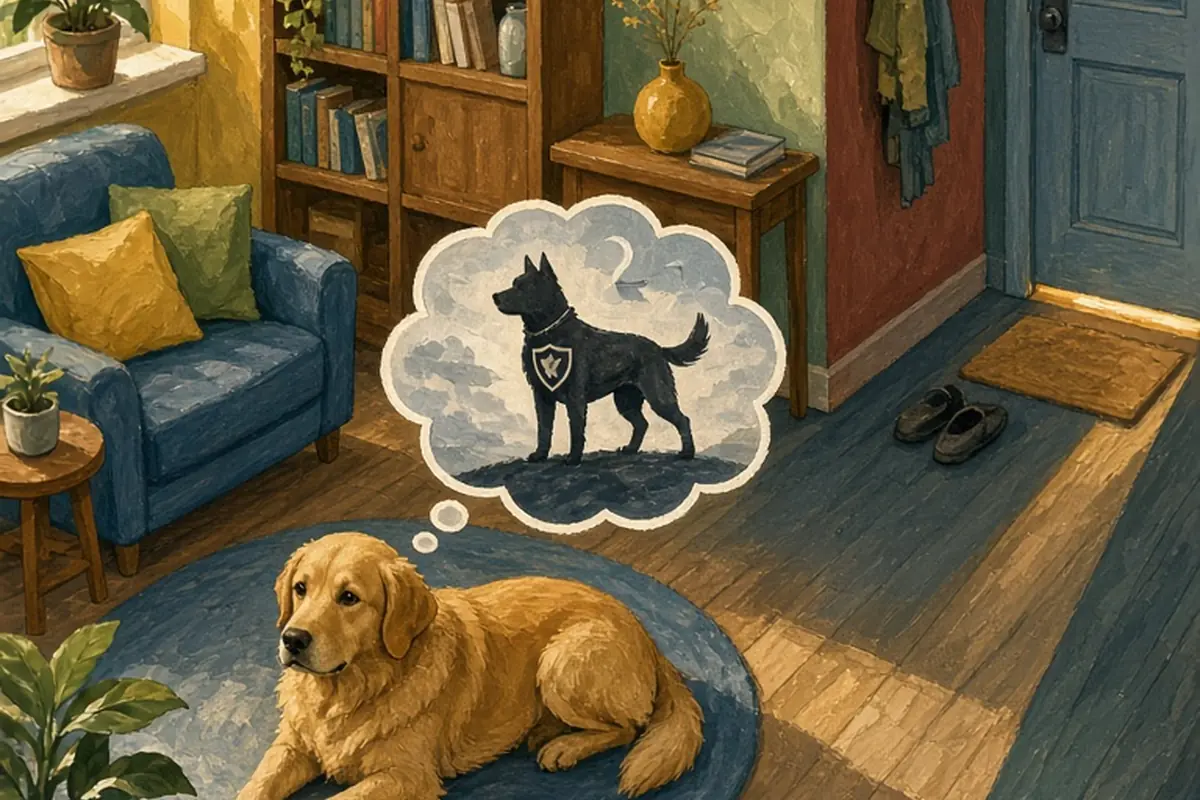
Male dogs are not inherently more protective of female owners due to sex alone. While some male dogs form intense attachments to women, a dog's protective tendencies stem primarily from individual temperament, socialization, breed genetics, and learned reinforcement rather than biological gender pairing. Healthy bonding creates attentive companions, but true protective guarding often signals anxiety or resource guarding rather than deliberate chivalrous loyalty.
Many women living alone or seeking personal peace of mind choose a male dog under the impression that an instinctual cross-gender bond will naturally yield a built-in bodyguard. Examining what truly governs canine behavior helps separate romanticized folklore from actionable pet care, ensuring you foster a loyal companion who is confident rather than reactive.
The Biological Reality Behind Cross-Sex Canine Attachment
A long-standing piece of conventional wisdom claims that male dogs gravitate toward female handlers, while female dogs bond more readily with men. In canine behavioral science, however, there is no verified biological mechanism or hormonal rule that causes male dogs to automatically adopt a protective stance over female humans. Canine attachment operates on shared interactions, daily caregiving, emotional consistency, and scent recognition rather than human gender roles. A dog bonds most securely with the person who provides reliable nutrition, predictable routines, clear leadership, and positive reinforcement, regardless of whether that handler is a woman or a man.
Sex hormones such as testosterone can influence behaviors like territorial marking, roaming, and inter-dog aggression in intact males, but these drives do not translate into deliberate chivalry toward female caretakers. Once a male dog is neutered, testosterone levels drop significantly, leveling out many hormone-driven territorial spikes without dampening the dog's capacity to love and support his family. When a male dog appears especially devoted to a female owner, it is usually because that owner acts as the primary provider of safety, food, and tactile affection. Attributing this devotion to human gender concepts risks overlooking the actual behavioral needs of the animal.
Distinguishing Genuine Loyalty from Possessive Resource Guarding
One of the most common misunderstandings in canine ownership is confusing resource guarding with protective loyalty. When a dog steps between his female owner and an approaching friend, growls at passing strangers, or barks furiously whenever someone enters the living room, owners often interpret the display as brave guardianship. In reality, dogs frequently view their primary handler as a high-value asset, much like a bowl of meat or a favorite chew toy. If a dog lacks foundational security, he may claim physical possession of his owner to control access and manage his own underlying distress.
True canine protection is exceptionally rare without extensive, professional bite-work training. A genuinely stable, trained protection dog remains entirely neutral and relaxed in public, assessing environments objectively and engaging only under explicit command or in the face of an unambiguous physical threat. Conversely, an insecure dog who barks, lunges, and stiffens on the leash is displaying fear-based reactivity or possessive control. Encouraging or praising this behavior can escalate mild spatial possessiveness into severe liability, leading to unintended bites directed at innocent friends, delivery couriers, or family members.
The Primary Influence of Breed Genetics and Individual Temperament
When evaluating how protective a dog will be, breed history and individual nerve strength matter exponentially more than the dog's biological sex. Breeds developed specifically for livestock protection, personal defense, or territory holding, such as Rottweilers, Doberman Pinschers, Belgian Malinois, and Great Pyrenees, carry genetic predispositions toward spatial vigilance and suspicion of novel stimuli. In contrast, companion and sporting breeds like Golden Retrievers, Cavalier King Charles Spaniels, or Poodles are selectively bred for low stranger suspicion and high social tolerance, meaning a male retriever is far more likely to welcome an intruder than ward them off.
Even within guardian breeds, temperament varies widely between individual littermates. A confident, stable male dog with strong genetic nerves assesses environmental changes without panicking, quietly observing his surroundings while remaining responsive to his owner. A low-threshold, nervous dog from the exact same litter may exhibit frantic barking, raised hackles, and erratic avoidance maneuvers when startled. Selecting a dog solely based on sex while ignoring the lineage, baseline confidence, and environmental tolerance of the individual animal often results in a mismatch that creates stress rather than security.
How Communication Styles and Emotional Cues Shape Behavior
Dogs possess an extraordinary ability to detect human biochemical cues and micro-expressions, picking up on elevated cortisol, rapid breathing, and changes in vocal inflection. Many female dog owners report that their dogs seem to perk up whenever the owner feels uneasy on a dark street or senses tension during a walk. This response is not necessarily a calculated defense maneuver; it is social referencing. When a handler tenses up and tightens the leash, the dog immediately perceives the sudden change in leash pressure and chemical signaling, concluding that something in the immediate vicinity justifies heightened alertness.
The way a handler communicates during everyday training also shapes how a male dog responds. Handlers who utilize calm, firm, and predictable cues help their dogs develop impulse control, preventing everyday vigilance from spiraling into nervous reactivity. Conversely, if an owner responds to their dog's low growl with soothing baby talk or gentle petting in an attempt to calm him down, the dog frequently interprets that tactile affection as positive validation for his suspicion. Maintaining an emotionally composed demeanor teaches the dog that you are capable of handling daily environments, relieving him of the anxiety that comes from feeling obligated to manage threats.
Visual Deterrence Versus Active Physical Defense
For women navigating public spaces or living independently, the genuine practical value of a dog almost always lies in passive visual and auditory deterrence rather than physical confrontation. Criminal behavioral studies and security experts routinely note that opportunistic wrongdoers avoid homes and individuals accompanied by dogs because of the unpredictability, noise, and added difficulty they introduce. A large, healthy, alert dog walking calmly beside you communicates that you are attentive and not an easy target, regardless of whether the dog would actually engage an attacker.
Relying on an untrained companion dog for active physical protection poses immense ethical and legal risks. Untrained dogs that attack under duress often redirect their bites onto their owners due to sheer panic, or they may freeze completely when confronted with unexpected human violence. A well-adjusted dog who barks a couple of times when an unfamiliar person knocks on the door provides excellent early warning deterrence without compromising community safety or exposing you to civil liability.
Key elements that provide genuine personal security through canine companionship include:
- Consistent spatial awareness that signals to potential observers that the team is focused and alert.
- A clear, deep alert bark when someone approaches the threshold of the home, followed by immediate obedience to an all-clear cue.
- Impeccable loose-leash walking that demonstrates complete handler control in high-distraction environments.
- Reliable neutrality around strangers, ensuring the dog never lunges, snaps, or causes accidental injury in public settings.
Training Steps to Foster a Stable, Confident Canine Companion
Developing a balanced companion who enhances your peace of mind requires proactive training focused on emotional neutrality and solid boundary setting. From puppyhood or the day of adoption, prioritize exposing your dog to diverse human demographics, ambient noises, novel surfaces, and unpredictable urban settings. Socialization does not mean forcing your dog to greet every person he passes; rather, it means teaching him that novel stimuli are background elements that require neither fear nor aggressive posturing.
Establishing structured home management reinforces your role as the benevolent decision-maker, which prevents possessive guarding from taking root. Teach a reliable place command where your dog must settle calmly when visitors arrive at your front door, rather than allowing him to charge the entryway and interrogate guests. Pair this boundary work with impulse-control routines, such as waiting for permission before exiting doorways or eating meals. These simple daily rituals build emotional resilience, showing your dog that he does not need to guard you or manage the household.
- Implement neutral observation sessions in public parks, rewarding your dog for focusing on you while people and other dogs pass at a safe distance.
- Establish an absolute release cue for greetings, ensuring your dog only approaches guests when explicitly invited to do so.
- Avoid using punishment-based corrections for growling, as suppressing early warning signs can lead to sudden bites without warning; address the underlying emotional stress instead.
- Engage in structured obedience drills and scent-work games that channel physical energy and mental focus into constructive tasks.
Selecting the Right Dog for Your Lifestyle and Security Needs
If you are seeking a dog to share your home and provide peace of mind, evaluate practical lifestyle factors before fixating on the sex of the animal. Female dogs are frequently just as alert, physically capable, and loyal as male dogs, often maturing slightly faster and sometimes displaying less physical stubbornness during adolescence. Male dogs, while sometimes larger in stature and bone structure, may take longer to move past adolescent impulsivity and may require more diligent leash handling if physical size disparities exist between dog and handler.
When meeting prospective dogs at a rescue or reputable breeder, look for signs of high environmental stability. A dog that approaches you with soft body language, recovers quickly from sudden dropping noises, and shows curious interest without frantic jumping or fearful cowering possesses the emotional foundation required for a dependable life partner. Choose an animal whose exercise requirements, physical strength, and natural drive match what you can comfortably manage on your most exhausting day, rather than selecting for an imagined protective instinct that could prove unmanageable.
Illustrative Scenarios
Illustrative Scenario: Insecurity Versus Protective Instinct
An owner living in a city apartment adopted a two-year-old male German Shepherd mix, believing his growling at approaching men on evening walks demonstrated natural protective devotion. Over several months, the dog began snapping at delivery workers, friends visiting the apartment, and even strangers who simply paused nearby. A professional behavior assessment revealed that the dog was not performing intentional bodyguard duties; he was experiencing severe environmental fear and treating his owner as an anchor of safety that he desperately guarded. By shifting from permissive comfort to structured obedience, clear spatial boundaries, and controlled counter-conditioning, the owner relieved the dog of the perceived burden of defense, transforming him into a calm, reliable companion who no longer panicked in public.
Key point: Defensive barking and spatial blocking are frequently expressions of canine fear or possessive resource guarding rather than purposeful protection, requiring structured training rather than encouragement.
Frequently asked questions
Are female dogs less protective than male dogs?
Female dogs are not inherently less protective than males. A female dog with strong maternal instincts or guardian breed genetics can be exceptionally vigilant and territorial over her home and family. Temperament, socialization, and breed drive govern protective behavior far more than sex.
Does neutering a male dog make him stop protecting his owner?
Neutering reduces roaming urges, territorial urine marking, and testosterone-driven male-to-male aggression, but it does not diminish a dog's fundamental personality or bond with his owner. A neutered dog retains his natural alert barking and environmental vigilance while generally being easier to manage.
Why does my male dog stand between me and other people?
Standing between an owner and others is often a sign of resource guarding or subtle insecurity rather than gallant defense. The dog is either claiming physical ownership of his handler or positioning the handler as a barrier against an approaching stimulus that makes him uncomfortable.
Can I train my family pet to protect me without bite work?
You can easily train alert behaviors, such as teaching your dog to bark on command or take a focused stance at your side, without dangerous bite training. These controlled deterrence skills give you confidence and early warning while maintaining your dog as a safe, social companion in everyday life.
Your next step
Assess your dog's current behavior objectively to confirm whether vigilance stems from confidence or stress, and schedule a session with a certified reward-based trainer to build clear communication and emotional neutrality.