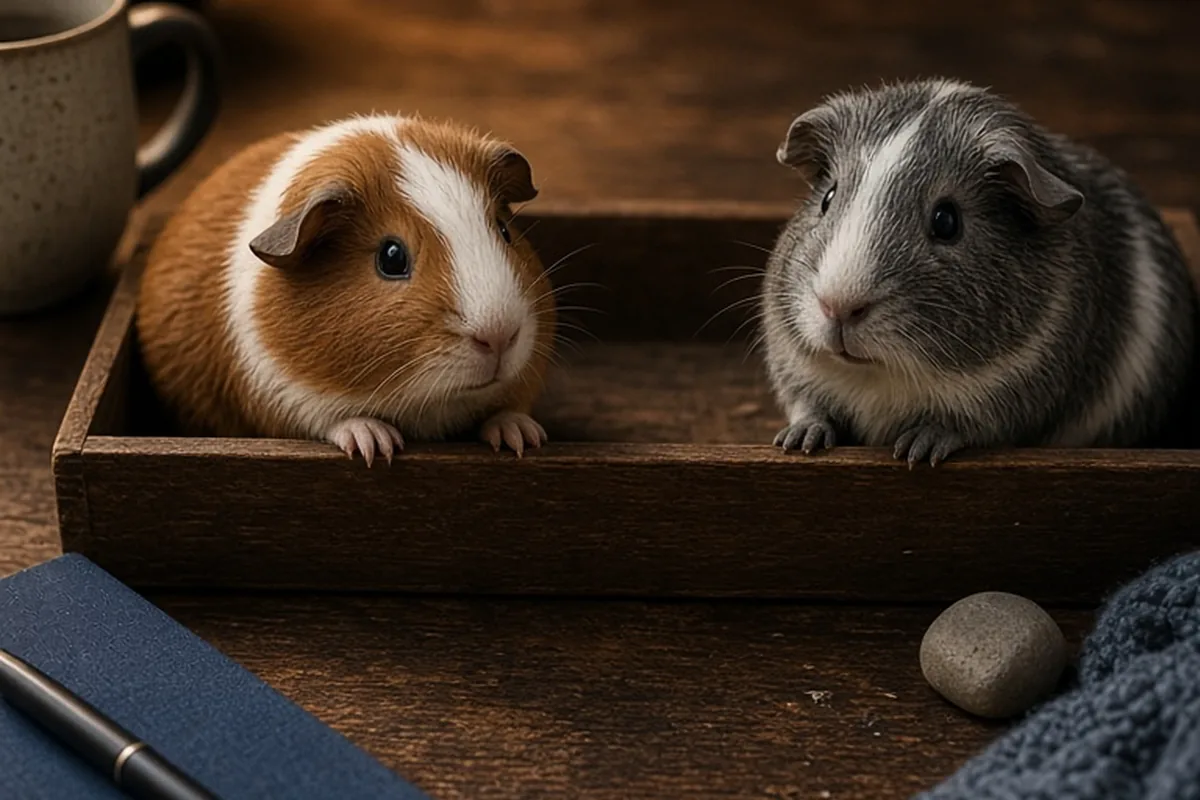
Neither male nor female guinea pigs are inherently more affectionate by default. An individual guinea pig's tameness depends primarily on personality, gentle handling, and consistent socialization. Males often display slightly bolder, more relaxed behavior during lap time, whereas females tend to be more alert and independent. Both sexes can form deep, trusting bonds with their caregivers when handled patiently.
When bringing new small pets into your home, it is natural to wonder whether a male or female guinea pig will enjoy cuddling and interaction more. Understanding how biological tendencies interact with individual temperament can help you set realistic expectations and create a calm, rewarding relationship with your pets.
General Temperament Trends in Boars and Sows
While personality varies significantly from animal to animal, experienced caregivers often observe subtle differences between male guinea pigs, known as boars, and females, known as sows. Boars frequently develop a reputation for being slightly more outgoing and comfortable with stationary petting once they feel safe in their environment. Because they are often physically larger, some males feel marginally more grounded when held, resting on a blanket or lap for extended periods without constantly searching for an escape route.
Sows, on the other hand, often present as energetic, observant, and busy. Female guinea pigs tend to spend significant time exploring their surroundings, foraging, and monitoring cage activity. This active disposition does not mean sows lack affection; rather, their affection often manifests through excited vocalizations, curious approaches to the cage bars, and gentle investigative nibbles rather than long, quiet cuddle sessions. Recognizing these broad tendencies prevents frustration and helps you appreciate how different guinea pigs express comfort.
Why Socialization Outweighs Biological Sex
A guinea pig's biological sex is far less predictive of its friendliness than its early life experiences and ongoing socialization. As natural prey animals, all guinea pigs possess an instinctive wariness of sudden movements, overhead shadows, and unfamiliar sounds. A boar that spent his early months without gentle human interaction may remain skittish and defensive for months, while a well-socialized sow from a quiet rescue environment might happily climb into an open hand on day one.
Consistent, positive daily interaction reshapes how a guinea pig responds to human presence. Offering fresh leafy greens by hand, speaking in a low and steady voice, and allowing the animal to approach on its own terms builds a sense of security. Over time, these positive associations override natural timidity, proving that patience and routine exert a much stronger influence on affection than whether the animal is male or female.
Lap Time and Floor Time Behaviors by Gender
Observing how guinea pigs behave during out-of-cage time highlights the subtle contrasts between male and female companionship styles. During lap time, many male guinea pigs are content to settle into a soft fleece pouch or towel, often flattening their bodies in relaxation—a posture known as pancaking—while receiving gentle chin and forehead strokes. However, boars can also be more prone to scent-marking their territory by dragging their hindquarters across fabrics, which is normal behavior but requires washable lap pads.
Females often treat floor time and lap time as investigative missions. A sow may accept a few strokes before wandering off to explore cardboard tunnels, inspect your shoes, or forage for hidden hay piles. Sows frequently return to check in with their human companion, offering a dynamic and entertaining form of interaction. If you prefer a companion that actively explores around you, a sow is often delightful; if you prefer a pet that sits quietly during a movie, a calm boar may fit that preference better.
Housing Dynamics and Social Pairings
Guinea pigs are obligate social herd animals that should always be housed in compatible pairs or small groups. The social dynamic within their enclosure directly impacts their baseline stress levels, which in turn influences how affectionate they are toward humans. Boars are typically kept in bonded pairs rather than larger groups because multiple intact males living together can become territorial, requiring substantial enclosure space—at least ten to twelve square feet—to maintain peace.
Sows can often live successfully in larger herds, establishing a clear social hierarchy with relatively little conflict. When guinea pigs feel secure in their social group, they exhibit less fear-based behavior toward their caregivers. A solitary guinea pig of either sex often becomes chronically stressed, withdrawn, or defensive, which severely hinders human bonding. Ensuring your pets have appropriate companion dynamics creates the emotional foundation necessary for them to show affection.
- Boar pairs require generous floor space and duplicate hideaways to prevent resource guarding.
- Sow herds offer rich social vocalizations and communal foraging routines.
- Neutered male and female pairings often create exceptionally stable, relaxed social units.
Daily Routines to Foster Trust and Bonding
Building genuine affection with any guinea pig requires deliberate handling techniques that respect their natural instincts. Lifting a guinea pig directly from above mimics the hunting behavior of predatory birds, triggering an immediate panic response. Instead, encourage your pet to walk into a fleece tunnel, cuddle cup, or cardboard tube before lifting them out of the cage, which eliminates the chase and preserves trust.
Establish a predictable daily schedule for feeding, cage cleaning, and interaction. Guinea pigs thrive on routine and quickly learn the sounds associated with their favorite treats, such as the rustle of a vegetable bag or the opening of a refrigerator. Spending fifteen to twenty minutes twice daily sitting quietly near their enclosure allows them to become accustomed to your scent and presence without feeling trapped or overwhelmed.
Hormonal and Physical Care Factors
Physical comfort plays a significant role in a guinea pig's willingness to be handled. Female guinea pigs experience an estrus cycle roughly every two to three weeks. During this brief hormonal window, a sow may become unusually restless, mildly irritable, or sensitive to touch along her lower back and hips, occasionally displaying rumblestrutting or light nipping if touched abruptly.
Male guinea pigs have distinct anatomical maintenance needs that can influence their mood. Mature boars have an active grease gland above their tail area that requires occasional cleaning, and older boars may develop impaction in their perineal sac requiring gentle manual assistance. If a male experiences buildup or skin irritation in these areas, he may become sensitive or grumpy during handling until the issue is addressed. Routine health checks ensure that discomfort is not mistaken for a lack of affection.
How to Choose Based on Individual Behavior
When adopting guinea pigs, evaluating individual temperament in person is far more reliable than selecting based solely on sex. When visiting an animal shelter or rescue organization, spend time observing how different individuals react to approaching footsteps and hand movement. Look for animals that show curiosity—raising their heads, sniffing forward, or approaching the front of the enclosure—rather than those that freeze in sustained panic.
Ask rescue staff or foster volunteers about the specific personalities of the bonded pairs available. Foster caregivers often have deep insight into which animals enjoy lap snuggles and which prefer active foraging games. Choosing a bonded pair whose observed personalities match your household's daily lifestyle ensures a much higher likelihood of a mutually affectionate relationship than relying on generalizations about boars or sows.
Frequently asked questions
Do male guinea pigs fight more than females?
Male guinea pigs can live peacefully in bonded pairs, but they do require more cage space and duplicate resources to prevent territorial disputes. Females are generally easier to house in groups larger than two, though personality compatibility remains essential for both sexes.
Does neutering or spaying make a guinea pig more affectionate?
Surgical alteration prevents reproduction and eliminates specific reproductive health risks, but it rarely changes a guinea pig's core personality. Tameness and affection remain the product of gentle handling, trust building, and individual temperament.
How long does it take for a guinea pig to become affectionate?
Most guinea pigs require several weeks to a few months of gentle, consistent daily interaction before feeling secure enough to relax with their owners. Progress depends on the animal's background, environment, and how patiently handling routines are introduced.
Your next step
Focus on adopting a well-matched, bonded pair based on observed personality and commit to gentle daily handling with healthy treats rather than choosing solely by sex.