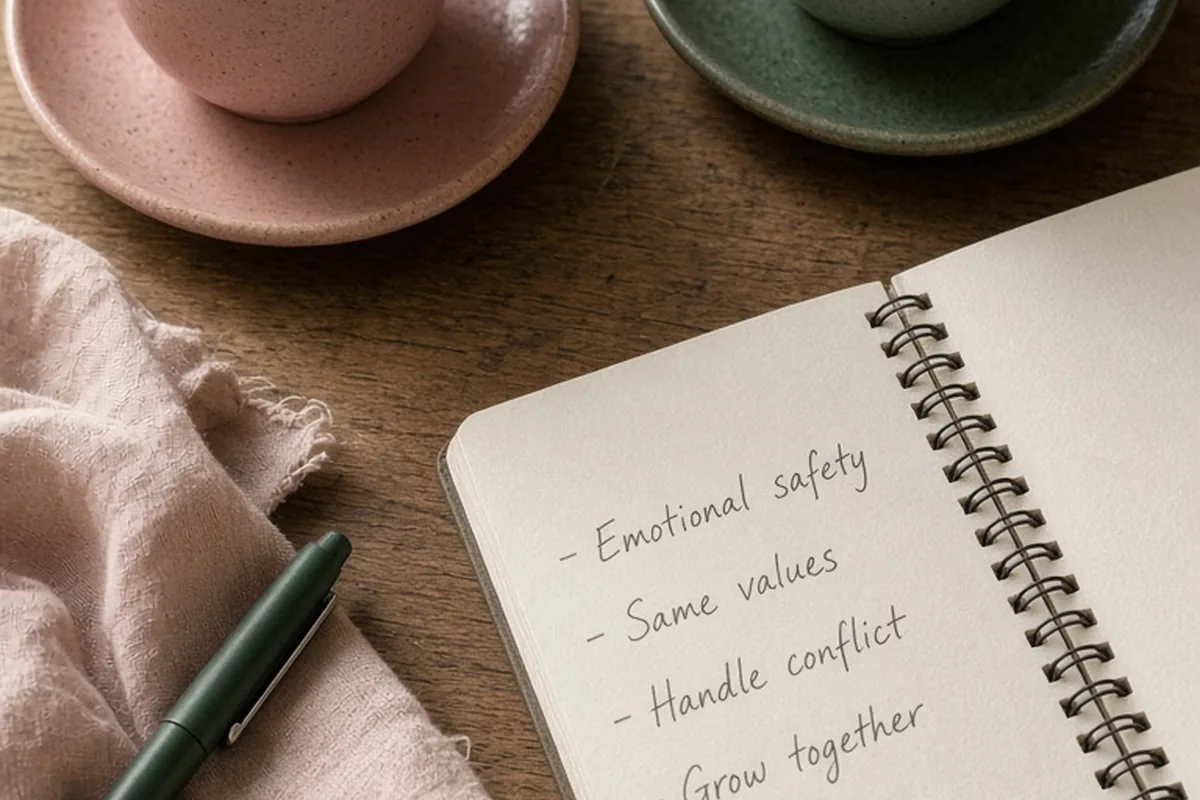
An are we soulmates quiz evaluates whether two people share the deep emotional safety, mutual respect, aligned values, and enduring commitment characteristic of true life partners. While popular culture depicts soulmates as effortless, magical pairings, genuine soulmate connection is best measured by how you navigate friction, support individual growth, communicate vulnerabilities openly, and work together as a collaborative team through everyday challenges.
Many people turn to relationship self-assessments during moments of personal reflection, wondering whether the deep bond they feel can weather real-world pressures or if recurring doubts indicate an underlying incompatibility.
The Core Compatibility Diagnostic: Key Questions to Score Your Bond
Rather than relying on vague notions of romantic destiny or mystical timing, a functional soulmate assessment evaluates behavioral consistency, emotional attunement, and practical synergy. To assess your connection honestly, consider how often you and your partner experience specific relational behaviors on an everyday basis. Reflect on whether you feel completely secure expressing dissenting opinions without fear of emotional retaliation, whether your partner demonstrates active curiosity about your inner thoughts without attempting to manage or control them, and whether your core ethical principles align naturally. Answering these questions requires stepping back from momentary infatuation to evaluate the predictable patterns of your interactions over months and years.
Scoring this self-assessment involves tallying patterns rather than searching for absolute perfection. If you consistently observe mutual respect, reliable follow-through, and genuine acceptance, your bond displays the hallmark qualities of a mature soulmate partnership. Conversely, if you notice that feelings of deep connection only appear during high-intensity romantic moments and evaporate during routine responsibilities, the relationship may rely more on passion than functional compatibility. For example, a partner might feel like a dream match during weekend getaways where outside stressors disappear, yet consistently withdraw or turn defensive when asked to coordinate domestic budgets or family visits. Recognizing these discrepancies helps you distinguish between exciting chemistry and sustainable, long-term compatibility.
Emotional Safety and the Freedom of Authentic Vulnerability
At the foundation of any genuine soulmate dynamic is emotional safety: the unshakeable confidence that you can reveal your unpolished, vulnerable self without being met with mockery, cold withdrawal, or weaponized criticism. In many casual or insecure relationships, partners carefully monitor their emotional tone, withhold their insecurities, and curate their behavior to prevent friction or abandonment. When you are with a soulmate, that guarded self-protection gradually softens. You feel comfortable sharing irrational anxieties, personal grief, past regrets, and professional uncertainties because your partner treats your inner life with gentleness and protective care.
Consider how you and your partner handle moments of personal failure or emotional exhaustion. For instance, if you make a significant financial misjudgment or struggle with depressive burnout, does your partner respond with resentment, or do they pull up a chair, listen attentively, and offer practical, non-judgmental partnership? A relevant limitation to keep in mind is that high emotional safety can sometimes slide into relational complacency if partners stop actively cultivating romance or taking personal accountability for their moods. True emotional safety does not grant either person permission to vent without boundaries; rather, it provides a secure harbor where both partners commit to emotional honesty while maintaining respect and emotional hygiene.
Collaborative Conflict and the Mastery of Emotional Repair
A widespread myth about soulmate partnerships is that they are entirely harmonious and devoid of disagreement. In reality, two complex individuals with distinct backgrounds, nervous systems, and emotional sensitivities will inevitably encounter conflicting needs. What separates soulmate-caliber compatibility from fragile attachments is not the total absence of arguments, but how you conduct yourselves during conflict and how effectively you execute emotional repair afterward. True partners address disagreements as a unified team confronting a shared obstacle, whereas incompatible couples turn disagreements into an adversarial battle where one must win and the other must lose.
For example, imagine a recurring argument over how to balance spending holidays with extended families versus resting privately at home. In an adversarial dynamic, partners resort to guilt-tripping, scorekeeping, or prolonged silent treatments to force the other person to concede. In a collaborative soulmate pairing, each partner listens for the core need underneath the complaint—such as a need for tradition or a need for nervous system recovery—and works to craft an equitable arrangement that honors both perspectives. A realistic trade-off to recognize is that constructive conflict resolution requires steady emotional regulation and patience; even deeply compatible soulmates will occasionally slip into reactive patterns. The strength of the bond is proven by how quickly both individuals step forward to apologize, take ownership of their reactivity, and restore warmth.
Mutual Growth and Preserving Individuality Within Partnership
Popular culture frequently portrays soulmates as two halves merging into a single identity, yet healthy long-term partnerships depend heavily on differentiation. Differentiation is the capacity to remain an autonomous, self-directed individual while staying deeply connected to someone else. When a couple collapses into codependency or enmeshment, personal goals are suppressed to keep the peace, which inevitably breeds latent resentment. In a vibrant soulmate bond, both individuals celebrate each other's individual evolution, separate friendships, personal hobbies, and creative ambitions without feeling threatened or abandoned.
A clear example of this dynamic appears when one partner decides to pursue a demanding career change, undertake intensive artistic training, or embark on a solitary travel retreat. In an insecure relationship, the other partner might interpret this personal endeavor as an emotional withdrawal and attempt to discourage it through subtle guilt or passive aggression. In contrast, a soulmate acts as an encouraging champion, trusting the relationship's resilience while maintaining active engagement in their own personal interests. The trade-off is accepting that supporting someone's growth means accepting ongoing change; you cannot expect your partner to stay frozen in the exact state they were in when you first met, which requires both of you to continually renegotiate routines and expectations.
Practical Alignment in Core Values and Life Logistics
Intense emotional resonance can make you feel as though your partnership was meant to be, but practical logistics and shared values determine whether the connection can survive daily reality. Soulmates share foundational alignment on major existential priorities: financial philosophies, career ambitions, desire for children, religious or moral commitments, and long-term geographic preferences. If two people share profound romantic chemistry but hold irreconcilable differences on whether to raise a family or live abroad, love alone rarely bridges the gap without one partner harboring intense, permanent regret.
Consider a scenario where one partner prioritizes aggressive saving, minimalist living, and early retirement, while the other values luxury, spontaneous spending, and entrepreneurial risk-taking. Neither approach to life is inherently flawed, but attempting to merge these conflicting financial styles without deep compromise produces daily friction that can erode affection over time. When using a quiz or self-assessment framework, it is crucial to weight life logistics just as heavily as romantic sentiment. While minor habits like domestic cleanliness or sleep schedules can easily be managed through clear boundaries and routines, fundamentally conflicting life visions indicate that two people may be deeply loving companions who simply want incompatible futures.
Distinguishing Soulmate Depth From Traumatic or Anxious Chemistry
Many people mistakenly identify intense nervous system dysregulation as evidence of a cosmic soulmate connection. When a relationship features unpredictable cycles of dramatic pursuit followed by emotional distance or criticism, the human brain often mistakes the resulting adrenaline and anxiety for profound romantic fate. This intermittent reinforcement creates an addictive emotional loop that feels all-consuming, making steady, reliable, and calm affection seem underwhelming or unexciting by comparison.
To evaluate your own relationship objectively, pay close attention to how your body feels during ordinary, unstructured moments with your partner. Do you feel grounded, centered, and physically relaxed, or are you constantly reading between the lines of text messages, walking on eggshells, and bracing for a sudden shift in their mood? A genuine soulmate provides a sense of emotional quietude and nervous system ease. The trade-off for individuals accustomed to turbulent relationship dynamics is that true soulmate peace may initially feel unfamiliar or even boring until they recalibrate their emotional expectations to appreciate predictable, steady devotion over erratic sparks.
Building a Soulmate Connection Rather Than Waiting to Find One
Perhaps the most empowering realization regarding soulmates is that enduring compatibility is constructed through ongoing dedication, rather than discovered ready-made. Viewing compatibility through a cultivation mindset—where two people actively invest in emotional attunement, shared traditions, and honest communication—produces far more resilient partnerships than viewing it through an evaluation mindset that constantly questions whether a partner matches a rigid fantasy. No partner enters a relationship with perfect communication skills or flawless emotional insight; those capabilities are built together through years of practice.
If your reflection reveals areas where your partnership currently falls short, that awareness does not necessarily mean the relationship is doomed or that you are with the wrong person. Instead, treat those gaps as specific skills to develop jointly. For instance, if you realize that both of you struggle with defensive communication during financial conversations, choosing to adopt structured check-ins or reading collaborative communication resources together can turn that friction into a source of connection. However, the vital limit to this perspective is reciprocity; deliberate relationship building only functions when both individuals are equally willing to self-reflect, accept feedback, and invest in the labor of mutual care.
Frequently asked questions
Can two people be soulmates if they argue frequently?
Yes, frequent disagreements do not disqualify a relationship from being a soulmate bond as long as the arguments remain respectful and lead to effective repair. The true measure of compatibility is whether you focus on solving the issue together rather than attacking each other's character or attempting to win.
What should I do if a soulmate quiz reveals significant incompatibilities?
Use the quiz results as a conversation starter rather than a definitive verdict on your future. Discuss the specific areas of disconnect with your partner to determine whether both of you are genuinely willing and able to compromise and grow in those areas.
Is it possible to have more than one soulmate in a lifetime?
Yes, because compatibility is grounded in shared values, emotional maturity, and mutual effort rather than a singular mystical destiny. As you mature and your priorities evolve, you may be capable of forming profound, soulmate-level connections with different partners at different stages of life.
Your next step
Choose one specific area of shared values or conflict repair highlighted in this assessment and initiate an open, non-judgmental conversation with your partner about how you can support each other more effectively this week.