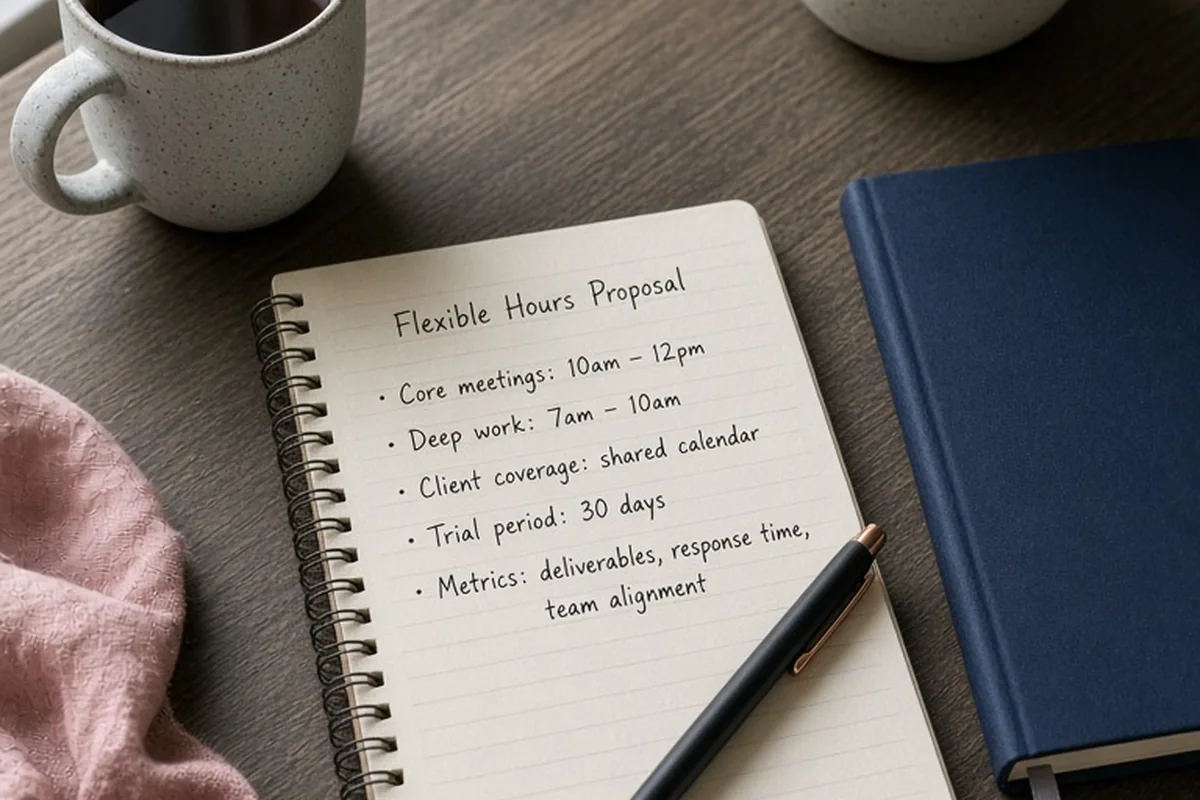
To ask for flexible hours, outline a specific schedule proposal that demonstrates how your responsibilities, team collaboration, and deliverables will remain uninterrupted. Frame the adjustment around business continuity, highlighting when you will be available for core meetings and how client or internal needs will be met. Request a one-on-one meeting to discuss the plan collaboratively, and suggest a thirty-day trial period with clear evaluation metrics to reduce your manager's perceived risk.
Modern workplaces increasingly recognize that rigid nine-to-five schedules do not always align with peak productivity, personal obligations, or complex project demands. Transitioning to a flexible arrangement requires more than simply asking for personal accommodation; it involves presenting a clear operational strategy that assures leadership your output and team collaboration will remain steady or improve.
Assessing Feasibility and Choosing the Right Schedule Model
Before proposing an adjusted routine, evaluate the structural realities of your role and the specific type of flexibility that fits your workflow. Flexible arrangements typically fall into categories such as shifted hours, compressed workweeks, or asynchronous blocks. Shifted hours involve sliding your start and finish times earlier or later while maintaining the standard eight-hour duration, which suits individuals dealing with commutes, international teams, or caregiving duties. A compressed schedule condenses a standard forty-hour workweek into four longer days, while asynchronous models allow workers to complete tasks during non-traditional hours as long as milestone deadlines are satisfied.
Understanding the day-to-day dependencies of your role helps determine which model is realistically viable. If your position requires constant real-time interaction with clients, on-call technical response, or immediate supervision of colleagues, total schedule autonomy may create operational friction. Look closely at team workflow bottlenecks: identify when your department receives peak inbound inquiries, when key internal stakeholders hold recurring scrums, and where your physical or digital presence is genuinely necessary. Selecting a structure that preserves overlap during primary operational windows prevents colleagues from feeling stranded and keeps your request grounded in workplace reality.
Documenting Reliability and Output to Build Professional Leverage
A successful request for alternative hours relies heavily on established trust and a demonstrated track record of self-directed competence. Managers often hesitate to approve non-standard schedules not out of resistance to employee well-being, but out of fear that accountability and project momentum will slip without direct visibility. To counter this concern proactively, spend two to four weeks cataloging your recent achievements, adherence to deadlines, and proactive communication habits before scheduling a conversation.
Compile concrete examples of independent problem-solving and consistent performance metrics. Note instances where you delivered high-priority projects ahead of schedule, resolved team challenges without continuous oversight, or maintained high communication standards during remote or solitary periods. Demonstrating that your productivity is tied to deliverables rather than continuous desk presence reframes the discussion. You are not asking for a favor that might compromise company goals; you are demonstrating that you already manage your time with the maturity and rigor needed for flexible autonomy.
Drafting a Comprehensive, Business-Centered Proposal
A verbal request can easily lead to misunderstandings or vague hesitations, whereas a structured written outline demonstrates professional foresight. Your proposal should clearly explain your requested hours, your availability for core collaborative windows, and how you will handle unexpected urgent matters. For instance, if you propose working from 7:00 a.m. to 3:30 p.m., specify that you will remain accessible for standard afternoon emergencies via chat or email, or that your core overlap covers all existing cross-departmental syncs.
Frame the benefits in terms of organizational performance alongside your personal sustainability. For example, explain how starting earlier allows for uninterrupted deep-focus time to tackle complex analytical reporting before the office becomes busy, or how shifted hours provide extended coverage across varying client time zones. Anticipate practical questions by documenting exact protocols: note how you will signal your working status, manage calendar visibility, and ensure handoffs to teammates occur smoothly without creating bottlenecks for others.
Navigating the Pitch Meeting with Your Manager
Timing and tone are critical when bringing your proposal to your supervisor. Schedule a dedicated conversation during a relatively calm period rather than springing the topic at the end of a stressful status update or in the middle of a major project release. Position the meeting as an exploratory, collaborative strategy session. You might open by stating that you have developed a schedule proposal aimed at maximizing your focus and efficiency while continuing to meet all team objectives, and that you would value their input on its feasibility.
During the conversation, listen carefully to any initial pushback without becoming defensive. Managers often voice worries regarding fair treatment across the broader department, client responsiveness, or the perception of special accommodations. Acknowledge these challenges directly and explain how your proposal accounts for them. If your manager worries that your absence during a late-afternoon team sync might disrupt updates, offer to adjust your core overlap day-by-day or provide a concise asynchronous wrap-up before you log off. The goal is to partner in finding an operational balance that protects team output.
Establishing a Time-Bound Trial Period with Measurable Review Metrics
One of the most effective ways to resolve managerial apprehension is proposing a temporary trial rather than an indefinite policy shift. A thirty-, sixty-, or ninety-day pilot program drastically reduces organizational risk. It offers leadership a clear exit strategy if performance drops while giving you the opportunity to demonstrate that your output, responsiveness, and collaboration remain completely intact under the new routine.
Define the criteria for evaluating the trial at the outset so both parties share identical expectations. Agree on specific benchmarks such as meeting all project milestones on schedule, maintaining acceptable response times on collaborative platforms during core hours, and collecting feedback from immediate peers. Schedule a formal check-in date midway through and at the end of the trial period. This structured review process removes emotional subjectivity, grounding the final decision in demonstrable evidence of sustained workplace contribution.
Protecting Work Boundaries and Team Visibility Under the New Schedule
Once your flexible hours are approved, the responsibility shifts to consistent execution, proactive communication, and boundary maintenance. An altered schedule requires deliberate transparency so colleagues never have to guess when you are actively working. Update your digital calendar with exact working blocks, configure automated out-of-office notifications detailing your working hours, and update team chat statuses at the start and end of your workday. Transparent routines build confidence across your department and prevent unintentional misunderstandings.
At the same time, beware of the trap of overcompensating by working beyond your designated schedule. Employees on flexible hours sometimes feel subtle pressure to respond to every evening ping to prove their dedication, which negates the primary benefit of the arrangement. Establish firm personal boundaries during non-working periods while honoring your commitment to high availability during your scheduled focus windows. Demonstrating calm reliability within defined hours establishes a healthy precedent for you and normalizes sustainable work practices for your entire team.
Illustrative Scenarios
Shifting Core Hours for Cross-Time-Zone Project Work
A senior data analyst wanted to shift working hours from 9:00 a.m. - 5:00 p.m. to 7:00 a.m. - 3:30 p.m. to accommodate afternoon family responsibilities and reduce commuting stress. Instead of requesting a schedule change based solely on personal convenience, the analyst created a proposal highlighting that the earlier start would allow uninterrupted morning focus for complex database modeling, as well as two hours of overlap with a European engineering team that previously waited overnight for answers. The analyst proposed a 60-day trial with clear overlap hours from 10:00 a.m. to 2:00 p.m. for all team meetings and a weekly review of project deliverables.
Key point: Framing a schedule change around uninterrupted focus and improved team collaboration turns a personal accommodation into a tangible operational benefit.
Frequently asked questions
What should I do if my manager immediately rejects my request for flexible hours?
Inquire gently about their specific operational concerns so you can understand the exact hurdles behind the decision. Ask if they would be open to revisiting the conversation in a few months, or explore smaller adjustments such as shifting your hours by thirty minutes or working one flexible day per week.
Can asking for flexible hours negatively affect my chances for promotion?
Career progression typically depends on visibility, business impact, and strong workplace relationships. If you maintain regular communication, consistently deliver excellent results, and attend key departmental meetings, flexible hours rarely hinder career growth, though company culture determines how presence is valued.
How do I handle coworkers who express resentment over my new schedule?
Maintain professional transparency by keeping your calendar public and consistently meeting all shared deadlines and handoffs. Focus on reliable collaboration rather than defending your schedule, as managers are responsible for team policy decisions.
Is it reasonable to ask for flexible hours during a job interview or offer stage?
The best time to raise schedule flexibility is typically during the offer stage after you have established your value and received an initial proposal. Ask about company policies regarding core hours and suggest your preferred routine as part of the overall compensation and work arrangement discussions.
Your next step
Audit your current weekly tasks and draft a one-page schedule plan outlining your proposed hours, your core collaboration window, and three measurable performance goals for a 30-day pilot.