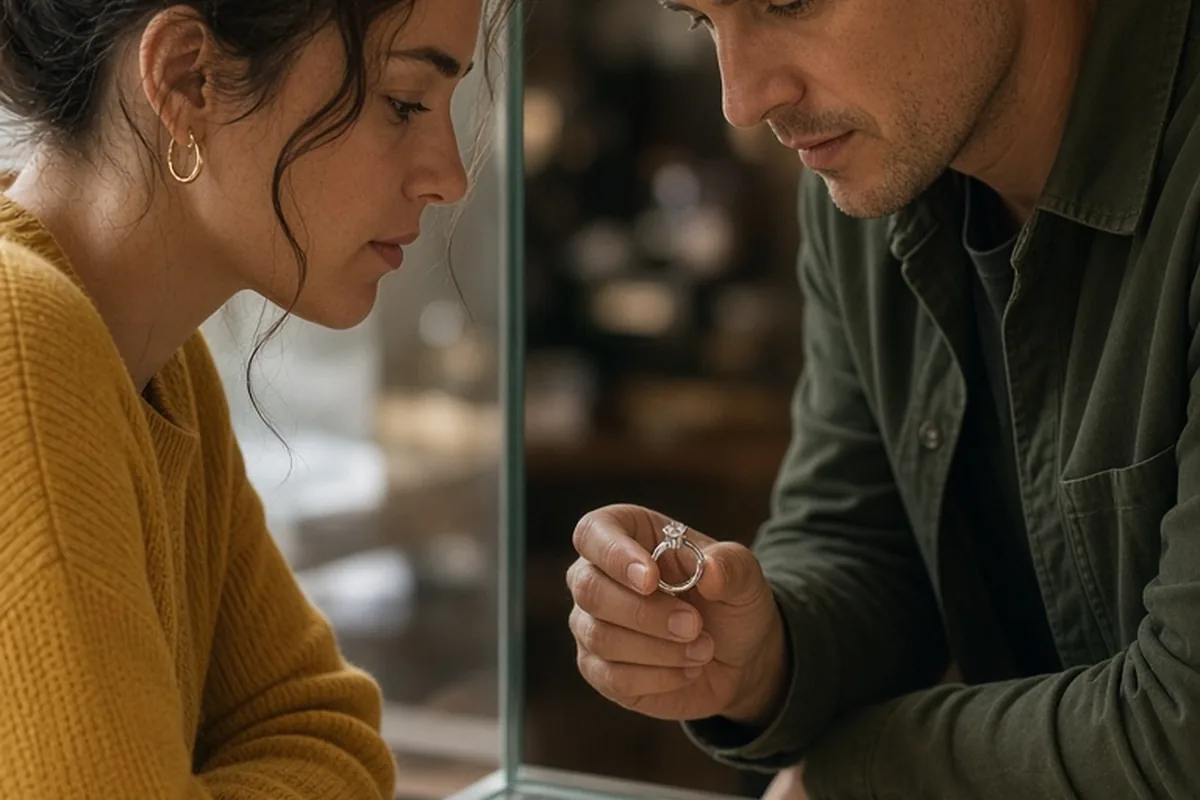
Most couples spend between three thousand and seven thousand dollars on an engagement ring, with national averages commonly settling near five to six thousand dollars. However, your ideal target depends strictly on your personal savings, joint lifestyle goals, and design preferences rather than an arbitrary national benchmark, outdated salary rules, or social expectations.
Shopping for an engagement ring often brings together intense emotional commitment and sudden financial pressure, especially when industry guidelines suggest spending months of your income on a single purchase.
Understanding Realistic Price Benchmarks Versus National Averages
When you look at broad retail surveys, average figures can be deceptive because luxury purchases heavily skew the mean upward. While an industry average might hover around six thousand dollars, the median spend is frequently lower, with many couples creating meaningful, high-quality rings in the two-to-four-thousand-dollar range. Knowing this difference helps relieve the immediate anxiety that you must spend a fortune to demonstrate genuine affection or serious intent.
Rather than treating a published average as a mandatory target, consider it a window into general market retail pricing. Diamond size, metal purity, designer branding, and custom fabrication determine the final price tag far more than any etiquette rule. If you enter the jeweler with a clear picture of what basic materials cost, you will make decisions based on value and personal design priorities instead of comparison with anonymous statistics.
Dismantling the Outdated Salary Rule
The traditional idea that a ring should cost two or three months of gross salary was created as a mid-twentieth-century marketing campaign by diamond syndicates, not an ancient cultural mandate. In today's economy, where couples face rising housing prices, student debt, and shared living expenses, tying a luxury jewelry purchase to a fixed percentage of pre-tax income rarely makes fiscal sense.
Following an arbitrary formula can pull critical cash away from emergency funds, moving expenses, or a down payment on a home. For example, someone earning seventy-five thousand dollars a year would be pressured to spend nearly nineteen thousand dollars under a three-month rule, which could easily derail essential long-term plans. A practical budget starts with available liquid savings and realistic monthly cash flow, completely setting aside marketing slogans from decades past.
Evaluating Lab-Grown Diamonds and Alternative Gemstones
One of the most dramatic shifts in modern jewelry is the widespread availability of lab-grown diamonds and durable colored gemstones. Chemically, physically, and optically identical to mined stones, lab-grown diamonds generally cost sixty to eighty percent less for comparable carat weight, cut, color, and clarity. This price difference allows couples to either choose a noticeably larger stone within their target number or secure a classic design while saving several thousand dollars.
Choosing between mined and lab-grown options involves balancing budget efficiency with personal sentiment. Some partners prioritize the geological heritage of a mined diamond, while others prefer the modern technology and accessible pricing of lab-grown gems. Durable alternatives such as moissanite or sapphire offer distinct visual styles and resilient everyday wear, though they will present a different aesthetic that both partners should appreciate before finalizing a design.
How the Four Cs Shape Ring Value
The overall cost of any diamond ring is governed by cut, color, clarity, and carat weight. Among these factors, cut quality has the greatest influence on how bright and lively the stone appears in everyday lighting, meaning a well-cut stone often looks more impressive than a larger stone with an average cut. Focusing your funds on cut precision ensures maximum sparkle, even if you choose a slightly modest carat weight.
You can also optimize value by understanding visual thresholds for color and clarity. Many diamonds graded near-colorless or slightly included appear completely clear and white to the naked eye once mounted in a gold or platinum setting, yet they cost significantly less than flawless, perfectly colorless specimens. Selecting a stone just under popular carat milestones, such as picking a 0.90-carat gem instead of a full 1.00-carat stone, can yield substantial price reductions without any visible loss in presence.
Navigating Ring Financing and Debt Pitfalls
Jewelry retailers frequently promote promotional store cards offering zero percent introductory interest for twelve to twenty-four months. While these arrangements can spread cash flow across several billing cycles, they carry strict conditions. If the balance is not paid in full before the introductory term expires, many contracts apply deferred interest retroactively to the original total, adding hundreds or thousands of dollars to the final cost.
Starting an engagement under high-interest revolving consumer debt introduces preventable strain into a relationship at the exact moment you are planning a shared future. If paying cash upfront is not feasible, consider saving over a predetermined timeline or adjusting the center stone size rather than overleveraging credit. A ring purchased within your real financial capacity represents steady teamwork and mutual care far better than an oversized gem funded through stressful financing.
Having an Honest Conversation About Ring Expectations
Discussing ring budgets does not have to spoil the romance of an upcoming proposal; instead, it establishes the foundation for shared financial transparency. Because expectations regarding aesthetics, ring scale, and ethical sourcing vary widely, open communication prevents well-intentioned but costly missteps. You can preserve the romantic element of the proposal itself while sharing practical input on ring styles, metal types, and spending limits beforehand.
Initiate this conversation outside of retail stores and away from emotionally charged settings. Ask open questions about what styles your partner envisions wearing every day and share your own feelings about balancing the ring with other joint priorities like travel or homeownership. When both partners participate in setting boundaries and aesthetic goals, the entire selection experience becomes an exercise in trust and collaboration.
Illustrative Scenarios
Choosing Shared Values Over Retail Pressure
Marcus and Elena began looking at rings after two years of dating. Standing at a luxury counter, Marcus felt an immediate wave of shame when a salesperson suggested that spending under ten thousand dollars demonstrated a lack of seriousness. Feeling defensive, he considered draining his rainy-day emergency fund to buy a traditional mined diamond that matched the salesperson's recommendation. Elena sensed his sudden tension and paused the visit to discuss priorities over coffee. She explained that she loved the look of vintage bands and actively preferred a lab-grown stone, which allowed them to spend three thousand dollars total while preserving their savings for an upcoming condominium down payment.
Key point: External sales pressure should never dictate relationship milestones; transparent conversations help couples protect their long-term security without compromising aesthetic satisfaction.
Rethinking Carat Milestones for Practical Value
Jordan wanted to surprise Priya with a classic solitaire diamond ring. He initially believed he needed to purchase a flawless two-carat stone on a retail credit card because several friends had recently shared photos of large rings on social media. After looking closely at the monthly payments and deferred interest clauses, Jordan realized the debt would delay their shared travel plans for two years. He decided to consult an independent jeweler, choosing a finely cut 1.4-carat stone with eye-clean clarity set in a clean yellow gold mounting. Priya was thrilled with the proportion and brilliant sparkle, and Jordan avoided financing fees entirely.
Key point: Prioritizing structural cut quality and personal lifestyle over status-driven carat numbers delivers enduring beauty without financial vulnerability.
Frequently asked questions
Does insurance cost significantly more for a higher-priced ring?
Engagement ring insurance typically costs between one and two percent of the ring's appraised replacement value annually. A five-thousand-dollar ring generally costs between fifty and one hundred dollars each year to insure against loss, theft, or damage, while a fifteen-thousand-dollar ring will proportionately increase that recurring yearly expense.
Can we upgrade an engagement ring center stone later in our marriage?
Many jewelers offer upgrade programs that credit the original purchase price of a mined diamond toward a larger replacement later in life. Choosing a quality setting now with an eye toward upgrading the center gem on a future anniversary is a practical way to manage early career budgets.
Is it rude or unromantic to set a strict ring budget together?
Setting a clear budget together is healthy, mature, and increasingly common among modern couples. Frank financial alignment reduces individual anxiety, eliminates second-guessing about style preferences, and confirms that both partners value long-term partnership over brief retail performance.
How do metal choices affect the overall ring cost?
Fourteen-karat white or yellow gold is generally the most economical and durable everyday option for standard settings. Platinum offers natural density and hypoallergenic qualities but carries a notable price premium, while eighteen-karat gold sits comfortably between them in terms of both metal purity and overall setting price.
Your next step
Review your current liquid savings and upcoming life expenses together this week, then define a firm maximum budget before browsing specific rings or stepping into a showroom.