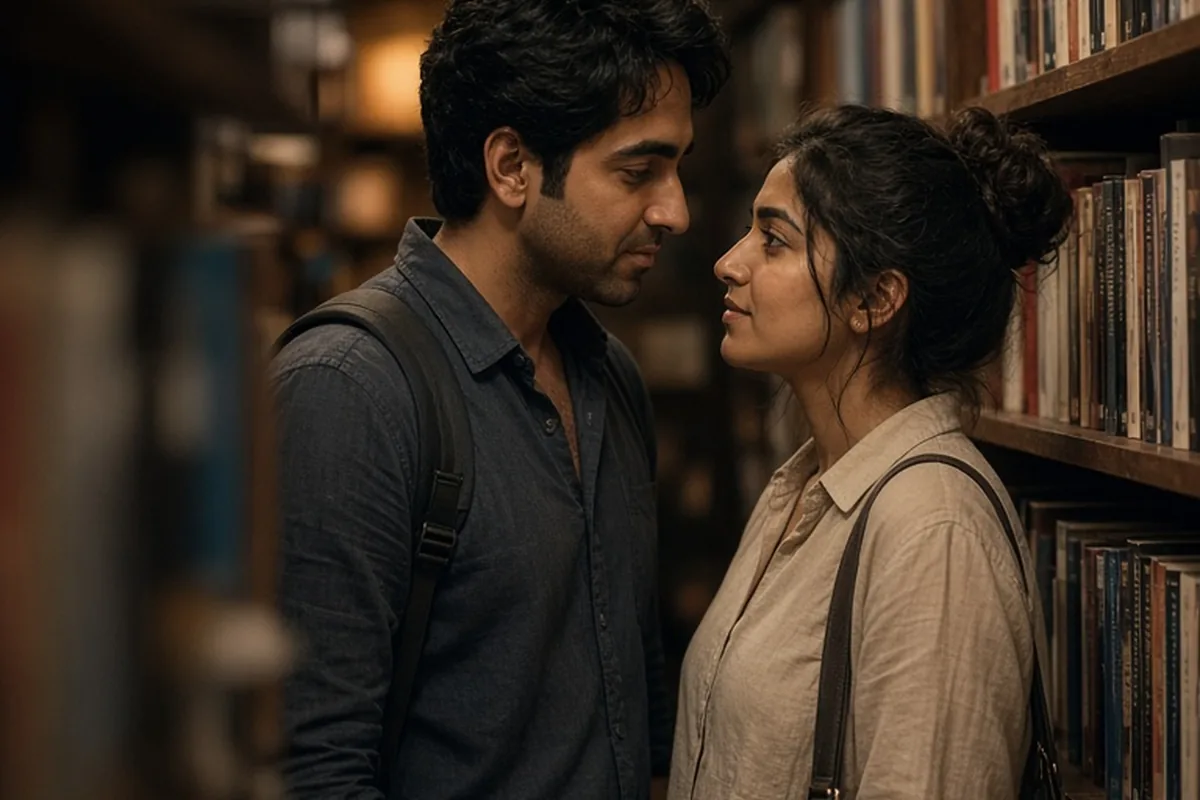
Ayushmann Khurrana is an acclaimed Indian actor, singer, and former television host celebrated for pioneering a distinct subgenre of Hindi cinema centered on middle-class protagonists facing social taboos. By tackling topics like reproductive health, premature balding, caste discrimination, and LGBTQ+ relationships with empathy and humor, he fundamentally altered contemporary Bollywood storytelling and redefined conventional cinematic masculinity.
Before his cinematic breakthrough, mainstream Hindi commercial cinema often depended on invulnerable heroes operating far above ordinary life. Ayushmann Khurrana systematically disrupted that convention by choosing scripts rooted in middle-class realism, relatable self-doubt, and everyday human friction, demonstrating that personal vulnerabilities could anchor successful commercial narratives.
The Rise of the Relatable Middle-Class Protagonist
Ayushmann Khurrana began his career in the media industry as a radio jockey and television host before making an unexpected and decisive transition to the silver screen. His 2012 debut in the romantic comedy Vicky Donor immediately established his willingness to venture where traditional leading men hesitated. Playing a young man from Delhi who becomes a sperm donor, Khurrana brought an innate ease, authentic regional dialect, and unaffected charm that made a previously unspoken subject accessible to family audiences. This debut signaled a clear departure from standard star-vehicle debuts, setting the foundation for what film critics and audiences would eventually label the Ayushmann Khurrana genre.
The appeal of this approach lies in the democratization of the film protagonist. Rather than presenting aspirational figures defined by physical perfection or detached luxury, his characters frequently inhabit modest apartments, navigate conservative family expectations, and struggle with mundane career anxieties in tier-two and tier-three Indian cities. By grounding his narratives in localized cultural contexts, Khurrana allowed everyday viewers to see their own social dilemmas, domestic conflicts, and unspoken insecurities reflected honestly on the screen. However, building a career on the everyman archetype requires continuous narrative reinvention to prevent relatable realism from turning into a predictable routine.
Redefining On-Screen Masculinity and Vulnerability
For decades, mainstream cinema celebrated masculine archetypes characterized by emotional stoicism, physical invulnerability, and dominant authority. Khurrana chose a deliberately counter-cultural trajectory by playing men whose central conflicts stemmed from physical, sexual, or social vulnerabilities. In Shubh Mangal Saavdhan, he portrayed a groom-to-be dealing with erectile dysfunction, while in Bala, he depicted a young man whose entire self-worth unravels due to premature hair loss. In both instances, the narrative focus remained fixed on how patriarchal expectations harm men by forcing them to maintain unrealistic standards of virility and perfection.
These portrayals shifted the conversation around modern masculinity from performance to self-acceptance. By showing male characters who openly panic, seek help, make mistakes, and dismantle their own egos, his films invite male audiences to drop their defensive postures and examine their insecurities without shame. A critical trade-off of this thematic focus is that comedic framing can occasionally risk softening systemic patriarchal problems into individual quirks. Nevertheless, Khurrana consistently balances comedic pacing with genuine pathos, ensuring his characters evolve through self-awareness rather than superficial quick fixes.
Normalizing Taboo Topics Through Empathy and Humor
Addressing sensitive cultural taboos in popular cinema presents significant challenges, as heavy-handed didacticism often alienates audiences while overly frivolous humor risks trivializing serious experiences. Khurrana managed to strike a delicate balance across several projects by using warm family dynamics and lighthearted comedy as a doorway into complex subjects. In Shubh Mangal Zyada Saavdhan, he starred in a mainstream same-sex romantic comedy that directly addressed homophobia within a conservative joint family setting. Similarly, in Chandigarh Kare Aashiqui, his character had to unlearn deeply ingrained biases when falling in love with a trans woman played by Vaani Kapoor.
The effectiveness of these films stems from their refusal to preach from an elitist moral high ground. Instead, the storytelling acknowledges the genuine confusion, generational conditioning, and discomfort that regular families experience when confronted with unfamiliar identities or lifestyle choices. By guiding the audience through a character journey of initial shock, gradual exposure, and ultimate acceptance, these movies offer a template for real-world empathy. The inherent limitation is that commercial formats must sometimes condense multifaceted socio-political realities into neat narrative resolutions, but their value as accessible conversation starters remains substantial.
Venturing Into Gritty Social Realism and Thrillers
While socially conscious comedies brought Khurrana widespread acclaim, his artistic range expanded significantly through serious dramatic roles and suspense thrillers. In the 2018 black comedy thriller Andhadhun, directed by Sriram Raghavan, he portrayed an ostensibly blind pianist who becomes entangled in a web of murder and deception. The role required precise physical discipline and a morally ambiguous posture, proving that his screen presence extended far beyond well-meaning reformist characters.
In the 2019 crime drama Article 15, directed by Anubhav Sinha, Khurrana took on the role of an urban police officer investigating a heinous caste-based crime in rural Uttar Pradesh. The film adopted a stark, unembellished tone that confronted systemic caste privilege, administrative apathy, and deep-rooted social injustice. Choosing such an uncompromising project demonstrated a conscious effort to utilize his commercial standing to highlight grave socio-political realities without relying on comedic relief to soften the blow. This duality between mainstream comedy and intense drama established him as one of the most versatile performers of his generation.
Artistic Versatility, Musicality, and Relatable Dialogue
Beyond acting, Khurrana brings a multifaceted artistic background that enriches his cinematic work. A trained classical singer and poet, he performed his breakthrough track Paani Da Rang in Vicky Donor, which earned him widespread recognition as a playback singer and lyricist. His musicality lends an organic emotional depth to his films, allowing his characters to express introspective and romantic dimensions that feel unforced and deeply personal.
Complementing his musical talent is his command over conversational dialects and localized speech patterns. Whether speaking with a specific western Uttar Pradesh cadence in Bareilly Ki Barfi or a contemporary urban inflection in Badhaai Ho, his vocal delivery remains natural and grounded. His dialogue delivery relies on comedic timing, underplayed reactions, and relatable banter rather than theatrical grandstanding. This understated approach makes the conflicts in his stories feel immediate and true to modern domestic life.
Critical Reception, Box Office Dynamics, and Formula Fatigue
Between 2017 and 2019, Khurrana achieved a rare and remarkable string of consecutive critical and commercial successes, cementing his status as a bankable star who could guarantee quality content. However, the very success of this subgenre created a new artistic challenge: the risk of formula fatigue. Audiences and critics eventually began noticing structural similarities across several middle-India social issue dramedies, where an unconventional premise followed a predictable trajectory of crisis, domestic turmoil, and a cathartic public monologue.
Films like Anek and An Action Hero reflected his deliberate attempt to break away from this potential creative rut by exploring geopolitical conflict and deconstructing the nature of celebrity culture and media voyeurism. While these films faced commercial headwinds in an evolving post-pandemic theatrical landscape, they were praised by critics for their narrative ambition and stylistic risk-taking. Navigating the delicate balance between commercial safety and creative reinvention remains a defining reality of his ongoing career trajectory.
A Structured Guide to Exploring Ayushmann Khurrana Films
For viewers looking to explore Ayushmann Khurrana's extensive body of work, approaching his filmography through distinct thematic gateways offers the most rewarding experience. Rather than watching chronologically, selecting titles based on tone and narrative intent allows for a deeper appreciation of his artistic development and versatility.
The following entry points categorize his most significant cinematic contributions based on viewer preference:
- Foundational Social Comedies: Start with Vicky Donor, Badhaai Ho, and Bareilly Ki Barfi to experience his signature blend of family humor, regional warmth, and social commentary.
- Deconstructions of Masculinity: Watch Shubh Mangal Saavdhan and Bala to examine how personal insecurity and traditional gender expectations are explored with nuance and levity.
- Social Justice and Systemic Realism: View Article 15 for a serious, atmospheric exploration of constitutional equality and systemic discrimination.
- Edge-of-the-Seat Thrillers and Genre Experiments: Explore Andhadhun and An Action Hero to see dark comedy, meta-narratives, and morally complex character arcs.
Frequently asked questions
What is the Ayushmann Khurrana genre in Bollywood?
The Ayushmann Khurrana genre refers to a distinct category of content-driven Hindi films set in middle-class Indian towns that tackle sensitive social taboos through humor, realism, and emotional family drama. These movies typically feature an ordinary, flawed male protagonist who confronts personal or societal prejudices.
Which movie marked Ayushmann Khurrana's acting debut?
Khurrana made his acting debut in the 2012 romantic comedy Vicky Donor, directed by Shoojit Sircar. The film addressed the taboo of sperm donation and infertility, achieving critical and commercial success while earning him multiple awards for acting and playback singing.
Has Ayushmann Khurrana won a National Film Award?
Yes, he won the National Film Award for Best Actor in 2019 for his performance in the thriller Andhadhun. He shared the prestigious honor with Vicky Kaushal, who won for his role in Uri: The Surgical Strike.
How did Ayushmann Khurrana start his entertainment career?
Before entering mainstream films, he won the reality television show MTV Roadies in 2004. He subsequently worked as a prominent radio jockey and television presenter, building communication skills and audience rapport that later informed his natural screen presence.
Your next step
To gain a well-rounded perspective on contemporary Hindi cinema, select one social comedy like Badhaai Ho alongside a dramatic thriller like Andhadhun to observe how thoughtful script selection and vulnerable performances can reshape popular entertainment.