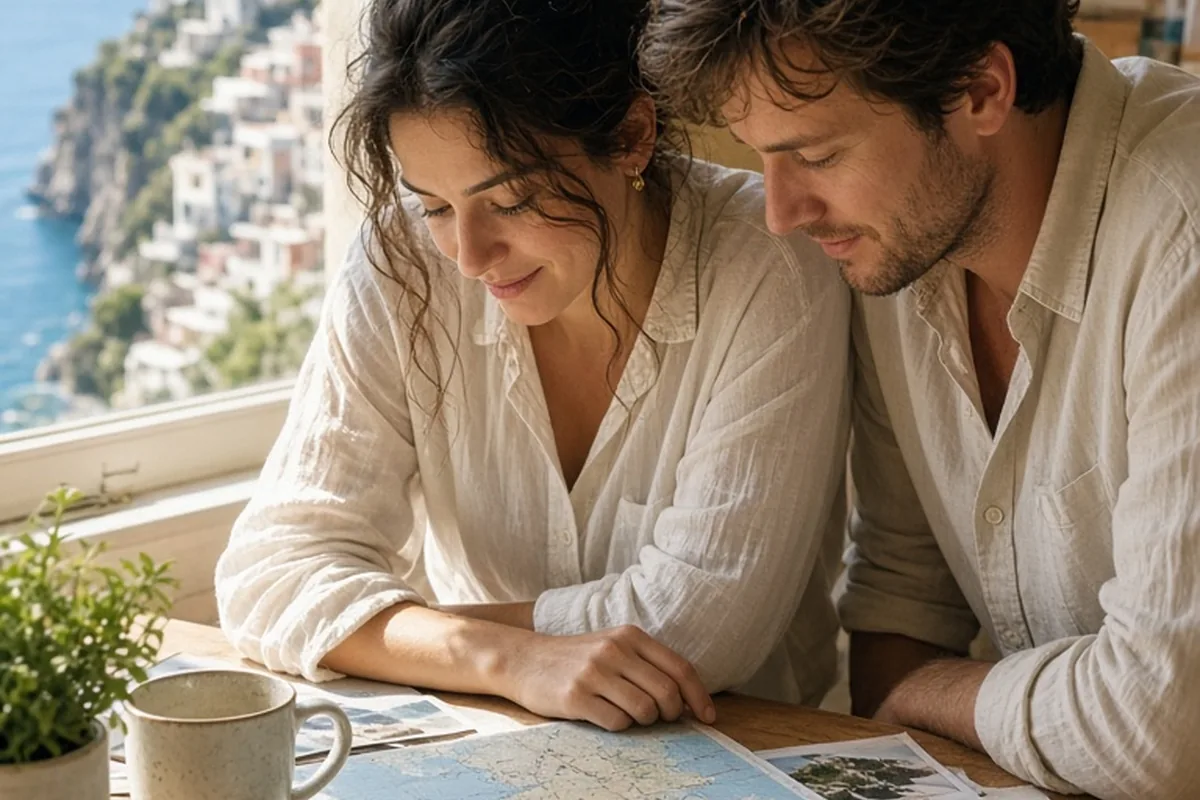
The best European honeymoon destinations match your shared travel rhythm rather than popular trends. Standout choices include Italy's Amalfi Coast and Tuscany for culinary immersion, Greece's Cyclades or Crete for coastal relaxation, Portugal's Douro Valley and Lisbon for accessible charm, France's Provence and Riviera for classic romance, and Switzerland or the Austrian Alps for scenic adventure. Selecting the right region depends on seasonal weather, pace, and daily spending style.
Planning a honeymoon across Europe allows newlyweds to blend historical discovery with unhurried intimacy, yet sorting through countless regions can feel overwhelming after wedding preparations. Focusing on destinations that emphasize manageable transit and authentic regional flavor prevents the trip from turning into an exhausting checklist.
Italy: Pairing Coastal Drama on the Amalfi Coast with Tuscan Countryside Retreats
Italy remains an enduring honeymoon favorite because it delivers contrasting landscapes within manageable overland distances. A classic pairing connects the dramatic limestone cliffs of the Amalfi Coast with the rolling hills of Tuscany. On the coast, towns such as Ravello, Positano, and Praiano offer cliffside dining, private wooden boat excursions across the Gulf of Salerno, and quiet evenings watching the sun dip into the Tyrrhenian Sea. Moving inland to Tuscany shifts the atmosphere toward restorative calm, where converted stone farmhouses, olive groves, and centuries-old vineyards encourage slow mornings and leisurely multi-course meals.
To make this combination work smoothly, couples need to account for practical transit realities. Driving along the narrow, winding cliffside roads of the Amalfi Coast can cause significant stress, especially during high season when traffic frequently stalls. Hiring private transfers or relying on regional ferries between coastal towns is generally far more relaxing. Conversely, exploring rural Tuscany requires a rental car to reach secluded estates in the Val d'Orcia or Chianti regions. Visiting during the shoulder months of May or late September provides warm weather without the crushing crowds and peak summer heat of July and August.
Greece: Balancing Iconic Aegean Sunsets with Secluded Island Living
The Greek islands offer whitewashed architecture, crystal-clear swimming coves, and relaxed waterfront tavernas. While Santorini's caldera cliffs in Oia and Imerovigli provide unforgettable sunset views and private plunge pools, the island's narrow pathways often become congested with cruise day-trippers. To preserve the intimate feeling of a honeymoon, thoughtful itineraries pair two or three nights in Santorini with an unhurried stay on a quieter neighboring island such as Naxos, Milos, or Folegandros, where uncrowded beaches and authentic village squares take center stage.
Another compelling alternative is Crete, Greece's largest island, which functions as a complete honeymoon destination on its own. Crete features Venetian harbor towns like Chania, remote mountain villages, dramatic hiking gorges, and wild coastal lagoons such as Balos. When planning an island itinerary, limit travel to two islands over a ten-day span to minimize time spent waiting at ferry ports. Be aware that the seasonal meltemi winds in July and August can occasionally cause ferry delays and rough sea crossings, making late spring and early autumn ideal for calmer seas and pleasant walking temperatures.
Portugal: Accessible Luxury, Historic Charm, and River Valley Vineyards
Portugal has emerged as one of Europe's most appealing honeymoon destinations for couples who value world-class hospitality, rich cultural heritage, and approachable pricing. A popular route begins in Lisbon, where newlyweds can explore tiled facades in Alfama, ride vintage trams, and dine in intimate fado houses before taking a day trip to the fairytale palaces of Sintra. From Lisbon, a scenic three-hour train ride north leads to Porto, famous for its historic riverside district and port wine lodges nestled along the Douro River.
The highlight for many honeymooners is extending the trip into the Douro Valley itself, one of the world's oldest demarcated wine regions. Staying at a restored wine estate (quinta) allows couples to relax by infinity pools overlooking terraced vineyards, take private boat rides on the river, and sample local olive oils and wines. A practical trade-off to consider is Portugal's hilly topography; both Lisbon and Porto feature steep cobblestone streets that require sensible footwear. Additionally, while coastal areas like Cascais and the Algarve offer beautiful sandy shorelines, the Atlantic ocean temperatures remain brisk year-round.
France: Provencal Village Life and the Glamour of the French Riviera
Southern France offers a classic honeymoon atmosphere shaped by fragrant lavender fields, vibrant farmers markets, and coastal elegance. Couples often establish a base in the Luberon or the Alpilles, staying in boutique country inns surrounded by cypress trees and vineyards. Days in Provence revolve around visiting perched stone villages like Gordes, Roussillon, and Saint-Remy-de-Provence, sampling artisan cheeses, and sharing unhurried lunches under shaded plane trees.
Transitioning from rural Provence to the Cote d'Azur adds seaside energy to the itinerary. Towns such as Villefranche-sur-Mer, Antibes, and Saint-Paul-de-Vence provide charming coastal walks, private beach clubs, and access to world-class art museums without the intense commercialism of larger resort cities. To navigate the region comfortably, rent a car for the Provencal countryside, but consider returning it or using the coastal rail line once you reach the Riviera, where coastal parking is scarce and expensive. Note that many village shops observe midday closures, requiring travelers to adjust their schedules to local rhythms.
Central Europe and the Alps: Scenic Rail Journeys and Mountain Sanctuaries
For couples who prefer dramatic alpine scenery, crisp mountain air, and outdoor activity over sunbathing, Central Europe provides an invigorating honeymoon setting. Switzerland excels at combining luxury alpine lodges with seamless public transit. Basing yourselves near Lake Lucerne or in the Lauterbrunnen Valley allows for morning boat cruises, panoramic cable car rides to mountain lookouts, and quiet evenings in traditional chalet villages. The Swiss travel system makes multi-destination journeys effortless, enabling couples to ride panoramic trains like the Glacier Express without the logistical headaches of driving.
Couples seeking a similar alpine aesthetic with a more intimate, understated feel often turn to Slovenia and the Julian Alps. Lake Bled and nearby Lake Bohinj offer emerald waters, forested walking trails, and cliffside castles at a fraction of typical Western European prices. While alpine destinations offer exceptional serenity, high-altitude weather can be unpredictable. Dense fog or sudden rain showers can obscure mountain vistas, so building buffer days into the itinerary ensures you do not miss scenic viewpoints due to a single afternoon storm.
Designing Your Honeymoon Route: Managing Transit and Avoiding Burnout
A common challenge newlyweds face is packing too many destinations into a single itinerary, resulting in a vacation dominated by packing suitcases, navigating train stations, and checking in and out of hotels. Wedding planning requires substantial emotional and mental energy, meaning couples often arrive in Europe craving unstructured rest rather than a demanding schedule. To protect the romantic atmosphere of the trip, adopt a hub-and-spoke approach: choose two or three central locations for a ten-to-twelve-day vacation and explore surrounding areas through relaxed day trips.
Booking open-jaw or multi-city airline tickets—flying into one city and departing from another—eliminates the need to backtrack across the continent at the end of the journey. For instance, flying into Florence and departing from Naples saves a full day of return travel. Additionally, designate at least one day per destination as completely unscheduled, giving yourselves permission to sleep in, wander residential neighborhoods, read by a pool, or linger at a sidewalk cafe without an alarm or fixed dinner reservation.
Budget Realities and Seasonal Timing: Choosing the Right Window
Aligning your European honeymoon with the right season dramatically impacts both your overall expenditure and personal comfort. Peak summer months (late June through August) coincide with European school vacations, leading to high airfares, sold-out boutique hotels, and intense midday heat in southern regions. The shoulder months of May, June, September, and early October generally offer the best overall balance: warm daylight hours for dining outdoors, open seasonal attractions, and significantly lower crowd densities.
When mapping out expenses, balance significant milestone splurges with everyday simplicity. Opting for a luxury suite with a terrace for three nights in an iconic coastal town can be balanced by staying in charming family-run guesthouses during the countryside portion of the trip. Remember to budget for local tourist taxes paid directly at hotels, train seat reservations on high-speed rail lines, and gratuities for specialized private tours. Establishing spending agreements before departing keeps financial decisions stress-free throughout the honeymoon.
Frequently asked questions
How long should an ideal European honeymoon last?
Most couples find that 10 to 14 days provides an ideal window to unwind, adjust to time zone differences, and explore two or three distinct destinations without burning out. Trips shorter than a week often feel rushed due to transatlantic travel days, while journeys beyond two weeks benefit from a slower pace with fewer hotel changes.
Is it better to rent a car or use trains for a European honeymoon?
The choice depends entirely on your specific itinerary. High-speed rail networks are vastly superior for travel between major cities and regions across Italy, France, Switzerland, and Spain, avoiding traffic and parking headaches. However, renting a vehicle is essential if your trip focuses on rural regions like the Tuscan countryside, Provence, or Ireland's west coast.
How far in advance should we book European honeymoon accommodations?
For peak summer and shoulder season travel, it is best to secure boutique hotels, cliffside villas, and popular vineyard estates six to nine months in advance. Iconic properties on the Amalfi Coast, Santorini, and Lake Como have limited room inventories and often sell out early in the calendar year.
What is the best way to avoid crowds in popular European destinations?
Traveling during shoulder season months like May or October provides immediate crowd relief compared to July and August. In addition, scheduling morning excursions before cruise excursions arrive and choosing base accommodations in smaller adjacent towns rather than central tourism hubs ensures a much quieter atmosphere.
Your next step
Sit down together with a shared map, select two complementary regions that fit your travel pace, and book your core accommodations early to keep the journey restful.