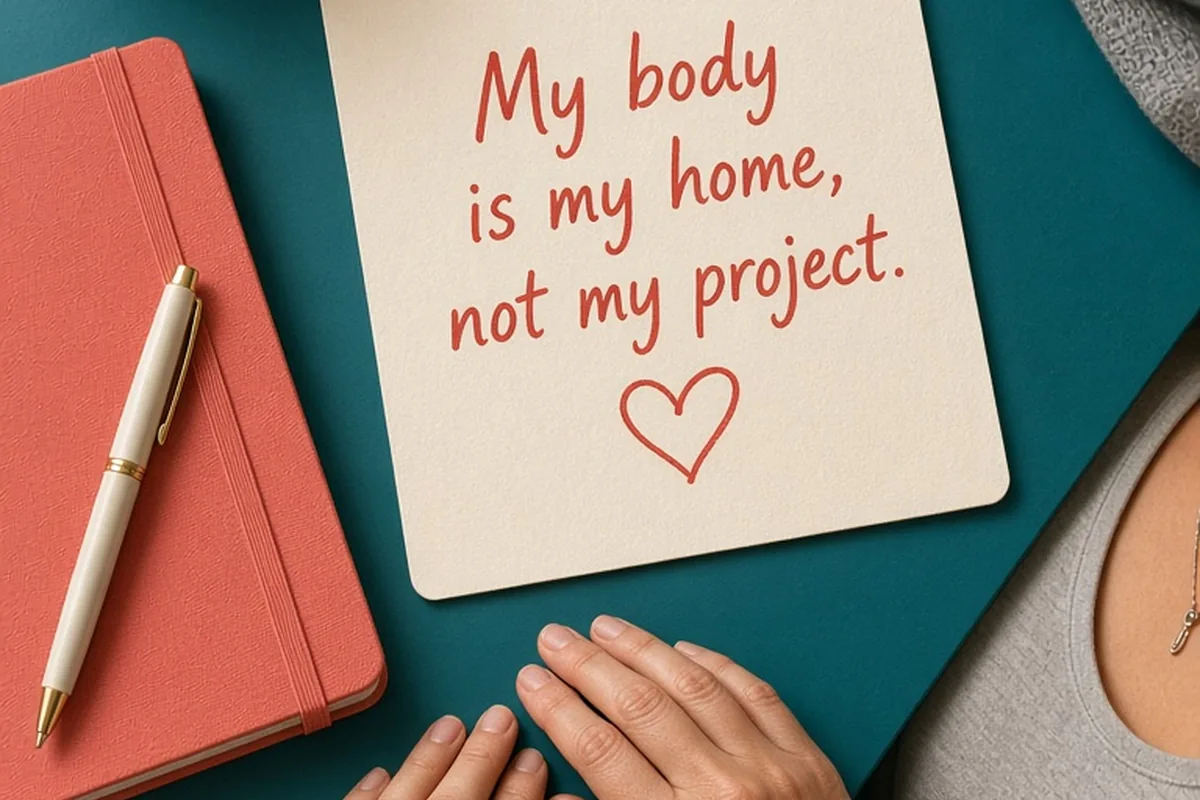
Body acceptance over 40 involves shifting your focus from fighting natural physical changes to respecting what your body does each day. It means replacing harsh self-criticism with supportive self-care, choosing movement that builds energy rather than burns calories as punishment, wearing clothes that fit comfortably right now, and dismantling comparison habits. Acceptance is not passive resignation; it is an active practice of treating your maturing body with steady appreciation and practical care.
Entering your forties and fifties brings noticeable physical shifts, including changes in metabolism, skin elasticity, recovery rates, and muscle distribution. When cultural messaging constantly urges you to reverse aging, learning to accept and appreciate your body as it matures can feel challenging, yet it remains one of the most stabilizing lifestyle shifts you can make.
Understanding Midlife Physical Changes Without Self-Blame
Reaching midlife involves predictable physiological changes that affect everyone, regardless of gender or past fitness routines. Hormonal adjustments, shifts in lean muscle mass, joint stiffness, and slower cellular repair alter how your body responds to everyday habits. When people treat these natural biological shifts as personal failures or lapses in willpower, they usually experience a spike in anxiety and frustration. Recognizing that your body is simply moving into a different phase of life allows you to evaluate your routines with curiosity rather than shame.
Holding onto physical benchmarks from your twenties or thirties creates an impossible standard that undermines your daily well-being. For instance, expecting your waistline to remain identical after decades of work, stress, child-rearing, or lifestyle changes sets you up for constant disappointment. Shifting your expectations does not mean you stop caring about your health; it simply means you base your health goals on current realities. When you understand why your body responds differently today, you can adjust your nutrition, sleep, and recovery routines to support the body you live in now.
Breaking the Cycle of Daily Body Checking
Body checking is an automatic habit where you constantly inspect, measure, or evaluate your appearance throughout the day. This behavior often includes pinching areas of softness, stepping on the scale multiple times a week, scrutinizing lines in magnifying mirrors, or analyzing your silhouette in every reflective storefront. While the initial urge comes from a desire for control or reassurance, repeated checking actually amplifies anxiety by keeping your focus locked on perceived flaws.
To reduce this cycle, you can gradually introduce small boundaries around your daily routines. Start by moving the bathroom scale out of plain sight or deciding to weigh yourself only during annual medical visits if tracking numbers causes distress. Replace harsh overhead bathroom lighting with softer bulbs, and deliberately redirect your attention whenever you catch yourself inspecting your reflection with a critical eye. Shifting your focus toward internal physical sensations—such as feeling grounded on your feet or breathing deeply—breaks the loop of visual criticism.
Curating a Wardrobe That Fits Your Current Body
One of the most common sources of daily distress in midlife is opening a closet filled with clothes that no longer fit. Keeping tight garments as motivational items often backfires, serving as a daily visual reminder of a past body and generating subtle guilt before your day even begins. Wearing waistbands that dig in or shirts that feel uncomfortably snug keeps you physically distracted and reinforces feelings of inadequacy with every movement.
Dressing the body you have today is an immediate act of self-respect that directly improves your mood and posture. Set aside an afternoon to remove items that do not fit comfortably or that make you feel self-conscious. Replace them with well-tailored, breathable pieces that flatter your current shape and allow full range of motion. While investing in new clothing can feel like an unwanted expense or an admission of change, having five reliable, comfortable outfits provides far greater peace of mind than a closet full of garments that trigger self-doubt.
Reframing Movement for Strength, Mobility, and Longevity
Many adults over 40 remain trapped in a punitive exercise mindset, viewing workouts solely as a way to burn calories, earn food, or fight visible signs of aging. High-impact routines that worked decades ago may now cause persistent inflammation, joint pain, or exhaustion. When exercise feels like a punishment for aging, consistency drops, and the risk of injury increases significantly.
Reframing exercise around functional strength, joint mobility, and sustained energy transforms your relationship with movement. Engaging in regular resistance training helps preserve bone density and muscle mass, while daily walking and mobility work keep joints healthy and reduce stiffness. For example, lifting weights so that you can carry groceries easily, play with family, or hike without knee pain gives movement an empowering purpose. Acknowledge when your body requires extra recovery days, and celebrate physical capabilities rather than focusing on aesthetic outcomes.
Managing Comparison and Setting Social Boundaries
Midlife body dissatisfaction is frequently fueled by social comparison, whether through digitally altered media, aggressive anti-aging advertising, or casual conversations with peers. Listening to colleagues, friends, or family members obsess over restrictive diets, cosmetic procedures, or visible graying can easily reignite your own insecurities. When your environment constantly frames normal aging as a crisis that must be corrected, maintaining self-acceptance requires deliberate boundary-setting.
Take proactive control of your social and digital diet by unfollowing social media accounts that rely on unrealistic filters, extreme fitness regimens, or youth obsession. In personal conversations, practice redirecting discussions away from weight and appearance toward shared interests, hobbies, or meaningful life updates. If a friend begins critiquing their own body or commenting on yours, a calm response like, 'I am focusing less on appearance these days and more on how I feel,' clearly establishes your boundary without creating conflict.
Fostering Confidence and Ease in Romantic Intimacy
Body changes can introduce new vulnerabilities in romantic relationships, leading some adults to withdraw emotionally or physically. Insecurity about changes in firmness, surgical scars, thinning hair, or weight gain often causes people to avoid intimate moments or remain mentally detached during them. Worrying about how you look under certain lighting takes you out of the present moment and prevents genuine connection.
Building comfort in intimacy begins with open, respectful communication and grounding yourself in physical sensation rather than visual appearance. Partners who care about you are usually far more interested in closeness, warmth, and mutual pleasure than in minor physical changes that you might hyper-focus on. Focus on tactile sensations, deep breathing, and shared emotional presence during intimate moments. Cultivating trust through honest conversations about your comfort levels allows both you and your partner to experience intimacy with greater ease and authenticity.
Balancing Genuine Self-Acceptance With Proactive Health
A frequent misconception is that accepting your body means neglecting your health or giving up on proactive lifestyle choices. In reality, self-loathing is an ineffective long-term motivator for positive change; people rarely take good care of something they actively dislike. True body acceptance provides a stable emotional foundation from which you can make nourishing choices regarding nutrition, sleep, medical care, and stress management.
You can fully appreciate your current body while still scheduling routine health checkups, eating balanced meals, and working on cardiovascular endurance. The critical difference lies in your motivation: choosing a nutritious meal because it gives you steady energy throughout the afternoon is rooted in care, whereas skipping meals to alter your waistline is rooted in self-punishment. Viewing daily health habits as acts of support for your maturing body creates sustainable well-being without the emotional turbulence of crash diets.
Illustrative Scenarios
Elena: Navigating Wardrobe Frustration Before a Reunion
Elena, a 47-year-old project manager, spent weeks dreading an upcoming high school reunion after realizing her favorite formal dress was uncomfortably tight around her midsection. Her initial reaction was to start a severe two-week liquid cleanse to force the dress to fit, which left her irritable, exhausted, and anxious about attending. Recognizing that extreme dieting was draining her energy, Elena chose instead to visit a local boutique and buy a stylish, well-tailored outfit in her current size. She attended the gathering feeling physically relaxed, focused entirely on catching up with old friends, and enjoyed the evening without worrying about her appearance.
Key point: Wearing clothing that comfortably fits your body right now removes physical distraction and lets you engage fully in meaningful social experiences.
Marcus: Shifting Gym Focus After Midlife Joint Pain
Marcus, a 45-year-old accountant, noticed changes in his shoulder mobility and a gradual loss of upper-body muscle definition. Frustrated by these changes, he attempted to lift the same heavy weights he used in his twenties, resulting in a rotator cuff strain that sidelined him for two months and fueled feelings of defeat. Working with a physical therapist, Marcus decided to rebuild his fitness routine around functional strength, core stability, and mobility drills. Although his routine looked different than before, his joint pain resolved, his energy returned, and he felt a renewed sense of pride in what his body could accomplish.
Key point: Adapting your fitness routine to match your current physical needs builds sustainable vitality and prevents the cycle of injury and frustration.
Frequently asked questions
Does body acceptance mean I have to stop working out or trying to improve my fitness?
No. Body acceptance simply shifts your motivation from punishing your appearance to supporting your physical health, strength, and mobility. You can continue pursuing fitness goals while treating your body with respect along the way.
How can I stop comparing my current appearance to photos from my twenties?
Recognize that your past self lived under entirely different biological, hormonal, and life circumstances. When old photos trigger comparison, view them with appreciation for that chapter of your life rather than as a scorecard for your current worth.
What should I say when friends or coworkers constantly discuss restrictive diets?
You can politely change the topic by stating that you are focusing on energy and overall wellness rather than diets. Shifting the conversation to shared hobbies, work projects, or upcoming plans allows you to maintain your boundaries without judging others.
Your next step
Take one tangible step today by clearing out three pieces of clothing from your closet that feel restrictive, replacing them with items that allow you to move and breathe with complete comfort.