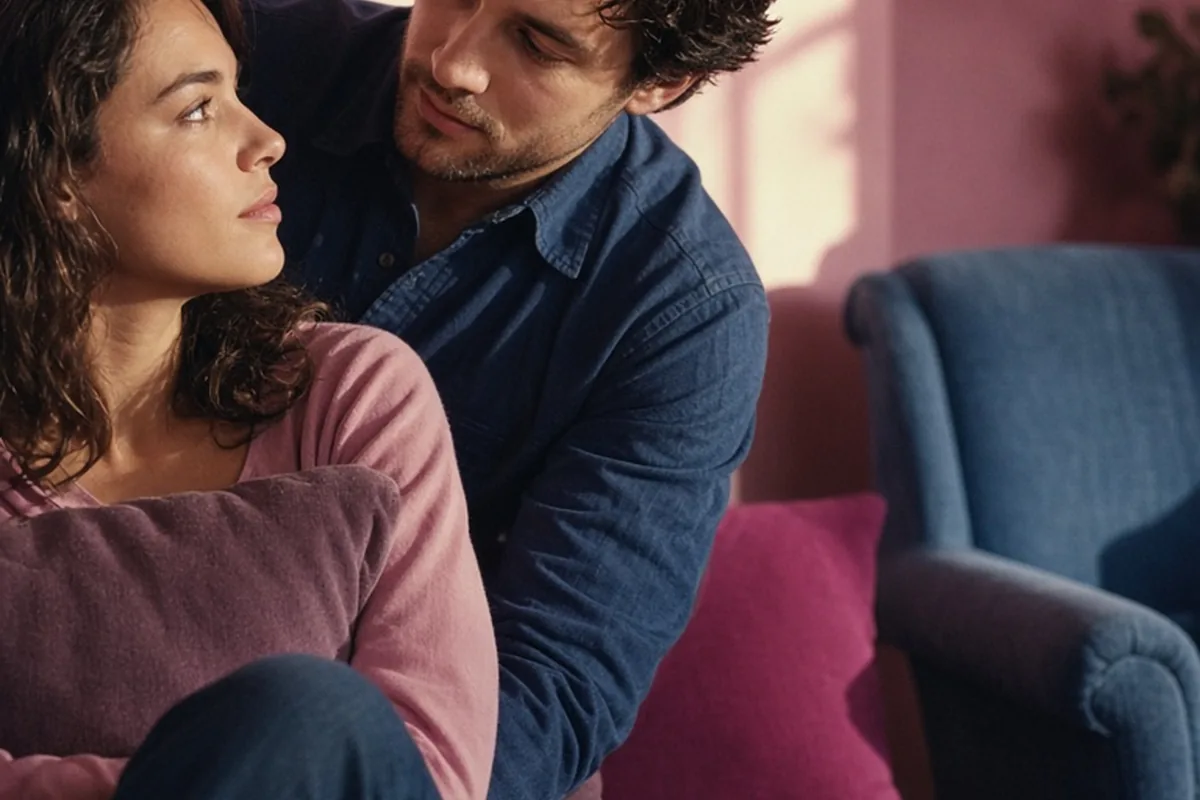
The body language of a man in love centers on consistent physical engagement, sustained proximity, and openness. Common cues include soft, lingering eye contact, angling his torso and feet directly toward you, leaning in closely during conversations, unconscious mirroring of your posture, and gentle, respectful contact. These physical responses reflect genuine emotional vulnerability and attentiveness rather than calculated posturing.
Understanding nonverbal behavior helps clarify romantic interest when verbal communication feels hesitant or ambiguous. While individual expressions differ based on personality, a man who develops deep romantic feelings usually reveals his emotional investment through subtle, repeatable physical habits that prioritize connection, comfort, and mutual presence.
Sustained Eye Contact and Softening Facial Expressions
A man who is falling in love often looks at his partner differently than an acquaintance or a casual acquaintance would. Rather than scanning the room or glancing away when conversation pauses, his gaze remains centered on your face, frequently shifting in a triangular pattern between your eyes and your mouth. This sustained visual engagement is paired with a noticeable softening of his facial muscles. Raised eyebrows, subtle smiling around the eyes, and a relaxed jaw indicate that he feels emotionally safe and fully absorbed in your presence.
The primary value of this nonverbal cue is that it demonstrates sustained attention in an environment full of potential distractions. For instance, in a crowded restaurant or loud social gathering, his visual focus consistently returns to you, signaling that you are his primary reference point in the room. The limitation to keep in mind is that shyness, social anxiety, or cultural norms can sometimes suppress direct eye contact. A shy man might look down quickly when caught looking, not out of disinterest, but because his emotional feelings create temporary nervous tension.
Physical Proximity, Torso Orientation, and Leaning In
When romantic feelings deepen, spatial boundaries naturally compress. A man in love will habitually reduce the physical distance between you, choosing to sit directly beside you rather than across a table, or leaning his upper body forward whenever you speak. His feet, knees, and shoulders will consistently point directly toward you, even in group settings where multiple people are interacting. This alignment, known as torso orientation, reveals where a person's underlying interest and energy are genuinely focused.
Consider a scenario where you are sitting in a booth at a coffee shop. If he shifts forward, rests his forearms on the table, and eliminates physical barriers like menus, cups, or bags between you, he is physically signaling emotional openness. Conversely, crossed arms combined with a backward lean or placing objects as physical barriers can suggest emotional distance or fatigue. However, physical leaning should always be evaluated in context; cold ambient temperatures, poor hearing, or physical fatigue can influence posture without reflecting emotional withdrawal.
Unconscious Mirroring and Synchronized Body Movements
Mirroring is a well-documented nonverbal phenomenon where two people unconsciously match each other's physical rhythms, postures, and gestures. When a man feels deep affection and emotional resonance, he will often adopt your physical positioning without realizing it. If you lean your chin on your hand, cross your legs in a particular direction, or take a sip of your drink, you may notice him performing the exact same action seconds later. This synchronization reflects active emotional attunement and an instinct to build rapport.
This behavior goes beyond simple body posture to include vocal pacing and walking speed. A man with genuine romantic investment tends to naturally match your stride when walking together on the sidewalk, ensuring you do not have to hustle to keep up. The benefit of recognizing mirroring is that it shows genuine empathy and focus. However, mechanical or deliberate mirroring used as an artificial persuasion technique feels rigid and unnatural; authentic mirroring is fluid, quiet, and happens without conscious performance.
Respectful Touch and Protective Micro-Gestures
Touch is one of the most direct nonverbal indicators of romantic affection, but the quality and context of the touch matter significantly. A man who loves someone often engages in gentle, non-demanding physical contact designed to comfort or connect rather than initiate immediate physical escalation. Examples include a light touch on the small of the back when navigating a crowded room, holding hands with interlocked fingers, brushing a stray hair from your face, or resting a warm hand on your forearm during an intense conversation.
Alongside affectionate contact, men in love often display subtle protective micro-gestures. He might instinctively position himself on the street side of the sidewalk, hold open a heavy door, or scan a dark parking lot to ensure your safety before saying goodbye. These actions are rooted in genuine care and a desire to provide a secure environment. The practical boundary here is essential: healthy protective gestures support personal autonomy and safety, whereas controlling or restrictive physical behaviors should never be confused with romantic care.
Nervous Energy and Vulnerability Displays
Even confident individuals experience a degree of nervous vulnerability when strong romantic feelings develop. Because the stakes of the interaction feel higher, a man in love may exhibit subtle physical cues of nervous excitement. These can include adjusting his collar, smoothing his hair, fiddling with his watch, clearing his throat, or briefly fumbling with everyday objects like keys or glasses. This gentle agitation reveals that your opinion matters deeply to him and that he wants to present himself favorably.
Recognizing these vulnerability cues helps prevent misinterpreting his tension as emotional detachment or disinterest. For example, if he stumbles over his words slightly or seems unusually careful with his movements during an intimate dinner, it often reflects internal reverence rather than coldness. The nuance lies in distinguishing healthy vulnerability from chronic emotional distress; occasional affectionate nervousness tends to settle into calm attentiveness as emotional safety and mutual familiarity grow.
Distinguishing Authentic Affection from Performative Flirting
Not all positive body language signifies long-term love. Charismatic or experienced daters often understand how to project confidence, use charm, and hold eye contact to create fast attraction. The key difference between performative flirting and authentic romantic attachment lies in consistency, patience, and behavioral durability across varied circumstances. A man who is genuinely falling in love maintains his attentive body language when there is no immediate romantic reward, during stressful moments, and in public or mundane daily routines.
To evaluate this distinction practically, observe how his body language shifts over time and under pressure. Performative charm tends to vanish when plans change unexpectedly, when conversations turn to serious emotional topics, or when you express personal boundaries. In contrast, genuine romantic affection displays calm patience: his posture remains receptive, his face remains engaged, and his physical actions respect your space and pace without exhibiting frustration or withdrawal.
Illustrative Scenarios
Deciphering Mixed Signals During Group Dinners
Marcus and Elena had been dating for two months, but Elena felt uncertain about his depth of feeling because Marcus was reserved in group settings. During a crowded dinner with mutual friends, Marcus spoke infrequently to the table at large. However, Elena noticed his body was angled entirely toward her, his hand consistently rested near hers on the bench, and his eyes met hers with a warm, shared smile whenever someone told a funny story. Instead of interpreting his quietness as aloofness, Elena recognized that his physical orientation and nonverbal focus were quietly centered on her comfort and shared connection.
Key point: Nonverbal cues in social settings often reveal emotional priorities more accurately than outward social gregariousness.
Navigating Misinterpreted Nervous Habits
David started acting noticeably fidgety around Chloe after several weeks of smooth, easy dates. He adjusted his jacket repeatedly, checked his phone for the time, and looked away nervously during quiet moments, causing Chloe to worry he was losing interest. When Chloe gently asked how he was feeling, David admitted that he had realized how deeply he cared for her and was terrified of saying the wrong thing. Understanding that his restless movements were physical manifestations of vulnerability allowed them to share a reassuring conversation that strengthened their emotional bond.
Key point: Sudden physical nervousness in an otherwise comfortable dynamic can signal growing vulnerability rather than fading attraction.
Frequently asked questions
Can you know for sure if a man is in love based only on body language?
No, body language provides valuable contextual evidence of attraction and emotional engagement, but it cannot replace open communication. Physical cues should always be confirmed by his verbal clarity, consistent effort, and respect for your boundaries over time.
What is the single most reliable body language sign of emotional attachment?
Unconscious orientation and sustained attentiveness are generally the most reliable nonverbal indicators. When a man consistently turns his torso toward you, minimizes physical barriers, and remains focused on you across varied environments, it indicates strong emotional prioritization.
How does shy male body language differ from regular romantic body language?
A shy man may avoid prolonged direct eye contact and show more pronounced fidgeting or nervous hesitation when sitting close to you. However, you will still observe subtle signs such as hovering near your physical space, frequent stolen glances, and a soft, receptive expression when you speak.
Your next step
Observe nonverbal cues as a holistic pattern over multiple weeks, and use your observations as a foundation for honest, clear conversations about where you both stand emotionally.