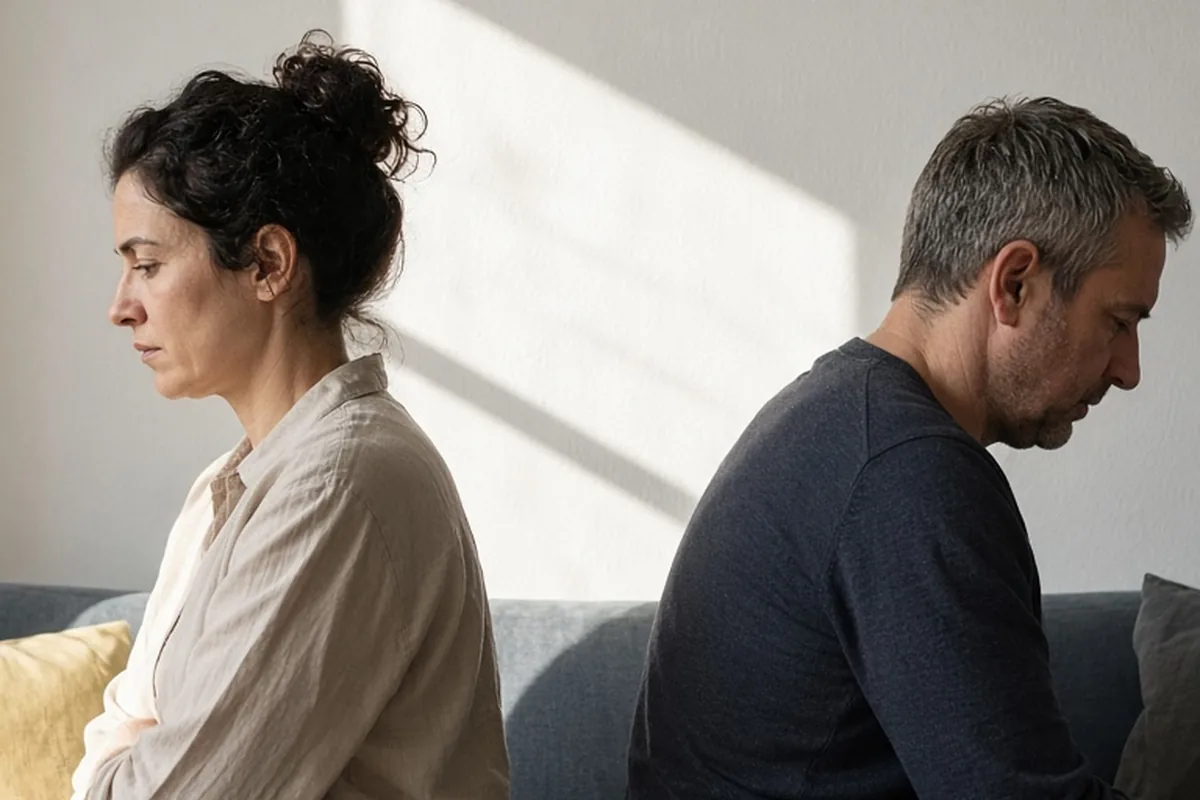
The body language of unhappy married couples typically shows physical withdrawal, defensive posturing, and reduced warmth. Common signals include avoiding eye contact, turning torsos away during conversation, crossing arms defensively, shrinking physical touch, and displaying dismissive micro-expressions like eye-rolling or tight lips. While an isolated gesture rarely indicates deep trouble, consistent patterns of physical disengagement often signal unaddressed emotional distance, chronic resentment, or unresolved conflict.
Nonverbal communication frequently reflects the health of a partnership long before either spouse explicitly articulates their dissatisfaction. When emotional distance grows, unconscious physical habits and postures shift to match that internal divide.
Chronic Spatial Avoidance and the Separation of Daily Environments
In a healthy partnership, spouses naturally drift toward one another, sharing physical space comfortably even when engaged in separate tasks. In distressed relationships, this proximity often creates anxiety or emotional fatigue. Unhappy couples frequently maintain substantial physical distance by positioning themselves on opposite ends of a large sofa, choosing separate rooms to relax in, or deliberately altering their domestic routines to minimize running into one another in shared areas like the kitchen or hallway. This avoidance functions as a self-protective measure designed to prevent conflict or evade uncomfortable silence.
Consider a typical evening where one spouse lingers in a home office or garage under the premise of minor chores, waiting until their partner has gone upstairs to sleep before entering the bedroom. While spending time alone is a normal and healthy aspect of any committed relationship, consistent dodging of a spouse's physical orbit reveals intentional detachment. The distinguishing factor is the underlying motive: restorative solitude recharges personal energy, whereas spatial avoidance seeks refuge from interpersonal tension.
It remains important, however, not to confuse general exhaustion or conflicting work schedules with active marital distress. Demanding careers, neurodivergent needs for decompression, or temporary sensory overload can prompt someone to seek a quiet room without any animosity toward their partner. Physical avoidance points reliably to relationship strain when it represents a sustained departure from previous patterns of sharing space with ease.
Defensive Orientations and Blocked Postures During Conversations
The physical alignment of a person's body reveals their emotional receptivity during communication. In troubled marriages, daily interactions are often marked by closed postures that establish subtle physical barriers. A spouse might tightly cross their arms across their chest, keep a laptop or smartphone elevated between their faces, or angle their shoulders and hips away from their partner toward an exit. These postures demonstrate that the listener feels guarded, viewing the conversation not as a collaborative exchange but as a potential dispute.
For example, during a routine discussion about family logistics or weekend plans, one partner might remain squared toward the kitchen counter or television, answering questions over their shoulder without fully turning around. This angled stance withholds presence and signals a desire to escape the interaction as quickly as possible. When both spouses habitually converse from guarded angles, everyday communication becomes transactional and cold.
Context is crucial when interpreting closed postures, as simple physical conditions frequently dictate how people sit or stand. A partner crossing their arms may simply feel cold, experience joint fatigue, or find the posture physically comfortable. Closed body language indicates emotional friction when it consistently appears alongside curt verbal replies, defensive tones, or an unwillingness to soften their stance as the dialogue progresses.
The Loss of Sustained Eye Contact and the Emergence of a Flat Affect
Eye contact is one of the most powerful nonverbal conduits for intimacy, validation, and emotional attunement. When marital satisfaction erodes, mutual gaze is frequently replaced by glancing avoidances or prolonged staring at electronic screens. Spouses may look past each other, drop their eyes downward whenever a meaningful topic arises, or maintain a blank, flat facial affect that communicates resignation and emotional withdrawal.
A clear demonstration of this shift occurs during homecomings. In connected relationships, partners usually pause, look into each other's eyes, and acknowledge the return with a warm expression. In an unhappy dynamic, greetings are often muttered without the listener ever lifting their gaze from their phone or desk. This lack of visual acknowledgment leaves the arriving partner feeling invisible, conveying the silent message that their presence does not shift the emotional climate of the home.
At the same time, natural eye contact habits vary significantly based on cultural background, personality, and sensory processing differences. Some people naturally look away while concentrating or processing complex thoughts. The key indicator of relationship distress is not whether eye contact is held constantly, but whether a spouse who previously held a warm, attentive gaze has gradually replaced it with visual avoidance, cold stares, or visible disinterest.
The Disappearance of Spontaneous Micro-Touches and Casual Affection
Informal, non-sexual physical contact serves as an ongoing gauge of marital safety. These small gestures—placing a hand on a spouse's lower back while navigating past them, squeezing an arm in sympathy, or offering a quick embrace before leaving—communicate care without demanding a performance. In unhappy marriages, these spontaneous tactile reassurances tend to disappear long before sexual intimacy completely halts.
When touch does occur in a strained marriage, it often feels stiff, performative, or reluctant. If one partner reaches out to initiate a hug, the other may keep their arms limp, hold their torso rigid, or step away prematurely. In situations with severe underlying resentment, a partner might visibly flinch, recoil, or adjust their clothing immediately after being touched. This reflexive withdrawal suggests that physical contact is experienced as an unwelcome boundary intrusion rather than an expression of comfort.
Tactile responsiveness naturally fluctuates with stress, personal health, and fatigue, so a temporary dip in physical affection is not automatically proof of marital breakdown. What matters is the enduring pattern. When weeks or months pass without any spontaneous, reciprocal touch, the tactile silence speaks to an emotional chasm that requires gentle, deliberate attention.
Facial Cues of Contempt, Resentment, and Dismissive Micro-Expressions
Facial expressions frequently reveal unresolved anger or disdain through fleeting, involuntary micro-movements. Contempt, which is particularly destructive to long-term partnerships, manifests through distinctive physical tells: a slight sneer that raises only one corner of the mouth, an exaggerated roll of the eyes, or lips pressed together in a tight, thin line. These expressions betray an attitude of moral superiority and judgment, even when spoken words remain neutral.
Consider a scenario where one spouse shares an idea or expresses frustration regarding a household responsibility. Rather than showing attentive engagement, the other spouse sighs audibly, drops their chin, and lets their eyes drift upward before offering a response. This subtle display communicates to the speaker that their perspective is viewed as trivial or tiresome. Over time, recurring dismissive facial cues teach partners to suppress their feelings to avoid silent mockery.
Care must be taken to avoid hyper-analyzing every momentary facial twitch, as squinting, blinking, or brow-furrowing can stem from bright lighting, eye strain, or deep concentration. Rather than trying to decode single, isolated expressions, focus on whether dismissive expressions appear repeatedly during discussions, problem-solving conversations, or moments of emotional vulnerability.
Asynchronous Public Movement and the Creation of Sleep Barriers
The physical rhythm between spouses extends beyond spoken conversations to public navigation and shared sleeping arrangements. When partners feel aligned, they naturally synchronize their walking speed, keeping pace beside each other. In contrast, disconnected couples frequently drift apart in public spaces: one partner walks several yards ahead without looking back, while the other lags behind, creating an unmistakable physical gap that mirrors their emotional distance.
In the bedroom, spatial arrangements often reflect the underlying temperature of the marriage. Couples experiencing chronic unhappiness frequently sleep facing the outer edges of the mattress, creating physical buffers using decorative pillows or separate blankets to prevent accidental physical contact throughout the night. Others manage their evening schedules specifically to ensure their partner is already asleep before they get into bed, circumventing the vulnerable, quiet space of a shared bedroom.
While differing biological chronotypes, temperature preferences, and natural walking paces are entirely normal variations, persistent physical disconnection across multiple settings often reflects an unconscious strategy to minimize interaction. When physical separation becomes the standard operating procedure for both public outings and nighttime rest, it signals that the shared emotional foundation needs active repair.
Constructive Ways to Address Nonverbal Drift Without Triggering Defensiveness
Noticing physical signs of distress in a marriage is only helpful if the observation leads to constructive, compassionate engagement rather than accusations. Confronting a partner directly about their posture or facial movements—such as asking, 'Why are you rolling your eyes at me?' or 'Why do you always flinch when I touch you?'—inevitably triggers defensiveness. Instead of auditing their physical behavior, frame the observation through your shared emotional environment.
A far more effective approach is to initiate a low-pressure conversation centered on connection: 'I have felt some physical distance between us lately, and I miss feeling close to you. How have you been feeling about things between us?' Phrasing the issue this way moves the conversation away from blame and invites your partner to share what might be weighing on their mind. It acknowledges the nonverbal reality without putting your spouse on trial.
Alongside verbal dialogue, reintroducing small, no-pressure bids for warmth can help rebuild comfort over time. Bringing a partner a cup of coffee, sitting nearby without demanding conversation, or simply offering a warm smile when they enter the room can soften defenses. If the physical withdrawal is deeply ingrained and everyday attempts to communicate fail, pursuing guidance from a licensed marriage and family counselor can provide a structured, safe setting to explore the grievances driving the distance.
Frequently asked questions
Can body language alone determine whether a marriage will end?
No, body language alone cannot predict the outcome of a relationship. External factors like chronic stress, bereavement, illness, and fatigue often mimic nonverbal detachment. A thorough understanding requires looking at enduring behavioral patterns in combination with honest verbal communication.
What should I do if my partner recoils or pulls away from my touch?
Respect their physical boundary immediately without responding with hostility or panic. Later, during a calm moment, gently ask if they are feeling overwhelmed or if there is unresolved tension between you. Forcing affection when a partner feels disconnected typically drives them further away.
Can consciously changing our body language fix an unhappy relationship?
Adopting open posture and offering warmer eye contact can improve the emotional atmosphere of your home, but it cannot solve core marital issues on its own. Physical adjustments are most helpful as a supportive practice alongside transparent communication, mutual accountability, and dedicated conflict resolution.
How can I tell the difference between work stress and relationship dissatisfaction?
Work stress typically results in generalized exhaustion that lifts when a spouse feels supported, and stressed partners often still seek out their spouse for comfort. Relationship dissatisfaction, on the other hand, directs coldness, guarded posture, or avoidance specifically toward the partner while remaining engaged with friends, hobbies, or colleagues.
Your next step
Choose a quiet, neutral moment today to observe your shared physical patterns with empathy, and invite an honest, blame-free conversation about how emotionally connected you both feel.