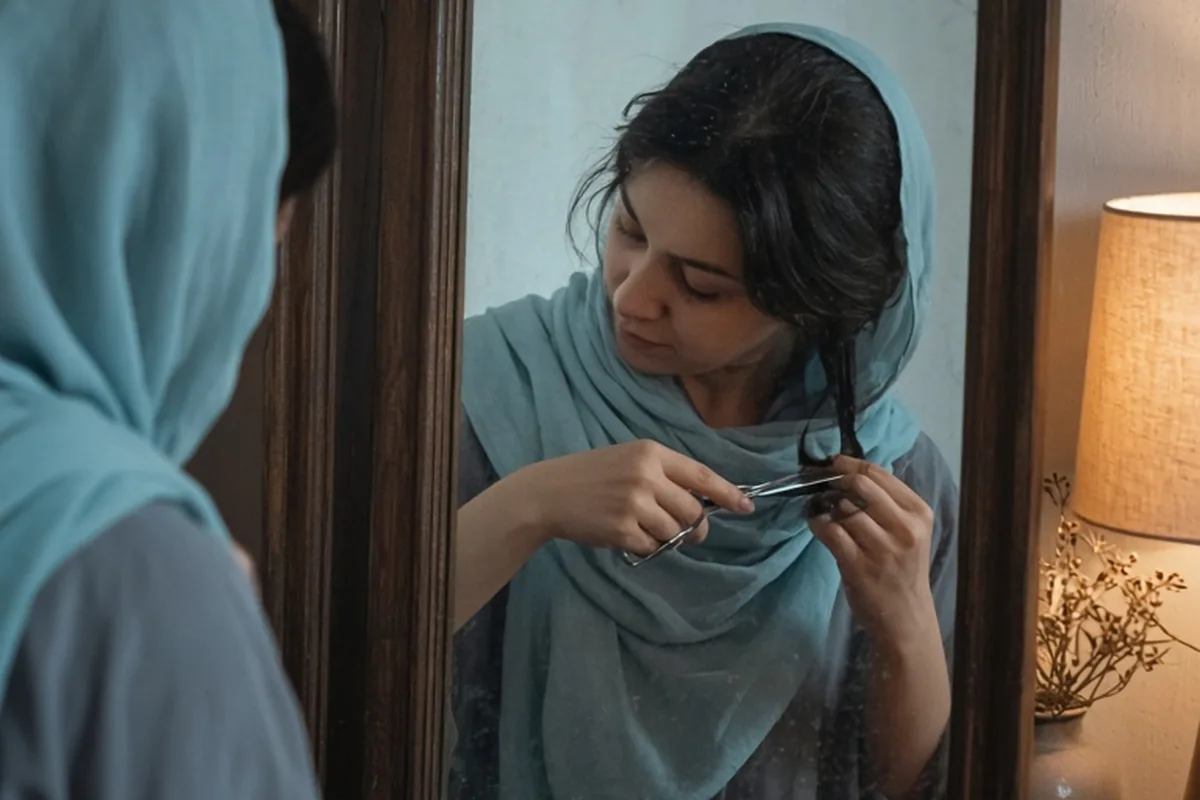
Yes, a woman can cut her own hair after completing Umrah to release herself from the state of Ihram. Islamic scholars across the major schools of thought agree that self-trimming, known as Taqsir, is entirely valid. A woman simply cuts approximately a fingertip's length—about one inch—from the ends of her hair using clean scissors.
Completing the rituals of Umrah is a profoundly moving experience, marking the end of sacred devotion and personal renewal. As you conclude your Sa'i between Safa and Marwah, the final act required to leave the consecrated state of Ihram is Taqsir, the cutting of hair.
The Ruling and Independence of Performing Taqsir Yourself
A widespread misconception among many first-time pilgrims is that a female worshiper must rely on her mahram or another female companion to cut her hair to complete her Umrah. In Islamic jurisprudence, a woman possesses complete autonomy over her worship and can legally perform Taqsir on herself once she has finished Tawaf and Sa'i. You do not need an intermediary to validate your ritual. Once you have completed the prescribed seven circuits of Sa'i, taking a pair of scissors and cutting your own hair fulfills the obligation perfectly.
Scholarly consensus across the traditional schools of thought confirms that an individual still in Ihram can perform their own exit trim or even cut the hair of another pilgrim who has also finished their rites. The action of trimming is the vehicle through which Ihram ends, meaning you are not violating the prohibition against cutting hair while in Ihram because the act itself is the rite of release. Understanding this independence gives women peace of mind, particularly those traveling solo, in all-women tour groups, or those separated from their travel companions in the vast crowds of Mecca.
How Much Hair to Cut: Measurement and Juristic Perspectives
The standard measurement for Taqsir for women is universally described as an unmula, which corresponds to the length of a fingertip, or roughly one-third of a finger. In modern measurements, this equals approximately one-half to one inch, or two to three centimeters. Women are explicitly prohibited from shaving their heads (Halq), which is reserved as an option for men; rather, trimming the ends is the only legislated method for female pilgrims.
While the fingertip length is standard, scholars present slightly different interpretations regarding how much of the total hair volume must be clipped. According to the Shafi'i school, trimming at least three individual hairs by a fingertip's length is sufficient to fulfill the minimum requirement, though trimming across the full perimeter is encouraged. The Hanafi school requires cutting a fingertip's length from at least one-fourth of the hair, while the Hanbali and Maliki traditions recommend gathering the entire body of hair into a single braid, ponytail, or gathered cluster and trimming a fingertip's length from all the gathered ends. To ensure widespread validity across all schools of thought, gathering your hair and taking an inch off the combined bottom ends is considered the safest and most comprehensive approach.
Step-by-Step Instructions for Cutting Your Own Hair
Trimming your own hair after a long day of worship is straightforward when you follow a structured method. Before you begin, ensure that you have genuinely completed all seven laps of Sa'i at Mount Marwah. It is best to wait until you are settled in a clean, private space with a dedicated pair of scissors. If you brought small safety scissors or travel scissors in your personal bag, ensure they are sharp enough to make a clean cut through your gathered hair.
To perform the cut evenly on your own, start by gathering all of your hair neatly behind your head or dividing it into two equal sections on either side of your face. Smooth down the strands and hold the bottom ends firmly between your index and middle fingers. Measure roughly the length of the top joint of your index finger from the very bottom. Make an intention in your heart to exit Ihram for Umrah, say Bismillah, and carefully snip straight across the ends. If your hair is layered or uneven, gathering it into two side bunches or a forward braid makes it easier to reach and ensures every major section has a fingertip's length removed.
Modesty, Privacy, and Where to Perform Taqsir
One practical challenge women face at the conclusion of Sa'i is managing modesty in public areas. The end of the Sa'i track at Marwah is often crowded with pilgrims, street vendors selling scissors, and active movement. Because a Muslim woman observes Hijab in public and during pilgrimage rites, removing your scarf or exposing your hair at the public exits of the mosque to perform Taqsir is not recommended and compromises your privacy.
The best practice is to delay the physical trim until you reach a private space. You do not need to cut your hair within the immediate boundary of the mosque; you remain in Ihram until you perform the cut, whether you do it immediately at Marwah or thirty minutes later in your hotel room. The vast majority of women prefer returning to their private hotel room or using dedicated female restrooms and nursing areas within the Haram complex where they can comfortably remove their head covering, look into a mirror, and cut their hair without feeling rushed or observed.
Assisting Others Versus Cutting Your Own Hair
In many travel groups, female pilgrims enjoy assisting one another with Taqsir. A common question is whether a woman who has not yet cut her own hair can cut another woman's hair. In classical jurisprudence, as long as both women have completed the necessary ritual laps of Tawaf and Sa'i, one woman can cut the hair of her companion first, or she can cut her own hair first. Helping another pilgrim does not incur any spiritual penalty.
However, performing the trim on yourself offers clear advantages in terms of speed and personal comfort. When crowds are heavy or groups get separated at the Marwah exit, waiting for a companion or finding a male guardian to perform the trim can cause unnecessary delays and fatigue. Knowing how to do it yourself allows you to conclude your pilgrimage independently and immediately begin resting and transitioning out of Ihram.
Common Misconceptions and Practical Mistakes to Avoid
Several practical errors and persistent myths surround Taqsir for women. The first major mistake is cutting hair before fully concluding the seventh lap of Sa'i. Because cutting hair is strictly prohibited while in Ihram, trimming prematurely—even by a few minutes—requires a compensatory penalty in traditional jurisprudence. Always verify that you have finished the final lap at Mount Marwah before making the cut.
Another misconception is that stray hairs falling out naturally during brushing or washing before Taqsir invalidate your Umrah. Natural hair shed without deliberate pulling is completely excused. Additionally, some women worry excessively about achieving a salon-perfect cut. Taqsir is a spiritual symbol of humility and transition, not a cosmetic styling session; a basic, even snip across the ends of the gathered hair satisfies all religious requirements without needing perfection.
Exiting Ihram: What to Do Immediately After the Trim
The moment you complete your Taqsir, all restrictions associated with Ihram are lifted. You have officially completed your Umrah. At this point, you can shower with scented soap, apply perfume or scented lotion, trim your nails, change into your regular everyday clothes, and resume normal marital relations if traveling with a spouse.
It is recommended to properly dispose of the trimmed hair by wrapping it in a tissue and placing it in a trash bin rather than leaving loose strands on public floors or hotel carpets. After completing the trim, take a moment to offer a personal prayer of gratitude (Dua) for the strength, health, and opportunity to perform your pilgrimage successfully.
Frequently asked questions
Can I cut my own hair before cutting someone else's hair?
Yes, you can cut your own hair first or cut another pilgrim's hair first, provided both of you have finished all required circuits of Tawaf and Sa'i. There is no mandatory order between self-trimming and helping a companion.
Do I need to be in Wudu to perform Taqsir on myself?
Being in a state of ritual purity (Wudu) is not a mandatory condition for cutting your hair at the end of Umrah. While maintaining Wudu throughout worship is virtuous, your Taqsir remains valid even if your Wudu lapsed during Sa'i.
What should I do if my hair is very short or in a pixie cut?
If your hair is too short to gather into a single ponytail, simply take small scissors and clip a tiny fraction from the ends of several sections around your head. As long as a small trim is taken across different sides of your hair, the requirement is satisfied.
Can I use nail clippers to cut my hair if I do not have scissors?
While scissors are the standard and most practical tool, using clean nail clippers or any sharp cutting implement to snip the required fingertip length from your hair ends is technically valid if scissors are unavailable.
Your next step
A woman can confidently cut her own hair by a fingertip's length in a private space once Sa'i is complete, smoothly releasing herself from Ihram without needing assistance.