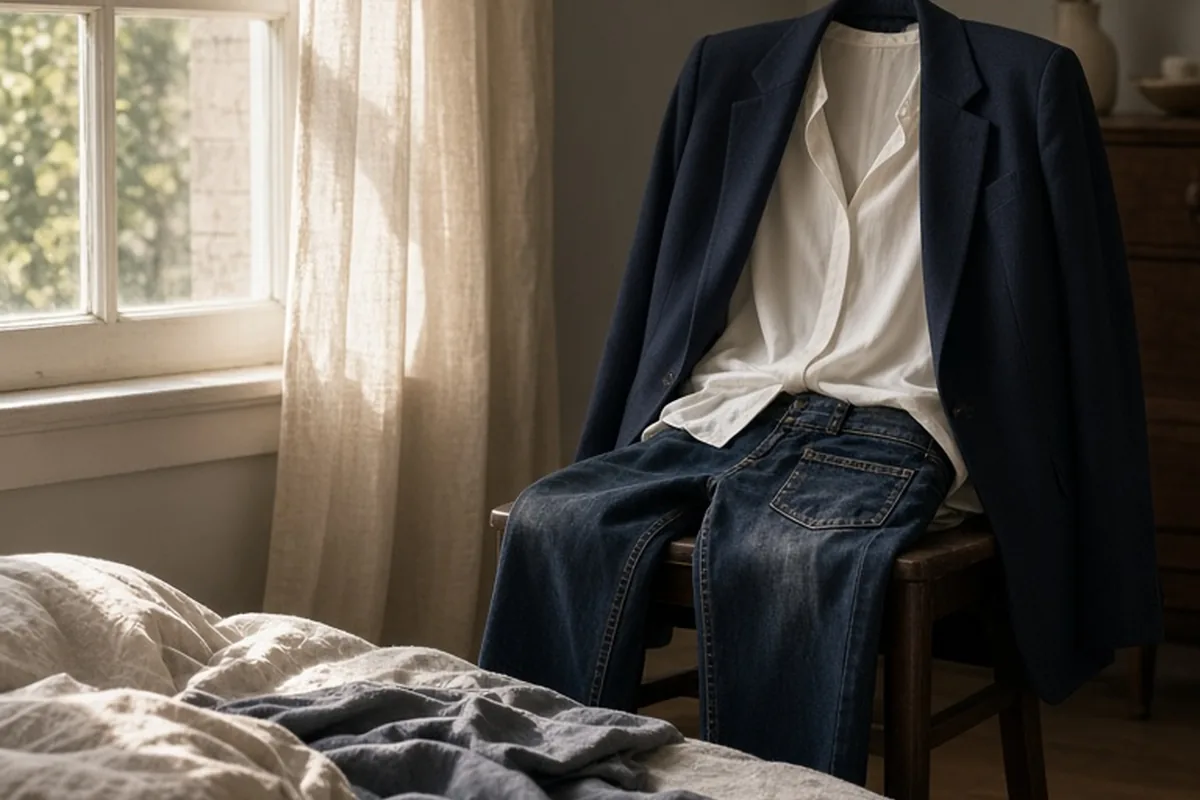
While most courts do not strictly ban plain jeans for spectators or routine administrative matters, wearing denim is generally discouraged. Judges expect business casual or professional attire out of respect for legal decorum. If jeans are your only option, select dark, tailored, non-distressed denim paired with a conservative blouse and a structured blazer. When appearing as a party or juror, slacks or a skirt offer a much safer approach.
Stepping into a courthouse can feel intimidating, and deciding what to wear often adds unnecessary anxiety to an already stressful event. Although courtrooms are public civic spaces, they operate under established traditions of formality and decorum designed to reflect seriousness and impartiality. Navigating the line between personal comfort, wardrobe access, and institutional expectations starts with understanding how courtroom standards function in practice.
Courtroom Dress Codes vs. Judicial Discretion
Most municipal, county, and state courthouses post general dress guidelines near building entrances or on their official public websites. These rules typically prohibit explicit casualwear, such as swimwear, sheer garments, muscle shirts, crop tops, and hats. However, official written rules rarely list every specific fabric or garment, which leaves considerable discretion to individual judges and presiding magistrates. A judge has the statutory authority to maintain order and dignity within their courtroom, meaning what one judge allows, another may openly reprimand.
Because of this broad judicial discretion, unwritten expectations often carry more weight than posted minimal dress codes. Judges, bailiffs, and court clerks observe dozens of people every day, and visual presentation is often interpreted as a reflection of an individual's respect for the proceedings. While a clerk processing paperwork at a service window may not mind casual denim, a judge presiding over a contested hearing may view blue jeans as overly casual. Understanding that the judge sets the tone for their specific courtroom helps you make conservative, low-risk wardrobe choices.
How Your Courtroom Role Dictates Your Wardrobe
The appropriateness of jeans often depends directly on why you are in the building. Spectators sitting quietly in the gallery are held to the lowest threshold of formality, provided their clothing is clean, modest, and free of disruptive slogans. Prospective and seated jurors occupy an intermediate tier; court administration recognizes that jurors are ordinary citizens performing civic duty, so neat, everyday casual attire is frequently tolerated, though business casual remains the preferred standard to honor the gravity of jury service.
If you are an active participant—such as a plaintiff, defendant, petitioner, or key witness—the stakes rise significantly. In these roles, your credibility, sincerity, and attentiveness are under direct scrutiny by the judge or jury. Wearing blue jeans can unintentionally signal that you treat the matter casually or do not appreciate the gravity of the legal forum. When personal freedom, custody, financial restitution, or reputation are on the line, opting for traditional trousers, a modest dress, or a pressed skirt eliminates the risk of an unfavorable first impression.
Guidelines for Styling Denim If Jeans Are Your Only Option
There are valid reasons why purchasing new clothing for a court date may not be feasible, including economic constraints, emergency hearings, or sudden travel. If you must wear jeans, the goal is to make them look as close to tailored slacks as possible. Choose a dark, uniform wash, such as solid black, deep indigo, or dark charcoal, with matching thread rather than contrasting gold stitching. The fit should be structured, mid-to-high rise, and classic—such as a straight-leg or subtle bootcut—avoiding overly tight skinny jeans or excessively baggy silhouettes.
Elevating the rest of your outfit is essential to balance the casual nature of denim. Pair your dark jeans with a pressed, high-neck blouse, a conservative button-down shirt, or a modest knit sweater, and layer with a tailored blazer or structured cardigan. For footwear, select clean, closed-toe shoes such as leather loafers, pointed flats, or low block heels. Ensure that your hair is neat, accessories are minimal, and your overall appearance communicates preparation and care.
Denim Styles and Casual Items to Avoid Completely
While dark, tailored jeans may pass without issue in many courtrooms, certain casual styles are almost universally unacceptable and can result in a bailiff refusing you entry. Distressed denim is the most common violation; any jeans featuring rips, raw hems, frayed edges, acid washing, or intentional fading belong outside the courtroom. Similarly, casual cuts such as low-rise waistbands, cargo-pocket pants, and ultra-wide streetwear jeans should be kept at home.
Beyond denim itself, avoid pairing your clothes with items that diminish the seriousness of the environment. Graphic t-shirts with commercial logos, political slogans, or humorous text are strictly prohibited in nearly all jurisdictions. Athletic wear—including leggings, sweatpants, yoga shorts, track jackets, and running shoes—signals casual recreation rather than formal civic participation. Open-toed flip-flops, excessively high platform heels, sunglasses worn indoors, and baseball caps also violate general courtroom etiquette.
Inexpensive and Comfortable Alternatives to Jeans
Achieving a courtroom-appropriate look does not require an expensive wardrobe. Many budget-friendly alternatives provide the physical comfort of denim while maintaining the visual polish of formal attire. Ponte-knit trousers, for example, offer the stretch and ease of casual pants while presenting a smooth, structured finish identical to classic dress slacks. Chinos in neutral colors like navy, olive, khaki, or black serve as versatile staples that work well across all seasons.
Midi-length skirts and jersey wrap dresses are additional low-cost options that require minimal tailoring and allow for ease of movement. Secondhand consignment shops, community clothing closets, and discount department stores frequently stock neutral blouses, knit tops, and unstructured blazers for modest prices. Investing in one simple, dark pair of trousers and a solid-colored top creates a reliable outfit suitable for legal appointments, job interviews, and civic proceedings alike.
Managing Weather, Mobility, and Cultural Considerations
Courthouses present unique environmental challenges that should inform your clothing choices. Security checkpoints require removing metal accessories, belts, and heavy outerwear, so wearing simple, easily adjusted layers streamlines your arrival. Interior temperatures can swing unpredictably between chilly air-conditioned courtrooms and warm corridors, making a medium-weight cardigan, wrap, or blazer practical for sitting comfortably through prolonged calendar calls and docket delays.
Accommodations for religious garments, cultural headwear, and medical mobility needs are protected rights across judicial systems. Hijabs, turbans, yarmulkes, and modest religious dresses are fully permitted, though security officers may request standard non-invasive security checks at entry. If you have mobility limitations or chronic pain that prevents wearing structured slacks, prioritize clean, dark, supportive clothing and comfortable orthopedic closed-toe footwear, which court personnel routinely accommodate.
Practical Consequences of Violating Court Dress Expectations
Arriving in attire that violates a courthouse dress code can create logistical and legal setbacks. In minor instances, a court bailiff or security officer may stop you at the metal detectors and deny building entry until you find alternative clothing. If you are already inside the courtroom, a judge may delay your matter to the end of the docket or instruct you to return on another date, which can result in missed work hours, additional travel expenses, and prolonged legal disputes.
In severe or disruptive scenarios—such as refusing a direct judicial order to adjust offensive clothing or wearing garments with profane language—a judge can issue a contempt of court citation, which may carry administrative fines. While a neat pair of dark jeans is exceedingly unlikely to trigger punitive contempt, underdressing adds avoidable friction to your day. Dressing conservatively ensures that the court's entire attention remains focused on the factual merits of your case.
Frequently asked questions
Can a judge hold someone in contempt solely for wearing jeans?
A judge will rarely hold someone in contempt simply for wearing clean, plain jeans. Contempt is typically reserved for disruptive behavior, refusal to comply with direct orders, or wearing clothing displaying profanity or explicit bias. However, a judge may refuse to hear your case that day and order a continuance until you dress appropriately.
Are black jeans more acceptable in court than blue jeans?
Yes, solid black jeans are significantly more acceptable than standard blue denim because they closely resemble formal slacks. When paired with a blazer, modest blouse, and dress shoes, tailored black jeans without visible contrast stitching often blend seamlessly into a business casual setting.
What is the recommended dress code for jury duty?
Most courts request business casual attire for jurors, such as chinos, slacks, modest dresses, or collared shirts. While clean, non-distressed jeans are frequently permitted during jury selection, opting for slightly more formal clothing shows respect for the judicial process and ensures compliance with any courtroom-specific rules.
Can I wear dress sneakers to court if I have mobility or foot issues?
Plain, supportive, dark sneakers are generally accepted if you have medical or mobility needs, especially when paired with neat trousers. If your footwear looks clean and neutral rather than brightly colored or athletic, court staff and judges will rarely question practical accommodations.
Your next step
Before your appearance date, visit your specific county or district court website or call the clerk of court to review local dress regulations and confirm that your planned outfit meets the local standard.