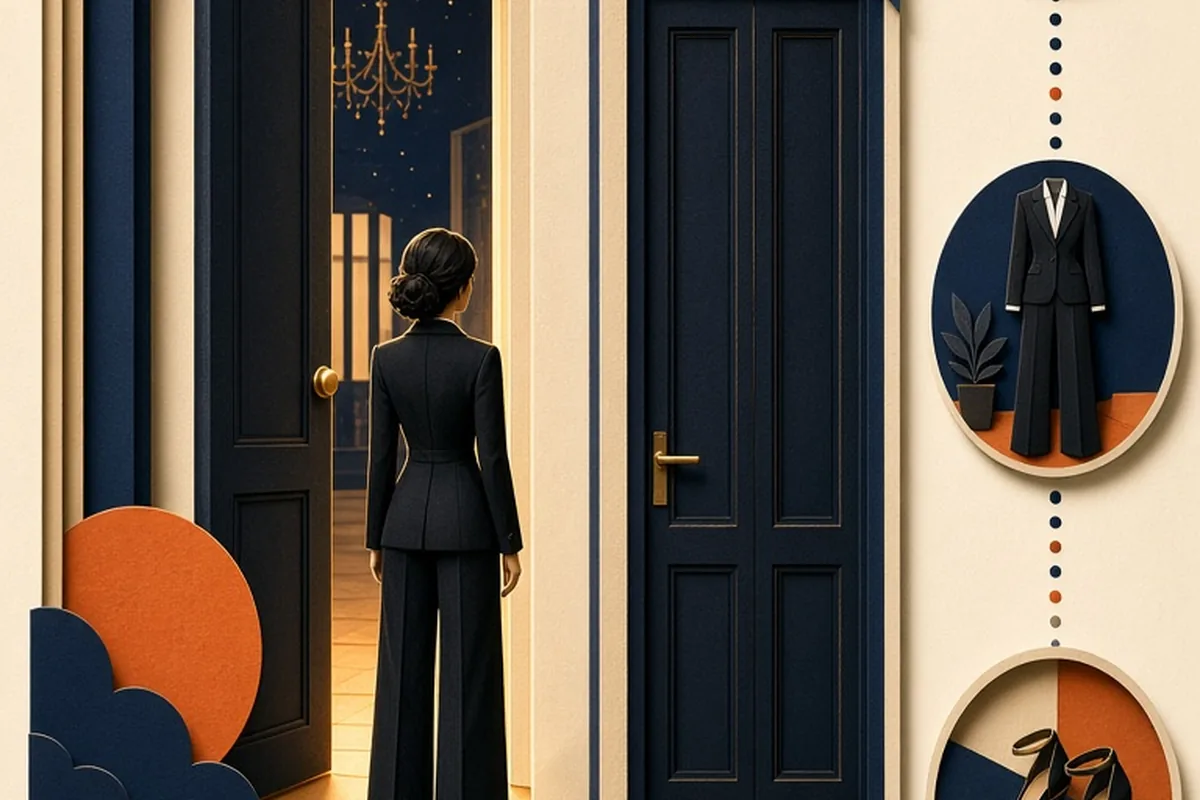
Yes, a woman can wear pants to a black tie event, provided the outfit matches the formality of a floor-length evening gown. Traditional casual trousers will not work, but tailored women's tuxedos, silk or velvet palazzo pants, and structured evening jumpsuits in rich, dark, or jewel-toned fabrics fit the dress code seamlessly when paired with elevated accessories and refined shoes.
Evening dress codes have historically centered on floor-sweeping dresses, but modern formal standards celebrate intentional, sophisticated tailoring. Choosing pants allows you to feel confident, mobile, and authentic without compromising the elevated atmosphere of a gala, formal wedding, or premiere.
The Core Criteria: Distinguishing Formal Pants from Everyday Trousers
The primary challenge when wearing pants to a black tie function is ensuring the garment cannot be mistaken for corporate workwear or upscale daywear. Black tie is defined by celebratory opulence, ceremony, and visual grandeur. Everyday suiting wools, stiff twills, cotton blends, and casual linens lack the sheen and movement required for an event of this caliber. To meet the standard, the textile must carry an undeniable evening quality, signaling that the piece was designed specifically for gala settings rather than a boardroom presentation.
To achieve this, look for luxurious fabrics that interact dramatically with evening light. Heavy silk crepe, lustrous duchess satin, rich devore or silk velvet, metallic brocade, and fine tuxedo wool trimmed with satin or grosgrain all convey formal elegance. The cut should also reflect intention, featuring either a razor-sharp, bespoke cigarette silhouette or an expansive, sweeping wide-leg cut that mimics the dramatic movement of an evening gown when you walk across the floor.
Consider, for example, a high-waisted palazzo pant made from fluid silk chiffon layered over silk charmeuse, paired with a matching structured bodice. It reads as regal and deliberate. However, a key trade-off with fluid, wide-leg evening fabrics is their delicacy; ultra-lightweight silks and trailing hem edges are vulnerable to snagging on heels or soaking up dampness from outdoor steps, requiring mindful movement throughout the night.
Mastering the Women's Tuxedo and Le Smoking Silhouette
Ever since Yves Saint Laurent debuted the groundbreaking Le Smoking in the 1960s, the female tuxedo has stood as a pinnacle of evening glamour. A beautifully cut tuxedo communicates authority, confidence, and refined taste. When done well, it rivals the most intricate ballgowns in elegance and presence. The secret lies entirely in the tailoring, because a boxy or poorly proportioned cut can easily overwhelm the frame and diminish the outfit's formal punch.
When selecting a tuxedo, look for intentional evening details. Classic satin peak lapels or a streamlined shawl collar instantly denote black tie pedigree. Pair the jacket with trousers that feature a matching satin side stripe down the exterior leg seam. Underneath, avoid casual cotton dress shirts that evoke office attire. Instead, opt for a sheer silk organza blouse with a dramatic bow, a delicate lace-trimmed silk camisole, or a plunge neckline anchored securely with garment tape for a minimalist, modern aesthetic.
A deep midnight blue or rich black tuxedo jacket fitted precisely at the shoulders and tapering gently at the waist provides an exceptional baseline. The practical limitation to keep in mind is temperature control: gala ballrooms often alternate between drafty entrances and warm, crowded dance floors. Removing your tuxedo jacket can instantly dismantle the architectural impact of your outfit, so ensure that whatever layer sits underneath is equally elegant on its own.
Choosing an Evening Jumpsuit as a Gown Alternative
A formal jumpsuit is one of the most natural, effortless alternatives to an evening gown. Because a jumpsuit creates a continuous, unbroken vertical column of color and texture, it mirrors the silhouette of a classic column dress while offering the dynamic mobility of trousers. It removes the stress of coordinating separate tops and bottoms, delivering an instantly cohesive and architectural look that is inherently modern.
When shopping for a black tie jumpsuit, pay close attention to structure and neckline. Look for designs that feature floor-skimming wide legs, asymmetric one-shoulder drapes, open architectural backs, or integrated cape sleeves that billow as you walk. The fabric must be substantial enough to drape smoothly over the hips without bunching. Matte crepe with satin accents, fully beaded georgette, and plush velvet are prime examples of materials that elevate a jumpsuit to black tie status.
For instance, an emerald green crepe jumpsuit featuring an asymmetric halter neckline and wide palazzo legs commands attention in any formal ballroom. The practical trade-off is logistical: formal jumpsuits present obvious challenges when visiting the restroom, often requiring unzipping a long back zipper or untying intricate neck drapery, making accessible fastening or a trusted companion essential during the event.
Navigating Color Palettes and Textures Beyond Classic Black
While midnight black remains the quintessential choice for black tie evening wear, limiting yourself strictly to black is unnecessary. Dark, saturated jewel tones and rich, luminous surfaces bring exceptional depth to evening trousers, helping your ensemble stand out without breaking dress code propriety. In artificial ballroom lighting, complex colors and textures catch the eye with sophisticated subtlety.
Deep emerald, rich sapphire, royal amethyst, and decadent ruby velvet bring instant warmth and aristocratic luxury to formal pant ensembles. Subtle metallics, such as woven gold brocade, platinum lame, or delicate beadwork, also belong squarely in black tie territory. If you prefer light neutral shades like ivory or winter white, a tailored monochromatic suit can look exceptionally sharp, provided the occasion is a gala, awards ceremony, or theater benefit.
Be cautious with your setting, however. At a black tie wedding, an all-white or ivory pant suit can unintentionally rival the bride, creating social discomfort regardless of how well it is tailored. Furthermore, avoid daylight pastels, neon accents, or casual floral prints, as these colors are associated with daytime garden parties and will look underdressed alongside traditional black tie garments.
Footwear and Hemlines: Balancing Proportions and Length
The relationship between your trousers and your footwear can make or break a formal pant ensemble. In a dress, shoe visibility is often secondary, but with pants, the hemline determines the entire drape, line, and proportion of the outfit. An ill-fitted hem that bunches awkwardly over shoes ruins the sleek visual line, while a hem cut too short will look shrunken and casual.
Decide on your shoes before visiting the tailor. For wide-leg palazzo pants, the hem should float roughly a quarter-inch above the ballroom floor, concealing the heel while preventing the fabric from dragging. For tapered cigarette trousers or slim tuxedo pants, the hem should break cleanly right at the ankle bone, highlighting an elegant shoe. Pointed-toe pumps, sculptural strappy metallic sandals, or crystal-embellished satin mules lengthen the leg and provide an evening finish.
A sleek pair of patent leather formal evening loafers or velvet smoking slippers can also work beautifully for those who prefer flats, but the trousers must be tailored specifically for flat shoes. The trade-off is versatility: once trousers are hemmed to pair with four-inch heels, you cannot easily switch into low flats halfway through the evening without the hems sweeping the floor and accumulating grime.
Elevating the Look with High-Impact Jewelry, Bags, and Beauty
Because tailored pants borrow structural elements from traditional menswear, your choice of styling accessories serves as the essential bridge into high-glamour formalwear. Understated daytime accessories will leave the outfit looking utilitarian. The overall presentation demands intentional, evening-scale jewelry, polished grooming, and an architectural evening bag to confirm that this is ceremonial attire.
Opt for statement jewelry that draws the eye upward toward your face and collar. Dramatic chandelier earrings, a bold diamond collar, sculptural gold cuffs, or a substantial cocktail ring all introduce necessary contrast against sharp lapels. Complete the ensemble with an evening clutch, such as a metallic minaudiere, an embellished box clutch, or a satin pouch. Leave large tote bags, daytime shoulder straps, and casual crossbody bags at home.
Grooming should feel equally polished. A sleek architectural updo, a sculpted low bun, or glamorous Hollywood waves frame the shoulders and balance the clean lines of a suit. A bold matte red lip or a classic smokey eye adds intentionality. The limit here is restraint: choose one or two focal points rather than overloading on accessories, ensuring that your jewelry complements the tailoring rather than competing with it.
Reading the Room: Adapting Pants for Galas, Weddings, and Corporate Dinners
Not every black tie invitation carries the exact same atmosphere or cultural expectations. A museum charity gala in an artistic metropolis welcomes creative avant-garde choices, while a traditional society wedding or a corporate awards banquet often calls for more conservative interpretation. Knowing your audience ensures you feel thoroughly comfortable and poised in your choice to wear pants.
For a corporate black tie dinner, a sharply tailored black or midnight navy tuxedo with a high-neck silk shell strikes the ideal balance between professional authority and black tie elegance. For a high-fashion charity gala or creative arts premiere, you have license to experiment with sculptural silhouettes, metallic jacquard fabrics, or floor-sweeping cape jumpsuits. For a formal wedding, choose rich jewel tones or deep romantic hues, ensuring your outfit honors the formal nature of the celebration without distracting from the couple.
When in doubt, consider the host's background and the venue. An invitation to an historic club with strict institutional guidelines may require sharper adherence to traditional lines, while a modern downtown loft venue allows for artistic freedom. Balancing your personal style with respect for the host's tone guarantees a seamless evening.
Frequently asked questions
Can I wear flat shoes with a formal pant outfit to a black tie event?
Yes, you can wear flats, but they must be intentionally dressy rather than casual. Opt for pointed-toe metallic flats, patent leather smoking slippers, or crystal-embellished satin mules, and ensure your trousers are custom hemmed to skim just above the ground without dragging.
Is a business suit acceptable for black tie if I wear a fancy blouse?
No, a standard business suit made of matte day wool or cotton blends does not meet black tie standards, regardless of the blouse underneath. Black tie requires specialized evening tailoring, such as satin lapels, velvet textures, or flowing silk fabrics designed exclusively for formal evening wear.
Can I wear white trousers to a black tie wedding?
It is best to avoid white, ivory, or cream trousers at a formal wedding unless the invitation explicitly requests an all-white dress code. White is traditionally reserved for the bride, so choosing jewel tones, metallics, or classic black is a far safer and more courteous option.
What kind of coat should I wear over a women's tuxedo or evening jumpsuit?
Pair your evening trousers with an elegant, full-length wool or cashmere overcoat, a faux-fur stole, or a tailored cape that extends past the jacket hem. Avoid casual puffers, denim, or everyday trench coats that clash with the formal nature of your outfit.
Your next step
To wear pants successfully to your next black tie event, select a dedicated evening fabric like velvet, silk crepe, or satin-lapel tuxedo wool, and take your chosen shoes to an expert tailor to ensure flawless, floor-skimming proportions.