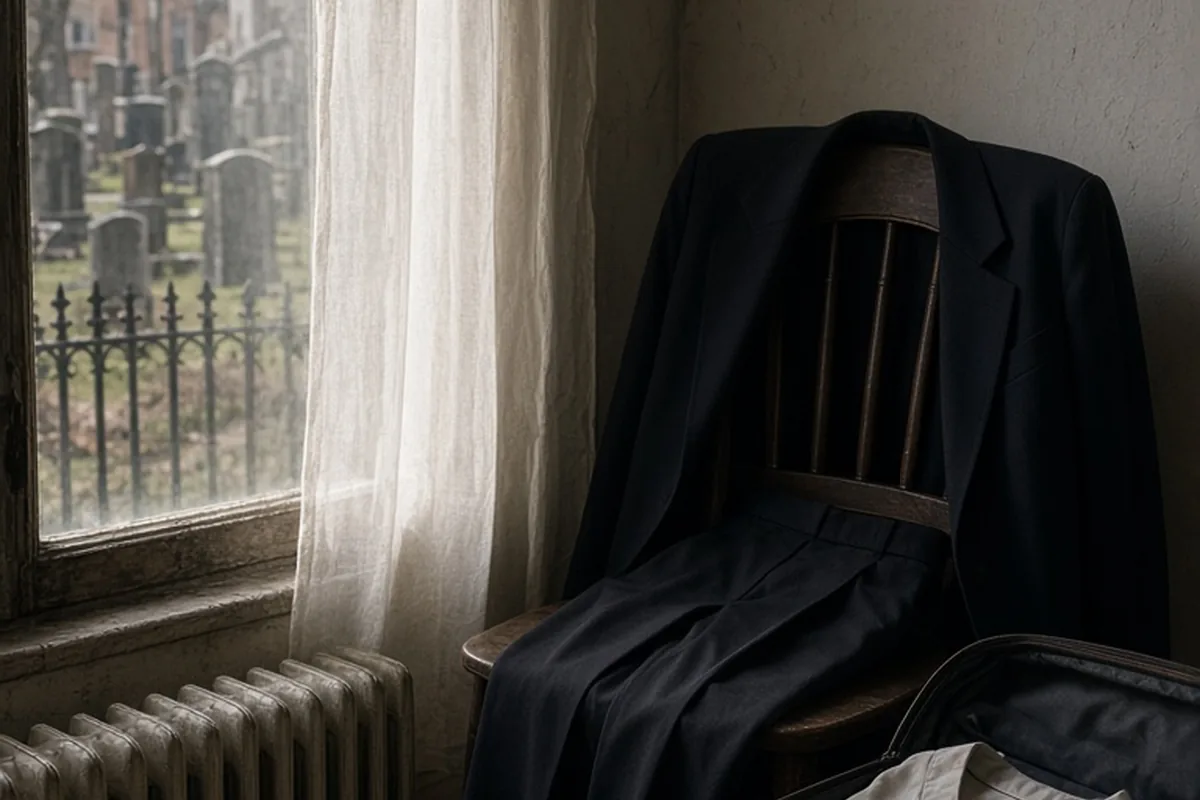
Yes, a woman can generally wear pants to Reform and many Conservative Jewish funerals, provided the trousers are dark, tailored, and modest. However, in Orthodox and traditional communities, women are customary expected to wear skirts or dresses that fall below the knee. If you do not know the family's denomination, choosing a modest skirt or calling the funeral home beforehand ensures you dress appropriately.
Attending a funeral in a tradition outside your own can feel daunting, especially when you want to show heartfelt support while honoring the grieving family's cultural customs. Understanding how different branches of Judaism approach mourning attire allows you to choose an outfit that is respectful, comfortable, and suited to the setting.
How Religious Denominations Shape Funeral Dress Codes
Jewish mourning attire is shaped significantly by the specific branch of Judaism practiced by the deceased and their family. In traditional Orthodox Judaism, modesty laws known as tzniut form a core element of religious observance. For women, these standards require skirts or dresses that extend past the knee, tops that cover the collarbone and elbows, and an avoidance of bifurcated garments such as pants. In an Orthodox synagogue or cemetery, a woman wearing pants will stand out, as communal norms strongly favor traditional feminine dress for religious services.
Reform Judaism, the most liberal of the major denominations, emphasizes personal autonomy and gender equality across all religious practices. In Reform communities, tailored dress slacks, dark pantsuits, and elegant trousers are universally accepted for female mourners and guests. Conservative Judaism occupies a middle ground along this spectrum. While most contemporary Conservative congregations welcome women in dress pants, some more traditional Conservative synagogues still lean toward skirts for formal lifecycle events and cemetery burials.
Recognizing these denominational differences helps you calibrate your wardrobe to the specific environment. When a service takes place in an Orthodox chapel or cemetery, wearing a skirt demonstrates sensitivity to the family's traditional beliefs. For non-denominational funeral homes, secular memorial services, or Reform congregations, clean and formal dress pants provide a completely appropriate option.
Selecting Appropriate Pants for Liberal and Secular Services
If you are attending a Reform, liberal Conservative, or secular Jewish service where pants are appropriate, the focus should remain on sobriety, fit, and dignified tailoring. Jewish funerals are solemn occasions dedicated to honoring the deceased (kavod hamet) and comforting the mourners (nichum aveilim). Garments should reflect this purpose by remaining understated rather than trend-focused or casual.
Structured, matte textiles are ideal for funeral attire. Look for pants made of wool blends, tailored crepe, heavy ponte knit, or structured cotton twill in muted shades. Wide-leg dress trousers, straight-leg slacks, or classic ankle-length dress pants paired with a dark knit top, button-down blouse, or tailored blazer strike the right balance between comfort and formal respect. In contrast, avoid casual materials and silhouettes such as denim of any wash, distressed fabrics, leggings, joggers, cargo pants, or skin-tight cuts that resemble athletic wear.
For example, a charcoal grey trouser suit paired with a black silk shell and low leather flats creates an ensemble that is understated, dignified, and practical. This style allows you to navigate the chapel and the cemetery grounds comfortably while remaining fully aligned with the solemn tone of the day.
Modesty and Color Conventions in Jewish Mourning
While popular media often associates funerals exclusively with solid black attire, Jewish tradition emphasizes restraint and simplicity rather than an absolute requirement for jet-black clothing. The primary goal is to avoid bright, cheerful, or flashy garments that might feel incongruous with grief. Dark and subdued tones such as navy blue, slate grey, forest green, deep brown, and black are standard choices that convey dignity.
Modesty remains an important principle across all Jewish funeral gatherings, even in less traditional settings. Tops should provide adequate coverage around the neckline and shoulders, avoiding deep plunges, sheer panels, or sleeveless cuts. If the weather is warm and you choose a short-sleeved blouse, carrying a dark blazer, cardigan, or wrap ensures you can quickly cover your shoulders if the indoor chapel or the officiating rabbi favors a more conservative standard.
Jewelry, makeup, and accessories should also remain minimal. Flashy statement pieces, brightly reflective metals, and noisy jewelry can be distracting in a somber memorial setting. Selecting simple stud earrings, a classic watch, and a neutral handbag maintains the focus on supporting the bereaved family rather than drawing personal attention.
Navigating Graveside Logistics and Outdoor Conditions
A Jewish funeral typically moves directly from the indoor memorial service to the cemetery for the burial (kevurah). In Jewish tradition, burial occurs swiftly, often within twenty-four to forty-eight hours of death, and the graveside portion is an active, physical ritual. Mourners gather closely around the open grave, and attendees are invited to participate in shoveling earth onto the casket as a final act of kindness for the deceased.
Cemetery terrain frequently involves unpaved dirt, gravel paths, and damp grass, which makes practical footwear essential. High stiletto heels sink directly into the turf, damaging shoes and creating a tripping hazard. Closed-toe flats, low block-heeled boots, or sturdy leather loafers in dark tones are far better suited to the physical reality of standing and walking on uneven ground.
Outerwear is another crucial consideration because Jewish graveside services take place outdoors regardless of cold, wind, or rain. A long, dark wool coat, trench coat, or tailored jacket not only protects against the elements but also provides a layer of conservative coverage over your outfit. Bringing a dark, simple umbrella is also sensible if there is any chance of inclement weather.
What to Do When the Level of Observance Is Unknown
It is common to receive funeral details without knowing the family's specific religious affiliation. When an obituary or invitation does not specify whether the service is Orthodox, Conservative, or Reform, adopting a traditional default is the safest approach. Wearing a dark, knee-length or midi skirt with a modest blouse and covered shoulders ensures you will be dressed respectfully in any Jewish setting without risk of underdressing.
If wearing a skirt is impractical or uncomfortable for you, opting for a dark, conservative pantsuit remains a respectable backup. While an Orthodox congregation might traditionally prefer skirts, guests and non-Jewish attendees are not expected to know every internal custom. Mourners and community members will appreciate your presence and sympathy far more than they will scrutinize your trousers.
You can also resolve uncertainty quickly by checking the funeral home's online listing or contacting the funeral director directly. Funeral staff work with diverse families daily and can easily inform you whether the service is Orthodox, Conservative, or Reform, allowing you to choose your attire with total certainty.
Head Coverings and Ritual Symbols for Guests
Jewish lifecycle events involve distinct symbolic items that can prompt questions for first-time guests. In synagogues and at cemetery gravesites, men are customarily asked to wear a kippah (yarmulke) as a sign of reverence, and these are provided in baskets at the entrance. For women, head covering requirements vary widely depending on the denomination. In Orthodox settings, married Jewish women cover their hair with hats, scarves, or wigs, but female visitors are not expected to cover their heads.
In Reform and Conservative venues, head coverings for women are entirely optional. Some chapels offer small lace head coverings with pins in the entryway; visiting women may choose to wear one as a gesture of respect, but doing so is not mandatory. You may also notice immediate family members wearing a torn black ribbon or a cut in their lapel. This represents the ancient practice of kria (tearing one's garment in grief) and is reserved strictly for primary mourners, meaning guests do not wear ribbons.
Understanding these distinctions allows you to navigate the service calmly. You do not need to adopt religious items that are not designated for you, and focusing on quiet observation is always the most polite course of action.
Respectful Etiquette and Supporting the Mourning Family
Beyond wardrobe choices, understanding basic Jewish mourning etiquette helps you offer comfort with poise. In traditional Jewish practice, it is customary not to initiate conversation with the immediate mourners until they speak to you first. This custom gives the grieving family control over their interactions, allowing them to speak, cry, or remain silent without feeling pressured to host their guests.
When offering condolences, keep your words brief, warm, and sincere. Simple phrases such as 'I am so sorry for your loss' or the traditional Jewish expression 'May their memory be a blessing' provide comfort without requiring the mourner to engage in prolonged small talk. Avoid clichés or theological rationalizations, which can feel dismissive during fresh grief.
At the conclusion of the cemetery service, you may notice a pitcher of water, a basin, and paper towels near the exit gates. Attendees wash their hands (netilat yadayim) before departing as a symbolic boundary between the space of death and the return to everyday life. You are welcome to participate in this ritual or simply walk past quietly as you prepare to leave.
Frequently asked questions
Can I wear dark jeans or leggings to a Jewish funeral if paired with a dressy top?
Jeans and athletic leggings are considered too casual for a Jewish funeral service. If you choose to wear pants, select tailored dress slacks, suit trousers, or structured wide-leg pants in dark, neutral colors.
Are female guests required to wear a head covering at a Jewish funeral?
Female guests are generally not required to cover their heads at a Jewish funeral. In Orthodox settings, married Jewish women cover their hair, while in Reform and Conservative settings, head coverings for women are optional.
What colors are acceptable to wear besides solid black?
Subdued and somber colors such as navy blue, charcoal grey, deep brown, forest green, and dark plum are entirely acceptable. The primary guideline is to avoid bright, flashy, or celebratory patterns.
Your next step
Check the funeral notice for the officiating synagogue or chapel to confirm the denomination, and select a dark, tailored outfit with modest coverage and sturdy, flat footwear for the graveside service.