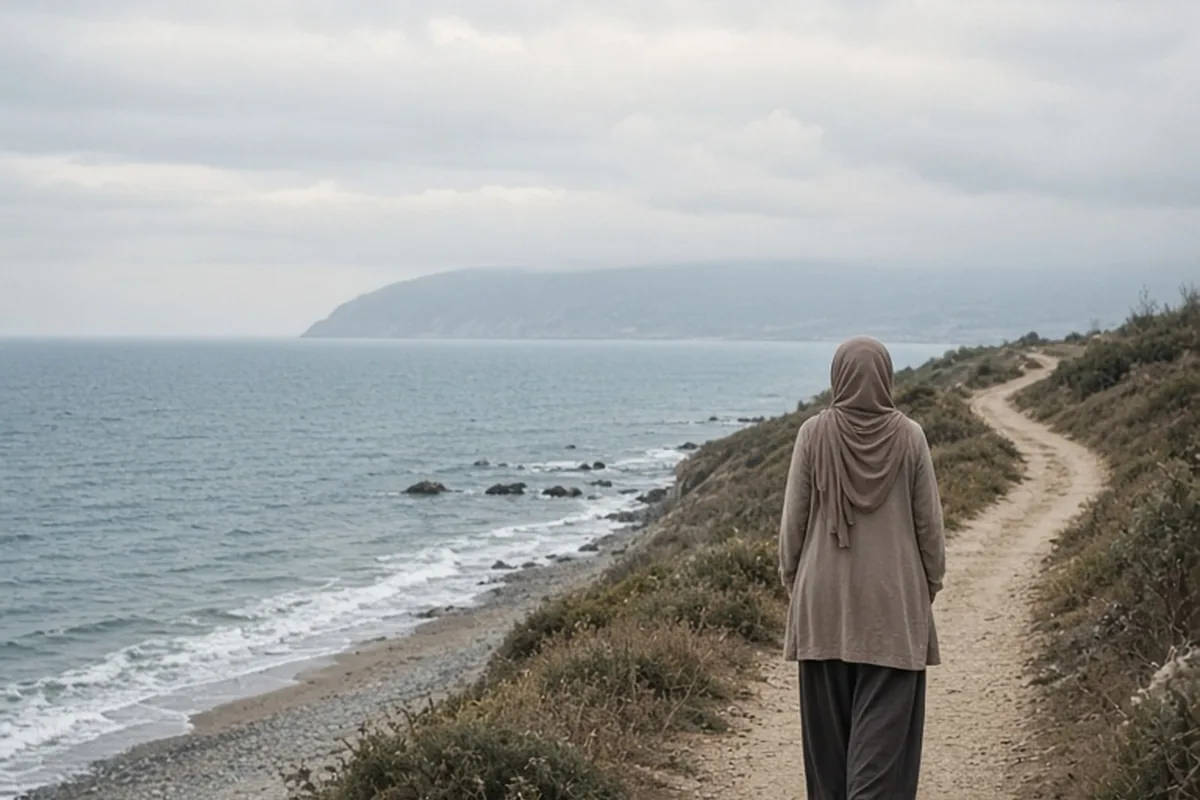
Yes, a woman can wear trousers to a Muslim funeral, provided they are loose-fitting, fully opaque, and cover the legs down to the ankles. Modesty is the primary consideration in Islamic funeral etiquette. Pair wide-leg trousers or relaxed slacks with a long tunic or top that falls past the hips, along with a headscarf, to ensure full, respectful coverage throughout the prayer service and burial.
Attending a funeral is always an emotional experience, and entering an unfamiliar cultural or religious environment can bring additional questions about how to dress appropriately. Understanding Islamic dress expectations helps you honor the deceased and support grieving family members with confidence and peace of mind.
Core Modesty Standards for Women at a Janazah
Islamic funeral services, known as Janazah, are centered entirely on prayer, humility, and solemn reflection. The general standard of attire for women at these services aligns with broader Islamic guidelines on modesty, which emphasize loose, unrevealing clothing that covers the entire body except for the hands and face. Because the atmosphere is focused on honoring the departed and seeking mercy in prayer, flashy, ostentatious, or tight-fitting garments are avoided.
Trousers are entirely acceptable under these principles as long as they do not outline the shape of the body. In traditional settings, many women wear long dresses, skirts, or abayas, but modern and culturally diverse Muslim communities routinely accept tailored, loose trousers. The objective is never fashion or individual expression; rather, it is about blending seamlessly into a collective space of mourning without drawing undue attention to oneself.
When planning your outfit, the primary goal is ensuring that your silhouette remains relaxed and covered in all postures. Islamic prayer services involve standing, bowing, and sitting on carpeted floors, so your clothing must maintain full coverage while allowing you to move, sit, and walk with dignity.
Selecting the Right Style and Cut of Trousers
Not all trousers meet the standard of modest funeral attire. Wide-leg trousers, palazzo pants, straight-cut linen trousers, and relaxed-fit dress slacks are the most suitable choices. These cuts allow natural movement without clinging to the thighs, calves, or hips, providing the necessary level of modesty while remaining comfortable throughout extended services.
Conversely, skinny jeans, leggings, jeggings, distressed denim, and form-fitting trousers are unsuitable for a funeral setting. Similarly, cropped trousers, capris, and ankle-grazing pants that expose the shins when sitting should be avoided. If you only own tailored trousers that taper slightly near the ankle, you can make them appropriate by pairing them with a longer upper garment that drapes well past the mid-thigh or knees.
Consider how the trousers behave when you sit on a chair or the floor. Materials with moderate structure, such as medium-weight cotton, wool blends, or crepe, hold their shape well and do not ride up excessively. Testing your outfit beforehand by sitting and bending in front of a mirror can quickly confirm whether the trousers maintain full coverage.
Pairing Trousers with Appropriate Tunics and Layers
The upper portion of your outfit plays a crucial role when wearing trousers to a Janazah. A standard hip-length blouse or short shirt may rise during prayer or movement, potentially exposing your lower back or hip line. To prevent this, pair your trousers with a long tunic, knee-length kurti, button-down shirt dress, or duster cardigan that extends to at least mid-thigh or knee level.
Sleeves must extend fully to the wrists, and necklines should be high and modest, such as crew neck, boat neck, or collared designs. Deep V-necks, scoop necks, and sleeveless tops are inappropriate unless completely covered by a structured, opaque outer layer that remains fastened. Layering an open front abaya, long kimono, or light duster coat over a basic top and trouser combination creates a polished, respectful ensemble that easily meets all modesty expectations.
Layering also offers practical utility during services that transition between different environments. Funerals often move from an indoor prayer hall to an outdoor cemetery, and having a structured outer layer ensures that shifting weather or sudden breezes will not disrupt the modesty or comfort of your attire.
Appropriate Colors, Fabrics, and Textures
Islamic traditions do not mandate a single rigid mourning color, but muted, somber tones are universally respected. Dark neutrals such as black, charcoal grey, deep navy, dark brown, and forest green are safe, traditional choices. In some cultures, white or soft neutral tones are also worn to signify purity and peace. The general rule is to avoid bright, saturated hues like neon, bright red, fuchsia, or vibrant yellow.
Fabrics should be completely opaque and non-sheer under natural sunlight and bright indoor lighting. Lightweight linens, cottons, rayons, and matte knits work well in warm climates, while heavier wools and knits are ideal for cooler seasons. Avoid fabrics that have a high sheen, metallic threading, sequins, or loud rustling sounds that could distract others during silent prayers.
Subtle textures and solid colors are preferable to bold patterns. While small, understated geometric or floral prints in muted tones are generally acceptable, large graphic prints, promotional logos, and casual typography on clothing are unsuitable for a solemn religious service.
Head Coverings and Footwear Etiquette
A head covering is required for women entering a mosque or prayer hall (musalla) and during the Janazah prayer itself. Even if you are a non-Muslim attendee, covering your hair is a sign of deep cultural respect. A lightweight scarf, pashmina, or shayla draped over your head and loosely wrapped around your neck to conceal your hair and chest is sufficient; you do not need elaborate pins or styling.
Footwear requirements depend on the location of the service. Upon entering the mosque or prayer area, all attendees remove their shoes at the entrance or place them in designated cubbies. Because you will be walking in your stocking feet on carpeted surfaces, wear clean, opaque, dark-colored socks or tights without holes. Avoid bare feet or visible pedicure styling.
If you are attending the burial at a cemetery following the prayer service, bring practical, closed-toe walking shoes such as dark flats, loafers, or sturdy ankle boots. Gravesites frequently have uneven terrain, grass, or loose soil, making high heels or delicate dress shoes impractical and difficult to navigate safely.
Mosque Protocol versus Gravesite Traditions
A Muslim funeral typically consists of two distinct phases: the communal Janazah prayer, which usually occurs inside a mosque or Islamic center, and the subsequent burial at the cemetery. In the mosque, women and men typically pray in separate designated areas or partitioned sections. Following the guidance of community ushers or female hosts will ensure you find the appropriate space smoothly.
Practices surrounding women's attendance at the cemetery itself can vary depending on cultural background and specific schools of Islamic thought. In many communities, both men and women attend the graveside service together, standing quietly as prayers are recited. In other traditional communities, the immediate burial is attended primarily by men, with women visiting the gravesite shortly after the burial concludes.
Wearing loose trousers is especially practical if you are attending the cemetery service. Trousers provide ease of movement along muddy paths and protect against wind while maintaining complete modesty, making them an ideal choice for the physical realities of an outdoor burial.
Respectful Conduct and Condolence Etiquette
Beyond clothing, your demeanor reflects your support for the grieving family. Islamic funerals are characterized by quiet restraint; loud wailing, applause, or excessive conversation are discouraged. Silence your mobile phone before entering the premises, and maintain a quiet, attentive presence throughout the recitation of prayers.
When offering condolences, simple and heartfelt phrases are appreciated. You can say, 'I am so sorry for your loss,' or use a traditional Islamic condolence such as, 'May God grant you and your family patience and comfort.' Physical contact norms also vary: while women may hug or shake hands with other women, some practicing Muslim men and women prefer not to touch individuals of the opposite gender. A safe approach is to place your right hand over your heart with a slight nod, mirroring the greeting offered by the person you are speaking with.
Frequently asked questions
Can I wear black jeans to a Muslim funeral?
Standard or skinny black jeans are generally discouraged because denim is casual and tight-fitting. However, dark, wide-leg, or relaxed-cut trousers made from soft, non-denim fabrics are fully appropriate.
Do non-Muslim women have to wear a headscarf at the funeral?
Yes, wearing a scarf to cover your hair inside the mosque and during the prayer service is standard etiquette for all women. A simple, loosely draped pashmina or shawl in a muted tone is completely acceptable.
Are open-toed shoes permitted at a Muslim funeral?
Open-toed shoes are discouraged in the prayer hall where bare feet are avoided, and they are impractical for the cemetery. Opt for closed-toe flats or loafers paired with dark, clean socks.
Is it required to wear an abaya, or are Western modest clothes fine?
An abaya is not required. Modest Western clothing, such as wide-leg slacks paired with a long-sleeved tunic and scarf, meets all Islamic modesty requirements.
Your next step
Choose a pair of loose-fitting, dark, ankle-length trousers paired with a long-sleeved tunic, dark socks, flat shoes, and a simple headscarf to ensure you are comfortably and respectfully prepared.