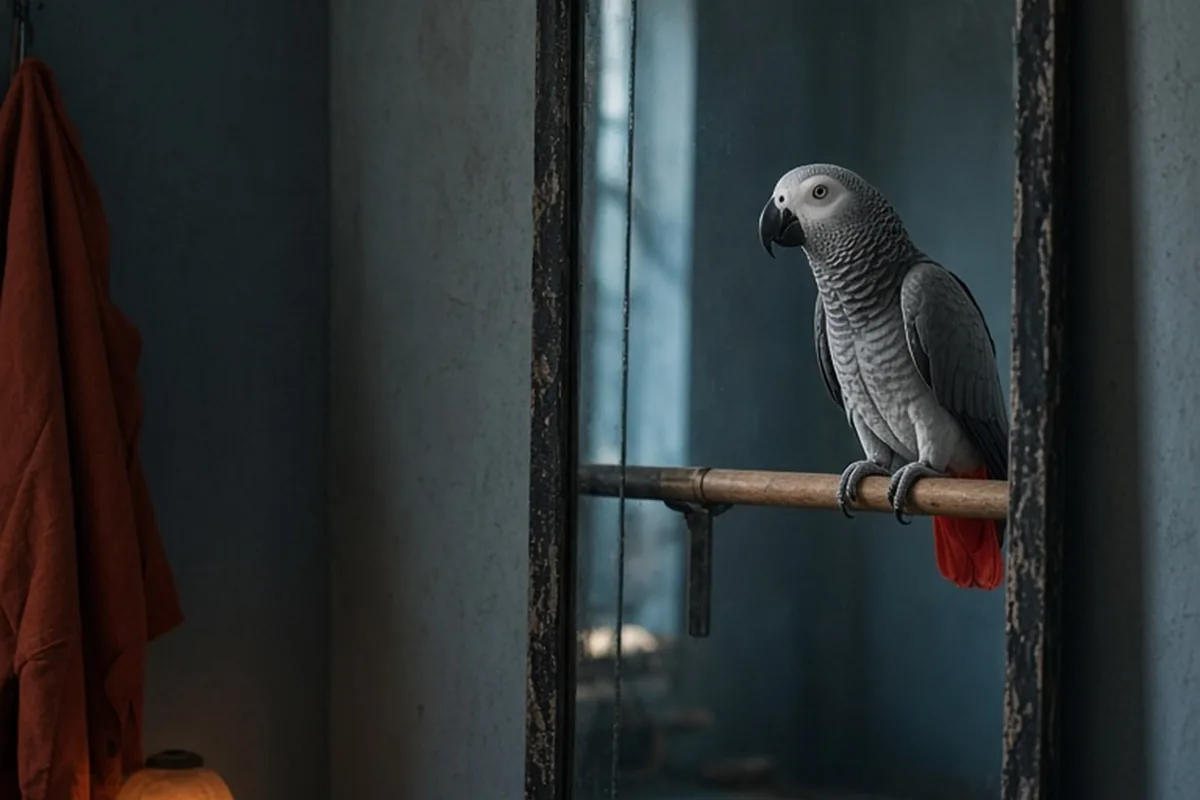
Yes, female parrots can talk. Female parrots possess the exact same vocal organ, the syrinx, and cognitive capacity for vocal mimicry as males. While males of certain species like budgerigars and cockatiels tend to mimic words more frequently, females across many species—including African greys, Amazons, and quaker parrots—frequently learn words, phrases, and environmental sounds when provided with consistent social engagement and gentle vocal encouragement.
A long-standing myth among companion bird enthusiasts suggests that only male parrots are capable of learning human language, leaving prospective and current owners wondering if their female birds will ever vocalize. In reality, female parrots are fully capable of vocal mimicry, though their speaking habits often depend on species, individual personality, and the quality of everyday interaction.
The Biological Mechanism Behind Avian Speech
Parrots do not produce sounds using vocal cords in the larynx the way humans and other mammals do. Instead, all parrots utilize a specialized vocal organ situated at the base of the trachea known as the syrinx. Surrounding muscles manipulate the shape, tension, and airflow through the syrinx with remarkable precision, allowing the bird to replicate complex frequencies, tonal shifts, and human consonants. Because female parrots have the exact same anatomical structure as males, there is no physical barrier preventing a female bird from forming distinct words and phrases.
Beyond physical anatomy, parrot vocalization relies heavily on specialized neurological pathways often described as vocal learning centers in the avian brain. These neural circuits process auditory input from the bird's social group and guide the motor controls needed to reproduce those sounds. In the wild, both male and female parrots use contact calls, flock identifiers, and alarm signals to navigate complex social hierarchies and dense foliage. In a domestic setting, human speech simply becomes the flock dialect that a female parrot processes and reflects back to her companions.
How Biological Sex Influences Talking Across Different Species
While female parrots have the physical and cognitive tools to talk, the degree to which biological sex influences speech frequency varies noticeably across different parrot families. In smaller companion species, such as budgerigars (budgies) and cockatiels, males generally show a stronger biological predisposition toward mimicking human speech. Wild male budgies and cockatiels use elaborate vocal displays to court mates, which translates in captivity into an eagerness to repeat long strings of words or whistle complex tunes. Female budgies and cockatiels can still learn words, but they often communicate through softer chirps, short contact calls, and non-verbal gestures rather than extended vocabularies.
Conversely, among medium-to-large parrot species, the distinction between male and female speech ability largely disappears. Female African grey parrots, yellow-naped Amazons, double yellow-headed Amazons, eclectus parrots, and quakers frequently develop large, articulate vocabularies that rival or exceed those of males. For example, a female African grey living in an interactive household often learns not only clear speech but also the specific voices and inflections of different family members. For these species, individual temperament and environmental stimulation matter far more than whether the bird is male or female.
Core Environmental Factors That Shape Vocal Development
A parrot's willingness to speak is shaped primarily by the social atmosphere in which she lives. Parrots are highly social flock animals that prioritize communication with those they trust. When a female parrot forms a secure bond with her primary caregivers, she feels motivated to learn the sounds that bring her attention, comfort, and positive engagement. A bird kept in an isolated room with minimal daily conversation is far less likely to talk, regardless of her sex or genetic potential, because she lacks the social context that makes vocalization worthwhile.
Daily routine and environmental enrichment also play pivotal roles in speech development. Birds that receive varied mental stimulation, foraging opportunities, physical out-of-cage time, and consistent auditory cues tend to be more vocal and curious. A well-adjusted female parrot that feels safe in her territory is naturally more inclined to experiment with sound. In contrast, chronic stress, inconsistent handling, or sudden environmental disruption can cause a bird to fall completely silent as a defensive mechanism.
Contextual Language Versus Mechanical Mimicry
When evaluating a female parrot's vocal abilities, it is important to distinguish between simple mechanical mimicry and contextual language use. Many parrots begin by replicating repetitive ambient noises—such as microwave beeps, ringing doorbells, running water, or telephone chimes—because these sounds are distinct and frequent. While this demonstrates sound reproduction skills, true vocal engagement deepens when the bird connects specific human words to tangible actions, objects, or daily routines.
Female parrots often excel at using words in correct context when taught associatively. For instance, if you consistently say 'apple' while offering a slice of fruit, or greet the bird with 'good morning' only when uncovering her cage at sunrise, she learns to associate the vocal pattern with that specific event. Over time, many female parrots will use those words deliberately to request food, announce their presence, or seek social interaction. This intentional communication creates a far more rewarding relationship than repeating unattached phrases on command.
Practical Approaches for Encouraging Speech in Female Parrots
Teaching a female parrot to speak requires patience, positive reinforcement, and consistent daily habits rather than rigid training drills. The most effective method is narrating your daily activities directly to the bird in an expressive, clear tone. Parrots respond naturally to enthusiasm and higher-pitched inflections. Focusing on short, one-to-two-word phrases associated with high-value actions—such as 'hello,' 'step up,' 'yummy,' or 'bye-bye'—provides your bird with clear acoustic markers that are easy to process and replicate.
To build a strong foundation for speech, integrate these practical habits into your regular interaction routine:
- Pair spoken words with immediate physical actions, such as naming a favorite treat right as you present it.
- Maintain brief, enjoyable sessions of two to five minutes several times a day rather than prolonged, demanding lessons.
- Acknowledge and gently repeat back any approximation or murmur the bird makes to validate her vocal attempts.
- Ensure the training environment is quiet and free from competing background noise like blaring televisions or loud appliances.
Common Misconceptions and Training Pitfalls to Avoid
One frequent mistake bird owners make is using automated audio loops or digital recordings left on repeat for hours. While an automated recording might occasionally lead to rote imitation, it lacks the essential social reciprocity that motivates a parrot to communicate. Parrots learn language because it serves a social function within their flock; passive audio tracks can quickly become ambient noise that the bird ignores, or worse, a source of frustration and sensory overload.
Another critical pitfall is showing visible excitement or anger when the bird mimics an undesirable sound, such as loud screaming or harsh household alarms. Parrots perceive dramatic human reactions—even negative ones—as rewarding drama. If a female parrot discovers that screeching produces an immediate reaction while a softly spoken word is ignored, she will naturally prioritize the louder sound. Consistent, calm praise for desired vocalizations and neutral disengagement during unwanted noise yields the best long-term outcome.
Valuing Non-Verbal Communication and Natural Vocalizations
While human speech is an entertaining aspect of parrot companionship, it represents only a fraction of how a female parrot communicates her feelings, needs, and trust. Birds express a rich spectrum of emotion through subtle body language, including eye pinning, crown feather raising, wing flicking, beak grinding, and tail wagging. A female parrot that grinds her beak quietly before sleep or leans in for a gentle neck preen is demonstrating profound contentment, regardless of whether she ever speaks an English word.
Placing unrealistic expectations on speech can strain the human-animal bond. Every bird is an individual with distinct preferences; some female parrots choose to communicate entirely through complex whistles, melodic chirps, and physical closeness. Embracing your bird's unique personality and natural vocal repertoire ensures a healthy relationship rooted in companionship rather than performance expectations.
Frequently asked questions
At what age do female parrots usually start talking?
Most parrots begin experimenting with human speech between six months and two years of age, depending on the species and social environment. Smaller birds like budgies may start babbling words earlier, while larger species often spend their first year absorbing sounds before articulating clear phrases.
Are male parrots always better talkers than females?
Not necessarily. While male budgies and cockatiels are statistically more prolific mimics due to courtship behavior, female African greys, Amazons, and quakers routinely match or surpass males in vocabulary and clarity. An individual bird's environment and bond with her owner matter significantly more than sex alone.
Can an older female parrot learn to talk if she has never spoken before?
Yes, older female parrots can learn new words throughout their entire lives if they are healthy and mentally stimulated. While younger birds often pick up sounds more rapidly, an adult parrot introduced to an engaging, communicative home can still develop speech over time.
What should I do if my female parrot prefers whistling over talking?
Whistling is a natural and rewarding form of vocalization for parrots, so it is best to enjoy and encourage her musical ability. If you still want to encourage speech, focus on speaking words in an animated, singsong tone during positive interactions without discouraging her natural whistles.
Your next step
Choose one simple, meaningful phrase—such as 'hello' or 'treat'—and begin pairing it consistently with a positive daily interaction to gently nurture your female parrot's natural communicative curiosity.