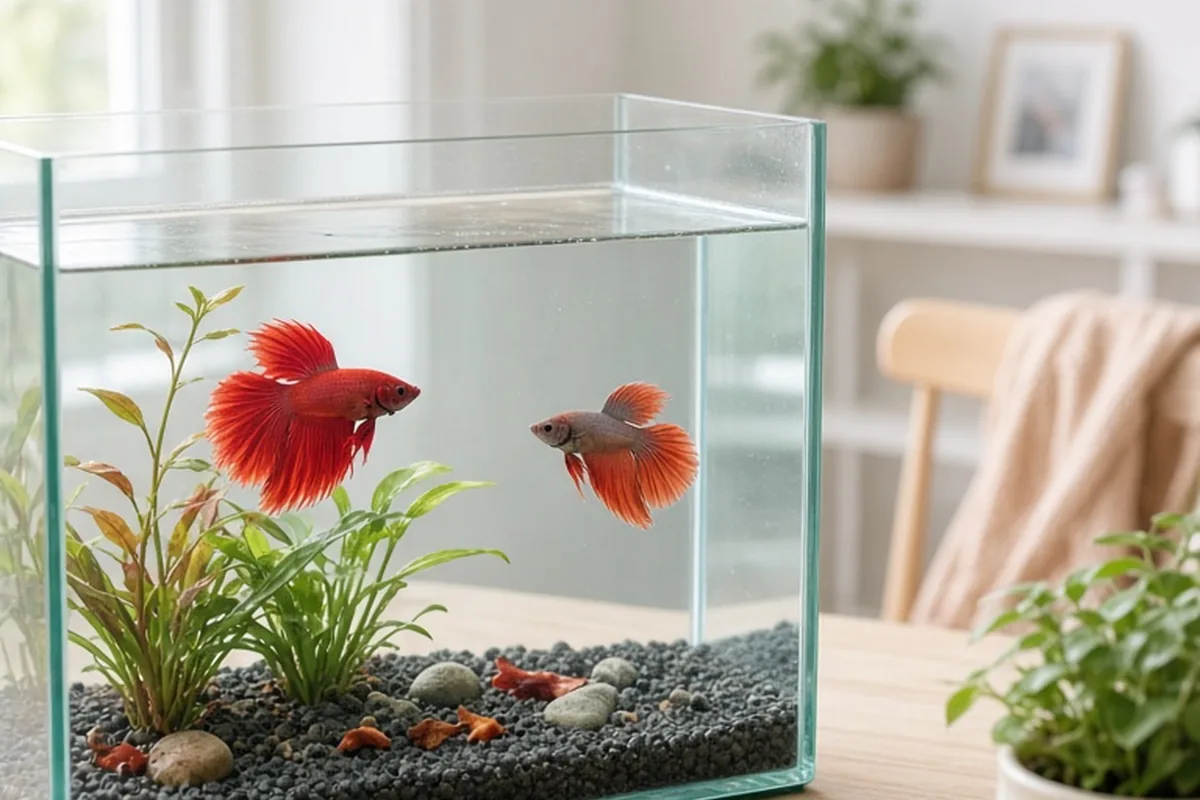
No, you should not house male and female betta fish together in a shared aquarium. While they can interact briefly during intentional breeding setups, keeping them in the same tank permanently leads to intense territorial fighting, severe physical injury, chronic stress, and often fatal outcomes for one or both fish.
Aquarists often wonder whether keeping a male and female betta fish together offers a balanced, natural environment similar to other community freshwater species. However, domestic Betta splendens possess strong solitary and territorial instincts that make permanent cohabitation unsafe regardless of tank size or aquarium decor.
The Biological Reality of Betta splendens Aggression
Domestic bettas descend from wild ancestors adapted to shallow, vegetated rice paddies and slow-moving streams across Southeast Asia. In these native habitats, individual fish occupy distinct territories rather than swimming in bonded pairs. Encounters between males and females in the wild are brief and seasonal, occurring primarily when conditions support reproduction. Once mating concludes, the female leaves the territory immediately while the male remains to guard the bubble nest and eggs alone.
Centuries of selective breeding have intensified these natural defensive behaviors in domesticated Betta splendens. Male bettas view any brightly colored or active fish entering their visual range as a direct threat to their space and resources. Female bettas are equally territorial and will attack males if they feel cornered, stressed, or unprepared to spawn. Placing both sexes into an enclosed home aquarium forces continuous visual and physical contact that wild bettas naturally avoid through vast spatial separation.
Why Permanent Mixed-Sex Housing Fails in Home Aquariums
When a male and female betta share a single tank, the dynamic rarely reaches a peaceful equilibrium. A male betta will relentlessly chase, flare at, and bite the female in an attempt to drive her away from his chosen territory or coerce her into breeding. If the female is not egg-laden or receptive, she experiences relentless harassment that prevents her from resting, foraging, or accessing the surface for air via her labyrinth organ.
Conversely, an aggressive or larger female can inflict catastrophic damage on a male betta. Long-finned male varieties, such as halfmoons and crowntails, lack the swimming speed and agility of shorter-finned females. If a female turns defensive, she can easily shred the male's delicate finnage, strip protective slime coats, and cause deep body wounds. Even in tanks heavily planted with stem plants and driftwood, line-of-sight breaks only offer temporary relief rather than lasting coexistence.
The Controlled Exception: Temporary Breeding Setups
The only situation where a male and female betta should ever occupy the same physical container is during deliberate, closely monitored breeding. Experienced breeders do not simply drop both fish into a common tank. Instead, they condition both animals in separate tanks for several weeks using nutrient-dense live or frozen foods, such as daphnia and bloodworms, ensuring optimal health and energy reserves before any introduction takes place.
During breeding, the female is initially placed inside a clear chimney or floating breeding box within the male's tank so they can view each other without direct contact. Direct release occurs only after the male constructs a sturdy bubble nest and the female displays distinct vertical breeding bars and submissive body language. Even under these ideal conditions, the breeder observes the pair continuously and removes the female the moment egg deposition finishes to prevent the male from killing her while defending the nest.
Physical and Psychological Symptoms of Housing Stress
Cohabitation stress manifests through visible physical degradation and behavioral shutdown long before fatal injuries occur. A betta trapped in a high-conflict environment experiences an ongoing surge in baseline cortisol levels, which actively suppresses its immune response. This chronic physiological strain leaves both fish highly vulnerable to opportunistic pathogens that healthy, solitary bettas easily resist, including fin rot, columnaris, and velvet.
Aquarists attempting cohabitation frequently observe specific warning indicators that signal immediate tank separation is required:
Observing any of these signs means the housing arrangement has failed and immediate intervention is necessary to prevent death.
- Horizontal stress stripes appearing along the female betta's torso.
- Tattered, torn, or clamped fins held tightly against the body.
- Complete loss of vibrant coloration and refusal to accept food.
- Persistent hiding behind heater units, filter intakes, or at the absolute waterline.
- Rapid, laboured gill movement indicating exhaustion and oxygen depletion.
Safe Housing Alternatives for Bettas
If you want to keep both a male and a female betta within the same footprint, a divided tank provides the safest functional solution. Using a solid, opaque divider in an aquarium of at least ten gallons allows each fish to have a dedicated five-gallon territory without visual stimulation that triggers flaring. It is critical that water flow remains filtered and heated equally on both sides while ensuring the divider fits snugly against all glass panels so neither fish can slip through the gaps.
For aquarists who prefer an active, multi-species community, female bettas can sometimes be housed in peaceful community tanks containing bottom-dwelling or calm mid-water species such as corydoras catfish, kuhli loaches, or small rasboras. Male bettas can also thrive in community settings under specific conditions, provided the tank is at least fifteen to twenty gallons, lacks fin-nipping companions like tiger barbs, and does not include other anabantoids or vibrant, long-finned fish like fancy guppies.
Standard Aquarium Requirements for Single Betta Health
Providing individual, dedicated aquariums remains the gold standard for betta welfare, allowing each fish to express natural exploratory behaviors without chronic defensive pressure. A single male or female betta requires an aquarium of at least five gallons equipped with an adjustable low-flow filter, such as a gentle sponge filter, to accommodate their preference for calm water. A dependable heater calibrated to keep the water temperature between 76 and 81 degrees Fahrenheit is mandatory, as cooler water slows their metabolism and weakens immunity.
Enriching the habitat with live plants such as Java fern, Anubias, and floating species like Amazon frogbit mimics their natural environment and offers broad leaves near the surface for resting. A secure, well-fitted aquarium lid is equally essential, as bettas possess powerful jumping abilities and need access to a warm, humid air layer directly above the water surface to properly breathe through their labyrinth organ.
Frequently asked questions
Can male and female bettas live together if the tank is very large, like 50 gallons?
Even in large aquariums, permanent cohabitation remains unsafe because the male will continuously patrol open swimming paths while the female remains in constant distress. A larger tank provides more hiding places, but it does not eliminate the innate territorial drive that leads to sudden, lethal conflict.
Are female betta sorority tanks safer than housing a male and female pair?
Female sororities involve housing five or more female bettas together, but they still carry substantial risk and require advanced aquarium management. While female sororities avoid male-female mating aggression, social hierarchies can collapse quickly, making individual housing far more reliable for general hobbyists.
What should I do if my male and female bettas are currently sharing a tank?
Separate the fish immediately using a secure tank divider or place one of the bettas into an auxiliary container with treated, temperature-matched water. Inspect both fish thoroughly for fin tears or abrasions and monitor their recovery in quiet, well-filtered individual tanks.
How long can a male and female betta stay together during breeding?
A breeding pair should only remain in physical contact for a few hours up to a single day, strictly until the spawning process is complete. Once the female finishes releasing her eggs, she must be removed immediately to prevent the male from attacking her as he guards the nest.
Your next step
Provide separate, fully cycled aquariums of at least five gallons for each betta to ensure both fish enjoy a stress-free and healthy life.