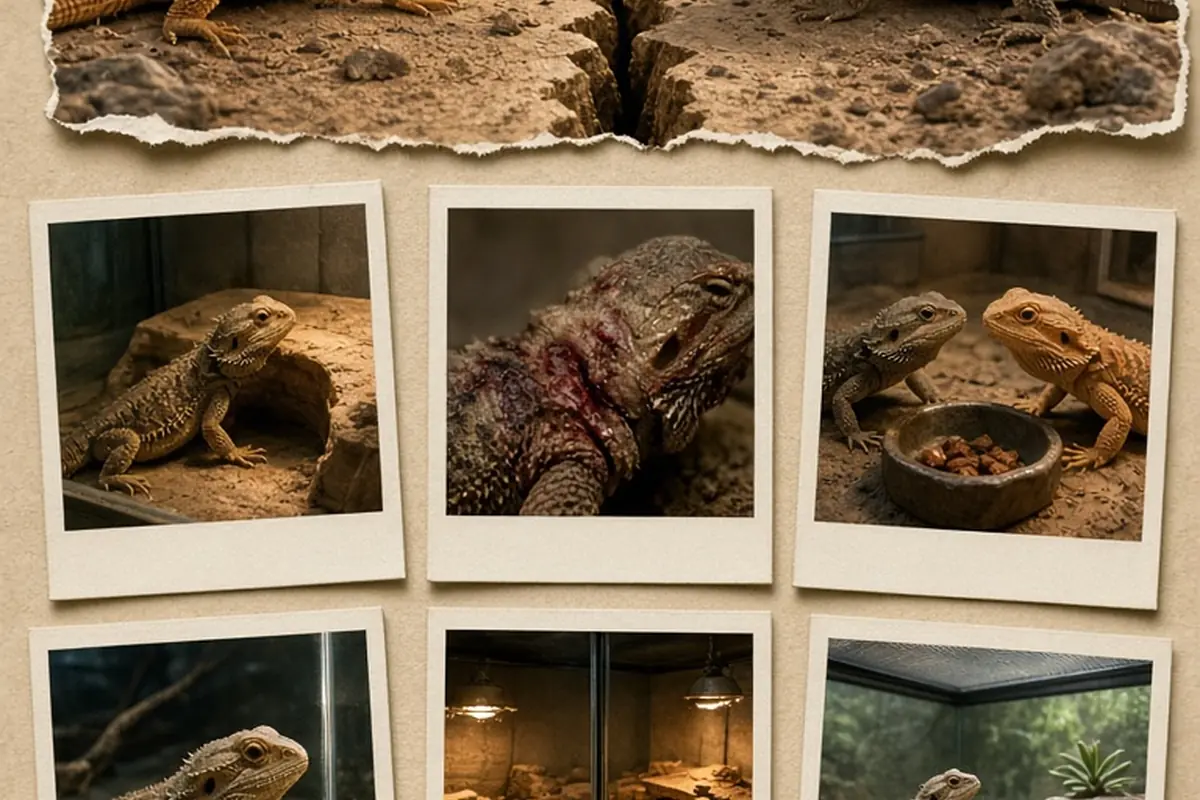
Male and female bearded dragons should not live together in the same enclosure. Bearded dragons are strictly solitary reptiles that do not seek companionship. Keeping a male and female together typically results in chronic stress, territorial bullying, resource competition, and relentless mating pressure from the male. In severe cases, cohabitation causes significant physical trauma, bite injuries, or fatal reproductive complications in females.
Reptile owners often wonder if their pets feel lonely when kept in individual vivariums. Mammals and birds frequently benefit from social groups, leading well-meaning keepers to project those same emotional desires onto desert lizards. However, reptile social structures operate on fundamentally different evolutionary instincts where shared territory almost always signals competition rather than comfort.
Understanding the Solitary Biology of Bearded Dragons
In their native Australian arid and semi-arid environments, central bearded dragons (Pogona vitticeps) live completely solitary lives. They do not form pair bonds, live in family units, or build cooperative communities. In the wild, an individual dragon occupies an established home range that it actively patrols and defends against other adults. Coming into close contact with a conspecific outside of the brief mating encounter is viewed as an intrusion and a direct threat to survival resources.
When two dragons are placed inside an enclosed glass or wooden terrarium, they cannot escape each other's presence. In the wild, a subordinate dragon simply runs away to find unoccupied basking branches or foraging patches. In captivity, confinement removes this natural flight response, forcing the subordinate animal into a permanent state of psychological and physiological alarm. This solitary nature means an individual dragon never feels lonely in an enclosure of its own; instead, solitude provides security and predictability.
The Constant Physical Toll of Male Mating Drives
Sexually mature male bearded dragons possess an intense, persistent mating drive that is not governed by seasonal discretion when maintained under stable, warm captive conditions. When housed with a female, a male will repeatedly attempt to mate, regardless of whether the female is receptive, cycling, or exhausted. These mating attempts involve aggressive head bobbing, black-bearding, chasing, and forceful biting of the female's neck and nape to secure breeding positioning.
This unending pursuit places an immense metabolic burden on the female dragon. Continual mating leads to frequent egg production, which rapidly depletes the female's vital calcium stores and nutritional reserves. Even if clutches are infertile, producing eggs several times a year risks severe conditions such as metabolic bone disease, follicular stasis, and egg-binding (dystocia). Egg-binding is a life-threatening medical emergency that often requires complex surgical intervention to remove retained eggs before infection or tissue necrosis occurs.
Covert Dominance and the Battle for Enclosure Resources
Territorial dominance between bearded dragons is often quiet and easily misinterpreted by pet owners as affectionate behavior. A classic example occurs when one dragon climbs directly on top of the other under the basking light. Keepers occasionally assume the animals are cuddling or sharing warmth, but in reality, the top dragon is actively monopolizing the concentrated heat and essential UVB radiation while literally shading and suppressing the animal underneath.
Over weeks and months, the suppressed dragon receives inadequate ultraviolet exposure and thermal energy required to digest food properly. This chronic deprivation leads to poor appetite, stunted growth, immune system degradation, and gut impaction. Dominance also extends to feeding times, where the more assertive dragon will aggressively lunge for live insects and greens, leaving the submissive partner with insufficient caloric and micronutrient intake.
Risk of Escalated Aggression and Severe Physical Injury
While dominance displays can be quiet at first, cohabitation almost inevitably escalates into overt physical violence. Territorial disagreements erupt over preferred sleeping spots, basking perches, and feeding bowls. Because dragons possess powerful jaws lined with small, serrated teeth, a sudden strike can cause profound tissue damage within seconds.
Common injuries resulting from cohabitation fights include severed toes, amputated tail tips, deep skin lacerations, and damaged eyes. Once an open wound occurs, the warm, humid microclimates within terrarium hides can foster bacterial infections, requiring systemic antibiotics and dedicated wound care. In the worst scenarios, larger or more aggressive males can inflict fatal head and neck trauma on smaller females during territorial disputes.
How Professional Breeders Handle Pairings Responsibly
The only situation where a male and female bearded dragon should occupy the same space is during strictly monitored, professional breeding attempts. Responsible breeders keep both animals in separate, dedicated enclosures year-round and only introduce them after both individuals have completed health screenings, reached full physical maturity, and attained optimal weight and calcium density.
During these planned introductions, the breeder actively supervises every moment of the interaction. The female is typically placed into the male's territory or a neutral area for a matter of minutes to an hour. Once copulation occurs or if either animal displays genuine signs of non-receptive distress, aggression, or injurious biting, the dragons are immediately separated and returned to their individual habitats. Cohabitation is never used as a long-term husbandry method in modern reptile breeding.
Setting Up Independent Enclosures and Visual Barriers
If you currently own a male and female bearded dragon, the standard requirement is to maintain two complete, standalone setups. Each adult dragon requires an enclosure measuring at least 4 feet long by 2 feet wide by 2 feet tall (120 gallons), outfitted with its own independent thermal gradient, high-output linear UVB fixture, basking spot, substrate, and hide boxes. Splitting a single standard enclosure with an internal divider rarely provides adequate thermal zones or floor space for adult lizards.
In addition to separate tanks, you should ensure the dragons cannot see each other from across the room. Transparent glass walls allow dragons to maintain constant visual contact, which triggers perpetual territorial posturing, frantic glass surfing, and stress-induced appetite loss. Applying opaque vinyl film, background paper, or positioning the enclosures on separate walls solves this visual tension and gives each reptile complete peace.
Enriching Your Bearded Dragon Without a Tank Companion
Pet owners who worry about an individual dragon's quality of life can replace the idea of a companion with dynamic environmental enrichment. Bearded dragons thrive when presented with cognitive challenges that stimulate their natural foraging, climbing, and exploring instincts within a safe environment.
You can enrich your dragon's daily routine through safe, practical husbandry adjustments:
Introducing rotated climbing branches, textured slate rocks, and dig boxes filled with pet-safe substrate blends.
Offering live feeder insects in puzzle feeders or scattering greens across different platform levels to encourage natural hunting behaviors.
Providing supervised out-of-tank exploration in a lizard-proof room, allowing the dragon to investigate novel textures and natural sunlight under direct oversight.
- Introducing rotated climbing branches, textured slate rocks, and dig boxes filled with pet-safe substrate blends.
- Offering live feeder insects in puzzle feeders or scattering greens across different platform levels to encourage natural hunting behaviors.
- Providing supervised out-of-tank exploration in a lizard-proof room, allowing the dragon to investigate novel textures and natural sunlight under direct oversight.
Frequently asked questions
Can male and female bearded dragons live together if they grew up together as babies?
No. While young hatchlings are often housed in groups by breeders before sale, their territorial and sexual instincts develop rapidly as they reach sexual maturity around 8 to 18 months. Cohabiting juveniles that appeared peaceful will eventually turn aggressive and territorial once adult hormones trigger natural solitary behaviors.
Is a very large enclosure big enough to safely house a male and female together?
Even massive custom enclosures generally fail to prevent cohabitation issues. A male dragon will actively patrol the area and seek out the female to mate, while competition for the single hottest basking point or highest perch will still cause persistent dominance struggles and psychological stress.
What are the early warning signs that a cohabited dragon is being bullied?
Subtle warning signs include one dragon constantly laying underneath or behind the other, darkening of the chin or belly (stress marks), reduced appetite, slow growth, and frequent arm-waving gestures. More obvious signs include frantic clawing at the glass, sudden weight loss, and visible bite marks around the neck or tail.
Can two female bearded dragons live together instead of a male and female?
Two females should also be housed separately. While they lack the aggressive mating drive of a male, female bearded dragons are equally territorial and will still compete for heat, UVB, and food, frequently resulting in dominance stress and physical injuries over time.
Your next step
Separate your male and female bearded dragons into individual 120-gallon enclosures equipped with dedicated heating and UVB lighting, and install opaque visual barriers so neither lizard can see the other.