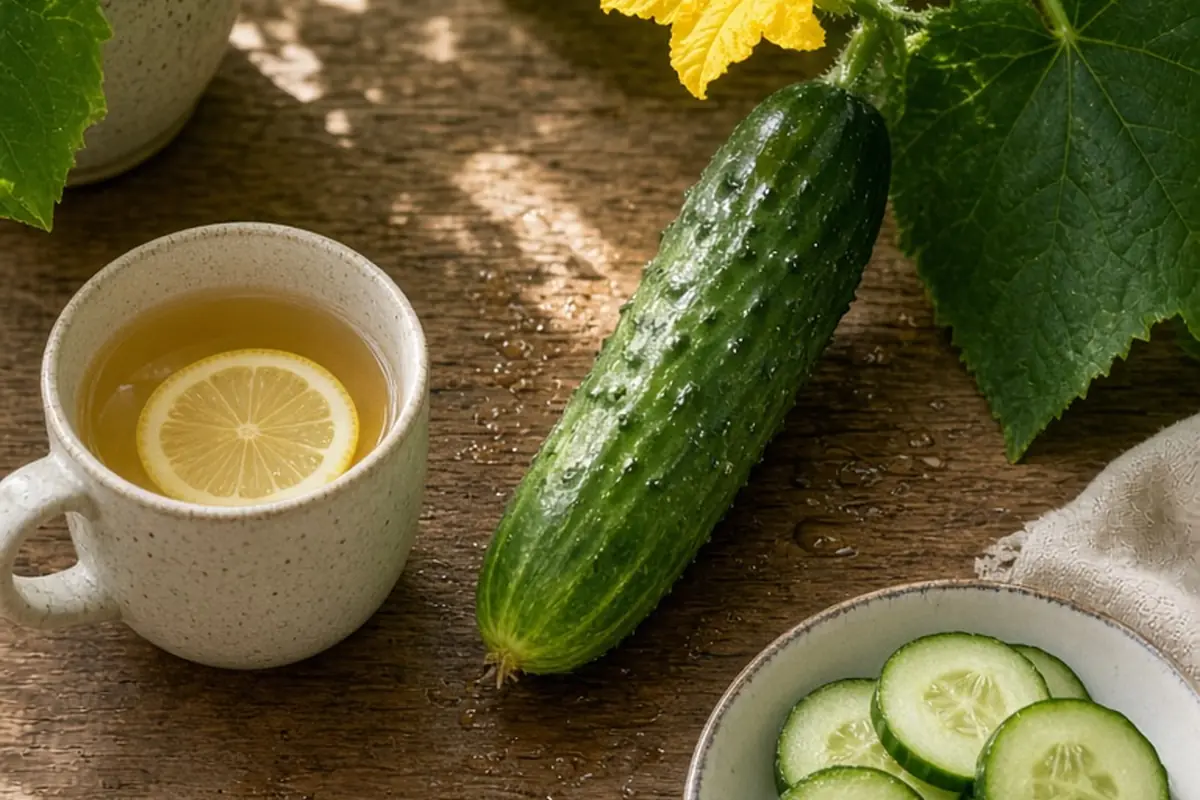
Technically, the small swelling behind a female cucumber blossom is an immature ovary rather than a fully developed fruit. While non-toxic, picking it at the flowering stage yields a tiny, bitter, or dry nub with minimal culinary value. For crisp texture and optimal flavor, you should wait until the blossom is pollinated and the fruit expands to its variety-specific harvest size.
When growing cucumbers in a home garden or patio container, noticing the tiny, fruit-shaped structure attached directly behind an open blossom often raises practical questions about early harvesting.
Anatomy of Cucumber Blossoms and the Immature Ovary
Cucumber plants are naturally monoecious, meaning an individual vine produces separate male and female flowers along its running stems. Male blossoms appear first on slender, straight stems and produce the pollen required for fertilization. Female flowers are easily distinguished by the prominent, miniature cucumber-shaped swelling located directly behind the yellow petals. This swelling is the plant's inferior ovary, which houses the ovules that develop into seeds once fertilized by incoming pollen.
Because this ovary looks like a fully formed miniature cucumber from the moment the bud emerges, gardeners frequently wonder if it represents an ultra-early micro-vegetable. Anatomically, however, this structure consists of undeveloped plant tissue filled with concentrated cucurbitacins and cellular fluid rather than the expanded, crisp flesh found in a mature vegetable. While squash blossoms are frequently harvested with tiny baby squashes attached for culinary frying, unpollinated cucumber ovaries behave differently in both texture and biochemical composition.
Edibility and Flavor Profile of Unpollinated Fruitlets
Consuming the miniature fruit behind an unpollinated female flower is safe in terms of basic toxicity, but the eating experience is rarely enjoyable. In standard cucumber varieties, unfertilized ovaries contain elevated concentrations of cucurbitacins, the bitter chemical compounds native to the Cucurbitaceae family. Biting into an unpollinated ovary typically produces an astringent, dry, or distinctly grassy taste with none of the refreshing sweetness associated with properly matured cucumbers.
The physical texture of an unpollinated flower ovary also lacks the characteristic snap and moisture of a harvest-ready vegetable. The skin of these tiny swellings is often densely covered in sharp prickles or stiff trichomes designed to protect the delicate bud from insect feeding before pollination occurs. Harvesting at this microscopic stage provides virtually no culinary volume or nutritional substance, making it impractical for salads, pickling, or snacking.
How Pollination Transforms the Ovary into Crisp Fruit
For traditional open-pollinated and hybrid cucumber cultivars, true fruit development begins only after viable pollen is transferred from a male blossom to the sticky stigma of the female flower. When bees or other beneficial insects successfully deposit pollen grains, fertilization triggers a rapid surge of plant growth hormones, predominantly auxins and gibberellins. These hormones signal the vine to pump water, natural sugars, and nutrients directly into the cellular structure of the ovary.
Over the course of seven to fourteen days following successful pollination, the ovary undergoes massive cell division and cell enlargement. This process dilutes the concentrated bitter compounds, softens the initial prickles, and creates the crisp, watery mesocarp that defines edible cucumbers. In contrast, if pollination fails, the flower petals will wilt, the unfertilized ovary will stop expanding, and the plant will eventually abort the structure, causing it to turn yellow, shrivel, and drop from the vine.
Understanding Parthenocarpic Varieties and Greenhouse Cultivars
An important exception in modern cucumber gardening is the category of parthenocarpic varieties, which are commonly grown in greenhouses, high tunnels, or indoor setups. Parthenocarpic cucumbers, such as many Long English and mini snack types, possess a genetic adaptation that allows the ovary behind the female blossom to swell into full-sized, seedless fruit without any insect pollination or pollen transfer whatsoever.
Even with parthenocarpic plants, the tiny swelling behind the freshly opened blossom is not ready to be picked on the day the flower opens. The ovary still requires time to undergo cellular expansion and accumulate the hydration and sweetness necessary for harvesting. Attempting to harvest before this expansion occurs results in the same woody, underdeveloped nub, regardless of whether the variety requires insect pollination or sets fruit parthenocarpically.
Optimal Timing and Size Indicators for Picking Cucumbers
Determining when a cucumber is truly ready for harvest depends primarily on the specific variety planted and its intended culinary use. Standard pickling varieties should generally be harvested when they reach two to four inches in length for sweet gherkins, or four to five inches for dill spears. Slicing varieties are typically picked when they measure six to eight inches long and between one and two inches in diameter, while greenhouse English types can reach ten to fourteen inches.
Visual and tactile indicators provide clearer guidance than stem calendar days alone. A harvest-ready cucumber should feel firm and solid along its entire length, displaying uniform skin color characteristic of the cultivar without signs of yellowing. The surface spines often become blunter and brush off easily with a light touch, and the blossom at the blossom end will have naturally dried up and fallen away.
Impact of Premature Harvesting on Vine Health and Total Yield
Removing female blossoms and their attached ovaries prematurely disrupts the vine's natural reproductive cycle and reduces your total seasonal yield. A healthy cucumber vine allocates significant resources toward establishing root systems, vegetative foliage, and early flower buds. Stripping flowers before they have the opportunity to set fruit forces the plant to continuously expend energy initiating replacement floral buds instead of maturing harvestable crops.
Conversely, allowing cucumbers to grow far past their prime until they turn yellow, soft, and seed-heavy signals the vine that its reproductive mission is complete, which suppresses new flower formation. The ideal management strategy involves allowing pollinated ovaries to reach their designated mature size and then harvesting promptly, which stimulates the vine to maintain an active, productive fruiting cycle throughout the growing season.
Recognizing and Managing Aborted Fruitlets
Gardeners often observe the small cucumber behind a female flower turning yellow, drying out, or rotting at the blossom end shortly after flowering. This condition, known as fruit abortion, occurs when the flower was insufficiently pollinated or when the vine experiences environmental stress, such as extreme heat above ninety degrees Fahrenheit, irregular watering, or a sudden drop in available soil nutrients.
Unlike healthy immature ovaries that are actively developing, aborted fruitlets will never mature into edible cucumbers and should be removed promptly. Using clean snips to cut away yellowing or shriveling ovaries prevents secondary fungal infections, such as gray mold, from spreading into the main vine and encourages the plant to direct its moisture and nutrients toward viable blooms higher up the trellis.
Correct Harvesting Methods to Protect Developing Blooms
When your cucumbers have progressed past the flowering stage and reached their optimal harvest size, using proper removal technique preserves the health of surrounding vines and nearby unopened female buds. Pulling or twisting the cucumber by hand frequently snaps the fragile main runner, tears the vascular tissue of the vine, or dislodges adjacent female blossoms that are preparing to open.
Always harvest mature cucumbers using sharp, clean garden shears or pruners, cutting the tough fruit pedicel roughly one-quarter to one-half inch above the top of the fruit shoulder. Harvesting in the cool morning hours when the plant's moisture content is at its highest ensures maximum crispness and prolongs the post-harvest storage life of the vegetable in refrigeration.
Frequently asked questions
Can you eat cucumber flowers like squash blossoms?
Yes, cucumber flowers are edible and can be used as a delicate garnish in fresh salads. However, they are far smaller and more fragile than squash blossoms, with a mild grassy taste that requires gentle handling.
Why are the tiny cucumbers behind my flowers turning yellow and falling off?
This happens when the female flower is not successfully pollinated by insects or when the vine suffers from environmental stressors like high heat or inconsistent watering. The plant naturally aborts unfertilized ovaries to conserve moisture and energy for healthier growth.
How long does it take for a cucumber to grow after flowering?
Once successful pollination occurs, most cucumber varieties grow rapidly and reach harvest size within seven to fourteen days under warm, sunny conditions. Checking the vines every day or two during warm weather prevents fruits from becoming overripe and seedy.
Does picking early make cucumbers grow faster?
Harvesting cucumbers as soon as they reach their mature variety size encourages the vine to keep producing new flowers and fruit. However, picking the tiny unpollinated ovaries right at the bloom stage does not speed up growth and simply wastes potential yield.
Your next step
Leave the miniature swelling behind your female cucumber flower on the vine to allow proper pollination and full cell expansion, then harvest with clean shears once the fruit reaches firm, variety-appropriate size.