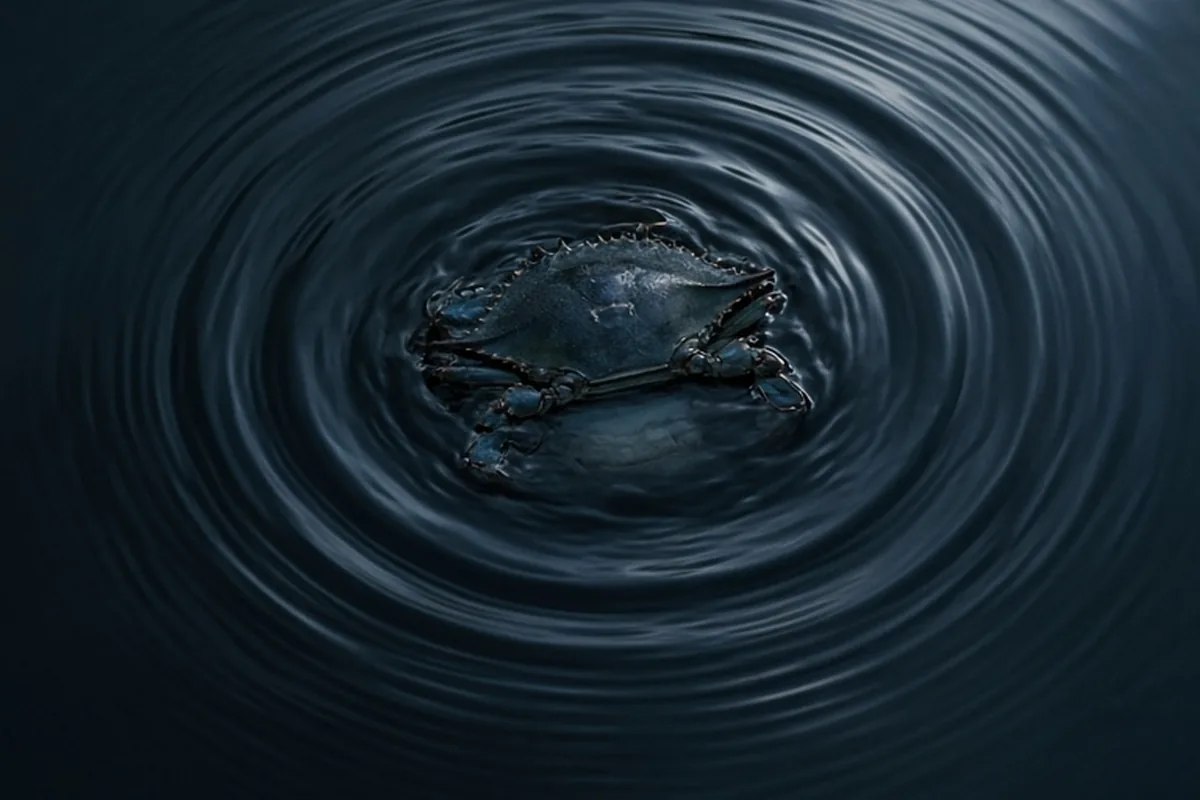
In New Jersey, you can legally keep non-egg-bearing female blue crabs if they meet the minimum shell width of 4.5 inches from spine to spine. However, you cannot keep egg-bearing female crabs, commonly called sponge crabs, under any circumstances. They must be returned immediately to the water. While harvesting legal mature females is permitted up to the recreational limit of one bushel daily, many anglers choose to release them voluntarily to support future breeding populations.
Recreational crabbing along the coastal bays, tidal creeks, and salt marshes of New Jersey is a classic summer past-time. Knowing the specific harvest laws protects you from steep fines and helps maintain healthy blue crab populations for upcoming seasons.
New Jersey Legal Standards for Harvesting Female Blue Crabs
State regulations overseen by the New Jersey Department of Environmental Protection (NJDEP) Division of Fish and Wildlife allow recreational crabbers to harvest female blue crabs, but only under clearly bounded conditions. A female crab kept for consumption must measure at least 4.5 inches across the carapace, taken from the tip of one lateral point to the tip of the opposite point. Hard crabs that fail to meet this threshold must be returned immediately to the water unharmed. Additionally, the standard daily recreational possession limit across all tidal waters in New Jersey is one bushel of blue crabs per person, combining both males and legal females.
While non-bearing females can legally enter your harvest basket, state law enforces an absolute prohibition on keeping egg-bearing females. Known as sponge crabs, berry crabs, or berried females, these crabs carry thousands to millions of developing eggs externally. Possessing even a single sponge crab in New Jersey is a direct violation of state conservation law, regardless of the crab's overall shell width or where it was caught. Environmental conservation officers perform routine dockside checks along popular bays and boat launches, and failure to release egg-bearing crabs can lead to confiscation of your gear, loss of catch, and significant monetary citations.
Identifying Sponge Crabs and Understanding Egg Development
To stay compliant with New Jersey law, every crabber needs to know how to recognize an egg-bearing female before tossing a catch into the cooler. When a female blue crab fertilizes her eggs, she extrudes them onto her underside, securing the cluster beneath her abdominal apron. This mass forms a prominent, spongy cushion that pushes the apron open and bulges outward. If you turn a crab over and see any rounded mass of eggs attached beneath the body flap, that crab is legally classified as a sponge crab and must be placed gently back into the water without delay.
The appearance of the egg mass changes as the embryos develop, ranging in color from a vibrant golden-yellow or bright orange to a dark, muddy brown or near-black hue. Freshly extruded eggs start light and darken as the embryonic crabs develop eyes and absorb their yolk reserves over approximately two weeks. Regardless of whether the sponge is bright yellow and fresh or dark black and on the verge of hatching, the legal restriction remains identical. Even if the sponge appears damaged or partially detached, the animal cannot be harvested or transported.
Reading the Apron: Distinguishing Males, Immature Females, and Mature Females
Telling male crabs from female crabs requires inspecting the abdomen, commonly called the apron, located on the underside of the shell. You can inspect this area safely by grasping the crab firmly from behind across the rear swimming paddles, keeping your fingers out of reach of the front chelipeds (claws). A male crab, often referred to as a jimmy, displays a long, narrow apron shaped like an inverted T or an obelisk, reminiscent of the Washington Monument. Males also typically feature brilliant blue highlights along the inner and outer surfaces of their large claws.
Female crabs undergo distinct anatomical changes between their immature and mature stages, which are easily identified by apron shape. An immature female, known as a sally or maiden crab, has a rigid, triangular apron shaped like an inverted pyramid. Once she undergoes her final terminal molt into a mature female, known as a sook, her apron widens into a broad, rounded semicircle resembling the dome of the United States Capitol. Mature females also display distinctive bright orange or red tips on their claws. Recognizing this broad dome is essential because mature females are the individuals capable of carrying a sponge or mating during the late summer cycle.
The Conservation Case for Releasing Mature Females
Although New Jersey fishing regulations allow you to keep non-sponge mature females that clear the 4.5-inch mark, many experienced crabbers actively practice catch-and-release for all female crabs. Blue crab populations experience substantial fluctuations driven by winter water temperatures, predatory pressure, and environmental conditions across estuaries like Barnegat Bay and Delaware Bay. Because a single mature female can produce multiple egg sponges totaling up to several million eggs during her life span, releasing mature females provides a direct ecological investment in the next season's crab stock.
Beyond conservation ethics, culinary trade-offs often lead seasoned crabbers to favor males over females. Large male crabs generally carry significantly more dense, flaky lump meat than females of an equivalent carapace width. Female crabs expend immense metabolic energy developing ovaries and reproductive tissue, particularly during the mid-to-late summer months. Consequently, a bushel consisting purely of large jimmies typically yields a higher volume of meat and a firmer texture than a mixed bushel heavy with sooks, making the release of females both an ecological benefit and a practical choice for the table.
Measuring Crabs Accurately to Comply with Size Limits
Measuring a blue crab accurately is the best defense against unintentional violations during a dock inspection. In New Jersey, the legal width for a hard crab must be measured point-to-point across the widest part of the shell, spanning from the extreme tip of one lateral spine to the extreme tip of the other. The standard minimum legal width is 4.5 inches for hard crabs, 3.5 inches for soft-shell crabs, and 3 inches for peelers or shedders. Fabric measuring tapes and flexible rulers are prone to bending or slipping across the curved dorsal carapace, which can produce inaccurate readings that place undersized crabs in your basket.
The most reliable tool for the job is a rigid aluminum or hard plastic crab gauge marked with fixed notches for legal measurements. Place the crab on a flat surface or hold it firmly by the swimming legs, then position the caliper across the lateral tips. If the spines do not cleanly touch or exceed the 4.5-inch gauge lines, the crab must be returned to the water immediately. If a crab has a broken or blunted lateral spine, conservation officers evaluate the animal based on the physical points present; if the broken spine causes the crab to fall short of 4.5 inches, it is deemed undersized. Erring on the side of caution with borderline catches avoids citations.
New Jersey Gear Rules, Licensing, and Harvest Methods
Your legal responsibilities when crabbing in New Jersey also depend on the type of gear you deploy in coastal waters. If you crab recreationally using hand lines, dip nets, or collapsible wire traps that fold flat on the bottom and close when pulled, you do not need a recreational crabbing license in New Jersey's tidal waters. These manual methods allow you to inspect each crab individually as it surfaces, making it simple to release sponge crabs and undersized females before they ever sit in a holding container.
However, if you choose to set commercial-style stationary crab pots that remain unattended in the water, state law requires you to obtain a recreational crab pot license through the NJDEP. Recreational potters are limited to two pots per person, which must be clearly marked with the owner's license number. These pots must also feature functioning escape vents for undersized crabs, biodegradable panels to prevent ghost-fishing if the pot is lost, and Bycatch Reduction Devices (BRDs) on the funnel entrances to protect diamondback terrapins. Regardless of your chosen gear, the daily personal limit remains firmly capped at one bushel.
Safe Handling and Release Techniques for Live Crabs
Handling crabs safely protects both the crabber from severe pinches and the crab from lethal limb damage. Blue crabs possess formidable claws capable of breaking skin and crushing knuckles, but they can be immobilized safely by approaching them from the rear. Use your thumb and index finger to grasp the base of one of the rear swimming legs right where it joins the main shell. Held in this position, the crab cannot articulate its claws backward far enough to pinch your hand, allowing you to turn it over cleanly to examine the apron or align it with a measuring gauge.
When releasing a sponge crab or an undersized female, avoid dropping or throwing the animal from tall piers, bridges, or bulkheads. Hitting the surface of the water from a substantial height can rupture the egg mass of a sponge crab or crack the carapace, leading to systemic bacterial infection or mortality. Instead, place the crab gently back into the water using a long-handled dip net, or lower it down close to the surface before letting it swim away. If a crab has become entangled in netting, take time to cut or untangle the mesh rather than violently tearing legs loose, as autotomy and excessive stress severely reduce the crab's post-release survival.
Illustrative Scenarios
Sorting a Borderline Catch on Barnegat Bay
While crabbing from a small skiff near Barnegat Bay, a recreational crabber pulled up a wire trap containing two large blue crabs. The first crab measured exactly 4.75 inches and showed the prominent T-shaped apron of a male jimmy, which went straight into the damp bushel basket. The second crab was a mature female measuring 4.6 inches across the spines, clearing the 4.5-inch legal threshold. However, upon turning the female over, the crabber noticed a faint, dark mass of tiny eggs beginning to push out from under the rounded apron. Recognizing that this budding sponge crab was legally protected and critical for future local recruitment, the crabber carefully lowered the female back into the water with a dip net.
Key point: Checking the underside of every female crab—even those that clear the minimum size requirement—prevents illegal possession of developing sponge crabs and protects estuary breeding stock.
Frequently asked questions
Can you keep female soft-shell crabs in New Jersey?
Yes, you can keep female soft-shell crabs in New Jersey as long as they measure at least 3.5 inches from point to point across the carapace. However, they must not possess any extruded egg mass, as sponge crabs are prohibited in all shell conditions.
What happens if you accidentally keep a sponge crab in New Jersey?
New Jersey enforces strict liability for possessing egg-bearing blue crabs, meaning accidental retention is not considered a valid legal defense during an inspection. State conservation officers can issue summonses resulting in fines starting at over one hundred dollars, alongside the confiscation of your catch and gear.
Does New Jersey allow crabbing at night?
Recreational crabbing with handlines, collapsible traps, or dip nets is permitted at night in public waters where access is open. However, if you are using licensed stationary recreational crab pots, you may not tend, set, or pull those pots between sunset and sunrise under state administrative codes.
Your next step
Inspect the apron of every crab you pull from New Jersey waters, verify that hard females exceed 4.5 inches across the spines, and immediately return any crab carrying an egg sponge back to the bay.