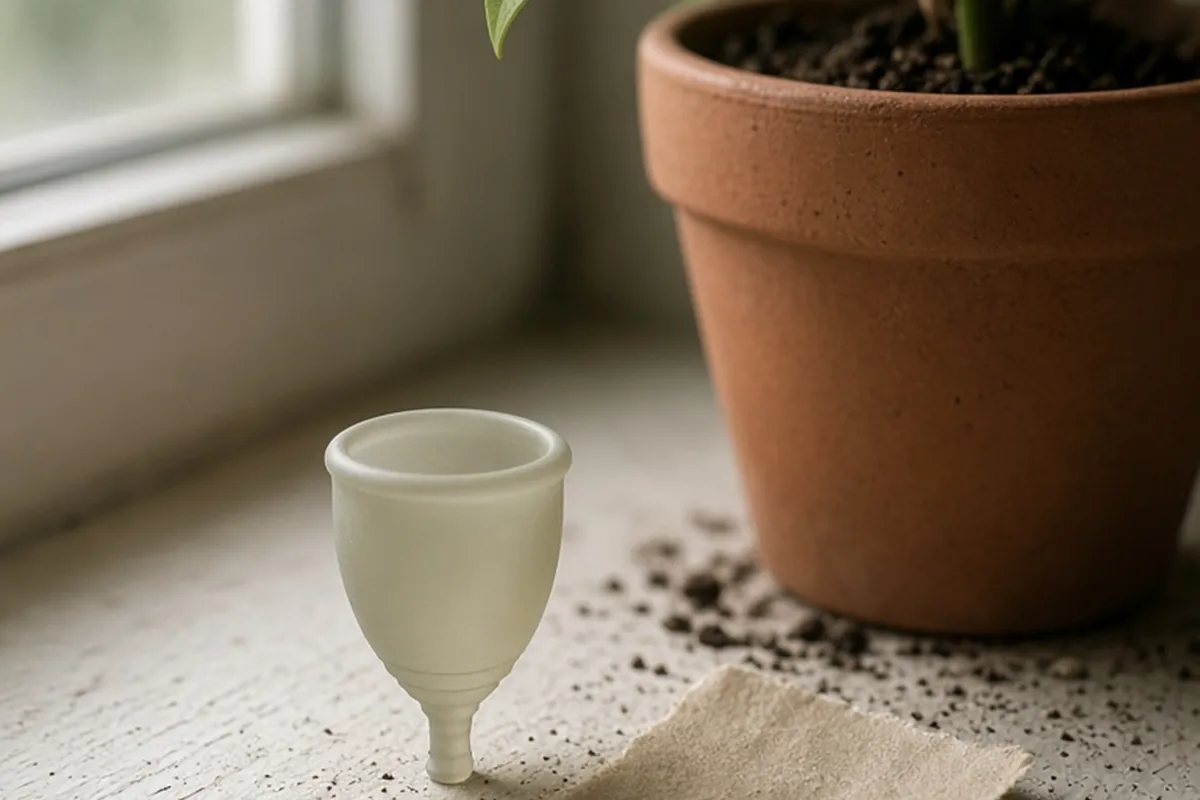
Yes, you can poop while wearing a menstrual cup. The vagina and the rectum are separate anatomical passages, so a bowel movement will not push the cup into your digestive tract. However, bearing down engages the pelvic floor muscles, which can shift the cup downward or break its suction seal. Checking placement after using the bathroom ensures continuous leak protection and comfort.
Navigating period care often involves learning how internal products interact with your daily bodily functions, especially during trips to the bathroom.
Pelvic Anatomy and Why Menstrual Cups Stay Contained
A common concern when using internal period products is whether standard bodily functions might interfere with their placement or safety. From an anatomical standpoint, your reproductive and digestive tracts are completely separate systems. The vagina, where the menstrual cup sits to collect flow, is located in front of the rectum, which stores and eliminates stool. A thin layer of connective tissue and muscle known as the rectovaginal septum divides these two passages. Because there is no opening between them under normal health conditions, having a bowel movement cannot push the cup into another part of your body or cause it to get lost inside you.
While these channels are distinct, they share space within the pelvic cavity and are supported by the same group of pelvic floor muscles. When stool passes through the rectum, it creates temporary internal pressure against the posterior wall of the vagina. This proximity is why you might feel the cup more distinctly while sitting on the toilet or why passing a firmer stool can make the cup feel as though it is being squeezed. Understanding that this shared muscular boundary is responsible for the sensation can ease any anxiety about whether your cup is behaving normally during digestion.
How Bearing Down Affects Cup Position and Suction
The primary mechanical change that occurs during a bowel movement involves the pelvic floor muscles, specifically the levator ani muscle group. When you bear down to pass stool, these muscles naturally engage, expand, and descend. This downward exertion applies force to the flexible walls of the vagina, which can alter the airtight seal that keeps a menstrual cup securely anchored near the cervix or lower vaginal canal.
Depending on the strength of your cup's suction, the firmness of its silicone, and the intensity of your bearing down, the cup may shift slightly downward toward the vaginal opening. In some cases, the contraction can compress the cup enough to release its vacuum seal entirely. For example, if you have a bowel movement that requires noticeable straining, you might feel the base or stem of the cup sit lower than usual immediately afterward. While this does not automatically mean the cup will fall out, a compromised seal or lowered position can create tiny channels for fluid to bypass the rim, leading to unexpected spotting or leaks once you stand up and resume normal activities.
Leaving the Cup In Versus Removing It First
Deciding whether to leave your menstrual cup in place while having a bowel movement comes down to a balance between personal convenience and comfort. For most routine, effortless bowel movements, there is no physical requirement to remove the cup beforehand. Leaving it inserted saves time, reduces the frequency of hands-on handling in the bathroom, and preserves the existing seal if your pelvic floor remains relatively relaxed. This approach is particularly practical in public or workplace restrooms where private sink access for rinsing and reinserting is limited.
Conversely, there are situations where removing the cup before using the toilet is the more practical option. If you are experiencing constipation, hard stools, or noticeable gastrointestinal cramping, the forceful bearing down required can make wearing a firm cup feel uncomfortable or painful against the rectal wall. Additionally, if your cup is already close to capacity, the muscular squeezing can cause an overflow. Removing the cup first eliminates the fear of it slipping into the toilet bowl and allows you to empty, clean, and reinsert it fresh once your pelvic muscles have fully relaxed.
Techniques to Prevent Your Cup From Slipping Out
If you prefer to keep your cup in place while using the bathroom, practical posture adjustments and relaxation habits can significantly minimize downward movement. The most effective approach is to avoid aggressive straining. Elevating your feet onto a small bathroom stool or a stack of sturdy items raises your knees above your hips. This modified squatting position aligns the puborectalis muscle and straightens the anorectal angle, allowing stool to pass smoothly with minimal muscular pushing and reducing the displacement force applied to the vaginal canal.
You can also use physical support if you feel significant downward pressure during a bowel movement. Pressing a folded pad of clean toilet paper gently against the vaginal opening while passing stool provides counter-pressure that stops the cup from sliding downward. Once you have finished and cleaned yourself, take a moment to evaluate the cup's position before pulling up your clothing. Wash your hands thoroughly, insert a clean finger to locate the base of the cup, and ensure the rim is still fully open against the vaginal walls. If it has slipped down, gently nudge the base upward or give it a slight rotation until you feel the suction re-engage.
Handling Mishaps and Accidental Drops
Even experienced cup users occasionally encounter a situation where a cup breaks its seal completely and drops into the toilet bowl during a bowel movement. While this can be frustrating and inconvenient, handling it smoothly requires prioritizing hygiene. If the cup falls into toilet water, do not rinse it off and reinsert it immediately, as standard tap water or hand soap is insufficient to clear potential bacterial contamination from toilet surfaces.
If a drop occurs at home, retrieve the cup using toilet paper or gloves, wash it thoroughly with warm water and a dedicated cup-safe cleanser, and sterilize it in boiling water for several minutes according to the manufacturer guidelines before its next use. If you are away from home when this happens, place the dropped cup in a sealable pouch or wrap it carefully to clean later, and switch to a backup product such as period underwear, a pad, or a spare sanitized cup. To prevent this scenario entirely, make a habit of keeping one hand lightly positioned near the opening if you feel the cup shifting, or simply remove the cup before sitting down if you anticipate heavy straining.
Cup Firmness and Shape Considerations for Bowel Comfort
The physical design of your menstrual cup plays a substantial role in how comfortable it feels during bowel movements and how well it stays in place. Cups vary widely in diameter, shape, and silicone firmness (often measured in shore durometer). A cup made from very firm silicone creates a strong, resilient seal that rarely collapses during pelvic contractions, making it less likely to shift or leak during a bowel movement. However, that same firmness means the cup exerts continuous outward pressure against the vaginal walls, which can press against a full rectum and make passing stool feel more difficult or uncomfortable.
Softer cups, by contrast, yield more easily to the natural shifts of your pelvic anatomy, which can feel much gentler on sensitive days or for individuals prone to bowel sensitivity during menstruation. The trade-off is that softer silicone is more easily compressed by bearing down, which raises the likelihood that the seal will break during a bowel movement. Finding the right balance may involve testing different profiles. If you frequently feel rectal pressure while wearing your cup, switching to a softer model or a cup with a narrower rim can relieve the sensation, provided you remember to check the seal after visiting the bathroom.
Frequently asked questions
Can bearing down to poop make a menstrual cup fall out?
Yes, intense straining or bearing down can compress the cup and break its vacuum seal, causing it to slide down the vaginal canal. While it rarely falls out entirely without warning, softer cups are especially prone to shifting during forceful bowel movements. You can prevent drops by avoiding excessive straining or removing the cup prior to using the toilet.
Why does it hurt to poop while wearing a menstrual cup?
Discomfort usually happens because the rectum and vagina share a thin muscular wall, meaning a firm cup can press directly against the space where stool passes. If the cup is too rigid, too large, or positioned low, the combined pressure can cause aching or cramping. Switching to a softer cup or adjusting the insertion height often resolves this tenderness.
Do I need to clean my menstrual cup every time I poop?
You do not need to clean the cup after every bowel movement as long as it remains securely inside the vagina and you only wipe the external genital and anal areas. However, if the cup slipped low enough to touch external surfaces or if you choose to remove it before passing stool, you should wash your hands and the cup before reinserting it.
Your next step
During your next bowel movement while wearing a cup, use a footstool to reduce pelvic straining and take ten seconds afterward with clean hands to confirm the base is seated and sealed correctly.