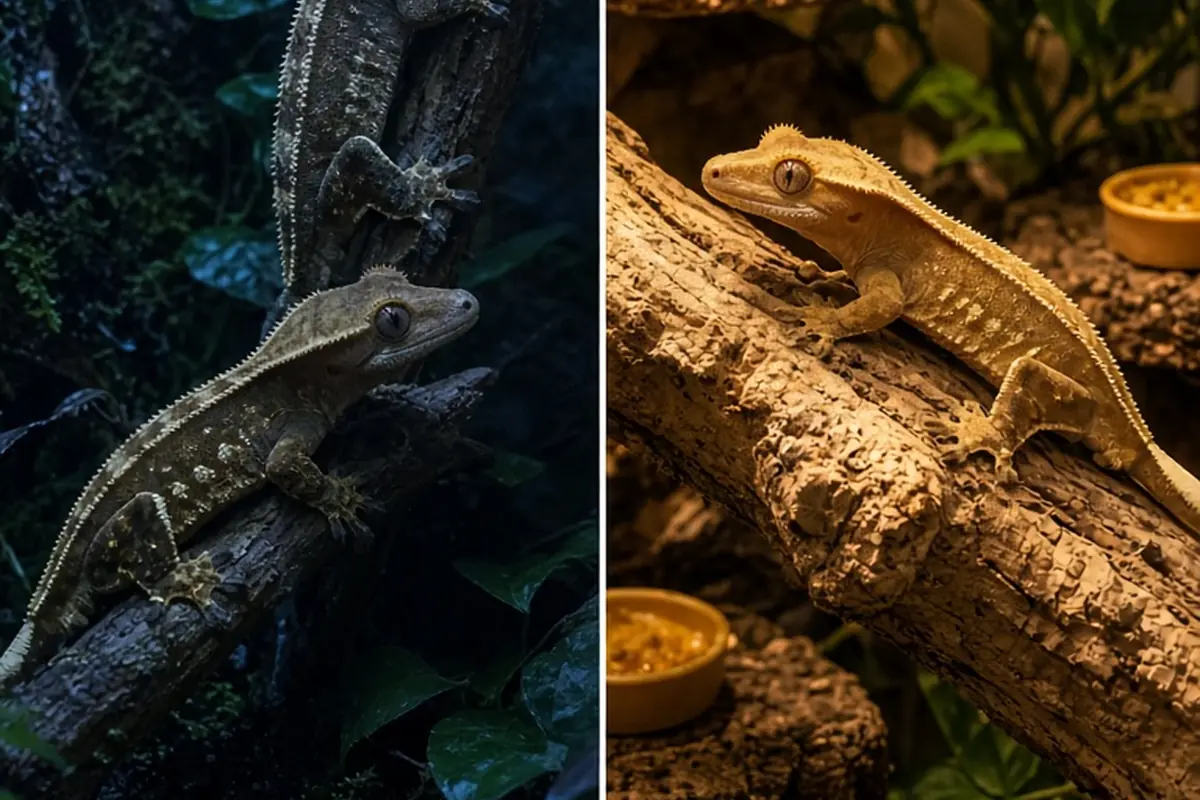
You can technically house two adult female crested geckos together, but reptile specialists generally advise against it. Crested geckos are solitary animals that gain no psychological benefit from companionship. Cohabitation frequently leads to chronic stress, resource guarding, and sudden aggression. If attempted, keepers must provide an oversized enclosure with multiple feeding stations, identical weight matching, and a permanent backup enclosure ready for immediate separation.
Crested geckos have become one of the most popular companion reptiles due to their manageable care requirements, calm demeanor, and striking appearances. It is natural for keepers to wonder if these gentle lizards would enjoy sharing a terrarium with a companion, particularly when observing two females. Understanding the natural biology, behavioral instincts, and environmental demands of these reptiles is essential before introducing a second gecko to an existing habitat.
The Solitary Nature of Crested Geckos and Social Misconceptions
In the wild canopy of New Caledonia, crested geckos live almost exclusively solitary lives. They come into contact with conspecifics primarily to mate or when inadvertently competing for the same patch of rotting fruit, sap, or daytime roosting foliage. Unlike mammals or flocking birds, geckos do not possess the neurological wiring for social bonding, pack hierarchy, or affection. Placing two females together does not provide emotional enrichment; rather, it introduces a permanent environmental competitor into their home range.
Keepers often anthropomorphize reptile behaviors, misinterpreting shared spaces as friendly interaction. When two geckos sleep pressed against one another or rest together on a single feeding ledge, novice owners frequently assume they are cuddling. In reptile behavioral terms, this is almost always a dominance display known as resource stacking. The dominant gecko positions herself directly over or alongside the subordinate animal to monopolize heat, humidity, security, or food access, gradually exhausting the weaker gecko over weeks or months.
Recognizing the Warning Signs of Cohabitation Stress
Stress in cohabiting crested geckos is rarely loud or continuous; it manifests in subtle, chronic physical and behavioral changes. One of the clearest indicators is an uneven growth rate or unexplained weight loss in one gecko while the other remains plump. The subordinate female may spend daylight hours hidden in suboptimal, colder, or excessively dry corners of the enclosure because the dominant female controls the best microclimates. Over time, chronic cortisol elevation weakens the subordinate gecko's immune system, leaving her vulnerable to respiratory infections or shedding difficulties.
Physical injuries can also occur with alarming speed, even after months of apparent calm. Keepers should watch for nipped toes, bite wounds along the crests or neck, and sudden autotomy, which is the shedding of the tail. Tail loss is a defensive reflex triggered by extreme fear or physical restraint. If you notice one gecko consistently awake and restless during the day, vocalizing with squeaks, or displaying darkened, firing-up stress coloration without an environmental cause, social tension has reached a dangerous threshold.
Strict Prerequisites Before Attempting Multi-Gecko Housing
Cohabitation should never be attempted on an impulse, nor should it be used as a convenient method to save space. Both geckos must be fully mature adults, verified beyond doubt as female, and closely matched in physical size. Introducing an unsexed juvenile to an adult female is extremely hazardous, as subadult males can suddenly mature, leading to unwanted breeding attempts or aggressive territorial attacks. Furthermore, a significantly larger adult female will readily bite, bully, or maim a smaller counterpart during nocturnal activity.
A strict health protocol must also precede any joint housing arrangement. Both geckos require a minimum ninety-day quarantine in separate enclosures located in different areas of the home, alongside fecal examinations to rule out internal parasites like Entamoeba or pinworms. Parasites that cause mild symptoms in a single animal can rapidly multiply and overwhelm geckos living under the shared physiological stress of cohabitation.
Minimum Enclosure Dimensions and Complex Habitat Architecture
A standard single-gecko enclosure, such as an eighteen-by-eighteen-by-twenty-four-inch tall terrarium, is completely inadequate for two adult females. Housing two females safely requires a bare minimum of an eighteen-by-eighteen-by-thirty-six-inch vertical terrarium, though a twenty-four-by-eighteen-by-thirty-six-inch or larger custom enclosure is far more suitable. Vertical height is essential because arboreal geckos establish distinct vertical territories, allowing individuals to select different canopy levels according to their temperature and humidity preferences.
The interior layout must feature dense, multilayered foliage providing at least eighty percent visual coverage across multiple zones. If two geckos can see each other from across the tank at all times, chronic stress will inevitably develop. Use cork bark rounds, hanging coconut hides, magnetic ledges, and sturdy live or synthetic broadleaf plants like Pothos or Sansevieria to divide the terrarium into distinct, independent micro-habitats where neither gecko needs to cross the other's preferred resting spot.
Distributing Food, Water, and Basking Stations
Resource guarding is the most frequent trigger for cohabitation aggression. When food is concentrated in a single spot, the more assertive female will establish dominance over that zone, preventing the more timid female from eating an adequate diet. To prevent this, an enclosure holding two geckos must feature at least two or three separate feeding stations placed on opposite sides and at different heights within the terrarium.
Both stations must be filled with fresh prepared fruit diet on the exact same schedule so neither lizard is forced to venture into the other's territory for sustenance. When offering live feeder insects like gut-loaded dubia roaches or crickets, supervise the feeding session directly or feed the geckos in separate temporary containers. Free-roaming insects inside a cohabited enclosure often spark fast, competitive strikes where one gecko accidentally or intentionally bites the face, eyes, or limbs of the other.
Introduction Protocols and Long-Term Monitoring Systems
Introductions must be conducted slowly and in neutral territory after quarantine is complete. Place both geckos into a clean, neutral holding container with ample cover and observe their interactions for thirty to sixty minutes during their active evening hours. Look for mutual tolerance, slow exploratory movements, and an absence of tail-waving, rapid lunging, or biting. If any aggressive posture occurs, separate the animals immediately and abandon the cohabitation plan.
If the neutral meeting is uneventful, introduce both geckos simultaneously into the newly arranged, thoroughly cleaned main terrarium after misting. Keepers must establish a strict monitoring routine involving weekly weigh-ins using a digital gram scale. Tracking weight over time provides objective data that visual inspection cannot match; a loss of even two or three grams in one female over several weeks is an undeniable signal that resource competition or covert bullying is occurring.
Preparing for Inevitable Separation and Backup Equipment
The most critical rule of cohabiting crested geckos is that the keeper must always maintain a fully equipped, standalone secondary terrarium ready for immediate occupancy. Cohabitation is never guaranteed to remain peaceful. Two females that have shared an enclosure without incident for two years can suddenly turn violent due to seasonal hormonal shifts, changes in ambient room temperature, or subtle health shifts in one animal.
Relying on temporary emergency bins as long-term solutions leads to substandard husbandry when an unexpected separation occurs. Your backup enclosure must have its own lighting, misting capability, thermometer, hygrometer, and climbing branches. If you do not have the physical space or financial budget to maintain two separate adult-sized enclosures simultaneously, you should not attempt to house two geckos together under any circumstances.
Frequently asked questions
Can two female crested geckos become lonely if kept in separate enclosures?
No, crested geckos are naturally solitary animals that do not possess social instincts or an emotional need for companionship. Keeping them in individual enclosures eliminates territorial stress and guarantees they have exclusive access to food, water, and optimal shelter.
What should I do if I see my geckos sleeping together on the same branch?
Separate them or closely monitor their weights and behavior, as this is often a dominance posture known as resource stacking rather than affection. Ensure there are multiple identical basking and resting spots available across the habitat to see if they choose to roost separately.
Can I house a male and a female crested gecko together permanently?
No, housing males and females together permanently leads to severe health decline for the female due to constant breeding attempts, egg-binding risks, and physical harassment. Males will relentlessly pursue females, causing extreme exhaustion, nutritional depletion, and aggressive territorial disputes.
What weight difference is acceptable when cohabiting two females?
Both females should be fully grown adults weighing over forty grams with no more than a two-to-three-gram difference between them. Any larger discrepancy gives the heavier gecko a significant physical advantage during territorial disputes and food competition.
Your next step
Before purchasing a second gecko, purchase and fully furnish a dedicated second enclosure so that individual housing remains your primary plan rather than an afterthought.