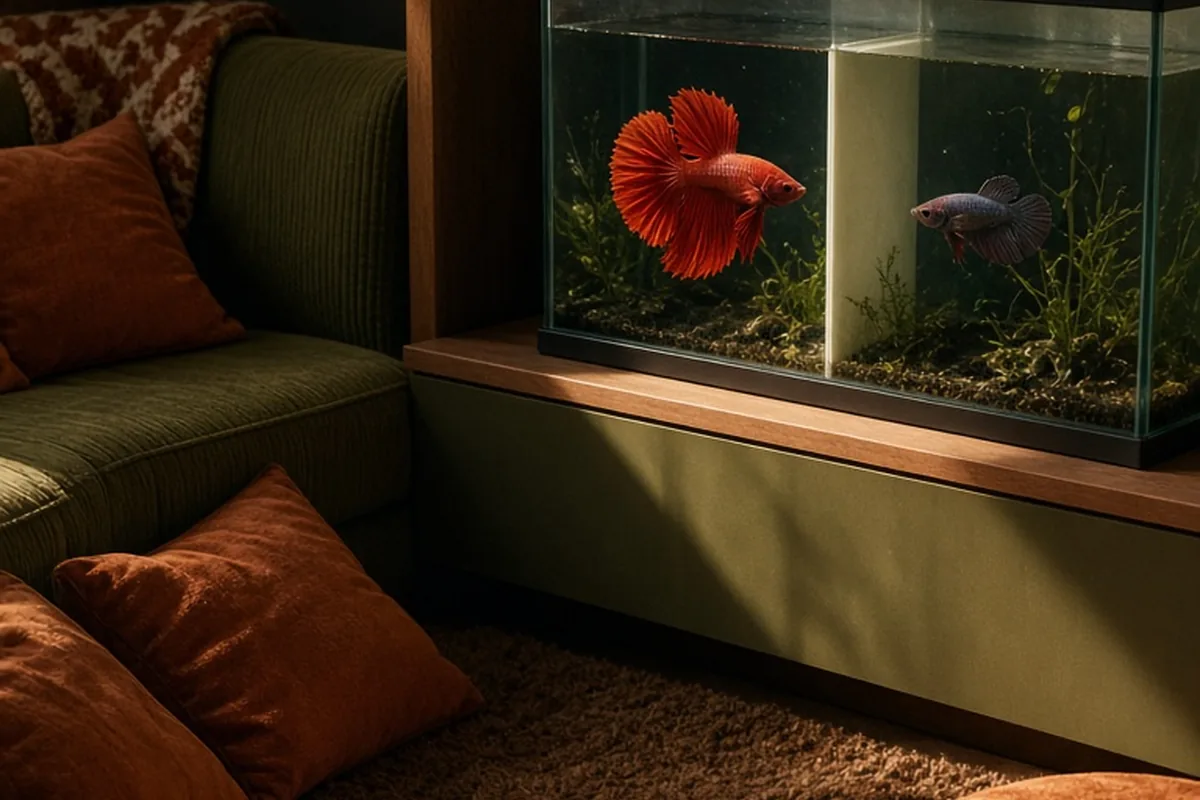
In general, you should not put a female betta with a male betta in the same aquarium. Domestic Siamese fighting fish are highly territorial, and keeping both sexes together almost always leads to violent fighting, severe stress, fin damage, or death. The only brief exception occurs during carefully monitored breeding sessions, after which the fish must be separated immediately.
Aquarium hobbyists are often drawn to the vibrant colors and interactive personalities of betta fish, leading many to wonder whether a male and female pair can peacefully share a home aquarium. While keeping a bonded pair works well for many other tropical species, the biology and behavioral instincts of domestic bettas make permanent shared housing unsafe.
The Behavioral Biology Behind Betta Aggression
Domestic Siamese fighting fish, scientifically known as Betta splendens, have been selectively bred for centuries to emphasize heightened territorial aggression. In their natural habitat in Southeast Asia, wild bettas inhabit vast, shallow bodies of water such as rice paddies, marshes, and slow-moving streams. These natural environments provide immense surface area, dense vegetation, and low stocking densities, allowing fish to establish distinct territories and escape aggressive rivals when necessary.
In a home aquarium, the physical boundaries prevent a weaker fish from fleeing out of sight. While male bettas are famous for fighting other males, their territorial drive extends directly to females outside of active spawning events. A male perceives any other betta within his territory as a threat to his resources, food supply, and nesting area. Similarly, female bettas can be surprisingly aggressive and territorial. When enclosed in a standard aquarium, the fish enter a state of constant social tension, which triggers chronic physiological stress and leads to inevitable physical confrontation.
The Controlled Breeding Exception and Its Strict Limits
The only situation where an aquarist places a male and female betta in the same enclosure is for controlled, temporary breeding. Experienced breeders do not simply drop both fish into a community tank together. Instead, the process requires weeks of specialized preparation, including feeding high-protein live or frozen foods, setting up a dedicated shallow breeding tank, and using a clear physical barrier so the fish can view each other without physical contact before release.
Even during planned breeding, the female is released only when she displays vertical breeding bars and the male has constructed a sturdy bubble nest. Once the spawning process concludes and the female releases her eggs, the male immediately shifts back into defense mode. He will vigorously attack the female to keep her away from the nest. The breeder must remove the female from the breeding tank within minutes of spawning to prevent severe injury or death. The male is also removed a few days later once the fry are free-swimming.
Common Misconceptions About Mixed-Sex Betta Tanks
Many aquarium keepers encounter anecdotal claims suggesting that male and female bettas can coexist if certain conditions are met. A frequent assumption is that a large tank, such as a 40-gallon or 55-gallon setup with heavy live plants, provides enough space for both fish to establish separate territories. While dense planting helps break sightlines, both fish release hormones and pheromones into the water column. The male continuously patrols the tank perimeter, seeking out intruders, and will eventually corner the female during routine feeding or surface breathing.
Another common myth involves raising young male and female siblings together from the same spawn. While juvenile bettas can live together peacefully during their first few weeks of life, their territorial instincts activate rapidly as they reach sexual maturity at roughly three to four months of age. Cohabitation that appears peaceful for several weeks can transform overnight into lethal violence without any obvious warning sign.
- Large tank volume alone does not eliminate territorial patrolling behaviors.
- Juvenile siblings develop strong aggressive instincts upon reaching sexual maturity.
- Heavy vegetation slows visual tracking but cannot prevent territorial encounters at the water surface.
- Female bettas are capable of initiating lethal attacks against males, particularly long-finned varieties.
Physical and Behavioral Indicators of Cohabitation Stress
When a male and female betta are kept in the same aquarium, the negative consequences manifest in both overt physical trauma and subtle behavioral shifts. Physical damage is often immediate and unmistakable. The fish may exhibit shredded or torn fins, missing scales along the flanks, bite marks around the head, and cloudy eyes resulting from direct impacts against tank decor while fleeing.
Behavioral changes often precede physical injury but are equally dangerous. A stressed betta will spend hours hiding behind heater casings or resting near the bottom gravel in an attempt to avoid detection. You may observe clamped fins held tightly against the body, rapid gill movement indicating elevated respiration, horizontal stress stripes along the body of the female, and a complete refusal to eat. Over time, chronic stress severely weakens the immune system, leaving both fish vulnerable to opportunistic bacterial and fungal infections.
- Torn, nipped, or fraying fin tissue on either fish
- Loss of vibrant coloration accompanied by horizontal stress stripes
- Clamped fins and reluctance to swim into open water
- Lethargy, loss of appetite, and persistent hiding near filtration equipment
- Rapid, labored breathing at the water surface or tank bottom
Safe Housing Alternatives: Divided Tanks and Individual Aquariums
If you own both a male and female betta and wish to keep them within the same physical aquarium footprint, a properly divided tank offers a safe and functional solution. A divided aquarium uses a secure, opaque partition that physically separates the tank into two distinct chambers. It is critical that the divider extends fully from the bottom substrate to above the water line, preventing either fish from leaping over the top. An opaque divider is strongly preferred over clear mesh, as constant visual contact through a transparent barrier will still cause chronic flaring, exhaustion, and territorial stress.
The ideal arrangement remains housing each betta in its own dedicated aquarium. A single betta thrives in a heated, filtered aquarium of at least five gallons. Providing separate environments allows you to tailor water flow, lighting, and decor to each individual fish without the ongoing risk of equipment failure or accidental barrier breaches. Individual setups also make monitoring food intake and waste production significantly easier.
Female Sorority Tanks and Why Males Cannot Be Added
Some aquarists maintain female betta sororities, which consist of a group of five or more female bettas housed together in a spacious, heavily planted aquarium of at least twenty to thirty gallons. Female sororities are advanced setups that rely on establishing a complex social hierarchy among females. While challenging to maintain successfully, some hobbyists manage them with careful monitoring and strict tank conditions.
However, adding a male betta to a female sorority creates an immediate crisis. The male will either relentlessly harass and injure individual females, or the group of females will perceive the male as an intruder and swarm him collectively. Long-finned male bettas are particularly vulnerable in this scenario because their heavy finnage makes them slower swimmers, preventing them from defending themselves or escaping multiple aggressive females.
Selecting Compatible Tank Mates for Single Bettas
While male and female bettas cannot share a tank, individual bettas do not necessarily have to live in complete isolation. If you have an aquarium of ten gallons or larger, you can safely introduce compatible non-betta tank mates that occupy different water levels and do not trigger the betta's territorial instincts. The key is selecting peaceful species that lack bright colors, long flowing fins, or aggressive fin-nipping tendencies.
Bottom-dwelling creatures are among the safest companions because they rarely interact with bettas, which spend most of their time in the upper and middle water columns. Peaceful invertebrate species and calm schooling fish can create a diverse, active community without compromising your betta's welfare. Always observe your betta's unique temperament closely after introducing any companion, as individual tolerance levels vary widely.
- Nerite snails and Mystery snails for non-intrusive algae management
- Amano shrimp and Ghost shrimp for cleanup in well-planted setups
- Corydoras catfish species such as Pygmy or Panda corys in tanks of fifteen gallons or more
- Harlequin rasboras and Ember tetras as peaceful mid-water schooling fish in larger tanks
Emergency Protocol If Bettas Are Currently Cohabitating
If you currently have a male and female betta sharing an undivided aquarium, your primary priority is immediate separation. Even if you have not yet observed direct fighting, the risk of a fatal encounter increases with every hour they remain together. If a second cycled aquarium is not immediately available, you can temporarily place one fish in a floating plastic breeder box within the main tank, or move one fish into a clean, food-safe container with conditioned water and an aerator while you arrange permanent housing.
After separating the fish, assess both individuals thoroughly for physical trauma. Provide pristine, warm water maintained between 78 and 80 degrees Fahrenheit to encourage healing. Adding natural Indian almond leaves releases beneficial tannins into the water, which provide mild antibacterial properties and help reduce physiological stress. If you notice signs of secondary bacterial infections or fin rot, treat the affected fish promptly in a dedicated hospital container with appropriate aquarium medications.
Frequently asked questions
Can a male and female betta live together in a 55-gallon community tank?
No, a large tank does not guarantee safety for a mixed-sex betta pair. Male bettas patrol large territories and use chemical and visual cues to locate other bettas, which inevitably leads to stress, chasing, and physical attacks during feeding or breathing at the surface.
How long can a female betta stay with a male during breeding?
The female should only remain in the breeding tank for the duration of the active spawning process, which typically lasts from two to six hours. Once egg laying is complete, she must be removed immediately to prevent the male from attacking her while he guards the nest.
Are wild betta species safer to keep in pairs than domestic bettas?
Certain wild betta species from peaceful taxonomic complexes, such as Betta imbellis or Betta smaragdina, can sometimes be kept in carefully planned pairs or small groups in specialized setups. However, standard domestic Betta splendens sold in pet stores have been bred for aggression and should never be housed together.
Can an opaque divider allow a male and female to share one tank permanently?
Yes, a secure, solid opaque divider allows both fish to safely share a single aquarium volume without physical or visual confrontation. Ensure the divider fits snugly against all glass walls and extends above the water line to eliminate jumping risks.
Your next step
Separate any cohabitating male and female bettas into distinct, fully filtered five-gallon aquariums or install a secure opaque divider immediately to ensure their safety and long-term health.