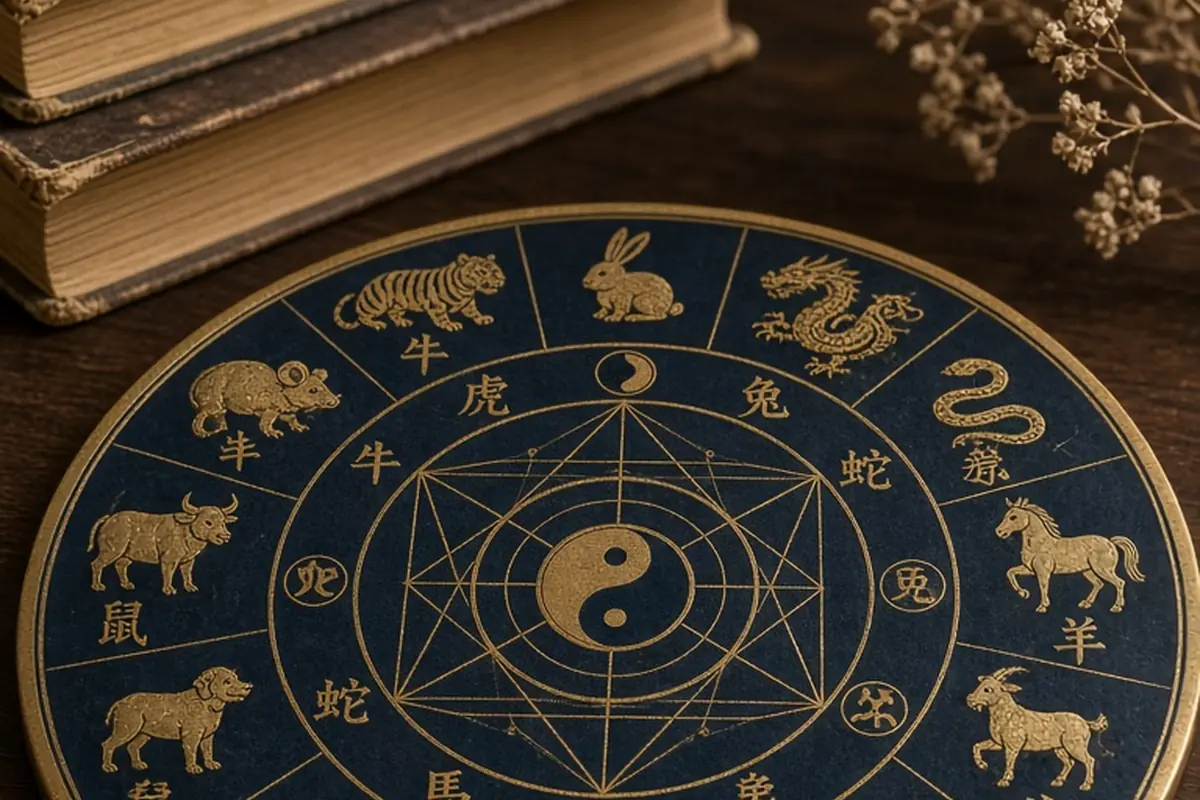
Chinese zodiac compatibility evaluates relational harmony by comparing the twelve animal signs through traditional astrological patterns like complementary trines (San He), intimate pairs (Liu He), and opposing clashes (Liu Chong). While traditional frameworks highlight natural ease or potential friction between specific signs, real-world relationship success relies on clear communication, shared values, and mutual emotional maturity alongside symbolic compatibility.
For centuries, the twelve signs of the Chinese zodiac have offered a symbolic framework for understanding personality temperaments, instinctual drives, and interpersonal dynamics. Exploring these archetypes can help couples reflect on how their natural communication styles and lifestyle preferences interact in daily life.
The Four Harmonious Trines and Natural Compatibility
In traditional Chinese astrology, the twelve animal signs are organized into four distinct groups of three, known as the Four Trines or San He. Signs within the same trine share an underlying temperament, elemental rhythm, and approach to life, which often translates into effortless mutual understanding and low-friction communication. Because these signs share core motivational patterns, partners from the same trine frequently find that they do not need to constantly explain their thought processes or justify their emotional priorities to one another.
The first trine consists of the Rat, Dragon, and Monkey, who share a restless drive, high ambition, and innovative problem-solving abilities. The second trine brings together the Ox, Snake, and Rooster, characterized by pragmatic thinking, structural discipline, and deep dedication to long-term goals. The third trine unites the Tiger, Horse, and Dog, who prioritize personal freedom, social justice, and dynamic exploration. Finally, the fourth trine includes the Rabbit, Goat, and Pig, known for their diplomatic nature, artistic appreciation, and desire for domestic peace.
While trine pairings offer intuitive understanding, they can also create an echo chamber where shared weaknesses are amplified. For instance, two partners in the action-oriented first trine may struggle with slowing down and processing subtle emotional vulnerabilities, while a pairing within the fourth trine might avoid necessary direct confrontation to preserve superficial harmony. Recognizing these collective blind spots allows compatible partners to consciously build the practical habits their shared temperament might naturally overlook.
The Six Secret Pairs and Balanced Mutual Support
Beyond the trines, Chinese astrology identifies six specific pairs known as Liu He, or the Six Compatible Pairs. Unlike the trines, which rely on similar personalities, these pairings function on the principle of complementary opposites. In these relationships, the strengths of one sign naturally counterbalance and stabilize the vulnerabilities of the other, creating a grounded foundation for both domestic life and shared collaborative projects.
The traditional six pairings match the resourceful Rat with the steady Ox, the daring Tiger with the empathetic Pig, the gentle Rabbit with the loyal Dog, the visionary Dragon with the analytical Rooster, the strategic Snake with the inventive Monkey, and the active Horse with the nurturing Goat. In a functional partnership, this dynamic creates a complementary balance: the impulsive partner receives grounding, while the cautious partner is encouraged to embrace growth and calculated risks.
A practical challenge in these pairings is learning to appreciate differences rather than attempting to convert your partner to your way of operating. For example, a disciplined Ox might initially misinterpret a Rat partner's restless brainstorming as a lack of focus, while the Rat might view the Ox's methodical pace as stubborn hesitation. Success in Liu He relationships requires deliberate patience, where both individuals value the alternate perspective their partner brings to shared decisions.
Understanding the Six Clashes and Managing Relationship Friction
The Chinese astrological wheel places opposing signs directly across from each other in pairings known as the Six Clashes, or Liu Chong. These pairings—Rat and Horse, Ox and Goat, Tiger and Monkey, Rabbit and Rooster, Dragon and Dog, Snake and Pig—represent fundamentally contrasting worldviews, emotional needs, and decision-making styles. When two people from clashing signs enter a relationship, misunderstandings often arise not from malice, but from opposing instinctive reactions to stress and everyday logistics.
For instance, a confrontation between a Rabbit and a Rooster frequently highlights the divide between diplomatic conflict avoidance and blunt, analytical critique. The Rabbit may experience the Rooster's direct feedback as unnecessarily harsh, while the Rooster may view the Rabbit's non-confrontational silence as passive or evasive. Similarly, a Tiger and Monkey pairing often experiences tension over authority and autonomy, as both signs possess strong wills and distinctive leadership instincts that resist compromise.
An astrological clash does not mean a relationship is doomed to fail; rather, it indicates areas where intentional effort and emotional regulation are essential. Couples in clashing pairings often experience profound personal development because their partner constantly challenges their default assumptions. To navigate this friction productively, partners should establish structured check-ins, agree on explicit ground rules for conflict, and avoid assuming that a partner's differing reaction implies a lack of affection or respect.
The Influence of the Five Elements on Relational Dynamics
Every year in the Chinese calendar is governed not only by an animal sign but also by one of the Five Elements: Wood, Fire, Earth, Metal, or Water. These elements interact through continuous cycles of creation (generating) and control (overcoming), introducing critical nuance to zodiac compatibility. Two individuals with clashing animal signs may find their connection significantly softened and harmonized if their birth elements share a naturally supportive relationship.
In the generating cycle, Water nourishes Wood, Wood feeds Fire, Fire creates Earth, Earth bears Metal, and Metal enriches Water. When partners have generating elements, they often experience an intuitive ease in providing emotional encouragement and practical support. Conversely, in the controlling cycle—where Water extinguishes Fire, Fire melts Metal, Metal cuts Wood, Wood depletes Earth, and Earth absorbs Water—partners may occasionally trigger each other's insecurities or struggle to align their daily pacing unless they communicate their boundaries clearly.
Evaluating elements reminds us that personality compatibility is multifaceted rather than binary. An impulsive Fire Horse interacts very differently with a partner than a pragmatic Earth Horse would, even though both share the same base animal sign. Using elemental theory helps couples identify the underlying quality of their shared energy, offering clues on how to moderate intensity, provide grounding, or introduce playfulness into the relationship.
Moving Beyond Astrological Archetypes to Real-World Relational Skills
While astrological frameworks offer engaging metaphors for self-reflection, enduring relationship health depends entirely on behavioral choices, emotional intelligence, and mutual respect. Relying on zodiac signs to excuse poor communication, emotional withdrawal, or defensive behavior undermines personal accountability. An archetype should serve as a descriptive starting point for self-awareness rather than a prescriptive excuse for rigid habits.
When relationship challenges arise, practical relational habits must take precedence over symbolic compatibility. This includes developing active listening skills, taking personal responsibility during repairs after arguments, maintaining clear emotional boundaries, and demonstrating consistent reliability in everyday tasks. If an astrological reading suggests that your partner tends toward stubbornness or impulsivity, use that insight to cultivate curiosity rather than weaponizing the label during disagreements.
Couples thrive when they treat astrological insights as conversational tools to explore how each person gives and receives love, handles financial decisions, and navigates stress. By combining archetypal self-awareness with concrete relational practices, partners create a resilient foundation that transcends any traditional compatibility chart.
A Mindful Approach to Evaluating Long-Term Partnerships
Integrating Chinese zodiac compatibility into modern dating is most effective when approached with curiosity rather than dogmatism. Dismissing a potential partner purely because their birth year falls into an opposing clash risks overlooking an emotionally mature, deeply committed individual. Similarly, assuming that a traditional trine match guarantees effortless bliss can lead to complacency and neglected relationship maintenance.
A balanced approach involves assessing alignment across core life dimensions before placing weight on astrological indicators. Focus on evaluating whether you and your partner share compatible long-term goals, financial philosophies, communication expectations, and family values. If your signs are traditionally considered compatible, celebrate that alignment as an extra point of shared interest while continuing to invest in active listening, quality time, and honest dialogue.
Ultimately, astrological systems provide a reflective mirror for your own tendencies and growth areas. When you approach Chinese zodiac compatibility as a framework for mutual understanding rather than a rigid destiny, it becomes an enriching way to appreciate your partner's unique qualities and navigate your shared journey with greater empathy.
Frequently asked questions
Can two people with clashing Chinese zodiac signs have a happy relationship?
Yes, opposing signs can build deeply fulfilling relationships when both individuals practice effective communication and conflict management. While traditional charts highlight inherent differences in temperament, these contrasts often foster valuable personal growth and dynamic balance when approached with mutual respect.
Does your Chinese zodiac element matter as much as your animal sign?
The element and the animal sign work together as an integrated system. The animal sign reflects your general behavioral style and instinctual drives, while your birth element modifies how that energy is expressed, either softening potential friction or reinforcing specific personality traits.
How do the Four Pillars of Destiny affect compatibility?
Traditional Chinese astrology evaluates complete compatibility using the Four Pillars (BaZi), which analyzes the year, month, day, and hour of birth. While the year sign provides a broad generational archetype, the day pillar represents the individual self and primary romantic partnership, offering a more nuanced view of relational chemistry.
What should I do if my partner and I have an incompatible match?
Focus on tangible relationship practices rather than astrological predictions. Use identified personality differences as opportunities to establish clear communication routines, understand each other's emotional needs, and build shared habits that support mutual trust and stability.
Your next step
Review both your animal sign and birth element to identify your natural communication style, then invite your partner to discuss how your temperaments can practically support each other in daily life.