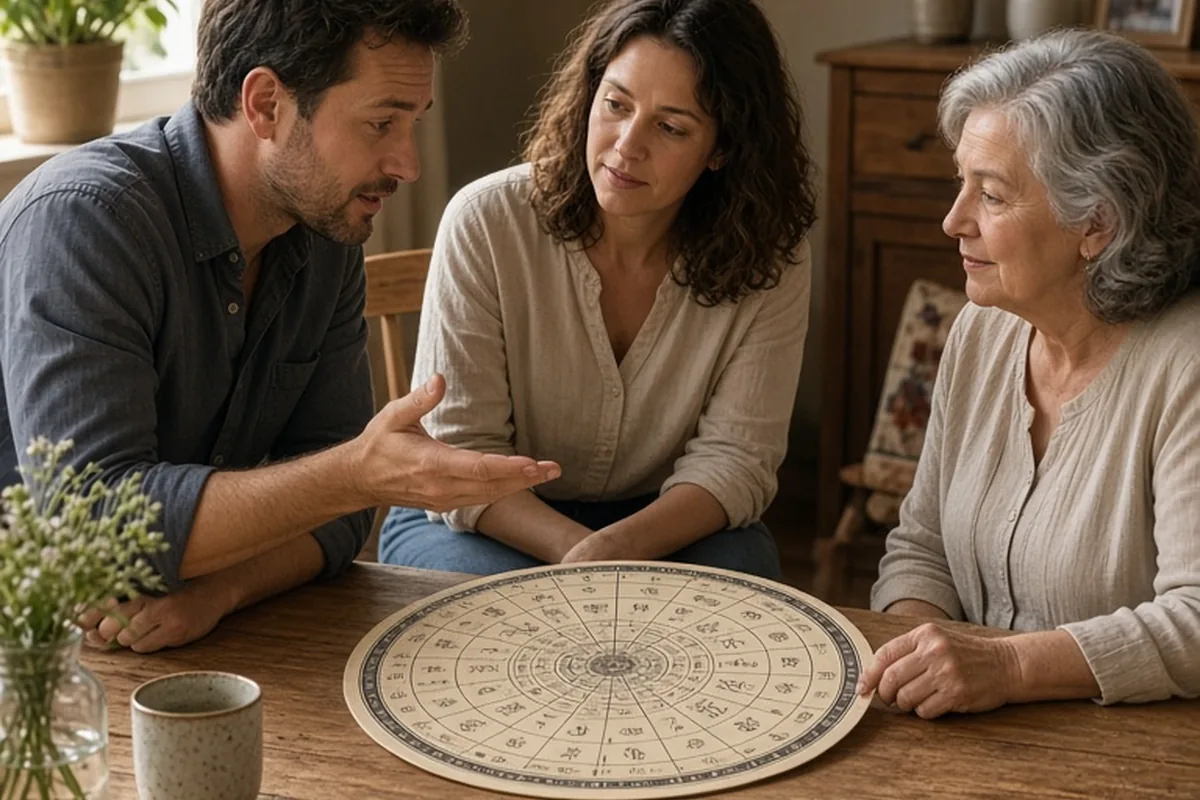
A Chinese zodiac marriage match chart pairs the twelve animal signs based on traditional lunar astrology, five-element associations, and geometric branch alignments. Signs four years apart form harmonious trines known as San He, while signs directly opposite each other on the astrological wheel create opposing clashes known as Liu Chong. In traditional practice, these alignments highlight natural affinities and communication challenges rather than determining whether a modern partnership succeeds or fails.
Couples often encounter the Chinese zodiac match chart when exploring cultural heritage, wedding customs, or family expectations surrounding marital compatibility.
How the Chinese Zodiac Marriage Match Framework Operates
Traditional Chinese astrology relies on the twelve Earthly Branches, each linked to a familiar animal archetype and recurring in a twelve-year lunar cycle. These signs are the Rat, Ox, Tiger, Rabbit, Dragon, Snake, Horse, Goat, Monkey, Rooster, Dog, and Pig. Beyond the animal mascot, each year carries an elemental polarity of Yin or Yang and belongs to one of the five elements: Wood, Fire, Earth, Metal, or Water. When astrologers assess marital harmony, they examine how these underlying energetic markers interact between two birth charts.
The marriage match chart places these twelve signs across a circular wheel divided into thirty-degree segments. Compatibility is not calculated by personal whims or arbitrary folklore; it is derived from specific geometric relationships across that wheel. Signs that sit in harmonious geometric aspects are thought to enjoy smooth emotional resonance, while signs arranged in direct opposition or awkward square relationships are thought to demand conscious patience and emotional adaptation. Approaching this system as a cultural lens for understanding interpersonal styles allows couples to appreciate the symbolism without treating an ancient calendar system as an absolute verdict on their future.
The Most Harmonious Unions: San He Trines and Liu He Pairings
In traditional Chinese marital matchmaking, the most favorable pairings fall into two primary categories: the Three Harmonies, known as San He, and the Six Secret Harmonies, known as Liu He. The San He relationships consist of four groups of three signs that sit exactly four years apart, forming an equilateral triangle across the zodiac wheel. Because these signs share compatible temperaments and energetic affinities, folklore considers them natural soulmates capable of sustaining long-term marital peace.
The first harmonious trine brings together the Rat, Dragon, and Monkey, often described as an alliance of ambition, intellect, and dynamic action. The second trine links the Ox, Snake, and Rooster, representing perseverance, deep loyalty, and structured planning. The third trine unites the Tiger, Horse, and Dog, characterized by idealism, mutual protection, and independent enthusiasm. The fourth trine connects the Rabbit, Goat, and Pig, known for shared empathy, artistic sensitivity, and peaceful domestic life. Alongside these trines are the Liu He pairings, which match adjacent and complementary signs: Rat with Ox, Tiger with Pig, Rabbit with Dog, Dragon with Rooster, Snake with Monkey, and Horse with Goat. These pairings represent an intrinsic yin-yang balance where partners instinctively cover each other's vulnerabilities.
Challenging Combinations: Six Clashes and Subtle Harms
Not all zodiac placements share effortless geometry. The most widely discussed tension in the Chinese zodiac marriage chart is the Six Clashes, or Liu Chong. These pairings sit exactly six years apart, positioned on opposite sides of the astrological wheel. The opposing pairs are Rat and Horse, Ox and Goat, Tiger and Monkey, Rabbit and Rooster, Dragon and Dog, and Snake and Pig. In classical lore, Liu Chong represents a clash of opposing fundamental elements, such as Water colliding with Fire or Metal confronting Wood, often manifesting as competing priorities or incompatible communication habits.
Beyond the direct clashes, traditional charts identify more subtle tensions termed Six Harms, or Liu Hai, and Earthly Punishments, known as Xing. A harm occurs when two signs disrupt each other's hidden harmonies, such as the friction between a Rat and a Goat or a Tiger and a Snake. Rather than erupting into dramatic conflicts, harm combinations are traditionally believed to produce lingering misunderstandings, misplaced expectations, or indirect resentment. However, experiencing a clash or harm on paper does not doom a relationship. In practice, modern couples often discover that contrasting perspectives offer valuable opportunities for mutual personal growth, provided both partners cultivate active listening and clear emotional boundaries.
Chinese Zodiac Marriage Match Chart Sign by Sign
To interpret a marriage match chart effectively, partners typically identify their own birth animal and compare it against their significant other's sign. For the Rat, ideal partners include the Dragon, Monkey, and Ox, while the Horse poses the sharpest stylistic clash. The steadfast Ox thrives with the Snake, Rooster, and Rat, but frequently experiences friction with the stubborn Goat or rebellious Horse. The bold Tiger finds smooth companionship with the Horse, Dog, and Pig, yet clashes directly with the quick-witted Monkey and struggles with the calculating Snake.
Gentle Rabbit individuals share deep rapport with the Goat, Pig, and Dog, while encountering sharp disagreements with the direct Rooster. The charismatic Dragon bonds seamlessly with the Monkey, Rat, and Rooster, but faces power struggles against the questioning Dog. The perceptive Snake aligns with the Ox, Rooster, and Monkey, while clashing with the spontaneous Pig. Energetic Horse personalities pair well with the Tiger, Dog, and Goat, yet feel constrained by the analytical Rat. The artistic Goat flourishes with the Pig, Rabbit, and Horse, while clashing with the unyielding Ox.
The resourceful Monkey enjoys effortless rapport with the Dragon, Rat, and Snake, yet collides with the independent Tiger. Detail-oriented Rooster natives harmonize with the Ox, Snake, and Dragon, but encounter friction with the gentle Rabbit. Loyal Dog personalities find stability with the Tiger, Horse, and Rabbit, while clashing with the proud Dragon. Finally, the generous Pig connects easily with the Rabbit, Goat, and Tiger, while facing frequent misunderstandings alongside the observant Snake. Viewing these traditional profiles as character sketches helps couples identify where their habits naturally complement each other and where deliberate compromise is required.
Beyond the Birth Year: Why the BaZi Four Pillars Matter
A common limitation of popular zodiac compatibility charts is their exclusive focus on the birth year animal. In authentic Chinese metaphysics, your birth year represents only one pillar of an intricate four-part system known as BaZi, or the Four Pillars of Destiny. The four pillars encompass the year, month, day, and exact hour of your birth. Each pillar contains both an Earthly Branch animal and a Heavenly Stem element, creating a personal chart made of eight distinct energetic components rather than a single animal label.
Within the BaZi framework, the Day Pillar is actually considered the primary indicator of marital life, the inner self, and the domestic partner, whereas the Year Pillar merely governs social impressions, ancestral lineage, and extended family relationships. Consequently, two people whose birth years technically form a Liu Chong clash might possess profoundly harmonious Day and Month pillars that foster deep emotional intimacy. Relying entirely on a surface-level annual animal match overlooks the majority of traditional astrological nuance, which is why reputable cultural practitioners never evaluate marriage potential based on birth years alone.
Navigating Cultural Traditions and Family Expectations with Compassion
In many Asian families and multicultural partnerships, zodiac matching is not treated as a playful pastime but as a serious ancestral tradition. When parents or older relatives express anxiety over an astrological clash, their reaction often stems from genuine concern for their children's long-term happiness, financial security, and familial peace. Dismissing their worries with ridicule or anger rarely resolves the underlying tension; instead, it tends to create defensive family rifts right when wedding celebrations should bring people closer.
A constructive response involves acknowledging the family's protective intentions while firmly reaffirming the couple's practical commitment to one another. Partners can listen patiently to traditional perspectives, validate the care behind the advice, and gently highlight tangible real-world evidence of their compatibility. Demonstrating dependable financial planning, shared moral values, mutual emotional respect, and collaborative conflict resolution shows hesitant relatives that the relationship rests on a solid, observable foundation. When family customs require formal compatibility readings, some couples choose to consult an open-minded traditional specialist who can provide constructive harmonization rituals or focus on favorable BaZi aspects to offer elders reassurance without compromising the partnership.
Illustrative Scenarios
Reframing an Astrological Clash During Wedding Planning
During preparations for their traditional wedding banquet, Mei and David encountered distress when David's grandmother noted that Mei's birth year in the Year of the Horse directly clashed with David's Rat year. The family worried this Liu Chong combination foretold constant arguing and an unstable household. Rather than arguing about folklore, Mei and David thanked his grandmother for sharing her concern and initiated a calm family dinner. They openly discussed how their personalities differed, showing how David's analytical planning balanced Mei's spontaneous energy in their daily lives. By demonstrating concrete mutual respect and clear communication, they alleviated family anxiety while honoring traditional customs.
Key point: Cultural compatibility concerns are best addressed with respectful dialogue and visible demonstrations of emotional maturity rather than dismissive confrontation.
Recognizing That Golden Compatibility Does Not Replace Everyday Effort
Chloe and Kevin began dating after noticing that their signs, the Dragon and the Monkey, formed one of the most auspicious San He trines on the Chinese zodiac chart. Convinced their connection was destined for effortless perfection, they overlooked recurring disagreements regarding personal finances and shared domestic duties. When minor frustrations compounded into persistent emotional distance, they realized that astrological harmony did not automatically solve practical differences. The couple established weekly check-ins to organize their shared budget and balance household responsibilities. Over time, their proactive teamwork provided the genuine stability that their birth charts alone could never guarantee.
Key point: Favorable astrological alignments cannot substitute for active partnership skills, practical planning, and transparent conversations about shared responsibilities.
Frequently asked questions
Does a low zodiac compatibility score mean a relationship is doomed?
No. The Chinese zodiac chart is an interpretive cultural tradition rather than a scientific predictor of relationship success. Couples with clashing signs frequently build joyful, lasting marriages by practicing transparent communication, emotional patience, and mutual respect.
What is the most harmonious pairing in the Chinese zodiac?
Traditional charts consider the San He trines, such as Rat with Dragon and Monkey, along with the Liu He secret harmonies, like Rabbit with Dog, to be the most naturally balanced pairings. However, lasting harmony in daily life depends on individual character, maturity, and shared values.
Why do different Chinese zodiac compatibility charts give contradictory advice?
Discrepancies occur because basic popular charts evaluate only the twelve annual animal signs, whereas advanced traditional systems incorporate the five elements, yin-yang dynamics, and the complete Four Pillars of Destiny. Variations also emerge across distinct regional folklore and local astrological lineages.
How can couples respectfully talk to parents who take the match chart seriously?
Acknowledge the care and cultural significance behind their concerns without becoming defensive. Show genuine gratitude for their interest in your future, and then redirect the conversation toward visible examples of your shared stability, financial alignment, and daily emotional support.
Your next step
Take an evening together to compare your zodiac profiles as a fun conversation starter, identifying which character descriptions resonate with your actual communication styles and which practical commitments keep your relationship grounded.