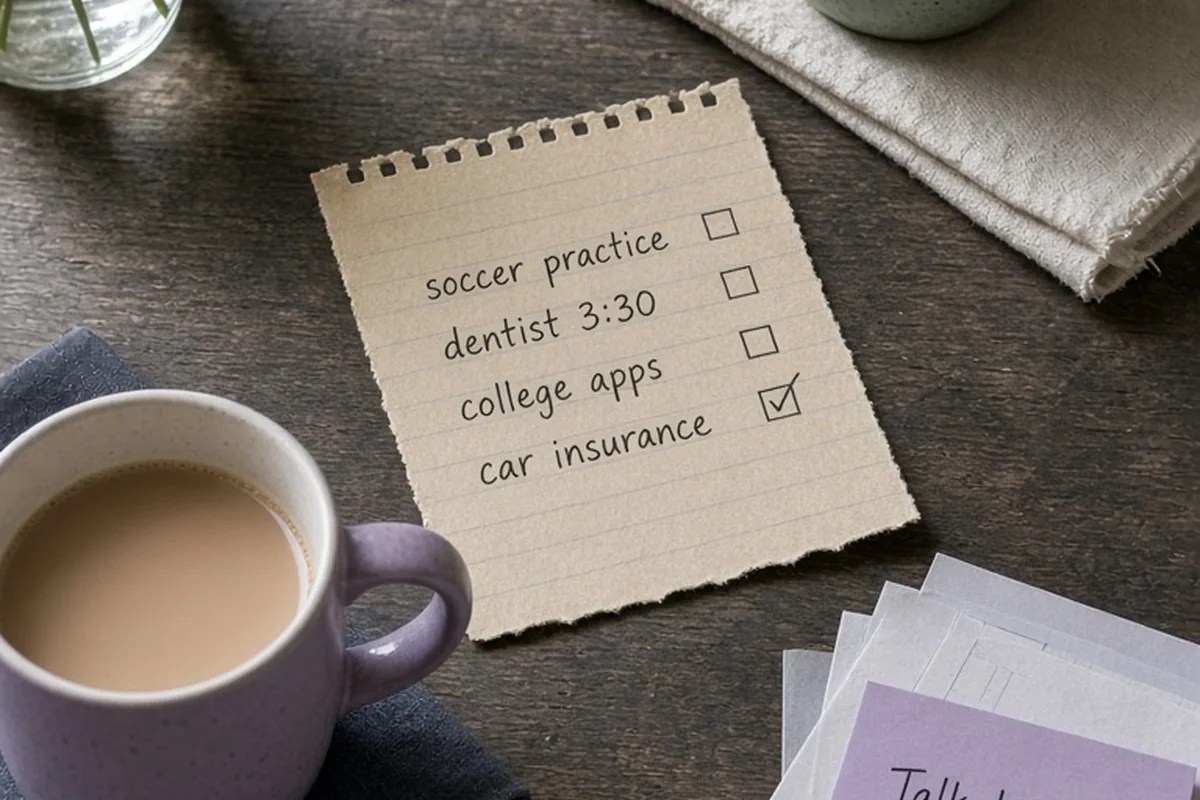
Raising teenagers after a divorce presents unique challenges because adolescents are actively building independence while navigating two separate households. The most common hurdles include managing conflicting house rules, coordinating complex school and social schedules, handling resistance to custody transitions, splitting large uninsured expenses like driving or college prep, and managing adolescent emotional loyalty conflicts. Effective co-parenting requires clear written agreements, unified safety boundaries, and neutral direct communication between parents.
Divorce fundamentally alters family dynamics, but parenting teenagers through the transition brings distinct complications that differ significantly from raising younger children. Adolescents possess their own transportation, evolving social lives, strong personal opinions, and an acute awareness of parental conflict, making traditional co-parenting routines harder to sustain without deliberate adjustments.
Managing Independent Teen Schedules and Dual-Household Logistics
One of the earliest friction points after a divorce involves the collision between rigid custody schedules and an adolescent's expanding personal life. Unlike younger children whose routines center almost entirely around parental supervision, teenagers juggle after-school jobs, sports practices, academic clubs, and social commitments. When parents live in different neighborhoods or school districts, coordinating transportation and daily attendance becomes a frequent source of logistical stress. Conflicts often arise when one parent views an extracurricular event as optional or inconvenient during their allotted parenting time, leading to missed opportunities or resentment from the teenager.
To prevent logistical breakdowns, co-parents must shift from managing custody as ownership of time to facilitating their teenager's independent development. Establishing a shared digital calendar where both parents and the teenager can view and update commitments prevents scheduling surprises. When reliable public transit or shared driving responsibilities are required, parents should outline clear transportation expectations in writing rather than relying on informal verbal handoffs. Crucially, parents should avoid using the teenager as a messenger for schedule modifications or expense requests, as placing adolescents in the middle forces them to manage adult communication.
Handling Differences in Discipline, Curfews, and Household Rules
A sharp divergence in parenting styles often becomes amplified across two separate homes. Teenagers naturally test limits, and when one household enforces strict curfews, digital device limits, and academic standards while the other adopts a permissive approach, adolescents quickly learn to exploit the gap. This dynamic frequently fosters a 'fun parent versus strict parent' polarization, leaving the more structured parent feeling undermined and the more lenient parent isolated from necessary accountability measures.
While it is rarely possible to achieve identical household environments after a divorce, parents should strive for alignment on critical non-negotiable standards. Core safety policies—such as passenger restrictions for newly licensed teen drivers, zero-tolerance rules for substance use, unsupervised party attendance, and minimum academic performance thresholds—must be standardized between both homes whenever feasible. For secondary preferences like bedroom cleanliness, bedtimes, or chore completion, parents can acknowledge household differences calmly to the teen without criticizing the other parent's methods.
Supporting Adolescent Emotional Stress, Loyalty Binds, and Anger
Adolescents experience parental divorce through a developmental lens that blends sophisticated cognitive understanding with emotional vulnerability. Teenagers often process grief, frustration, or instability through withdrawal, cynicism, academic decline, or intense anger directed at one or both parents. In some instances, teens feel pressured to take sides, act as emotional confidants for a distressed parent, or defend a parent they perceive as vulnerable, creating severe internal loyalty conflicts that interfere with normal identity formation.
Parents can support their teenager by maintaining firm emotional boundaries and keeping adult grievances entirely separate from parent-child interactions. Listening to a teenager's frustrations without becoming defensive or counter-attacking the other parent provides an essential emotional outlet. If a teenager displays persistent behavioral changes, social isolation, or significant drops in school performance, engaging an independent licensed adolescent therapist offers a neutral space to process the family transition without the pressure of managing either parent's emotional reactions.
Navigating Financial Expenses, Child Support, and Teenage Milestones
The financial demands of raising teenagers escalate rapidly beyond basic food, clothing, and shelter. Major adolescent milestones—such as auto insurance premiums, vehicle maintenance, club sports, test preparation courses, school trips, and college application fees—are frequently omitted from standard child support calculations or initial separation agreements. When expenses arise that fall outside baseline support payments, disagreements over what constitutes a necessary cost versus an optional luxury can trigger renewed legal or interpersonal conflict.
Addressing these costs requires a structured, documented approach to variable expenditures. Parents should review their official divorce decree and parenting plan to verify existing terms regarding extracurricular activities, uninsured medical care, and post-secondary educational funding. Under federal tax rules, dependency exemptions and child-related tax credits depend on specific custody arrangements, court orders, and written declarations such as IRS Form 8332. Parents should verify their current legal decree requirements and consult tax regulations when determining who claims an adolescent dependent.
Further reading: USA.gov: Get a copy of a divorce decree
Further reading: IRS Publication 504: Divorced or Separated Individuals
Responding When Teenagers Resist Custody Schedules or Show Favoritism
As teenagers gain personal autonomy, they may voice strong preferences regarding where they spend their time, sometimes outright refusing to visit one parent's home. This resistance can stem from proximity to friends, academic convenience, discomfort with a parent's new partner, or genuine relationship strain. While an adolescent's desire for routine stability is understandable, unilateral refusal to adhere to a court-ordered parenting plan creates both emotional distress and potential legal liability for the custodial parent.
From a legal standpoint, state laws govern whether and at what age a family court will consider a mature minor's custody preferences, and existing court orders remain binding until formally modified by a judge. Practically, forcing an unwilling teenager into a vehicle often worsens relational strain. The most constructive response involves identifying the underlying cause of the resistance through open dialogue, proposing reasonable schedule adjustments that accommodate the teen's social or academic calendar, and working collaboratively with the co-parent or a family mediator to adjust terms officially.
Further reading: USA.gov: Get a copy of a divorce decree
Introducing New Romantic Partners and Protecting Parent-Teen Bonds
Dating after divorce introduces another layer of complexity when raising teenagers. Unlike young children who may readily accept new adult authority figures, adolescents are often skeptical, protective of their biological parents, and acutely sensitive to changes in household attention. Introducing a romantic partner too early or attempting to force a step-parenting authority role onto a teenager frequently results in open defiance, passive hostility, or withdrawal from family activities.
Parents can minimize tension by establishing thoughtful boundaries around dating and household introductions. New relationships should generally be established, stable, and discussed in advance with the co-parent when required by parenting stipulations before introducing partners to teenagers. Furthermore, parents must intentionally preserve dedicated, one-on-one time with their teenager that remains completely separate from dating life, reinforcing that the adolescent's place in the parent's life remains secure and valued.
Illustrative Scenarios
Coordinating High School Commitments Across Households
David and Karen shared 50/50 physical custody of their 16-year-old daughter, Maya, who recently secured a spot on the varsity debate team and began a weekend part-time job. David initially viewed Maya's weekend tournament schedule as an infringement on his alternating parenting time, suspecting Karen was deliberately scheduling commitments to reduce his contact. Instead of escalating the dispute through accusatory emails, David scheduled a direct discussion with Karen to review Maya's semester calendar. Together, they established a shared digital schedule, divided transportation duties based on work proximity, and agreed that tournament attendance counted as active parenting engagement.
Key point: Viewing a teenager's extracurricular growth as a shared priority rather than a custody interference keeps the focus on adolescent development.
Addressing House Rule Discrepancies and Boundary Testing
Rachel noticed her 15-year-old son, Liam, increasingly pushing past his 10:00 PM weekend curfew and neglecting homework, claiming his father had no curfews or device restrictions at his house. Rachel initially felt compelled to enforce even harsher restrictions at her home to compensate for the lack of structure, which triggered explosive arguments with Liam. Recognizing the cycle, Rachel reached out to her ex-spouse to discuss three essential non-negotiable rules: a shared minimum grade standard, an agreed-upon driving curfew, and device-free sleeping hours. By reaching consensus on these core boundaries while allowing minor differences in daily chores, Liam lost the ability to leverage one home against the other.
Key point: Standardizing a few critical safety boundaries across both homes neutralizes manipulation without requiring identical daily routines.
Frequently asked questions
Can a teenager legally decide which parent to live with after a divorce?
A teenager cannot unilaterally override a valid court custody order until reaching the age of majority. While family court judges in many states consider the preferences of mature teenagers during formal custody modification hearings, statutory age thresholds and procedural weight vary by state and local jurisdiction.
How should parents divide large unexpected teen expenses like auto insurance or sports fees?
Parents should first consult their divorce decree or marital settlement agreement to determine how extracurricular and variable expenses are allocated. For items not specified in existing court documents, parents should establish written cost-sharing agreements in advance, detailing approval thresholds and payment timelines before incurring the expense.
Who is entitled to claim a teenage child as a dependent on federal income taxes?
Under federal tax regulations, the custodial parent with whom the child lives for the greater number of nights during the year typically claims the child. However, the custodial parent may release this claim to the noncustodial parent using IRS Form 8332 or as mandated by specific divorce decrees meeting federal criteria.
What should you do if your teenager refuses to visit the other parent?
Parents should calmly investigate the specific root causes behind the refusal rather than immediately resorting to punishment or unilateral schedule changes. If legitimate safety or emotional concerns exist, parents should document the issues and seek formal schedule modifications through family mediation or legal counsel.
Your next step
Review your current parenting plan and divorce decree to ensure extracurricular schedules, driving expenses, and communication guidelines accurately reflect your teenager's developmental needs.