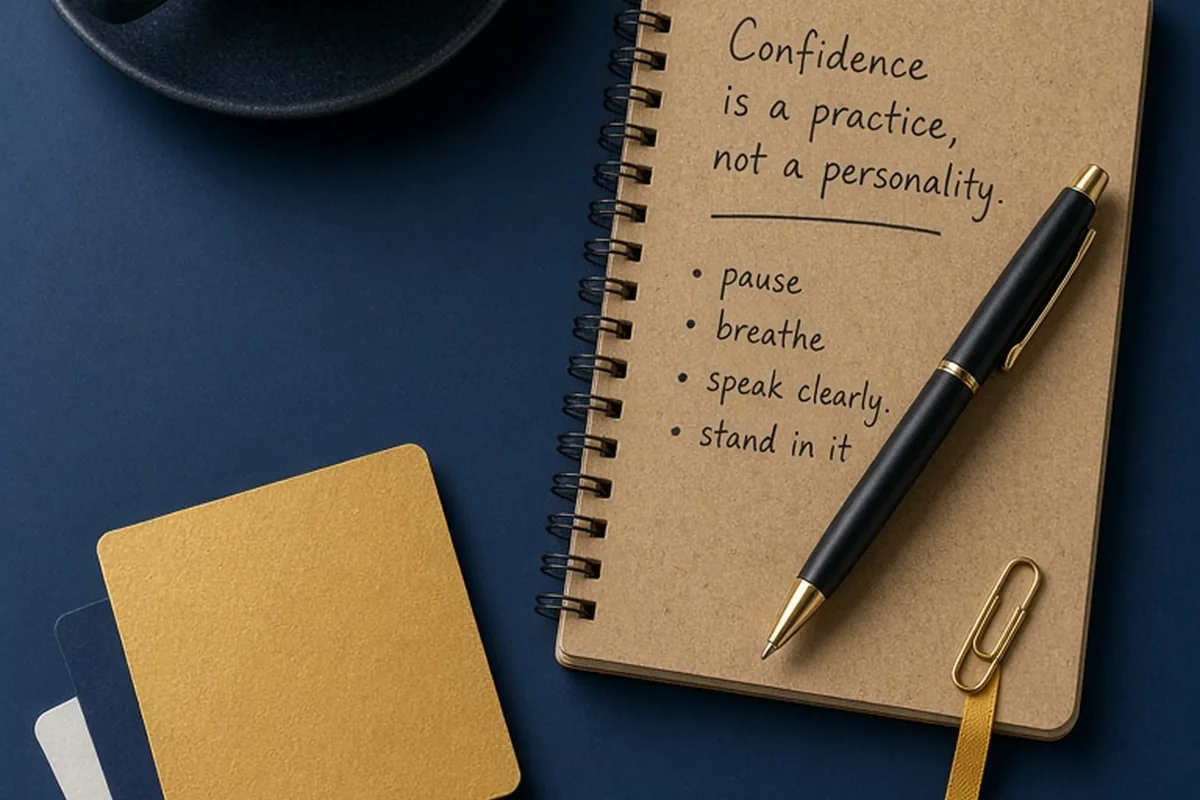
Tapping into your confident side means engaging your core values, preparation, and self-trust rather than projecting an exaggerated persona. It involves recognizing your existing skills, maintaining calm body language, speaking clearly without unnecessary self-diminishing apologies, and accepting that occasional discomfort is normal. Rather than eliminating fear entirely, accessing this state allows you to act deliberately despite uncertainty.
Most people experience moments where they feel capable, articulate, and completely at ease, yet struggle to access that same presence during moments of high pressure or social uncertainty. Unlocking that grounded mindset on demand is not about forcing an aggressive attitude, but about learning how to align your preparation, physical state, and internal dialogue.
Understanding What True Self-Confidence Looks Like
A common misconception is that personal confidence requires being the loudest or most dominant voice in the room. In reality, genuine self-assurance is quiet, stable, and anchored in self-acceptance. When you operate from this perspective, you do not need external validation to confirm your value, nor do you feel the urge to prove your worth through constant self-promotion. Instead, self-assurance presents as calm clarity, active listening, and a willingness to acknowledge what you do not know without feeling diminished.
When people try to force confidence through bravado or rigid posturing, they often generate internal stress and external friction. Projecting an artificial persona is mentally exhausting and frequently perceived as defensive or disingenuous by others. Grounding yourself in authentic capability, on the other hand, allows you to remain composed even when circumstances change unexpectedly.
Consider a scenario where a project timeline changes suddenly at work. A person relying on artificial bravado might dismiss legitimate obstacles or become overly defensive about their original plan. Someone operating from their natural, grounded self-assurance will acknowledge the shift, invite pragmatic input from the team, and calmly outline the next actionable steps. The trade-off is that true assurance requires sitting with vulnerability and accepting that you cannot control every outcome, which can initially feel more uncomfortable than hiding behind a rigid mask.
Identifying Internal and External Confidence Triggers
Unlocking your self-assurance starts with recognizing the specific conditions that either support or undermine your peace of mind. Many individuals experience sudden drops in assurance when confronted by perceived authority figures, unfamiliar environments, or situations where their performance is explicitly evaluated. These moments tend to activate automatic cognitive distortions, such as catastrophizing potential mistakes or assuming others are judging them harshly.
To systematically counter these reactions, it helps to conduct a structured personal inventory. Pay close attention to the physiological signals that precede self-doubt, such as shallow breathing, tense shoulders, or a sudden urge to over-explain yourself. By mapping out the specific environments, conversation topics, or interpersonal dynamics that trigger hesitation, you can prepare targeted responses in advance rather than reacting impulsively under stress.
For example, if speaking up during spontaneous team meetings consistently triggers anxiety, you might prepare two concise discussion points prior to the call. Knowing you have relevant thoughts ready reduces the cognitive load in the moment. However, it is important to recognize that awareness alone does not eliminate physical discomfort immediately; recognizing your triggers is a diagnostic step that creates the space needed to choose a steady, deliberate response.
Using Somatic Grounding and Vocal Presence
Your physical posture and breathing directly influence your mental state and how others perceive your contributions. When self-doubt creeps in, the nervous system often triggers a subtle fight-or-flight response, leading to rapid speech, restricted breathing, and defensive physical habits like crossing arms or avoiding eye contact. Consciously resetting these physical markers signals safety to your nervous system and helps you regain composure.
Begin by planting your feet firmly on the floor, releasing tension in your jaw, and drawing steady breaths into your lower abdomen rather than your upper chest. When speaking, practice comfortable pacing by allowing natural pauses between sentences instead of filling every silence with vocal hedges like 'um,' 'like,' or 'you know.' Maintaining steady, relaxed eye contact communicates comfort with your presence and gives your words greater weight.
Imagine presenting a proposal to a skeptical client. Rushing through your slides to get the interaction over with signals uncertainty, which can inadvertently prompt more pushback. Taking a deliberate pause before answering a tough question demonstrates thoughtful control. The trade-off to keep in mind is that deliberate physical grounding takes conscious energy at first, and practicing new physical habits may feel slightly mechanical until they become second nature.
Reframing Self-Criticism into Objective Assessment
Internal dialogue heavily dictates how quickly you can recover from setbacks and step into your capabilities. Harsh self-criticism often masquerades as practical realism, convincing you that self-judgment prevents future mistakes. In reality, persistent negative self-talk drains cognitive resources, increases performance anxiety, and prevents you from taking calculated, necessary risks.
Shifting this narrative does not require ungrounded positive affirmations, which often feel unrealistic and unconvincing. A more effective strategy is neutral, objective reframing. When you notice an internal thought such as 'I completely ruined that presentation,' replace it with a factual assessment: 'My opening was slightly disorganized, but the data analysis was accurate and well-received. I can refine my opening structure for next time.'
This shift moves you from fixed self-blame into practical problem-solving. It preserves your energy for constructive adjustments rather than emotional rumination. A natural limit of this approach is that cognitive reframing does not erase the discomfort of making a mistake; its purpose is to keep the error in perspective so you can adapt effectively without abandoning your self-trust.
Communicating Assertively Without Over-Apologizing
Clear and direct communication is one of the most visible expressions of self-assurance. Many capable individuals diminish their contributions by padding requests, boundaries, and insights with unnecessary apologies or qualifiers, such as 'I might be wrong, but...' or 'Sorry to bother you, but could I ask a quick question?' These phrases signal that you view your basic presence as an inconvenience.
Assertive communication balances respect for others with respect for your own time, needs, and viewpoints. It relies on clean, direct language that states facts and preferences clearly without aggression or passive-aggressive hedging. Replacing 'Sorry for the delay' with 'Thank you for your patience' or stating 'I have a different perspective on this timeline' directly conveys professional self-respect.
Consider an instance where a colleague asks you to take on extra tasks when your workload is already full. A passive response accepts the work while breeding resentment, whereas an aggressive response creates interpersonal conflict. An assertive response states clearly: 'I cannot take on this assignment right now due to existing project deadlines, but I can review the final draft next Tuesday if that helps.' The trade-off is that clear boundaries may occasionally disappoint others, but they establish long-term clarity and mutual respect.
Building Competence Through Gradual Micro-Challenges
Lasting confidence is built through demonstrated competence rather than abstract thinking. The confidence-competence loop illustrates that taking small, successful actions builds evidence of your capabilities, which in turn reduces hesitation for future actions. Attempting massive personal changes all at once often leads to overwhelm, whereas consistent micro-challenges produce sustainable growth.
You can design low-stakes exercises to stretch your comfort zone incrementally. These actions might include expressing a gentle preference when choosing a restaurant with friends, asking a clarifying question in a group discussion, or initiating brief small talk with a service worker. Each completed action provides your brain with tangible proof that you can navigate social uncertainty safely.
For example, if you find it difficult to voice opinions in large meetings, you might start by agreeing with a colleague's point and adding one sentence of supporting context during the first five minutes of the call. Gradually increasing the complexity of these challenges expands your comfort zone over time. The main limit of this method is that progress is cumulative rather than instantaneous, requiring patience and consistent follow-through.
Maintaining Self-Assurance After Making a Mistake
The true test of grounded assurance occurs when things go wrong. Individuals who rely on fragile self-esteem often collapse into self-doubt or defensiveness when confronted with errors, criticism, or unexpected rejection. In contrast, durable self-assurance allows you to separate your core self-worth from tactical outcomes.
When an error occurs, acknowledge it promptly and focus on resolution rather than lengthy self-justification. Taking clean accountability without excessive groveling demonstrates high emotional maturity and reliability. By treating errors as informational data points rather than reflections of personal inadequacy, you maintain your composure and retain the trust of those around you.
For instance, if you miss a critical deadline, a grounded response involves contacting stakeholders immediately, stating the current status objectively, providing a revised delivery time, and outlining measures to prevent recurrence. This approach resolves the immediate operational issue while reinforcing your reputation for dependable, mature professionalism. The trade-off is that taking full responsibility requires tolerating short-term discomfort, but it protects your self-respect in the long run.
Frequently asked questions
How can I access my confident side if I naturally feel introverted?
Introversion is a preference for lower-stimulation environments, not a lack of self-assurance. You can express quiet confidence by listening actively, offering thoughtful and well-reasoned contributions, and using steady body language without needing to be loud or highly extroverted.
What is the fastest way to calm physical anxiety before a big event?
Engage in slow diaphragmatic breathing with an extended exhale to downregulate your nervous system. Pair this with relaxing your shoulders and unclenching your jaw to reduce physical tension before speaking.
How do I stop feeling like an imposter when stepping into new roles?
Focus on the objective facts of your preparation and past achievements rather than temporary emotional doubts. Recognize that feeling unfamiliar with new responsibilities is a normal part of the learning process rather than evidence of incompetence.
What should I do if someone mistakes my assertiveness for rudeness?
Maintain a calm, polite tone and focus on the objective issue at hand rather than matching their emotional reaction. As long as your communication is clear, honest, and respectful, you are not responsible for managing another person's discomfort with clear boundaries.
Your next step
Choose one low-stakes interaction today to practice holding a deliberate pause before answering, speaking at a measured pace without unnecessary qualifying apologies.