A couples spa night at home is an intentional, low-distraction evening dedicated to mutual relaxation, physical comfort, and shared recovery. To organize one, prepare a clean and warm room, dim harsh overhead lighting, silence digital devices, and gather simple essentials like towels, massage oil, gentle facial masks, and a foot basin. Keeping the atmosphere relaxed and free from performance pressure helps both partners decompress naturally without commercial spa costs.
When work deadlines, household maintenance, and digital notifications pile up, partners often spend their evenings coexisting in silence next to screens rather than genuinely reconnecting. Organizing a dedicated spa evening at home offers a grounded, affordable way to break that routine, quiet mental noise, and share attentive physical comfort.
Creating the Right Physical Environment
A successful home spa session begins well before anyone reaches for lotion or a face mask. The physical environment directly signals to your nervous system whether it is safe to downshift from alert work mode into deep relaxation. Start by decluttering the primary space you plan to use, whether that is the bedroom, bathroom, or living room floor. Visual disorder, such as laundry baskets, unwashed mugs, or stacks of mail, creates subtle mental friction that keeps attention anchored in daily chores.
Temperature and sensory details require deliberate calibration. People cool down quickly when resting or receiving a massage, so set the room thermostat one or two degrees warmer than usual. Swap sharp overhead lights for warm-toned bedside lamps, dimmers, or a cluster of unscented candles placed safely away from blankets. For sound, select an ambient acoustic playlist or natural soundscape that runs continuously without abrupt commercial breaks or jarring tempo shifts. Scent can enhance the room, but keep it subtle. A light mist of lavender, cedarwood, or sweet orange oil in a diffuser provides a soothing backdrop without triggering headaches or allergies.
Preparation also means eliminating logistical interruptions during the evening itself. Gather all the supplies you will need ahead of time so neither partner has to leave the warm room to hunt for an extra towel or clean washcloth.
- Fresh bath sheets and several clean hand towels warmed in the dryer just before starting
- A neutral body oil such as sweet almond, jojoba, or fractionated coconut oil
- A basin or foot tub with warm water and Epsom salts
- Gentle, unscented or mildly scented clay or sheet face masks
- A thermal carafe of herbal tea, ice water with citrus slices, or light refreshments
Planning Accessible, Low-Mess Treatments
It is easy to get caught up in elaborate spa rituals that look appealing online but end up feeling stressful, sticky, or awkward in a standard home setup. The key to a restorative evening is selecting treatments that require minimal cleanup and zero specialized technical skills. If a treatment demands twenty minutes of scrubbing the bathroom tub afterward, it undermines the very calm you are trying to cultivate.
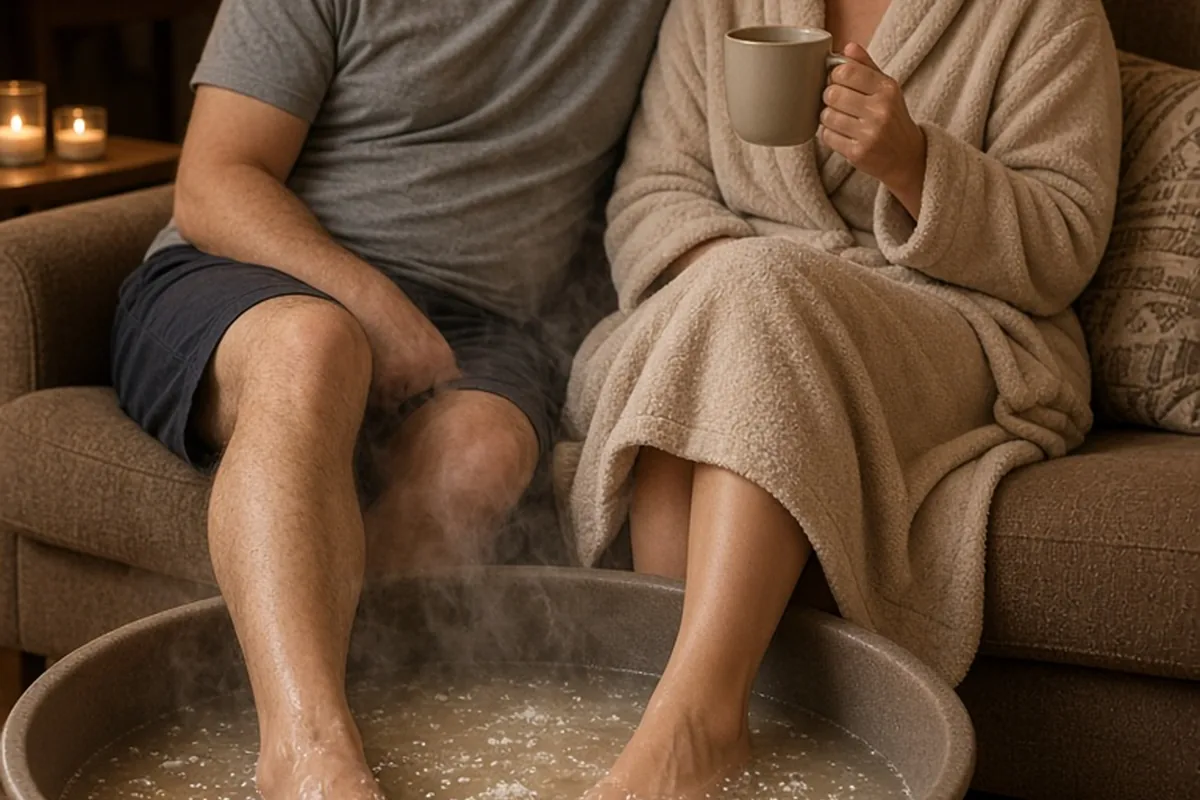
Begin with simple foundational options that invite instant relaxation. A warm foot soak is one of the easiest ways to transition into the evening. Fill a basin with hot water, add half a cup of Epsom salts, and place a folded towel underneath to catch splashes. Sitting side by side on a sofa while soaking feet lets both partners talk quietly, sip a beverage, and let go of physical fatigue from standing or sitting at desks all day. Follow the soak with a straightforward moisturizing cream applied in slow, firm strokes over the feet and ankles.
Facial treatments are equally manageable when kept modest. Rather than multi-step peels that can irritate sensitive skin, opt for basic hydrating sheet masks or simple soothing creams. Wash your faces together with warm water, place the masks on, and rest back against pillows with closed eyes. This creates ten to fifteen minutes of quiet stillness, giving both partners a natural pause where no conversation is necessary and neither person has to actively entertain the other.
Delivering a Comfort-Focused Partner Massage
Giving your partner a massage at home should never feel like a high-stakes performance test. You do not need professional massage therapy training to deliver genuine relief; what matters most is steady pressure, patience, and clear communication. The primary goal is reducing tension in common holding areas like the neck, shoulders, upper back, and hands without fatiguing your own muscles.
Set up the receiving partner comfortably on their stomach across the bed or on a firm mat on the floor, using a rolled towel under the ankles and a small pillow supporting the chest to keep the spine neutral. Warm a small amount of oil between your palms before making contact so the initial touch is soothing rather than startling. Use broad, flat strokes with your palms and the heels of your hands, moving upward along either side of the spine toward the shoulders. Avoid pressing directly into the vertebrae or neck bones. Lean your own body weight into each stroke rather than straining your fingers or thumbs, which prevents your hands from cramping after five minutes.
Maintain open, collaborative feedback throughout the session. Ask directly whether the pressure feels too light, too heavy, or just right, and encourage your partner to speak up if an angle feels awkward. Agreeing in advance on a set timeframe, such as fifteen to twenty minutes per person, ensures that both individuals receive equal care without one partner feeling shortchanged or exhausted by the effort.
Establishing Clear Boundaries and Removing Pressure
One common friction point during at-home date nights involves mismatched expectations regarding romance and physical intimacy. If one partner views the spa night solely as foreplay while the other enters the evening hoping for quiet decompression after an exhausting workweek, both people can end up feeling misunderstood or resentful. Removing ambiguity before the evening begins protects the restorative nature of the experience.
Have a quick, honest conversation beforehand to define the purpose of the night. Framing the spa night around rest, stress relief, and attentive touch makes it safe for both partners to let their guard down. Physical touch does not always have to lead toward sexual activity to be meaningful and bonding. When both individuals know that the evening carries no implicit demands or performance expectations, they can relax much more deeply into the sensations of touch and quiet company.
Similarly, respect individual sensory preferences and physical boundaries. If one person dislikes having their face touched, feels self-conscious about their feet, or is sensitive to specific smells, adjust the plan without judgment. Customizing the activities to what feels comforting for each unique body ensures that the evening fosters genuine trust and emotional ease.
Selecting Refreshing Drinks and Light Bites
Dehydration and heavy digestion both work against physical relaxation. A heavy meal right before a massage or warm bath can leave you feeling sluggish and uncomfortable, while running on an empty stomach can make partners irritable. The ideal approach balances light, nourishing snacks with continuous hydration throughout the evening.
Infused water is simple to prepare and immediately elevates the home spa experience. Fill a glass pitcher with cold water, ice, and combinations like cucumber and mint, lemon and rosemary, or fresh berries. Having herbal teas like chamomile, peppermint, or rooibos on hand offers a warming alternative that supports unwinding before sleep. If you choose to include alcohol, keep it minimal; excessive alcohol disrupts deep sleep, dehydrates the body, and counteracts the calming physiological effects of warm baths and massage.
For food, focus on small, mess-free plates that can be enjoyed at room temperature. Fresh fruit skewers, raw almonds, sliced crisp vegetables with a mild dip, dark chocolate squares, or small cheese slices are practical choices. These options provide clean energy without creating greasy fingers, heavy crumbs, or a pile of dirty cookware that needs immediate washing.
Winding Down and Transitioning to Restful Sleep
The end of a home spa evening deserves as much intentionality as the opening. Abruptly turning on overhead lights, checking urgent work emails, or immediately starting chores can instantly undo the calm state you spent the past two hours building. Creating a soft buffer zone allows the physiological benefits of your relaxation to carry directly into a restorative night of sleep.
Establish a gentle closing routine together. After the final treatment or massage round, wrap yourselves in dry, comfortable loungewear or breathable sleepwear. Keep the lighting low while doing a quick five-minute cooperative reset of the room, such as capping the oil bottles, putting damp towels in the hamper, and turning off candles. Sharing this brief tidy-up prevents either partner from feeling burdened by late-night cleanup duties.
Finish the night in a calm, screen-free space. Spend the last twenty minutes listening to low music, reading alongside each other, or simply talking quietly about pleasant, low-stakes topics. Sliding into bed with relaxed muscles, moisturized skin, and a quiet mind helps ensure a deeper, higher-quality rest that leaves both of you refreshed the following morning.
Illustrative Scenarios
Scaling Back Complexity for Real Relief
David wanted to surprise Sarah with an elaborate five-course spa routine after an exhausting workweek, complete with body scrubs, hot stones, and facial steams. Within twenty minutes, the bathroom was cluttered, the hot water was running low, and David felt stressed trying to manage all the equipment while Sarah felt guilty watching him rush around. Recognizing the mounting tension, David paused and suggested they simplify. They wiped down the counter, ran a single warm foot bath with Epsom salts, and put on simple sheet masks while sitting side by side on the floor with quiet music. The shift from a complex production to an unhurried, low-mess routine allowed both of them to finally decompress.
Key point: True relaxation comes from presence and ease, not the number of elaborate treatments you attempt to execute.
Clarifying Intentions to Avoid Mixed Signals
Maya and Chris planned a Friday spa night at home, but neither specified what they wanted from the evening. Chris assumed the back massage was an immediate prelude to intimacy, while Maya was mentally drained and solely seeking physical relief for a stiff neck. When Chris escalated physical touch early in the massage, Maya tensed up and pulled away, creating an uncomfortable silence between them. Instead of letting the mood sour, Chris asked directly what Maya needed most from the night. Maya explained her exhaustion, and they agreed to keep the evening focused strictly on restorative bodywork and relaxation. Removing the unspoken pressure allowed Maya to fully relax and let Chris enjoy caring for his partner without second-guessing her reactions.
Key point: Clear, upfront communication about the purpose of the evening eliminates mismatched expectations and protects mutual trust.
Frequently asked questions
What is the best type of massage oil to use at home?
Lightweight, unscented carrier oils like jojoba, sweet almond, or fractionated coconut oil work best for home use. They provide smooth glide without absorbing too rapidly, rarely stain sheets when used in moderation, and minimize the risk of skin irritation.
How can we do a home spa night if we have a small living space?
Focus on treatments that require minimal square footage, such as a seated foot soak, hand massages, or facial sheet masks on the couch or bed. Tidy one dedicated corner, dim the lights, and lay a clean sheet down to keep the space comfortable and contained.
How long should an at-home couples spa session last?
A total duration of 90 minutes to two hours is typically ideal. This provides ample time for a short warm-up soak, 20 minutes of massage per person, and a peaceful wind-down period without feeling rushed or physically exhausting.
What should we do if one of us gets too tired to finish the planned routine?
Always prioritize real rest over sticking rigidly to a schedule. If one partner begins falling asleep during a massage or mask, simply pack away the supplies, transition into bed, and enjoy the calm state without guilt.
Your next step
Pick a specific evening this week, agree on two simple treatments like a foot soak and a gentle shoulder massage, and prepare your towels and lighting in advance for a relaxed, low-pressure night.