To create an intimate dinner with romantic recipes, choose dishes that allow you to spend time at the table rather than hovering over a hot stove. Pair an elegant main course—such as pan-seared steak with herb butter, braised short ribs, or a velvety wild mushroom risotto—with a crisp make-ahead salad and an effortless dessert like chocolate pots de crème. Prep all ingredients beforehand, set low ambient lighting, and pace courses slowly to keep the atmosphere relaxed.
Cooking for a partner or a special date carries a different set of priorities than everyday meal preparation. When the goal is intimacy and connection, culinary complexity should never come at the cost of your presence, making thoughtful menu planning the single most important ingredient of the evening.
Selecting Romantic Recipes That Keep You Out of the Kitchen
The primary risk of hosting an intimate dinner date is spending forty-five minutes attending to sputtering pans or frantic sauce reductions while your guest sits unattended with a glass of water. A truly romantic menu minimizes active cooking during the date itself. The best recipes rely on gentle braising, roasting, or careful prep work completed several hours before the first knock on the door. By front-loading the labor, you protect the emotional tone of the evening, ensuring you are calm, present, and unhurried when your guest arrives.
When evaluating recipe options, look for dishes that hold heat gracefully or can rest without drying out. Steaks need five to ten minutes of resting anyway, making them viable only if your side dishes are already warm and plated. Braised meats like beef short ribs, chicken cacciatore, or slow-roasted salmon in parchment are inherently forgiving because they tolerate wide serving windows. Avoid dishes that demand split-second timing, such as soufflés, deep-fried items, or tempura, which inevitably pull your attention toward kitchen mechanics and away from genuine conversation.
A Pan-Seared Ribeye and Truffle Butter Menu for Indulgent Evenings
A classic steakhouse meal remains one of the most reliable romantic dinners because it feels luxurious while requiring relatively brief active cook times. For two people, consider splitting a single thick-cut bone-in ribeye or porterhouse (roughly eighteen to twenty-two ounces) rather than cooking two thinner steaks. A thicker cut allows you to achieve a deeply browned, savory crust without overcooking the center past medium-rare. Season the meat generously with coarse kosher salt several hours ahead and leave it uncovered on a wire rack in the refrigerator. This dry-brining process seasons the meat deeply and dries out the surface, ensuring an exceptional sear in a heavy cast-iron skillet.
While the steak rests, top it with a coin of compound herb butter made in advance by blending room-temperature unsalted butter with minced shallot, cracked black peppercorns, fresh tarragon, and a drop of truffle oil. For accompaniments, skip labor-intensive French fries in favor of creamy Yukon Gold potato purée whipped with crème fraîche and roasted asparagus tossed with lemon zest. The potato purée can stay warm in a heatproof bowl set over simmering water for up to an hour, and the asparagus roasts on a single baking sheet in just twelve minutes at high heat, leaving your kitchen clean and quiet when it is time to sit down.
Handmade Fresh Pasta and Velvety Sauces for an Interactive Date
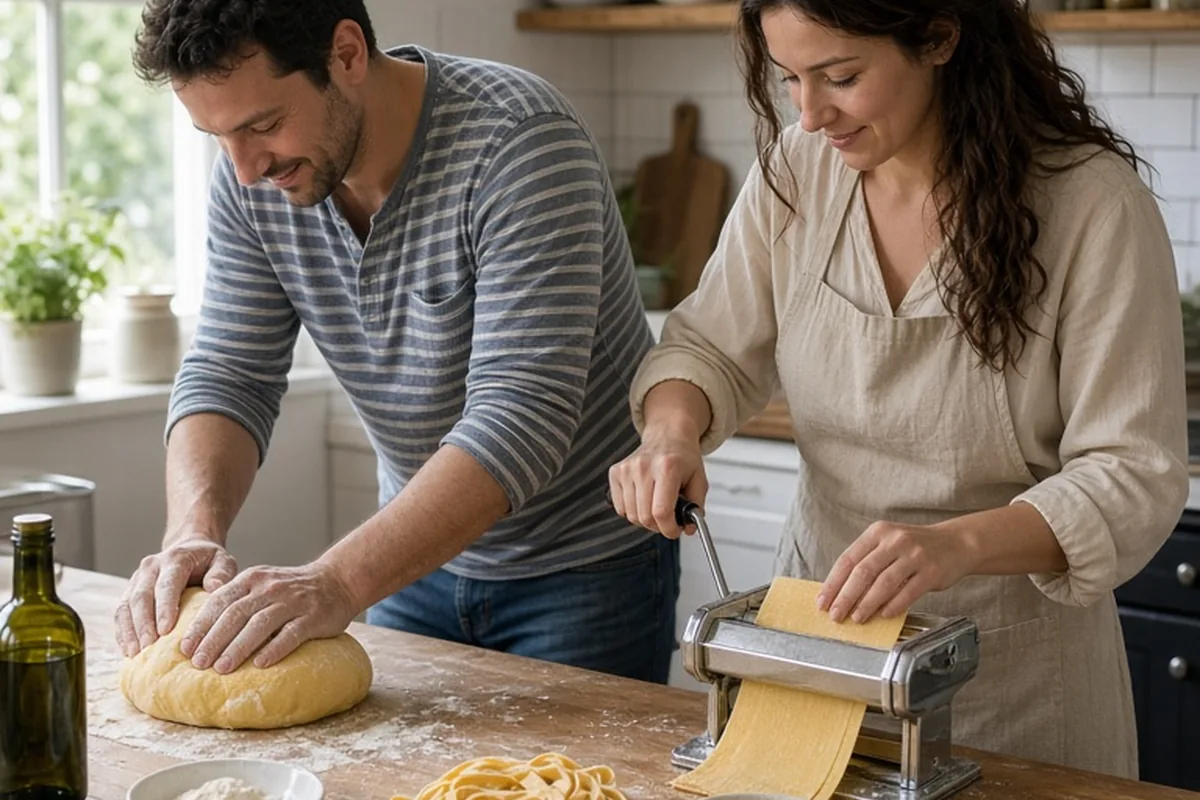
If you and your partner enjoy culinary projects, turning the dinner itself into a collaborative activity can break the ice and build shared memories. Fresh pasta dough requires only fine Italian double-zero flour, fresh whole eggs, a drizzle of olive oil, and a pinch of salt. Kneading the dough together and cranking golden sheets through a hand-cranked pasta roller creates a playful, hands-on rhythm. Cutting wide ribbons of tagliatelle or pappardelle feels rewarding without requiring the delicate folding techniques needed for filled ravioli or tortellini.
Pair fresh pasta with a slow-simmered, velvety sauce that you prepared entirely earlier in the day. A rich bolognese simmered with white wine, milk, and ground veal, or a silky roasted butternut squash purée with fried sage and toasted hazelnuts, both coat fresh egg pasta beautifully. Fresh pasta cooks in boiling salted water in two to three minutes. Simply toss the strained noodles directly into the warmed sauce with a splash of starchy pasta cooking water and freshly grated Parmigiano-Reggiano. Serving the pasta directly from a warm serving bowl onto individual plates keeps the presentation elegant yet homey.
A Light Mediterranean Seafood Feast for Relaxed Conversation
Heavier meals can occasionally cause post-dinner fatigue, which runs counter to an intimate, conversational atmosphere. A Mediterranean-inspired seafood menu provides vibrant flavors, vivid colors, and a clean, light finish that keeps energy levels steady. One of the most fail-safe centerpieces is wild cod or halibut baked in parchment parcels (en papillote). Enclosing each fish fillet with thinly sliced fennel, cherry tomatoes, Castelvetrano olives, capers, dry white wine, and fresh dill seals in steam and aromatics. The packets can be folded and chilled up to four hours beforehand, then slipped into a four-hundred-degree oven twenty minutes before you plan to eat.
Start the meal with a crisp, bitter green salad—such as shaved fennel, watercress, and blood orange segments dressed with a delicate champagne vinaigrette. The bright acidity cuts through rich olive oils and awakens the palate without dulling your appetite. Serve the baked fish parcels unopened on wide plates so you and your partner can cut them open at the table; the sudden release of herb-scented steam provides an engaging sensory moment that feels far more theatrical than a conventional plate of fish.
Make-Ahead Vegetarian Menus Centered on Rich Wild Mushroom Risotto
Vegetarian dinners for intimate occasions should feel grounded, hearty, and celebratory rather than an assembly of standard side dishes. Wild mushroom risotto provides a luxurious, restaurant-quality focal point. While traditional risotto has a reputation for requiring non-stop stirring, you can execute a near-effortless version using par-cooking. Simmer arborio or carnaroli rice with warm mushroom stock and dry white wine until it is about seventy percent cooked—roughly twelve minutes—then spread it thin on a baking sheet to stop the cooking and chill it. When you are ready for dinner, finishing the dish takes only five minutes: add a couple of ladles of warm stock over medium heat until the grains are tender, then vigorously stir in cold cubed butter, grated aged pecorino, and sautéed chanterelles or maitake mushrooms.
Complement the risotto with an earthy, colorful starter that requires zero last-minute cooking. Sliced roasted beets paired with soft goat cheese, crushed pistachios, and a drizzle of aged balsamic vinegar can be arranged on serving platters up to two hours in advance. Fresh, crusty sourdough bread with salted honey butter rounds out the spread. Because mushroom risotto is so naturally rich in umami, the bright earthiness of the beets and the acidity of a crisp pinot noir or mineral-driven chardonnay balance the meal impeccably.
Low-Stress Desserts: Molten Chocolate Pots and Poached Fruit
Dessert should mark a gentle conclusion to the meal rather than a stressful baking project. Molten chocolate lava cakes or baked dark chocolate pots de crème are ideal because the batter can be mixed hours in advance, poured into buttered ramekins, and refrigerated until dinner begins. Once you clear the main course, preheat your oven and bake the ramekins for twelve to fourteen minutes. The cakes come out warm, with crisp edges and luscious molten centers, ready to be dusted with powdered sugar and served with a dollop of mascarpone or vanilla bean ice cream.
If you or your guest prefer something fruit-forward, wine-poached bosc pears offer a refined alternative that actually benefits from sitting in the refrigerator overnight. Simmer peeled pears in dry red wine infused with cinnamon sticks, star anise, orange peel, and raw cane sugar until tender, then reduce the poaching liquid to a glossy syrup. The pears absorb the deep ruby hue and warm spices as they chill. Serving cold or room-temperature pears drizzled with warm spiced syrup requires less than two minutes of assembly, allowing you to stay completely relaxed and attentive throughout the final course.
Curating Atmosphere, Table Settings, and Course Transitions
The environment in which you serve romantic recipes influences the mood just as much as the food itself. Harsh overhead lights immediately make a dining space feel utilitarian. Dim overhead lighting completely and rely instead on layered ambient light: two or three unscented dinner candles on the table, complemented by warm-toned floor or table lamps around the perimeter of the room. Unscented candles are essential, as scented jar candles will overpower the delicate aromas of your cooking and compromise the tasting experience.
Keep the table layout simple and functional rather than cluttered with formal dining accessories. A washed linen tablecloth or runner, cloth napkins, polished glassware, and comfortable flatware communicate intentionality without feeling stuffy or intimidating. Clear dirty prep bowls, cutting boards, and cookware into the dishwasher before your guest steps into your home; a cluttered sink introduces unnecessary mental tension. Between courses, do not rush to clear plates instantly like a server eager to flip a table. Allow comfortable lulls where you linger over your glasses, letting the conversation unfold naturally.
Frequently asked questions
How do I accommodate dietary restrictions without making a romantic dinner feel awkward?
Ask casually a few days before the meal with a warm, open question about any food allergies or ingredients your guest avoids. Once you have their answer, design a single, cohesive menu around those preferences rather than preparing separate dishes, which ensures your guest feels naturally cared for without being singled out.
Can I prep romantic dinner recipes the day before?
Yes, many of the best components improve with an overnight rest. Braised short ribs, soup bases, compound herb butters, and dessert sauces develop richer flavor profiles after twenty-four hours in the refrigerator. Completing these items the day before leaves you only light finishing steps on the evening of your date.
What should I do if a dish burns or turns out poorly during the date?
Maintain a lighthearted, calm attitude and treat it as a humorous shared moment rather than a ruined evening. Keep a backup option on hand, such as high-quality bread, cheeses, cured meats, or a trusted local delivery favorite, which keeps the date fun and reinforces that connection matters far more than culinary perfection.
Your next step
Pick one core main dish from the options above, write down your grocery list, and block out two hours earlier in the day to finish all knife work and make-ahead components before setting the table.