The most common curly hair care mistakes include dry brushing textured strands, using stripping sulfate shampoos, applying styling products to dry or damp rather than soaking wet hair, and using rough cotton bath towels that cause friction. You can protect your curl pattern by detangling exclusively when hair is saturated with conditioner, prioritizing moisture and protein balance, sleeping on silk or satin pillowcases, and letting curls dry completely before touching or breaking the styling cast.
Caring for curly hair requires an approach fundamentally different from caring for straight textures because the curved structure of the hair follicle affects moisture distribution, cuticle alignment, and tensile strength. When common styling habits disrupt these natural mechanisms, the result is often persistent dryness, breakage, and undefined frizz.
Dry Brushing and Mechanical Detangling Disasters
One of the most destructive habits for textured hair is running a standard bristle brush or fine-tooth comb through dry curls. Straight hair allows natural oils from the scalp to travel smoothly down the shaft, providing lubrication, but curly strands create bends and twists that trap friction. Brushing dry curls forces the naturally grouped clumps apart, lifting the outer cuticle layer and creating an immediate halo of uncontrolled frizz. More critically, pulling a brush through dry, coiled hair places severe mechanical stress on weak points along the curve, frequently snapping strands and causing split ends.
To detangle safely, manipulate curly hair only when it is thoroughly saturated with water and coated in a slippery conditioner. The conditioner creates a protective barrier that reduces friction, allowing tangles to slide apart rather than tear. Start by gently finger-detangling the largest knots, then follow with a wide-tooth comb or a flexible detangling brush specifically designed for textured hair. Always begin at the ends of your hair, working upward toward the roots in small sections. This bottom-up method prevents compacting lower knots into dense tangles that require aggressive force to remove.
Cleansing Mistakes: Stripping Natural Sebum With Harsh Sulfates
Because curly hair struggles to distribute sebum from the scalp to the ends, individual strands are naturally prone to chronic dehydration. Washing your hair too frequently or relying on harsh clarifying cleansers formulated with aggressive sulfates removes the protective lipid barrier faster than your scalp can replenish it. When hair is stripped of its natural moisture, the cuticle flares open in an attempt to absorb moisture from the surrounding air, leading to swelling, dullness, and a rough texture that resists styling.
Adjusting your cleansing routine requires finding the right balance between scalp hygiene and moisture retention. For most curl types, washing once or twice a week with a gentle, sulfate-free cleanser or a cleansing conditioner (co-wash) is sufficient to remove sweat and environmental debris. However, avoiding clarifying washes entirely is another common error; styling gels, leave-ins, and natural oils eventually build up on the scalp and hair shaft, blocking hydration. Incorporate a gentle clarifying wash once every three to four weeks to reset your hair without causing chronic dryness.
Misjudging Moisture and Protein Balance in Curly Hair
Healthy curls depend on a careful balance between elasticity from moisture and structural strength from protein. A widespread misconception is that curly hair solely requires heavy moisture. When curls receive excessive deep conditioning treatments without adequate structural support, they can enter a state known as hygral fatigue. In this condition, the hair shaft repeatedly swells with water and contracts upon drying, weakening the cortex. Hair experiencing hygral fatigue feels excessively soft, mushy, or limp, and curls lose their ability to spring back into shape.
Conversely, overusing protein-heavy treatments such as hydrolyzed keratin, wheat protein, or collagen without sufficient hydration causes curls to become stiff, brittle, and prone to snapping under tension. To maintain balance, observe how your hair responds to elasticity testing. Take a single wet strand and gently stretch it; if it stretches slightly and bounces back, your balance is healthy. If it stretches endlessly and feels gummy before breaking, your hair needs protein. If it snaps instantly with little stretch, cut back on protein treatments and incorporate hydrating, emollient-rich deep conditioners.
Incorrect Product Application Timing and Techniques
Applying styling creams, mousses, and gels to damp or semi-dry hair is a primary reason curls fail to form uniform, defined clumps. Water is the foundational styling agent for textured hair because it aligns individual strands into cohesive ribbons before products seal them in place. When stylers are introduced after the hair has already started air-drying, the product sits on top of unevenly separated strands, creating a patchy, sticky finish with persistent underlying frizz.
For optimal definition, apply your styling products to soaking wet hair immediately after rinsing out your conditioner. Use techniques like 'praying hands'—smoothing your flat palms over sections of hair—to distribute product evenly without disturbing the curl formation, followed by gentle scrunching toward the scalp to encourage the natural pattern. Tailor the weight of your products to your specific curl density and strand thickness; fine curls easily collapse under heavy shea butter and coconut oil, while coarse, thick coils thrive on richer creams paired with strong-hold gels.
Drying Pitfalls: Terrycloth Towel Friction and High-Heat Diffusing
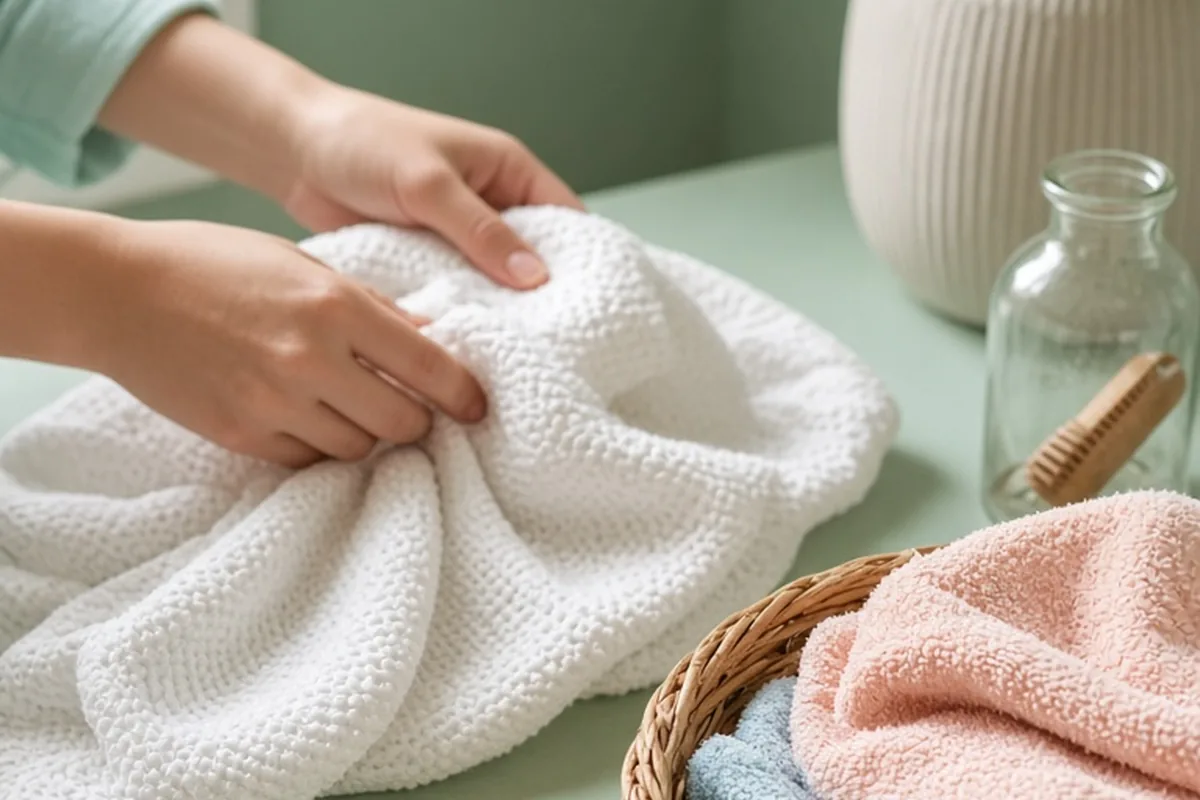
Standard cotton terrycloth towels feature thousands of tiny, looped fibers designed to absorb water quickly, but these textured loops snag individual hair cuticles and tear curl clumps apart. Rubbing or wrapping curls in a heavy bath towel roughs up the hair surface, instantly creating frizz and absorbing the very moisture you applied your styling products to lock in.
Replace traditional towels with a smooth microfiber towel or a clean cotton t-shirt, using a gentle blotting or 'plopping' motion to remove excess water without friction. When blow-drying, avoid direct, high-heat air streams that blow curls around loosely. Always attach a diffuser bowl, set your dryer to low or medium heat with low airflow, and hold the diffuser stationary near your scalp or cup sections gently upward. Hovering the diffuser around your head initially sets the exterior gel cast before you touch the hair directly, preventing disruption of the curl pattern.
Over-Manipulating and Touching Curls While They Dry
Textured hair is at its most vulnerable to frizz while transitioning from wet to completely dry. Many people make the mistake of repeatedly running their fingers through their hair, fluffing their roots, or rearranging individual curls while the drying process is underway. Every time you touch a damp curl, you fracture the protective styling cast before the hair has fully locked into its final shape, dispersing moisture and producing surface flyaways.
Allow your curls to dry completely to one hundred percent before attempting to manipulate them. Once the hair is fully dry and feels firm due to your styling gel, perform the 'scrunch out the crunch' technique. Lightly coat your hands with a few drops of a lightweight oil, such as jojoba or argan oil, and gently scrunch your curls upward from the ends to break the stiff outer cast, revealing soft, defined, and flexible curls underneath.
Neglecting Nighttime Protection and Friction Prevention
A flawless wash day can be completely ruined after a single night of sleeping unprotected on standard cotton bedding. Cotton is an absorbent fabric that draws essential moisture out of the hair shaft overnight while creating constant friction as you shift positions. This friction tangles delicate curl clusters, creates stubborn matte spots at the back of the head, and flattens definition by morning.
Protect your style by incorporating a nighttime preservation routine. Gather your curls loosely at the top of your head using a silk or satin scrunchie in a high, loose ponytail commonly called the 'pineapple.' In addition, sleep on a 100 percent silk or satin pillowcase, or cover your hair with a satin bonnet or scarf. The smooth surface allows strands to glide effortlessly without catching, preserving your curl definition and moisture levels for multiple days between washes.
Frequently asked questions
How often should curly hair be washed to avoid drying it out?
Most curly hair types benefit from washing once or twice per week using a gentle, sulfate-free cleanser. Washing more frequently can strip natural protective oils, while waiting too long can lead to scalp buildup that prevents moisture from penetrating the hair shaft.
Can damaged curl patterns be repaired without cutting the hair?
Mild dryness or protein loss can often be restored through targeted deep conditioning and bond-building treatments. However, severe heat damage or chemical breakage permanently alters the internal keratin structure, meaning the affected ends will eventually need to be trimmed away to allow healthy curls to grow.
What is the best way to refresh second-day curls without washing?
To refresh curls without a full wash, lightly mist your hair with water mixed with a small amount of leave-in conditioner to rehydrate the strands. Smooth a dime-sized amount of lightweight gel or foam over frizzy sections using praying hands, and let it air dry completely before scrunching.
Your next step
Audit your next wash day by detangling exclusively with conditioner in the shower and replacing your standard terrycloth towel with a microfiber wrap or cotton t-shirt.