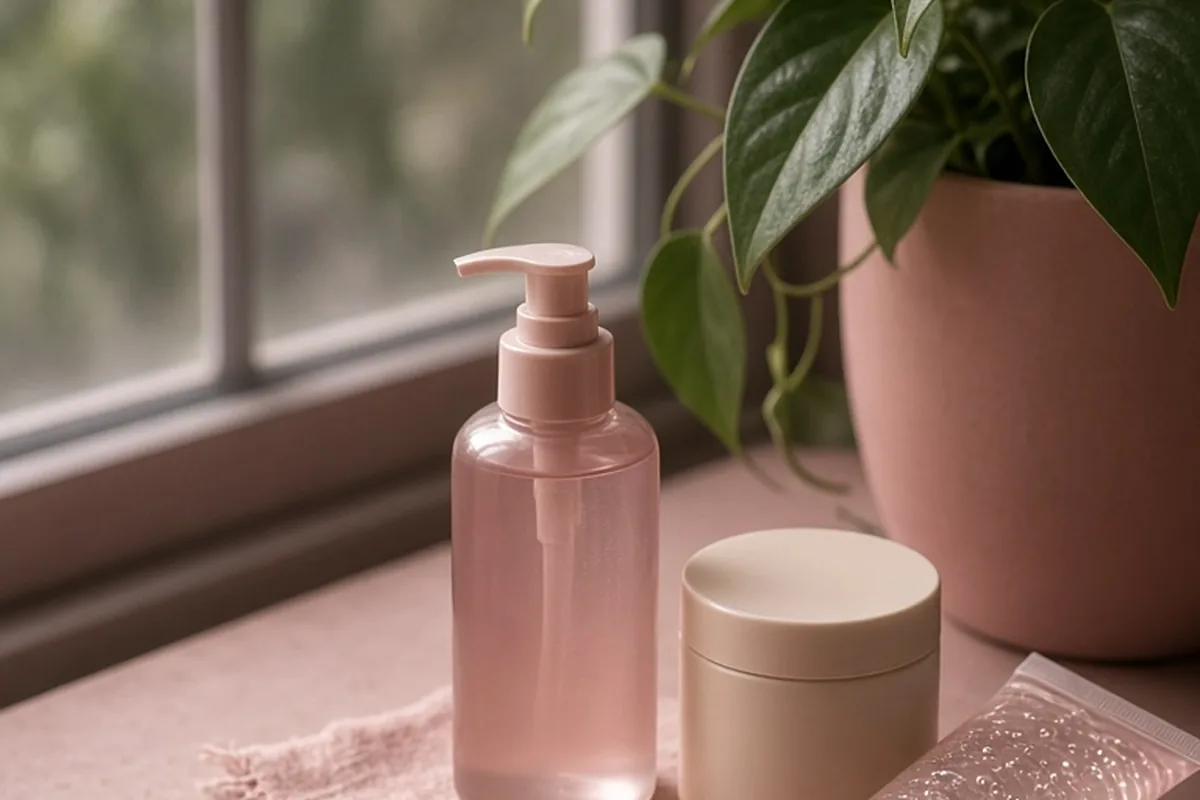
For beginners starting a curly hair routine, the four essential products are a sulfate-free shampoo, a slippery rinse-out conditioner, a water-based leave-in conditioner, and a defining gel or mousse. This core combination cleanses the scalp without stripping natural oils, hydrates the hair shaft to prevent tangles, and seals moisture to maintain curl clump definition and control frizz.
Transitioning from straight-hair styling methods or standard drying routines to a curl-focused regimen can feel overwhelming due to specialized terminology, conflicting ingredient advice, and extensive product lines. Starting with a focused set of foundational formulas allows you to observe how your curls respond to moisture, hold, and cleansing before you invest in complex multi-step treatments.
The Essential Four-Product Starter Kit for Curly Hair
Building an effective curly hair routine does not require purchasing an entire aisle of specialized bottles. In fact, introducing too many new formulas at once makes it nearly impossible to identify which product enhances your texture and which causes heaviness, flaking, or irritation. A practical starter kit consists of four core formulas: a gentle sulfate-free cleanser, a moisturizing rinse-out conditioner with high slip, a lightweight leave-in conditioner, and a styling gel or curl mousse. Together, these products handle every primary stage of curl care: cleansing, conditioning, moisturizing, and setting.
Your cleanser keeps the scalp balanced and free of excess sebum, while your rinse-out conditioner restores hydration and allows you to detangle knots smoothly using your fingers or a wide-tooth comb. Once out of the shower, the leave-in conditioner provides a base of lasting moisture to prevent dryness throughout the week, and the gel or mousse forms a flexible cast over your curl clumps to lock that hydration inside while blocking ambient humidity. Using only these four products for your first four to six weeks establishes a reliable baseline, allowing you to gauge your hair's true texture, density, and hydration needs.
Matching Product Weight to Your Hair Porosity and Density
One of the most common reasons beginner products fail to deliver expected results is a mismatch between product weight and hair porosity. Hair porosity refers to how easily moisture passes through the hair cuticle layer. Low-porosity curls have tightly bound cuticles that resist water penetration and cause heavy ingredients to sit on the strand surface. If your hair takes a long time to get wet in the shower and dries very slowly, choose lightweight, water-based leave-in sprays and lotions formulated with light humectants like aloe vera, glycerin, or panthenol, while avoiding heavy raw butters and pure waxes.
High-porosity curls have raised or damaged cuticles with microscopic gaps, meaning they absorb water rapidly but lose hydration just as quickly. If your hair feels dry shortly after washing or has been chemically colored or heat-treated, it benefits from richer moisturizing creams containing emollients such as jojoba oil, shea butter, argan oil, or hydrolyzed plant proteins that help temporarily fill cuticular gaps. Additionally, consider your strand thickness and density: fine strands easily collapse under heavy styling butters regardless of porosity, whereas coarse, thick curls require more emollient weight to remain pliable and soft.
Cleansing Options: Low-Foam Shampoos, Co-Washes, and Clarifiers
Traditional shampoos rely on harsh anionic detergents like sodium lauryl sulfate that strip the natural lipid barrier from curly hair, leaving fragile bends and coils dry and prone to breakage. Beginners should look for sulfate-free shampoos, often labeled as low-poo cleansers, which utilize gentler surfactants derived from coconut, glucose, or amino acids, such as cocamidopropyl betaine, decyl glucoside, or sodium cocoyl isethionate. These clean the scalp thoroughly while leaving essential moisture intact.
Co-washing, or washing exclusively with a cleansing conditioner, is an alternative method popular among those with very dry, tight coils or coarse hair textures. Co-washes contain mild conditioning emulsifiers that lift light surface dirt without lathering. However, relying solely on co-washes can lead to scalp congestion, itchiness, and limp roots, especially for individuals with fine curls or oily scalps. To prevent buildup from styling polymers, hard water minerals, and natural oils, incorporate a clarifying shampoo into your schedule once every two to four weeks, followed by a thorough conditioning treatment.
Hydration and Sealing: Leave-In Conditioners versus Curl Creams
A common point of confusion for beginners is the difference between a leave-in conditioner and a curl styling cream. A leave-in conditioner is a water-rich formula designed to penetrate the strand, provide ongoing hydration, and improve manageability after rinsing out your shower conditioner. It serves as the primer for your styling routine. If you have fine waves or curls that get weighed down easily, a sprayable, water-based leave-in is often the only moisture step you need before applying your holding product.
Curl styling creams, by contrast, are richer emulsions that combine conditioning emollients with light shaping polymers. They add softness, clumping support, and weight to reduce fluffiness in coarser, thirstier textures. When applying these products, remember that oils and butters do not generate hydration on their own; water is the primary hydrating agent. Emollients and styling creams function as sealants that trap water inside the hair shaft. For the best balance, apply your leave-in conditioner or cream to thoroughly wet hair before applying any strong-hold styling products.
Defining and Holding Curls: Choosing Between Gels, Foams, and Mousses
Without a hold product, moisturized curls quickly lose their shape, separate into individual flyaways, and expand into untamed frizz as they dry. Styling gels provide the strongest hold and the most dependable definition. When applied to wet hair, a quality curl gel creates a temporary, firm outer shell known as a gel cast around each curl clump. This cast prevents friction and humidity from disrupting the curl structure while the hair dries. Once your hair is entirely dry, gently scrunching the curls with your hands softens the cast, leaving behind defined, touchable curls.
Foams and mousses offer an alternative for beginners who prefer airy volume, shorter drying times, or a weightless feel. Foams are typically water-based with natural film-forming polymers like flaxseed or hydrolyzed corn starch, making them well-suited for fine hair, loose waves, and volume-focused styling. Mousses often contain light conditioning agents and propellants that deliver medium hold and structural body. When reading ingredient labels, look for film formers like polyquaternium compounds, pectin, or xanthan gum, and avoid high concentrations of denatured alcohol or isopropyl alcohol, which can dry out your hair over repeated use.
Application Techniques That Help Beginner Products Perform
The way you apply your curly hair products is just as important as the formulas you choose. Applying styling products to damp or partially dry hair often leads to patchy distribution, frizz, and product flaking. For the cleanest definition, apply your leave-in conditioner and styling gel to soaking wet hair while you are still in the shower. Use the praying hands technique—smoothing your flat hands down sections of hair—to distribute the product evenly across curl clumps without pulling individual hairs apart.
After distributing your styler, gently scrunch upward toward your scalp to encourage your natural curl pattern to form. To remove excess water without causing friction-induced frizz, swap conventional terry cloth bath towels for a smooth microfiber towel or a plain cotton t-shirt. Press the fabric gently against your hair rather than rubbing. You can then let your hair air-dry undisturbed or use a blow dryer with a diffuser attachment on low heat and low speed, which sets the gel cast quickly and boosts volume without disturbing curl alignment.
Troubleshooting Product Buildup, Flaking, and Moisture Overload
As you experiment with new products, you may occasionally run into issues like small white flakes, a sticky film, or limp, lifeless curls. White flakes typically happen when two incompatible formulas are layered together—for instance, a leave-in conditioner containing heavy oils combined with a high-polymer gel that fails to bind with oil. You can test compatibility before washing by mixing a nickel-sized drop of your leave-in and gel together in the palm of your hand; if the mixture turns pasty or curdles into white specks, they will likely flake in your hair.
Another common challenge is distinguishing between moisture overload and product buildup. Moisture overload occurs when hair absorbs excessive water and rich emollients without adequate structural protein or hold, leading to a mushy, overly soft texture that cannot hold a curl. Product buildup, on the other hand, causes hair to feel dull, dry, and coated despite regular washing. If your curls feel greasy, refuse to clump, or seem unusually dry even after conditioning, reset your hair with a clarifying wash to strip away accumulated polymers and re-evaluate your moisture levels.
Illustrative Scenarios
Illustrative Scenario: Resolving Product Heaviness and Lack of Definition
A beginner with medium-density, low-porosity type 3 curls initially purchased several heavy styling butters and raw oils recommended for general curl care. Within two weeks, their scalp felt itchy, roots looked flat and greasy, and the ends developed stringy clumps that took several hours to air-dry. By replacing the heavy butters with a clarifying shampoo wash, a lightweight water-based leave-in spray, and a medium-hold gel applied to soaking wet hair, their curls regained bounce, natural volume, and defined clumps that dried in half the time.
Key point: Selecting products based on hair strand thickness and porosity rather than general trend recommendations prevents product buildup and keeps curl patterns well-defined.
Frequently asked questions
How long does it take for curly hair to adapt to a new product routine?
Most people notice improved hydration and less frizz within two to four wash cycles. However, if your hair is recovering from chemical processing, excessive heat styling, or years of harsh sulfate use, it typically takes four to eight weeks for your scalp oil production to normalize and your curl clumps to fully form.
Do beginners need to strictly avoid all silicones and sulfates?
Strict avoidance is not required, but understanding how they interact is essential. Insoluble silicones coat the hair shaft to block humidity, but they require surfactants to wash out completely. If you use silicone-based styling products, you must use a gentle sulfate or clarifying shampoo periodically to prevent buildup that blocks hydration.
How often should a beginner wash curly hair?
Most individuals with curly hair wash their hair one to three times per week. The ideal frequency depends on your scalp oiliness, workout routine, and strand thickness; wash your hair whenever your scalp feels congested or your curls lose their shape and moisture.
Can I use regular bath towels to dry curly hair?
Standard terry cloth towels have large, looped fibers that snag curly strands, disrupt curl clumps, and create surface frizz. Replacing your bath towel with a smooth microfiber towel, a cotton t-shirt, or a flour sack towel significantly reduces friction and preserves curl definition.
Your next step
Inspect the products currently on your bathroom shelf to identify your four foundational basics—a gentle cleanser, a slippery conditioner, a light leave-in, and a defining gel—and test them on soaking wet hair during your next wash day.