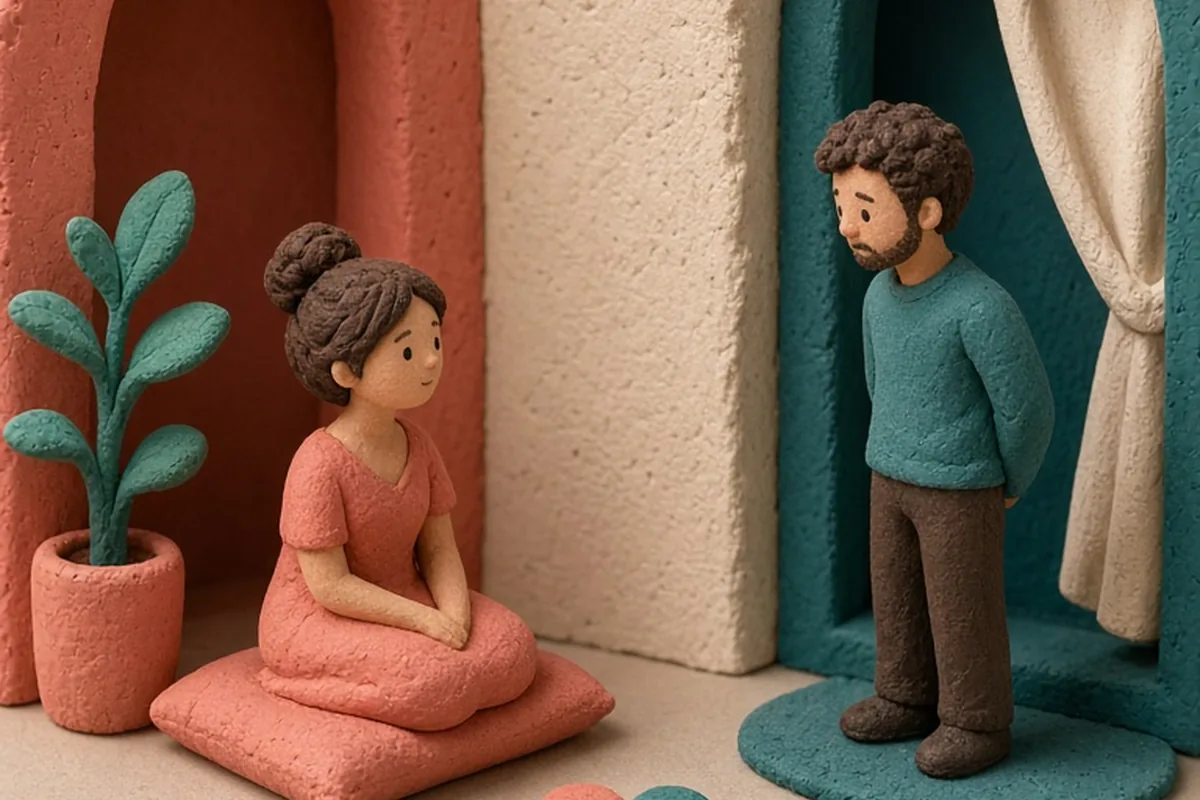
A 'daddy's girl' is a woman who shares a close, affectionate bond with her father. In dating, it usually means family approval matters to her and she may measure partners against her dad's example. It is not a diagnosis or a red flag by itself; what matters is whether the bond is healthy or controlling.
If a woman you're seeing describes herself as a daddy's girl, or her friends do, you're probably wondering what you're signing up for. The honest answer is that the label covers a wide range, and the details matter far more than the name.
What 'Daddy's Girl' Actually Means
At its simplest, the term describes a woman who is especially close to her father. She might call him for advice before making big decisions, spend holidays and weekends with him, or light up when she talks about him. In many families it is a warm, slightly teasing label for a daughter who was spoiled with attention, taught to fish or fix things, or treated as her dad's sidekick growing up.
The label gets complicated because people use it loosely. Sometimes it is a compliment about a tight-knit family. Sometimes it is a dig implying she is entitled or expects to be pampered. And sometimes it is shorthand for the opposite situation, a woman whose father was absent and who is assumed to be searching for that approval elsewhere. Because the same phrase gets stretched across all these meanings, the smartest move is to treat it as a starting question rather than a conclusion. What does her actual relationship with her father look like, and how does it show up in her adult life?
How a Close Father-Daughter Bond Shows Up in Dating
When a woman genuinely adores her dad, you will usually notice it in practical ways. She may want his opinion on the man she is seeing, bring you to family events earlier than you expect, or mention her father's habits as a benchmark, like how he handled money, treated her mother, or fixed problems around the house. None of this is automatically a problem. A woman who watched a good man treat her mother well often has a clear, healthy picture of what respect looks like, and that can work in your favor if you treat her well too.
The trade-off is that her father's opinion may carry real weight. If he is skeptical of you, she may hesitate even if things are going well between you two. That can feel frustrating, especially if you are used to relationships being a private matter between two people. The useful reframe is that winning over a close family is not a hurdle invented to test you; it is simply how her world works. Patience and consistency tend to matter more here than charm, because fathers who are protective of their daughters are usually watching for reliability over time, not a single impressive dinner.
Healthy Bond Versus Warning Signs
A close bond becomes a problem only when it crosses into dependence or control. In a healthy version, she loves her dad, values his input, and still makes her own choices. In a harder version, she cannot make a decision without his sign-off, he weighs in on your relationship uninvited, or she uses him as an escape hatch whenever conflict comes up between you. The difference is not how much she loves him; it is whether she can function as an independent adult.
It also helps to separate this from the pop-psychology idea of 'daddy issues,' which gets thrown around carelessly. A woman with a difficult or absent father is not broken, and a woman with a doting father is not automatically high-maintenance. What you can reasonably pay attention to is behavior: does she expect you to fund a lifestyle she has not earned, does she compare you unfavorably to her dad in arguments, or does she fold under family pressure in ways that hurt the relationship? Those are fair things to notice. The label itself tells you almost nothing; the pattern tells you a lot.
How to Handle Her Dad's Presence in the Relationship
If her father is a big presence, your job is not to compete with him or to win a showdown. It is to show, steadily, that you are a man who treats his daughter well. That means following through on what you say, being polite without groveling, and letting him see that you respect his daughter's independence rather than trying to control her. Many protective fathers soften when they realize the new man is not asking them to disappear; he is just asking for a fair shot.
There is also a boundary side to this. If her dad's involvement starts to crowd the relationship, like him mediating your disagreements or her sharing every private detail with him, it is reasonable to raise it calmly. A useful script is to affirm the bond first and then name your need: you are glad she has a father she trusts, and you also want some things to stay between the two of you. Delivered without resentment, that conversation usually lands better than either silent frustration or an ultimatum about her family.
When 'Daddy' Means Something Else Entirely
It is worth acknowledging that the word carries a second meaning in adult relationships. Some couples use 'daddy' as an affectionate or playful nickname inside a consensual dynamic, and a woman calling herself a daddy's girl in that context is describing a preference between adults, not her relationship with her actual father. If you encounter the term in a dating profile or an intimate conversation, context usually makes the meaning clear.
If it comes up for you in that sense, the same rules apply as with any preference between adults: it is fine to be curious, fine to participate if it genuinely appeals to both of you, and fine to say it is not your thing. What matters is that nobody is pressured into a role they find uncomfortable, and that you can talk about it directly rather than guessing. A simple question like asking what the term means to her is far better than assuming or mocking it.
Mistakes Men Make With a Daddy's Girl
The most common mistake is treating her father's importance as a threat to your position. Men who get competitive, mock her dad, or demand she stop consulting him usually trigger exactly the loyalty they were afraid of. Even if her father is genuinely difficult, she has known him her whole life and you have not. Criticizing him forces her to defend him, which pushes you into the role of the outsider attacking her family.
The second mistake is swinging to the opposite extreme and trying to become a replacement father figure, managing her choices, paying for everything, or tolerating treatment you would not accept otherwise, because you assume that is what she expects. That dynamic breeds resentment on both sides. The middle path is simpler: be a partner, not a rival and not a substitute. Respect the bond she has, keep your own standards, and let the relationship be judged on what the two of you build rather than on how you measure up to a man she has loved since childhood.
Building Your Own Place in Her Life
Long term, the goal is not to outrank her father but to hold a different and equally real role. A woman who is close to her dad is often practiced at loyalty, comfortable with family life, and clear about wanting a man with integrity, because she grew up watching one. Those are genuinely good raw materials for a relationship. Your job is to be consistent enough that her trust in you becomes its own thing rather than a reflection of her trust in him.
That consistency is built in unglamorous moments: showing up when you said you would, staying calm in a disagreement, treating her family decently even when they are slow to warm up. Over time, most women with strong father bonds do exactly what healthy adults do, which is keep loving their dad while making their own calls. If she cannot do that and her father's approval controls every decision she makes, that is a real compatibility question worth an honest conversation, not a flaw you can fix by trying harder.
Illustrative Scenarios
The Sunday Dinner Test
Marcus had been dating Elena for two months when she started bringing him to her family's Sunday dinners. Her father barely spoke to him beyond a handshake, and Marcus read the silence as disapproval. His first instinct was to win the man over fast with jokes and stories about his job, which came off as trying too hard and made things stiffer. On a friend's advice he shifted approach: he stopped performing, helped clear the table, asked her dad about his workshop, and just kept showing up. By the fourth dinner, the man was asking him about his week.
Key point: A protective father's silence is usually observation, not rejection. Consistency impresses him more than charm.
The Birthday Conflict
Devon's girlfriend Priya planned her birthday weekend around her dad's annual visit, which collided with a trip Devon had already booked for the two of them. His first reaction was hurt: he felt like he would always rank second. Instead of issuing an ultimatum, he told her plainly that he felt sidelined and asked how she saw the two commitments fitting together. Priya had not realized how it looked from his side. They moved the trip a week, and she later told him that his calm honesty mattered more to her than the reservation.
Key point: Feeling second to her dad is worth naming calmly. An honest conversation beats a loyalty test every time.
Frequently asked questions
Is dating a daddy's girl a red flag?
Not by itself. A close bond with her father is often a sign she knows what respectful treatment looks like. It only becomes a concern if she cannot make decisions without his approval or if he regularly overrides your relationship.
What if her dad clearly does not like me?
Stay polite, keep showing up, and avoid criticizing him to her, since that forces her to defend him. If months of consistent effort change nothing, talk with her about how his opinion affects your future together rather than fighting him directly.
Does 'daddy's girl' mean she has daddy issues?
No. The phrase usually describes a warm, close relationship, which is the opposite of what 'daddy issues' implies. Judge her by how she actually behaves in the relationship, not by a label people apply loosely.
What if she calls me 'daddy' and it feels strange?
That is a separate, consensual nickname some couples use, and it is fine to say it is not for you. Tell her kindly what you would prefer instead; a preference like that is easy to adjust when neither person makes it a test.
Your next step
Next step: the next time her father comes up, ask her one open question about him, like what she admires most about him, and just listen. Her answer will tell you more about what she values in a partner than the label ever will.