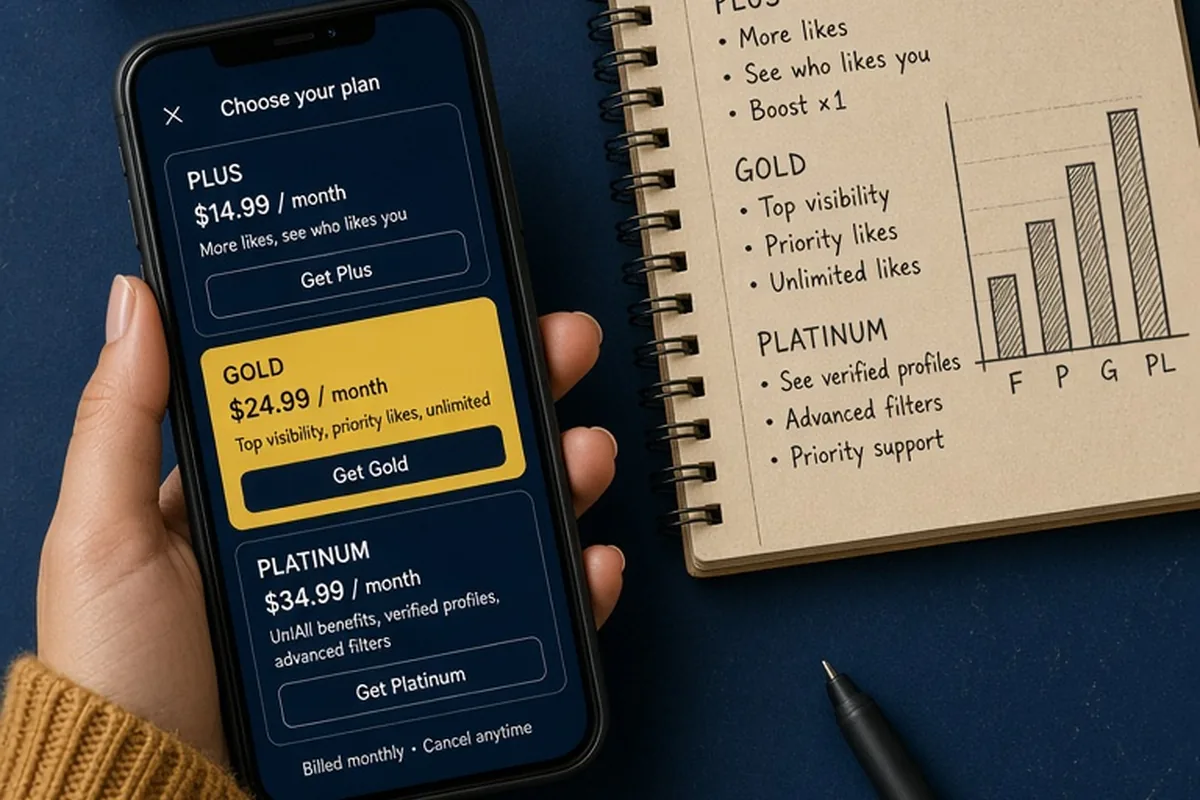
Dating app prices vary widely based on subscription tiers, billing duration, platform storefronts, and a la carte features. Most major platforms operate on a freemium model where basic matching is free, while premium subscriptions range from entry-level visibility perks to top-tier executive matching. Total costs depend heavily on whether you purchase monthly or multi-month packages, buy via web browsers instead of mobile app stores, or purchase add-on visibility boosts.
Navigating modern digital dating requires understanding not just profile algorithms, but also the complex commercial structures behind popular matching platforms. With platforms continuously revising their premium bundles, knowing how pricing works helps you invest intentionally without falling into recurring billing traps.
The Core Architecture of Modern Dating App Pricing Tiers
The modern digital matchmaking marketplace relies almost universally on a multi-tiered monetization architecture. At the foundational level sits the free tier, which allows users to create a profile, upload photos, and browse a limited number of candidate profiles within a set rolling window. While functional for casual exploration, free tiers intentionally introduce friction points such as daily swipe limits, delayed match queues, and restricted filtering options. These limitations are designed to demonstrate the platform's potential match pool while encouraging active users to consider paid upgrades for smoother navigation.
Moving beyond the free tier, platforms generally divide paid services into entry-level, mid-tier, and premium executive packages. Entry-level subscriptions typically eliminate basic mechanical frictions by removing daily swiping caps, unlocking unlimited rewinds for accidental left swipes, and enabling basic location adjustments. Mid-tier packages, which represent the most common purchase choice across major platforms, generally add inbound visibility by revealing who has already liked your profile before you swipe, granting priority placement in discovery feeds, and providing advanced preference filters. Top-tier luxury or executive plans introduce high-frequency visibility boosts, priority direct messaging to unverified matches, and individualized algorithmic curation designed for users seeking accelerated dating velocity.
Comparing Tinder, Bumble, Hinge, and Legacy Matchmakers
Mainstream dating applications position their paid tiers to reflect distinct user intents, ranging from spontaneous local discovery to structured long-term relationship building. Tinder segments its offerings across three escalating tiers: Plus, Gold, and Platinum. Plus focuses purely on utility by lifting swipe limits and granting access to global passport features. Gold adds immediate efficiency by unlocking the dedicated grid of users who have already liked your profile, alongside curated daily selections. Platinum caters to high-volume visibility seekers by attaching priority status to outbound likes and allowing brief introductory notes before a mutual match is established.
In contrast, Bumble structures its catalog into Boost, Premium, and Premium Plus tiers. Boost acts as a workflow enhancer with unlimited extends on expiring matches, rematch capabilities, and unlimited backtracking. Bumble Premium expands functionality to include the Beeline showing inbound likes, incognito browsing modes, travel settings, and advanced lifestyle filters. Their top-tier Premium Plus layer focuses on maximum feed exposure, placing profiles ahead of competitors in local queues. Meanwhile, Hinge approaches monetization through Hinge+ and HingeX, where Hinge+ removes daily like limits and provides full grid visibility, while HingeX deploys continuous algorithmic priority, surfacing your profile faster to high-engagement users and offering personalized recommendation tweaks based on past interactions. Legacy platforms like Match.com and eHarmony maintain longer-form questionnaire models with higher baseline subscription fees, focusing on comprehensive personality testing and communication unlocks rather than micro-transaction swipe mechanics.
Primary Variables That Change Your Subscription Total
The final price you encounter on any dating platform is rarely fixed or universally uniform across all consumer touchpoints. One of the most influential factors is subscription commitment length. Purchasing access on a rolling one-month basis carries the highest per-week cost, reflecting the short-term flexibility offered to the subscriber. In contrast, committing to three-month, six-month, or twelve-month upfront billing agreements significantly reduces the effective monthly rate, though it requires a larger non-refundable capital outlay before you have evaluated local match responsiveness.
Your purchasing platform also directly influences your final bill due to mobile storefront economics. When buying a subscription through Apple iOS App Store or Google Play Store, dating companies often adjust consumer prices upward to absorb standard platform transaction commissions. Purchasing the identical subscription package directly through the dating service's desktop or mobile web browser often reveals discounted rates or specialized web-only promotions. Furthermore, geographic location and dynamic regional pricing tests can result in differing price points for identical tiers depending on market density, local competitive dynamics, and localized seasonal promotions.
A La Carte Microtransactions and Add-On Costs
Beyond recurring subscription plans, modern dating applications generate substantial revenue through consumable, one-time microtransactions. These standalone purchases are designed to offer temporary competitive advantages without requiring a full monthly tier commitment. Common examples include spotlight boosts that temporarily place your profile at the front of local discovery stacks for thirty to sixty minutes, paid direct compliments that bypass standard matching mechanics, and read receipts that confirm whether a recipient has viewed your sent message.
While individual microtransactions may appear inexpensive on a per-unit basis, they can rapidly outpace the cost of a comprehensive monthly subscription if used repeatedly. Platforms frequently package these consumable items into tiered volume bundles, encouraging users to buy twenty or fifty credits at once to secure lower per-unit pricing. However, unspent digital tokens and temporary visibility items usually carry strict expiration policies and zero cash refund value. Calculating your real monthly dating spend requires tracking both your base subscription fee and these sporadic microtransaction purchases.
Hidden Fees, Renewal Traps, and Account Management Pitfalls
Managing the operational lifecycle of a dating app subscription involves navigating several common billing pitfalls. The most frequent financial surprise comes from automatic renewal defaults. Virtually all dating app memberships default to continuous auto-billing at the conclusion of your initial promotional or prepaid period. Unless manually disabled within your platform settings at least twenty-four hours before the renewal date, your account will be charged the standard, non-discounted rate for an equivalent billing cycle.
A critical operational distinction that frequently leads to unintended charges is the difference between pausing a profile, deleting an app, and actually canceling a subscription contract. Merely uninstalling the application from your smartphone or tapping 'delete account' within the software settings does not terminate the underlying payment agreement established with Apple, Google, or the platform's direct billing processor. To permanently halt billing, you must navigate directly to the specific subscription management interface where the payment originated and explicitly terminate recurring authorization. Additionally, users who travel must be mindful of localized sales taxes and currency conversion fees when purchasing upgrades outside their primary billing region.
Financial Safety and Romance Scam Awareness in Paid Dating
Investing money into dating app subscriptions or premium communication features does not automatically insulate you from deceptive profiles or bad actors. While paid tiers often feature basic photo verification badges, bad actors frequently create plausible profiles to establish contact before attempting financial exploitation. Understanding the baseline operating methods of romance scams is essential for protecting your financial and personal well-being while navigating digital dating spaces.
A common pattern involves an individual rapidly escalating emotional intimacy, expressing intense affection, and quickly requesting to move conversations away from the platform's monitored messaging system onto private encrypted channels. Once trust is established, scammers invent elaborate emergencies, claim unexpected travel or customs crises, or pitch exclusive investment opportunities, often involving cryptocurrency or fraudulent financial schemes. According to consumer protection guidance, you should never send money, wire transfers, gift cards, or cryptocurrency to someone you have only met online, regardless of how convincing their story or verified their initial profile appeared.
Further reading: FTC: What to know about romance scams
Lower-Cost Strategies to Maximize Dating App Value
Achieving strong dating outcomes does not necessarily require maintaining high-tier subscriptions year-round. A highly effective cost-reduction strategy involves treating paid memberships as short-burst promotional campaigns rather than continuous lifestyle utilities. By spending dedicated time perfecting your initial profile on the free tier—using high-resolution photos, descriptive conversation prompts, and clear lifestyle indicators—you establish an organic baseline. Once your profile is optimized, activating a single one-month subscription or targeted boost allows you to process accumulated interest efficiently before returning to the free tier.
Another dependable way to lower your total expenditure is leveraging promotional discount cycles and off-peak incentives. Dating services regularly run seasonal promotional pricing around major relationship milestones, New Year holidays, and single-awareness awareness periods, offering steep introductory discounts on three-month and six-month commitments. Combining these seasonal offers with direct web-based checkout bypasses standard mobile store markups. Always audit your active mobile subscriptions monthly to ensure you are not paying for overlapping platforms that duplicate the same local user pool.
Pre-Purchase Verification Checklist and Questions to Ask
Before entering your payment details into any dating application, performing a brief technical and financial audit will prevent unwanted charges and ensure realistic expectations. Start by verifying the exact terms of the cancellation policy, noting specifically whether unused portions of multi-month upfront commitments are eligible for pro-rated refunds or if all sales are final upon activation. Check whether key features you desire—such as international travel modes or advanced lifestyle filters—are included in your selected tier or gated behind an even higher upgrade package.
Next, evaluate your local dating market density to confirm that paid upgrades will deliver practical utility in your immediate geographical radius. In smaller towns or rural areas, paying for unlimited likes or top-tier visibility boosts often yields diminishing returns because the total local candidate pool is naturally limited. In densely populated metropolitan centers, targeted visibility tools can significantly reduce the time required to establish meaningful connections. Verifying platform activity levels and subscription conditions in advance guarantees that every dollar spent aligns with your personal relationship goals.
Frequently asked questions
Does paying for a premium dating app tier guarantee more high-quality matches?
No subscription tier guarantees romantic success or high-quality matches. Paid plans only provide technical visibility, advanced preference filters, and mechanical conveniences such as unlimited swiping or seeing who liked you first. Your actual match rate still depends primarily on profile quality, photography, genuine conversational compatibility, and local user demographics.
Why do subscription prices differ between my iPhone and a web browser for the same app?
Price discrepancies usually occur because mobile app stores charge platform operators commission fees on in-app transactions. Many dating companies offer lower pricing or exclusive promotional rates when you purchase directly through their desktop or mobile websites, allowing them to pass along savings from bypassing mobile store processing fees.
What happens to my active subscription if I delete my dating app profile?
Deleting your profile within the app does not automatically cancel your billing subscription. Recurring payment agreements are managed through your Apple ID, Google Play account, or the platform's third-party web payment processor. You must manually cancel the recurring subscription in your platform billing settings to prevent future automated charges.
Is it cheaper to buy a multi-month dating app package instead of paying monthly?
Multi-month packages offer a significantly lower effective monthly rate compared to single-month subscriptions. However, multi-month plans require paying the entire lump sum upfront and are generally non-refundable if you meet someone early or decide to stop using the service before the period ends.
Your next step
Audit your active smartphone app subscriptions today, cancel any recurring auto-renewals on idle dating platforms, and test purchasing future upgrades through direct web checkout to secure the lowest available rates.