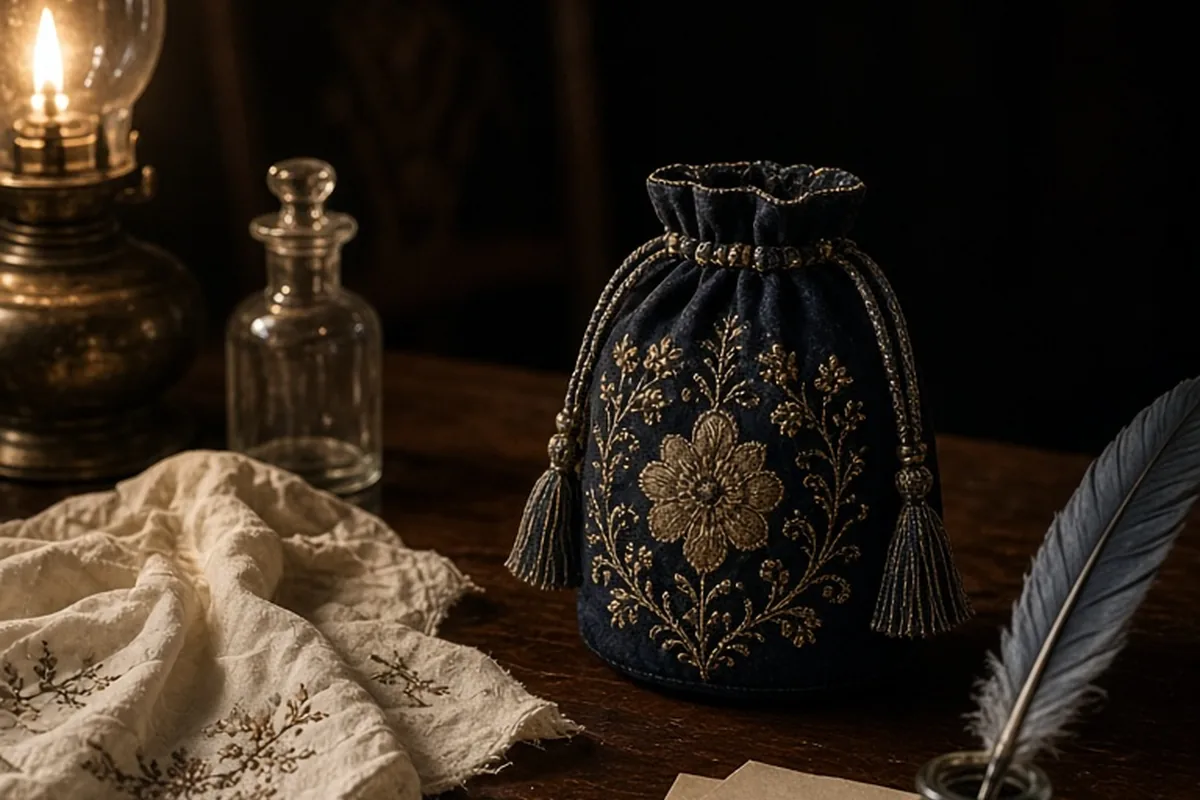
Regency women did carry purses to balls, using small decorative handheld bags called reticules. The shift toward slender, high-waisted Neoclassical gowns made traditional internal tie-on pockets impractical, requiring visible bags. At evening assemblies, women used these silk, velvet, or beaded drawstring bags to hold personal necessities such as dance cards, smelling salts, handkerchiefs, and card money without disrupting their gown lines.
The image of a Regency ballroom often conjures swirling silk gowns, candlelight reflecting off polished floorboards, and formal choreography governed by strict social decorum. Modern readers and period enthusiasts frequently wonder how women of the late eighteenth and early nineteenth centuries managed their personal belongings while dancing, dining, and navigating crowded assembly rooms.
The Fashion Evolution from Tie-On Pockets to Handheld Reticules
Throughout much of the eighteenth century, women did not carry external purses because their voluminous skirts accommodated deep, detachable tie-on pockets worn beneath their petticoats. These large fabric pouches were accessed through discreet slits in the gown side seams, allowing women to carry substantial personal items without altering the visible shape of their clothing. Because panniers and structured petticoats supported wide skirts, heavy pockets remained completely invisible from the outside.
When fashion shifted dramatically in the late 1790s toward high-waisted, columnar Empire silhouettes inspired by classical antiquity, the traditional tie-on pocket became obsolete for evening wear. Lightweight fabrics like sheer white muslin, fine silk gauze, and gossamer crepe clung closely to the body, meaning even a small pocket beneath the dress created unsightly bulges and ruined the drapery of the gown. To solve this practical dilemma, fashionable women adopted the reticule, a small external pouch that could be carried in the hand or draped over a wrist, marking the birth of the modern handbag as an essential social accessory.
Essential Items Carried Inside an Evening Ball Reticule
A Regency woman selected the contents of her ball reticule with careful consideration, balancing social necessities against the compact physical limits of the bag itself. Because assembly rooms were warm, physically demanding environments with hours of vigorous English country dancing, practical self-care and social tools took precedence over bulkier personal belongings.
The most critical accessory for any young lady at an assembly was her dance card, or carnet de bal, accompanied by a tiny attached lead pencil used to record prospective partners for specific sets. Aside from dance tracking, women routinely packed a finely embroidered linen or lace handkerchief, a small bottle of smelling salts or a decorative metal vinaigrette filled with perfume-soaked sponge to combat stuffiness, a miniature compact or patch box, and a few coins or bone gaming counters in case they joined the card tables in the adjoining card room.
While day bags might hold sewing implements, correspondence, or small books, ball reticules were strictly edited for evening convenience. A heavy or overfilled purse would pull clumsily on delicate evening fabrics and swing uncomfortably during high-tempo cotillions or reels.
Materials, Embroidery, and Color Coordination for Evening Wear
Because the reticule was worn visibly in public, it was treated as an integral component of a lady's formal ensemble rather than purely functional luggage. Women coordinated the color, material, and trim of their bags to harmonize with their evening dresses, ribbons, silk slippers, and decorative hairpieces, turning the accessory into a showcase of personal taste and needlework skill.
Evening reticules were commonly constructed from rich materials such as lustrous silk satin, fine velvet, metallic lamé, or netting encrusted with tiny glass seed beads. Handcrafted needlepoint, gold and silver bullion thread embroidery, and intricate tambour work decorated the exterior panels. Most bags featured silk ribbon or cord drawstrings finished with ornate tassels, decorative fringe, or metallic pompons that swayed elegantly as the bearer moved through the ballroom.
Young gentlewomen often made their own reticules as a demonstration of refined accomplishment, following printed patterns from popular period publications like The Repository of Arts or The Lady's Magazine. A delicately stitched velvet bag demonstrated patience, artistic composition, and mastery of decorative needlecraft before prospective suitors and chaperones alike.
Ballroom Etiquette and Managing Belongings During Dances
Carrying a bag through an active ballroom required both physical dexterity and adherence to social etiquette. Regency country dancing and energetic Scotch reels involved brisk footwork, turns, and constant movement down long lines of couples, making it inconvenient or awkward to hold a bag in one's palm while offering hands to partners.
To manage this, women utilized several practical strategies depending on the formal nature of the event and their immediate surroundings. A woman could loop the long drawstring of her reticule securely around her wrist or forearm, keeping her hands completely free to take her partner's hands and gather her skirt train when turning.
Alternatively, women frequently left their reticules in the care of their seated mothers or chaperones along the perimeter of the room before joining the set. In private home balls or well-monitored subscription assemblies, ladies also left their small bags resting on banquettes, window seats, or dining tables near their group's designated sitting area, retrieving them between dances for refreshment or conversation.
Satirical Backlash and the Origin of the 'Ridicule' Label
The introduction of the reticule provoked widespread cultural commentary and satirical criticism in both Britain and France. Traditionalists and caricaturists viewed the visible external bag as a humorous or slightly scandalous innovation, largely because internal tie-on pockets had historically been considered intimate undergarments.
Critics and satirists quickly coined the punning nickname 'ridicule' to mock the new fashion trend, arguing that carrying one's private necessities openly in the hand was inherently absurd. Satirical printmakers like James Gillray published cartoons depicting fashionable ladies carrying microscopic bags that seemed incapable of holding anything useful, while poking fun at the sheer, clingy dresses that necessitated the accessory in the first place.
Despite the initial mockery, women continued carrying reticules because the practical necessity of having an external pouch far outweighed conservative fashion critiques. Over the course of two decades, the reticule lost its controversial reputation and established itself firmly as a standard, respectable element of nineteenth-century feminine dress.
Alternative Ways Women Carried Personal Items at Evening Events
While the reticule was the primary handheld accessory at formal assemblies, it was not the only method Regency women used to keep essential items accessible throughout a long evening. Depending on the venue, climate, and personal preference, women combined several strategies to manage their belongings.
Larger travel items, heavy cloaks, fur-lined pelisses, and spare walking shoes were stored in a sturdy carriage bag or workbag left in the cloakroom or under the supervision of personal maids and coachmen. This allowed women to bring warm outerwear for the carriage ride while entering the warm ballroom unencumbered by bulky gear.
Additionally, certain accessories functioned as self-contained carriers. Handheld folding fans often had dance cards attached by narrow silk ribbons directly to their outer guard sticks, eliminating the need to search inside a bag between dances. Small vinaigrettes or lockets were frequently worn on fine gold chains around the neck or pinned directly to the bodice of the gown, keeping reviving scents and decorative keepsakes within immediate reach.
Historical Reenactment Guidance for Recreating Regency Ball Bags
For modern historical reenactors, museum costumers, and Regency dance participants, selecting or constructing an authentic ball reticule involves matching historical materials with modern functional needs. A properly scaled bag enhances period immersion while keeping contemporary essentials secure during vigorous historical dancing.
When making or purchasing a reproduction reticule, prioritize period-appropriate fabrics such as silk taffeta, duchess satin, lightweight velvet, or linen lined with cotton. Choose historical shapes like flat rectangular pouches, octagonal drawstring bags, or rounded bottom designs with hanging tassels. Keep the overall dimensions modest, typically six to nine inches in height, to maintain proper visual proportions against an Empire silhouette.
Modern participants should also consider weight distribution inside the bag. While a historical lady carried only lightweight items, modern dancers often need to conceal smartphones, car keys, or identification. Lining the base of the bag with lightweight buckram or interfacing helps maintain its shape, and using a secure, doubled drawstring ensures the bag stays closed without slipping off the wrist during lively country dances.
Frequently asked questions
What is the difference between a Regency reticule and a Victorian purse?
Regency reticules were soft, drawstring pouches made of silk, velvet, or beadwork designed to hang from the wrist alongside neoclassical gowns. Victorian purses later introduced rigid metal frames, snap clasps, and leather construction as industrial manufacturing expanded and skirt silhouettes broadened.
Did unmarried and married women carry different types of ball reticules?
Both married and unmarried women carried reticules to balls, but their ornamentation often reflected social status, personal wealth, and needlework skill rather than strict marital rules. Wealthier women or matrons might carry richer velvet bags with metallic bullion, while younger debutantes frequently wore pastel silks adorned with delicate floral embroidery.
Could men carry bags or purses to Regency balls?
Gentlemen did not carry external purses to balls because their evening attire featured tailored pockets built into their tailcoats, waistcoats, and breeches. Men stored their dance cards, handkerchiefs, snuff boxes, and pocket watches inside these internal coat pockets, keeping their hands free.
Your next step
To incorporate authentic Regency accessories into your historical costuming or study, choose a small silk or beaded drawstring reticule that complements your gown and holds only lightweight essentials.