Finding your zodiac sign's traditional love match involves looking at elemental harmony across Fire, Earth, Air, and Water pairings, along with complementary communication styles. While astrology offers an engaging framework for discussing temperament and personal tendencies, genuine relationship compatibility depends on shared core values, emotional maturity, mutual respect, and active communication rather than birth charts alone.
Many people turn to sun signs when navigating modern dating to understand chemistry or make sense of early relationship friction. Using astrology as a reflective tool can give you fresh language to talk about your needs, social rhythms, and emotional habits, provided you treat these traditional pairings as conversational perspectives rather than rigid rules.
How Fire, Earth, Air, and Water Shape Traditional Astrological Compatibility
In classical astrological traditions, the twelve zodiac signs are grouped into four triplicities or elements: Fire (Aries, Leo, Sagittarius), Earth (Taurus, Virgo, Capricorn), Air (Gemini, Libra, Aquarius), and Water (Cancer, Scorpio, Pisces). Elemental compatibility suggests that signs sharing the same element naturally understand each other's pace and priorities. Fire signs typically value spontaneity, ambition, and expressive warmth; Earth signs prioritize stability, practical execution, and steady loyalty; Air signs thrive on intellectual exchange, social variety, and conceptual problem-solving; and Water signs operate through deep emotional resonance, intuition, and protective care.
Cross-element relationships bring distinct dynamics that require conscious balance. Fire and Air generally invigorate one another, as Air provides ideas and perspective that fuel Fire's enthusiasm, while Fire adds momentum to Air's theories. However, these pairings can struggle when practical follow-through or deep emotional grounding is required. Conversely, Earth and Water form a stabilizing, nurturing connection where Earth provides secure boundaries and Water offers emotional depth. Friction often emerges between contrasting pairs, such as Fire's urgent directness clashing with Water's sensitivity, or Earth's structured predictability feeling restrictive to Air's need for novelty. Recognizing these archetypal tendencies helps partners discuss their innate rhythms without framing differences as character flaws.
Aries to Pisces: Traditional Sun-Sign Pairings and Dynamics
Each sign possesses distinct relational archetypes that shape traditional matchmaking. Aries often thrives alongside the adventurous spirit of Sagittarius or the social charm of Libra, though both partners must negotiate independence versus cooperation. Taurus values consistency and physical affection, frequently aligning well with the supportive routine of Virgo, the structured ambition of Capricorn, or the deep emotional devotion of Scorpio. Gemini seeks lively mental stimulation, finding energetic rapport with Libra and Aquarius, or a balancing counterweight in Sagittarius, provided both allow room for independent interests.
Cancer seeks emotional safety and domestic harmony, traditionally connecting deeply with Scorpio and Pisces, or finding a grounding partner in Capricorn who values long-term commitment. Leo flourishes with appreciative, expressive companions like Aries and Sagittarius, or an intellectually engaging Aquarius who respects their creative drive. Virgo pairs naturally with fellow Earth signs Taurus and Capricorn for orderly day-to-day life, or with Pisces, whose intuitive warmth softens Virgo's analytical tendencies. Libra seeks harmony and aesthetic partnership, flourishing with Gemini, Aquarius, or an assertive Aries who helps streamline decision-making.
Scorpio brings intensity and loyalty, bonding seamlessly with Cancer and Pisces, or discovering steady reliability with Taurus. Sagittarius craves intellectual and physical exploration, finding easy camaraderie with Aries, Leo, or an adaptable Gemini. Capricorn looks for mutual dedication and pragmatic teamwork, pairing smoothly with Virgo, Taurus, or an emotionally receptive Cancer. Aquarius values unconventional ideas and personal freedom, bonding with Gemini, Libra, or a warm Leo who encourages open self-expression. Pisces offers empathy and imaginative depth, matching naturally with Cancer, Scorpio, or a practical Virgo who helps ground abstract dreams into daily reality.
Why Modalities and Chart Nuances Complicate Simple Sun-Sign Matches
Relying solely on sun signs overlooks critical structural components of traditional astrological interpretation, particularly modalities. The twelve signs are divided into Cardinal (Aries, Cancer, Libra, Capricorn), Fixed (Taurus, Leo, Scorpio, Aquarius), and Mutable (Gemini, Virgo, Sagittarius, Pisces). Cardinal signs are initiators who take charge of projects and relationships, sometimes resulting in power struggles when paired together. Fixed signs offer endurance and loyalty but can encounter prolonged stalemates due to stubbornness. Mutable signs bring adaptability and compromise, though two mutable partners may struggle to establish firm direction or routine.
Beyond modalities, personal astrological charts contain other placements that influence relationship dynamics far more than the sun sign alone. The Moon reflects an individual's instinctual emotional processing, comfort needs, and private vulnerabilities. Venus illustrates how a person expresses affection, seeks beauty, and defines value in romantic partnerships, while Mars governs assertiveness, conflict styles, and physical drive. A couple with mismatched sun signs might experience profound harmony if their Moon and Venus placements share complementary elements. Treating astrology as a nuanced map rather than a single label prevents oversimplified judgments during early dating.
Differentiating Astrological Archetypes from Concrete Relationship Red Flags
A common pitfall in modern dating is using astrological traits to excuse dismissive, inconsistent, or harmful behavior. Describing someone's chronic unreliability as 'typical Gemini restlessness' or labeling manipulative jealousy as 'classic Scorpio passion' misuses astrological concepts to justify interpersonal harm. Astrology operates as an interpretive lens for personal exploration; it never explains away poor communication, boundary violations, or emotional unavailability.
Healthy evaluation requires separating personality quirks from relationship health. An introverted Taurus taking an evening to recharge is an example of personal pacing; a partner refusing to respond to essential messages for days without notice is an accountability issue. Similarly, an assertive Aries who debates enthusiastically during dinner is displaying energetic communication, whereas a partner who belittles your perspective during disagreements is displaying disrespect. When evaluating compatibility, assess concrete behavioral patterns, personal accountability, and emotional safety before considering astrological explanations.
Translating Astrological Curiosities into Meaningful Dating Conversations
Astrology can serve as an accessible icebreaker when approached with curiosity and lightheartedness. Instead of interrogating a date about their birth chart to pass or fail them, use the concepts to invite thoughtful discussion about personal habits and communication preferences. For instance, rather than asking 'Are you a stubborn Taurus?', you might say, 'Astrology often describes Taurus as someone who loves a calm, predictable routine. Do you prefer having your weekends planned out, or do you like deciding in the moment?' This phrasing invites the other person to share real lifestyle preferences without feeling categorized.
You can also use element concepts to discuss stress responses and support needs. A conversational prompt such as, 'When you have a demanding day at work, do you prefer talking through every detail like an Air sign, or do you need quiet space to reset first?' allows both people to discuss practical needs without demanding astrological belief from your partner. If a date expresses zero interest in horoscopes, respect that boundary immediately and shift the conversation to shared hobbies, books, or current events. Using astrology constructively means using it to open doors, not to impose assumptions.
Evaluating Real-World Compatibility Beyond the Horoscope
While comparing charts can be enjoyable, lasting relationships rely on verifiable alignment in core life areas. Practical compatibility involves financial attitudes, long-term family goals, division of labor, career aspirations, and conflict management styles. Two people with a theoretically flawless astrological alignment will still struggle if one person wants an adventurous nomadic lifestyle while the other seeks homeownership and deep community roots.
Observe how you and your partner navigate minor friction, unexpected changes in plans, and mutual compromises. True compatibility is demonstrated when both people feel heard during disagreements, respect each other's emotional and physical boundaries, and show consistent care through daily actions. Use astrology for fun and self-reflection, but let observable actions, mutual respect, and emotional maturity guide your romantic decisions.
Illustrative Scenarios
Navigating Communication Paces Across Different Elements
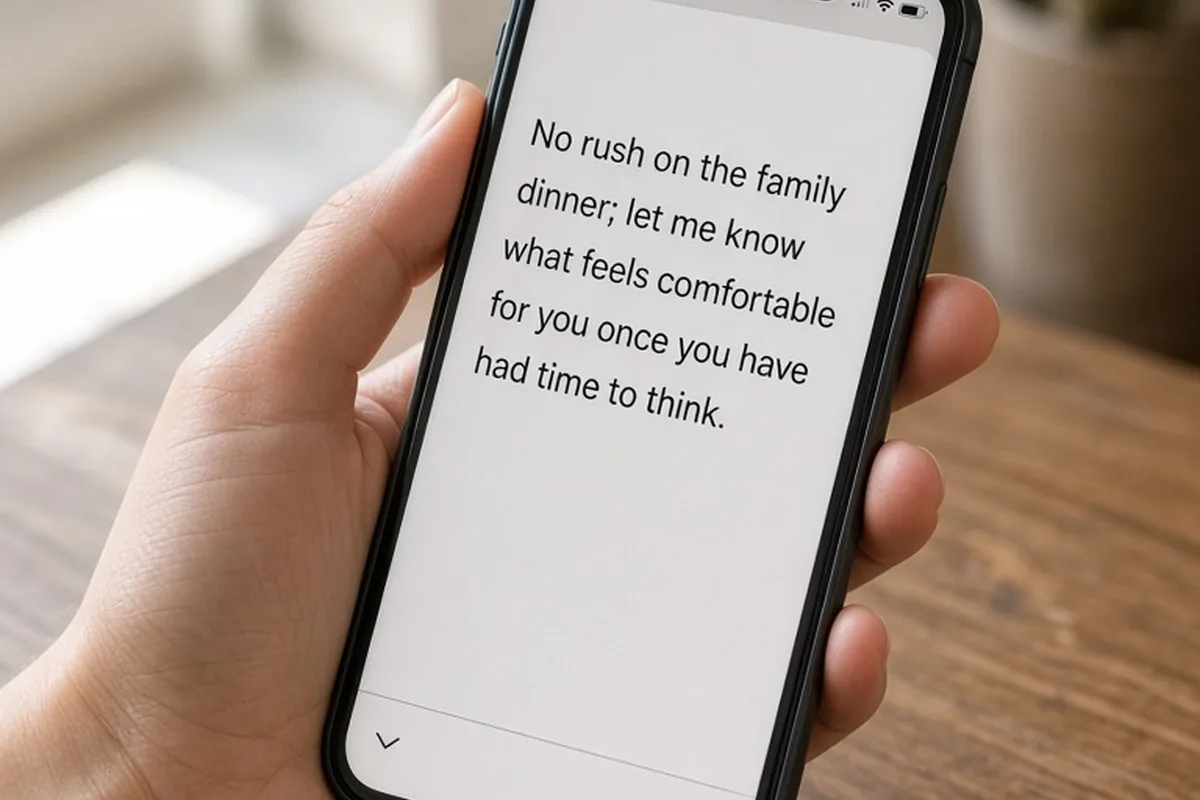
Julian, an Aries who valued swift decisions and direct talk, started dating Maya, a Cancer who preferred processing emotional conversations privately before responding. When Maya took time to answer an invitation to meet Julian's extended family, Julian initially feared she was uninvested because of their incompatible elements. Instead of assuming her silence meant rejection or pushing for an instant answer, Julian checked in with a low-pressure note: 'No rush on the family dinner; let me know what feels comfortable for you once you have had time to think.' Maya appreciated the breathing room and explained her social pacing, allowing them to agree on an agenda that honored both Julian's enthusiasm and Maya's comfort.
Key point: Giving a partner space to process avoids unnecessary conflict and allows genuine communication habits to surface.
Reframing Chart Expectations During Early Dating
Sam, a Virgo, was initially thrilled to match with an Earth-sign partner, assuming their shared element guaranteed effortless harmony around routines and goals. Within a month, Sam realized their date preferred high-risk financial investments and spontaneous cross-country moves, creating constant stress around future planning. Sam realized that relying on sun-sign alignment had obscured significant differences in life values. Sam initiated an honest discussion about long-term goals and mutually decided to part ways as friends.
Key point: Shared astrological elements do not replace active alignment on foundational life choices, finances, and long-term values.
Frequently asked questions
Can two traditionally incompatible zodiac signs build a healthy relationship?
Yes. Astrological compatibility reflects traditional interpretive archetypes, not fixed rules or destiny. Real-world relationship success relies on mutual respect, effective conflict resolution, shared lifestyle values, and emotional maturity.
Which astrological placement is most relevant to romantic compatibility?
While the Sun sign represents general temperament, astrologers often look at the Moon for emotional security, Venus for romantic affection and values, and Mars for drive and conflict management. However, these interpretations serve as reflective tools rather than definitive measurements of relationship success.
How should I handle it if my date does not believe in astrology?
Respect their perspective and steer the conversation toward general topics like interests, work, and personal values. Astrology should remain a fun, optional topic rather than a requirement for connecting with someone.
Does having a strong synastry chart guarantee long-term relationship success?
No. A favorable astrological chart cannot compensate for poor communication, unresolved personal conflict, or mismatched life goals. Healthy relationships require ongoing effort, honest communication, and consistent mutual support.
Your next step
Pick one area of your relationship where communication feels rushed or unclear, and ask your partner an open question about their preferred pacing today.