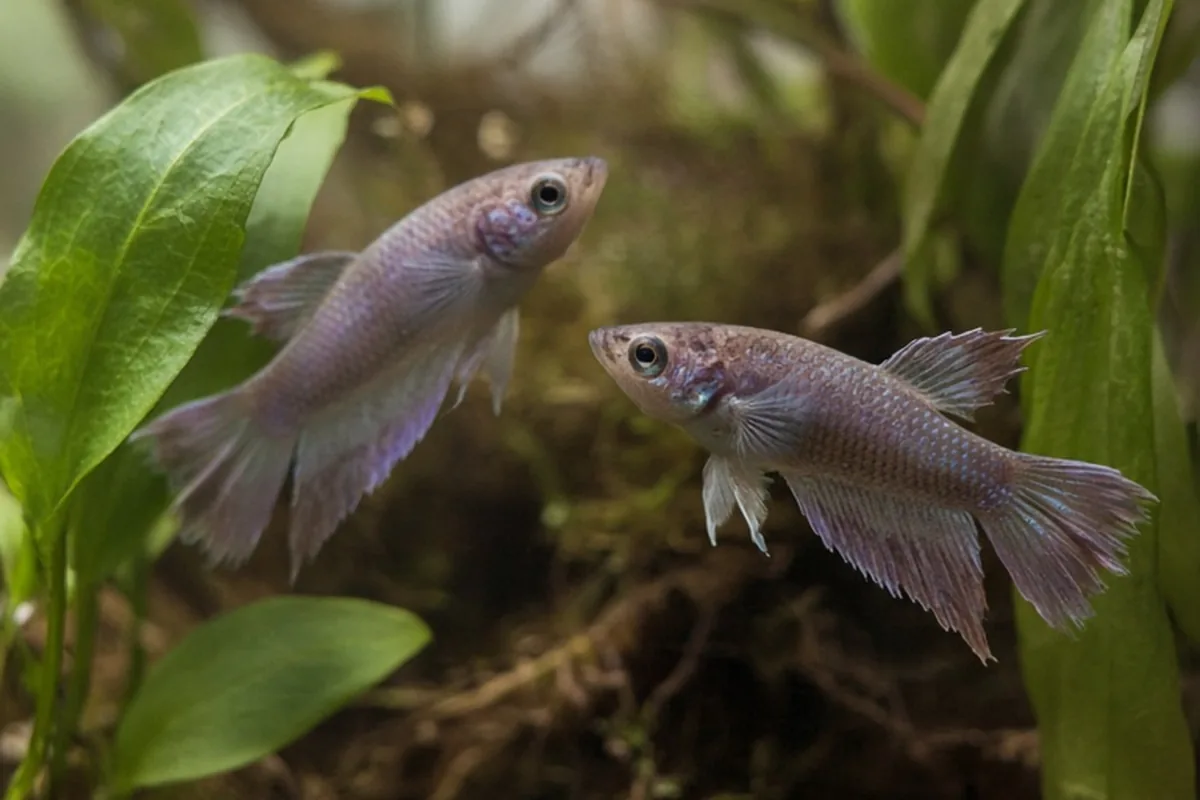
Yes, female bettas can and do fight. While they are generally less aggressive than males, female bettas are still territorial labyrinth fish with individual temperaments. When housed together without adequate space, visual barriers, or proper group dynamics, females will flare, chase, nip fins, and potentially fight to the death to establish dominance or defend territory.
Betta splendens have a widespread reputation for intense territorial aggression, which is most famously associated with solitary males. Many fish keepers assume females are naturally docile schoolers, yet female bettas carry the same territorial instincts, making communal housing a complex and potentially hazardous undertaking.
Aggression Levels and Behavioral Triggers in Female Bettas
Domestic female bettas possess natural instincts rooted in wild Betta splendens behavior, where defending feeding zones and nesting sites is necessary for survival. While selective breeding has historically amplified extreme aggression in males for ornamental and fighting purposes, females share identical evolutionary wiring. In an aquarium, female aggression surfaces through flaring their opercular gill covers, lateral displays where they stiffen their bodies, tail beating, and targeted nips at vulnerable fins. These behaviors are not anomalies; they are standard communication methods used to assert territorial boundaries and control access to resources.
Several specific environmental triggers cause female aggression to escalate from occasional posturing into severe violence. Inadequate swimming room forces fish into constant visual contact, elevating stress hormones and preventing subordinate fish from retreating. Irregular feeding schedules or localized feeding spots create intense competition, encouraging dominant individuals to guard territory aggressively. Additionally, water quality issues, improper temperatures, and high water flow can irritate fish, lowering their tolerance for tank mates and accelerating behavioral clashes. Keeping female bettas together requires recognizing that peaceful coexistence is conditional rather than guaranteed.
The Hierarchy Dynamics of a Betta Sorority Tank
An all-female betta community is commonly referred to as a sorority, but it functions fundamentally as a strict dominance hierarchy rather than a harmonious school. When multiple females are placed into a shared ecosystem, they immediately begin assessing one another to determine rank. The most dominant female, often called the alpha, claims the prime resting and feeding zones, while secondary and tertiary ranks fall into place beneath her. This pecking order is established entirely through behavioral challenges, which can range from brief, non-violent standoffs to prolonged physical skirmishes.
Maintaining stability within a hierarchy is inherently fragile because changes in group composition or health can destabilize the social balance. If an alpha female falls ill or is removed, the remaining fish often engage in renewed fighting to claim the vacant top rank. Similarly, introducing a new female into an existing group disrupts established relationships, forcing all inhabitants to renegotiate their standing simultaneously. Keepers must understand that a sorority is rarely in a state of permanent peace; it exists in a managed equilibrium that demands ongoing monitoring.
Recognizing the Difference Between Social Pecking and Deadly Conflict
Differentiating between normal hierarchy establishment and dangerous aggression is vital for preventing casualties in communal tanks. During initial group establishment, brief chases, momentary gill flaring, and light nudging are standard behaviors as females test each other's resolve. These interactions typically last only a few seconds before one fish yields and swims away. If the retreating fish is allowed to leave without pursuit, the interaction generally falls within the bounds of standard hierarchy formation.
Conversely, dangerous conflict occurs when aggression becomes persistent, relentless, and physically destructive. Warning signs include clamped fins, loss of vibrant coloration, visible horizontal stress stripes across the body, and torn or frayed fin tissue. If a dominant fish actively hunts another, traps it in a corner or near the surface, or prevents it from feeding, the dynamic has transitioned from hierarchy testing into life-threatening stress. In severe cases, bite marks on flanks, missing scales, and physical exhaustion indicate that immediate intervention is necessary to prevent death from injury or secondary bacterial infections.
Tank Requirements to Minimize Territorial Aggression
Housing female bettas together requires an environment designed intentionally to diffuse line of sight and distribute territories. A proper sorority should never be attempted in standard small aquariums; a minimum volume of thirty gallons is widely recommended for a small group. Larger volumes dilute physical encounters and provide sufficient vertical and horizontal swimming space for multiple distinct territories to form naturally without constant overlap.
The interior aquascape must be densely planted with live or silk aquatic foliage, driftwood, and smooth rock structures. Heavy vegetation breaks direct lines of sight, allowing subordinate females to forage and rest without being constantly targeted by more assertive tank mates. Tall stem plants, floating cover like water lettuce, and hollow decor provide refuge at multiple water depths. A sparse tank with open swimming lanes almost invariably results in chronic fighting because subordinate fish have nowhere to break visual contact when challenged.
Safe Introduction Protocols for Multi-Female Housing
The method used to introduce female bettas to one another directly influences whether the group stabilizes or collapses into immediate violence. Placing females into an aquarium one at a time over weeks is a frequent mistake, as established residents will treat each newcomer as an intruder on their established territory. Instead, the safest approach involves introducing a minimum of five to seven females simultaneously into a fully cycled, densely decorated tank. Introducing an odd number of fish helps disperse aggressive focus, preventing a single subordinate from absorbing all territorial pressure.
Before releasing the fish, arranging all specimens in clear floating containers or mesh breeding boxes within the tank allows them to observe one another without physical contact. This visual acclimation period, sustained for several hours, dampens the initial shock of introduction. Rearranging decorations just prior to release removes established territorial landmarks, forcing all fish to explore and claim new spaces simultaneously. Keepers should schedule introductions on days when they can continuously observe the tank for several consecutive hours to step in if severe fighting starts.
Evaluating Solitary Housing Versus Sorority Setups
While communal betta tanks are visually striking, solitary housing remains the safest, least stressful environment for an individual female betta. In a solo setup of five to ten gallons, a female betta exhibits natural foraging, exploratory behavior, and vibrant coloration without the physiological burden of constant social vigilance. Solitary females can also be housed successfully with non-aggressive, non-betta tank mates such as peaceful snails, small freshwater shrimp, or calm bottom dwellers like Corydoras catfish, provided the tank size permits.
Choosing a sorority over solitary housing comes with distinct trade-offs that every aquarist must weigh carefully. Sorority tanks require larger equipment, substantially higher maintenance, dense planting, and constant behavioral observation. There is always an inherent risk that an unexpected behavioral shift will mandate separating every fish into individual tanks permanently. Prioritizing animal welfare means acknowledging that female bettas do not experience loneliness, and solitary housing is a completely healthy, fulfilling lifestyle for them.
Emergency Separation Steps and Medical Response for Injured Fish
Every keeper attempting a multi-female betta setup must have a fully prepared contingency plan for rapid separation. This requires having extra heated, filtered tanks, divided holding systems, or hospital containers ready to deploy at a moment's notice. If a female is persistently targeted or exhibits severe physical trauma, waiting overnight to see if behavior improves often results in fatal outcomes. Immediate removal of the victim or the hyper-aggressive instigator is the only reliable way to halt escalating violence.
Once an injured fish is separated into a quiet, low-flow isolation tank, treatment focuses on preventing infection and supporting tissue regeneration. Maintaining pristine, warm water between seventy-eight and eighty degrees Fahrenheit supports the fish's immune system. Adding aquarium salt at appropriate dosages, along with natural tannins from Indian almond leaves, provides mild antibacterial and antifungal properties while soothing irritated slime coats. Monitoring the injured fish closely for signs of fin rot or systemic lethargy ensures targeted treatment can be administered before minor nip wounds develop into critical illnesses.
Frequently asked questions
Can you put two female bettas together in the same tank?
Housing exactly two female bettas together is strongly discouraged because one fish almost always establishes dominance over the other, resulting in relentless bullying and severe injury. If females are housed communally, a well-planted tank with at least five to seven individuals is necessary to disperse territorial aggression.
Can male and female bettas live together peacefully?
Male and female bettas should never be housed together in a permanent home aquarium. Males will aggressively harass, attack, or kill females outside of brief, closely monitored breeding sessions, and females can also inflict fatal injuries on males.
What should I do if my female bettas suddenly start fighting after months of peace?
Sudden fighting usually indicates a disruption in the social hierarchy caused by illness, changes in water parameters, or the removal or addition of decor. Immediately separate the injured or overly aggressive fish into a dedicated isolation tank to prevent fatal injuries.
Your next step
Assess your tank volume and available backup containers today, ensuring you have the space, dense cover, and separate isolation setups ready before attempting to house female bettas together.