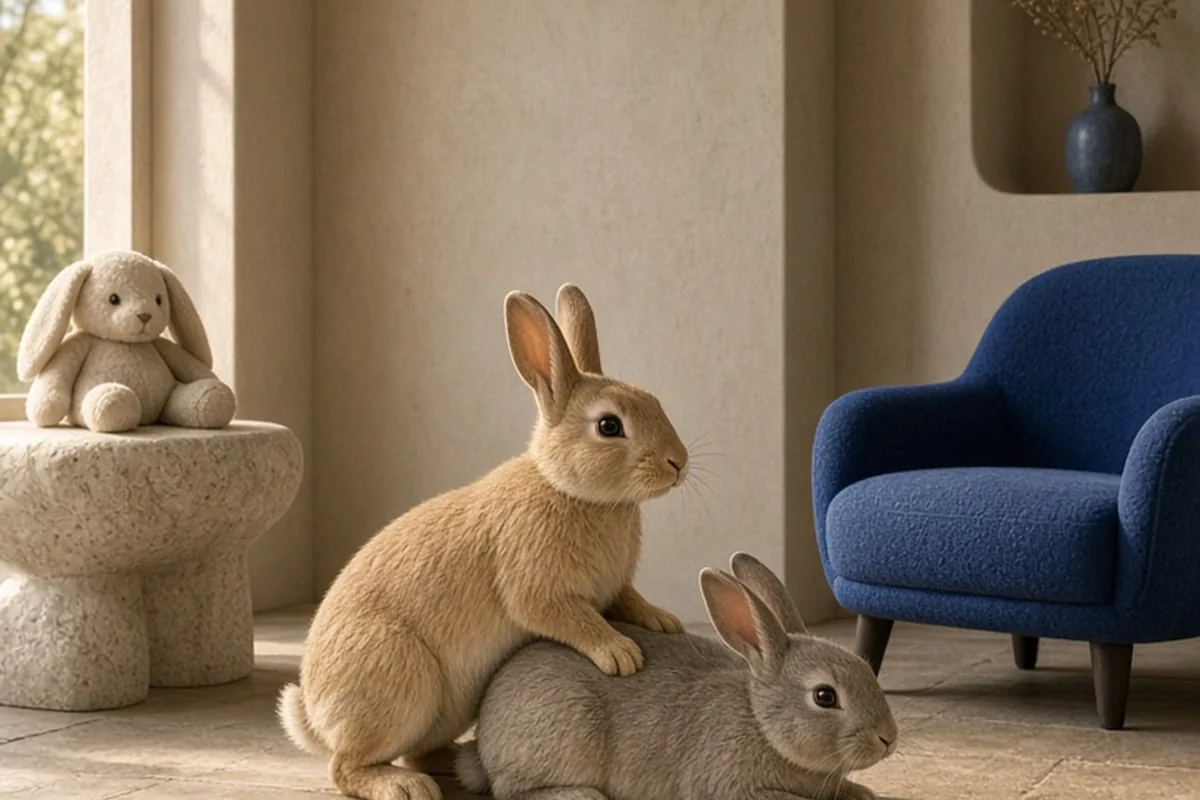
Yes, female rabbits frequently hump, mount, and display mounting postures. While often assumed to be an exclusively male reproductive behavior, female bunnies mount to assert dominance, establish social hierarchy within a pair or group, communicate territorial boundaries, respond to hormonal surges, or vent pent-up excitement. Spayed females also mount as a normal form of non-sexual rabbit communication.
Discovering that your female rabbit is actively mounting a companion, a plush toy, or your foot can be startling if you expect the behavior only from intact males. Understanding the underlying motivations behind female mounting helps you respond calmly, support healthy social bonds, and create a secure living environment for your pet.
The Primary Reasons Female Rabbits Mount
In lagomorph social structures, mounting is primarily a communicative and hierarchical tool rather than solely a reproductive act. In the wild, warrens rely on stable social rankings to minimize constant physical fighting over resources, nesting sites, and territory. A female rabbit uses mounting to establish herself within the group hierarchy, signaling her confidence or testing the boundaries of another rabbit. This dominance-related humping is widespread among both intact and altered females, making it one of the most common body language signals in multi-rabbit homes.
Beyond social positioning, mounting can stem from hormonal impulses, stress, or sensory overstimulation. Young female rabbits reaching sexual maturity around four to six months of age experience significant hormonal spikes that trigger territorial marking, chin rubbing, nesting impulses, and persistent mounting. Similarly, an overstimulated rabbit with excess physical energy, or one reacting to sudden changes in room layout, unfamiliar scents, or irregular feeding schedules, may mount objects or humans as an outlet for nervous excitement.
Hormonal Drives Versus Learned Social Behaviors
Differentiating between hormonal drives and behavioral mounting helps you choose the right management approach. Hormonal mounting in an intact female is typically accompanied by secondary reproductive behaviors, such as vocal honking, circling ankles, spraying urine, aggressive territorial lunging, and phantom pregnancies involving fur pulling and nest building. When hormones run high, the urge to mount can be relentless and frustrating for the rabbit, leading to elevated stress and short tempers during handling.
In contrast, behavioral mounting in a spayed female usually occurs in specific, predictable contexts, such as during bonding sessions with another rabbit, when new furniture is introduced, or during energetic play sessions. Behavioral mounting tends to be brief and episodic rather than constant. A spayed doe might mount her bonded partner for a few seconds to reaffirm that she holds the top position in their partnership, after which both rabbits return smoothly to mutual grooming and relaxed resting.
Reading Accompanying Body Language and Context
To understand what your female rabbit is expressing, observe the subtle body cues that precede and follow the humping episode. A rabbit mounting out of dominance will typically approach with an upright posture, erect ears turned forward, and a confident, deliberate gait. She may nudge the other rabbit firmly, circle them, or rub her chin along nearby surfaces to deposit scent from her submandibular glands before climbing on. If the recipient accepts the hierarchy, they will flatten their body to the floor in a submissive posture and allow the mounting without kicking or biting.
Conversely, if mounting is driven by anxiety or environmental frustration, you might notice rapid breathing, thumping hind legs, flattened ears, or frantic darting around the enclosure before the behavior starts. For instance, if a vacuum cleaner runs nearby or a strange animal enters the room, a doe might latch onto a nearby cushion or blanket to discharge sudden tension. Recognizing these contextual differences prevents misinterpreting fear-based displacement behaviors as intentional social aggression.
Mounting Dynamics During Rabbit Bonding
Mounting is an expected and often necessary phase when introducing two rabbits, but it requires careful supervision to ensure neither animal gets hurt. When two unfamiliar rabbits meet in neutral territory, both females and males will take turns mounting each other to determine who takes the dominant and submissive roles. As long as the mounting happens from the rear, lasts only a few seconds, and the bottom rabbit does not resist aggressively, human intervention is usually counterproductive because interrupting safe mounting can prolong the power struggle.
However, safety boundaries must be maintained. If a female rabbit attempts to mount another rabbit from the front or over the face, you must gently break up the interaction immediately using a flat piece of cardboard or a soft towel. Face-mounting carries a high risk of severe bite injuries to sensitive noses, eyelids, and genitals if the bottom rabbit panics. Additionally, if the mounted rabbit kicks out vigorously, runs in frantic circles, or turns to fight, the session should be paused to allow both rabbits to cool down before any physical injuries occur.
Managing Mounting Directed at Humans or Household Objects
When a female rabbit targets human feet, hands, plush toys, or pillows, the behavior can become an inconvenient or uncomfortable habit. While it is rarely dangerous, allowing a rabbit to relentlessly mount your feet can reinforce territorial possessiveness and sometimes lead to nip injuries if you suddenly pull away. Pushing the rabbit away harshly or scolding her is ineffective and can damage trust, as lagomorphs do not understand punitive corrections and will perceive harsh physical responses as predatory threats.
Instead, use calm redirection and physical boundaries. If your doe begins circling your ankles and attempting to mount, stand still, gently slide your foot away, and immediately offer an engaging alternative, such as a willow ball, a cardboard box filled with hay, or a forage mat sprinkled with dried herbs. For rabbits fixated on a particular plush toy, removing the object temporarily helps break the obsessive loop, while providing complex foraging puzzles channels their focus into natural digging and chewing activities.
The Role of Spaying and Post-Operative Expectations
Spaying is an essential health and behavioral consideration for female rabbits. Intact female rabbits carry a high risk of developing reproductive health complications as they age, including uterine adenocarcinomas, uterine infections, and ovarian cysts. Spaying completely eliminates these reproductive risks and significantly reduces the intense hormonal surges that fuel excessive humping, territorial spraying, and nesting stress, resulting in a calmer and more contented companion.
Pet parents should keep in mind that behavioral changes do not happen overnight. After a successful spay surgery, circulating reproductive hormones can take between four to eight weeks to fully dissipate from the rabbit's system. During this recovery and adjustment window, your doe may still display occasional mounting, territorial marking, or mood fluctuations. Giving her time to heal in a low-stress environment without expecting immediate behavioral transformations ensures realistic management and smoother long-term progress.
Enrichment Strategies to Reduce Pent-Up Energy
A regular daily enrichment routine can substantially decrease excess mounting caused by boredom or restlessness. Rabbits are intelligent, crepuscular herbivores that require mental challenges and physical space to express their natural instincts. When a healthy female rabbit spends long hours in a confined space without stimulation, mounting frequently becomes a repetitive outlet for unused physical energy. Expanding exercise time and redesigning the living space keeps her mind active and satisfied.
Introduce rotating enrichment items that encourage problem-solving and natural foraging behaviors throughout the day:
Implementing these enrichment methods provides healthy outlets for natural curiosity, effectively lowering tension and reducing repetitive mounting tendencies across all ages.
- Multi-chamber cardboard tunnels and dig boxes filled with safe crinkled paper or chemical-free soil.
- Woven grass mats and untreated apple wood sticks for constructive chewing and shredding.
- Scatter feeding and puzzle boards that require sliding compartments to locate daily pellet rations.
Frequently asked questions
Is it normal for a spayed female rabbit to hump another rabbit?
Yes, it is completely normal. Spayed female rabbits mount to express social dominance, negotiate hierarchy within a pair, or react to excitement during play. As long as the interaction remains gentle and does not escalate to fighting, it is safe social behavior.
Should I stop my female rabbit whenever she starts humping?
You only need to intervene if the mounting poses a physical safety risk, such as face-mounting, mounting that leads to biting and fur-pulling, or relentless harassment of a stressed partner. Brief, calm dominance mounting from the rear should be allowed to run its natural course.
Can a female rabbit hump out of stress or fear?
Yes, displacement mounting occurs when a rabbit feels overstimulated, anxious, or unsettled by environmental changes. Providing a quiet, secure space and structured daily routines helps alleviate the underlying tension.
Your next step
Observe your female rabbit's specific triggers and social context to determine whether her mounting is driven by hierarchy, hormones, or excess energy, then use gentle redirection, safe bonding oversight, and environmental enrichment to keep her routine balanced.