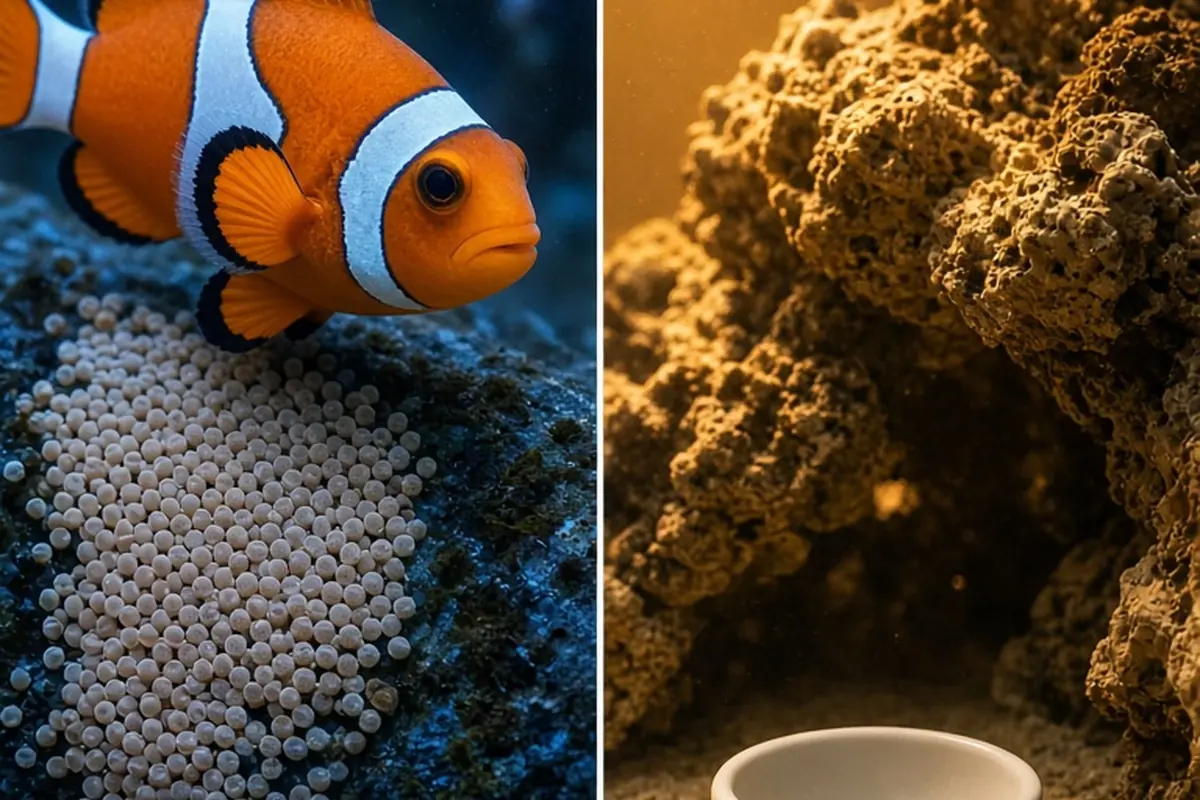
Female clownfish do sometimes eat their eggs, a behavior known as filial cannibalism. While males handle most direct nest care, females consume damaged, infertile, or fungus-infected eggs to protect healthy embryos. Both partners may also eat entire clutches if they face poor nutrition, environmental stress, bright lighting, or water quality issues. First-time breeding pairs frequently eat early spawns before establishing reliable parental routines.
Observing a clownfish pair lay a vibrant clutch of eggs is one of the most rewarding milestones for marine aquarium keepers. Discovering that the female has eaten those eggs shortly afterward can feel alarming, yet this behavior is deeply rooted in natural instincts and practical survival strategies.
The Natural Purpose of Filial Cannibalism in Clownfish
Filial cannibalism might seem destructive to an aquarist, but in marine biology, it serves as an evolutionary quality-control mechanism. Clownfish lay clutches ranging from several hundred to over a thousand eggs on hard surfaces near their host anemone. In any given spawn, a portion of the eggs will inevitably fail to fertilize or will sustain damage during deposition. If left untouched, non-viable eggs quickly succumb to bacterial decay and waterborne fungal infections. A single decomposing egg can sprout fungal mycelium that spreads across adjacent healthy embryos, threatening the survival of the entire clutch. By plucking and eating defective eggs, the female actively preserves the health of the remaining brood.
Consuming non-viable eggs also acts as an energetic recycling system for the breeding pair. Generating a dense clutch demands massive caloric reserves from the female, while guarding and aerating the nest requires continuous physical stamina from the male. Consuming infertile or damaged eggs allows the female to reclaim proteins, lipids, and trace minerals that would otherwise rot and degrade the surrounding water quality. The key distinction for an observer is whether the female is selectively removing isolated, milky-white eggs over several days or rapidly devouring large patches of translucent, healthy amber eggs within hours of laying.
Female Dominance and Nesting Roles in Clownfish Pairs
Understanding why a female eats her clutch requires looking at the unique social hierarchy of clownfish pairs. Clownfish are protandrous hermaphrodites, meaning all individuals hatch with male reproductive organs, and the largest, most dominant individual in a group matures into the female. Within a mated pair, the female holds clear authority over territory, perimeter security, and nest site selection. In contrast, the smaller male assumes the role of primary nest tender, dedicating the majority of his time to fanning the eggs with his pectoral fins and gently mouthing them to remove silt.
Because the male carries out day-to-day custodial duties, aggressive female intervention directly at the nest often signals a breakdown in the nesting routine. A female will inspect the spawning site periodically. If she senses that the male is inattentive, failing to fan properly, or neglecting necrotic eggs, she may intervene aggressively. In high-stress situations, this tension can escalate into the female clearing the entire site by eating the clutch. Recognizing these distinct behavioral roles helps keepers identify whether egg loss is driven by maternal stress, male inexperience, or territorial agitation.
Environmental Stress Factors That Trigger Egg Consumption
Environmental instability in the aquarium is one of the most frequent catalysts for sudden clutch consumption. Marine fish rely on stable chemical parameters to gauge whether their offspring have a realistic chance of survival. Sudden swings in specific gravity, fluctuations in water temperature, or modest increases in dissolved nitrates can prompt an immediate survival response. When adult fish perceive that the surrounding water conditions cannot support delicate larval development, their physiological priorities shift from reproduction back to self-preservation, leading them to consume the clutch.
Physical disturbances around the tank can be equally disruptive to a brooding pair. Frequent maintenance inside the aquarium, heavy vibrations from poorly mounted powerheads, sudden shifts in room lighting, or boisterous tankmates hovering near the nest keep the female in a persistent state of alertness. For instance, a pair kept in a high-traffic hallway may feel perpetually threatened, prompting the female to consume her eggs under the cover of darkness. Providing a calm environment with consistent photoperiods helps reassure the female that the nest is secure.
Nutritional Deficiencies and Spawning Demands
Egg production places an intense nutritional demand on a female clownfish. In established breeding setups, a mature female can produce a fresh spawn every ten to fourteen days throughout the year. Generating hundreds of nutrient-rich yolk sacs depletes her internal fat reserves, protein levels, and essential carotenoids. If her daily feeding regimen fails to replenish these lost nutrients, she will enter a state of chronic metabolic deficit. In this weakened condition, newly laid eggs represent an irresistible, nutrient-dense meal that she uses to restore her own vitality.
A varied and fortified diet before and during the spawning cycle significantly lowers the likelihood of hunger-driven egg predation. Relying solely on dry flake food or standard pellets rarely provides the fatty acids and lipid profiles necessary for sustained reproduction. Offering high-quality frozen foods, such as enriched mysis shrimp, chopped marine seafood, and vitamin-supplemented preparations, ensures the female maintains adequate body mass. A well-nourished female produces darker, healthier egg clutches and shows far less inclination to consume her own spawn.
Inexperience in First-Time Breeding Pairs
Inexperience is perhaps the most common reason young clownfish pairs eat their initial spawns. When a young pair transitions into reproductive maturity, their parental instincts take time to develop and synchronize. During their first two to five spawning events, both the male and female often show erratic behavior. The female may deposit eggs in irregular patterns, fail to adhere them securely, or become overstimulated by the scent of fresh spawn and consume the clutch within minutes.
Aquarists should view early clutch losses as an expected developmental phase rather than a permanent behavioral defect. As the pair completes subsequent spawning cycles, the male learns to guard and fan the nest methodically, and the female learns to leave the clutch undisturbed after laying. For example, a young pair of Ocellaris clownfish might eat their first three clutches entirely, only to successfully tend their fourth spawn all the way through to hatching. Patience and minimal interference during these formative attempts allow natural parental behaviors to solidify.
Practical Setup Modifications to Protect Clutches
Making minor structural changes to the aquarium setup can significantly lower stress and protect developing clownfish eggs from premature consumption. In nature, clownfish lay their clutches on clean rock surfaces beneath the protective tentacles of an anemone. In captivity, placing a removable ceramic tile, small terracotta pot saucer, or piece of smooth slate directly beside their host territory gives the pair an optimal, easily cleaned spawning substrate that encourages secure egg attachment.
Managing water flow and lighting around the nesting site is equally critical for egg survival. Direct, turbulent water flow can detach delicate eggs and agitate the parents, causing the female to eat loosened embryos. Conversely, stagnant water allows detritus to settle on the clutch, encouraging fungal growth. Aim for gentle, indirect water movement across the nest and establish a dependable lighting schedule with a gradual dimming phase to avoid sudden darkness that can startle the brooding pair.
Evaluating In-Tank Care Versus Artificial Incubation
When a pair consistently eats their eggs despite pristine water conditions and excellent nutrition, keepers often wonder whether they should artificially incubate the clutch. Leaving the eggs with the biological parents is almost always the best approach for hobbyists who are not actively breeding for larval rearing. The male's natural fanning provides precise oxygenation and gentle mechanical cleaning that mechanical bubblers cannot easily duplicate. Furthermore, allowing the pair to work through their cycles helps them develop long-term parental competency.
Artificial incubation involves removing the spawning tile on the night of expected hatching and transferring it into a dedicated larval tank equipped with precise aeration and live food cultures. However, this path requires considerable preparation, including maintaining active rotifer cultures and rigorous daily water changes. For aquarists who simply want a peaceful community display, allowing the female to naturally consume unviable clutches remains the most balanced, low-stress choice for the overall aquarium.
Frequently asked questions
How can I tell if my female clownfish is eating bad eggs or destroying a healthy clutch?
Healthy eggs appear translucent with a vibrant amber, orange, or reddish tone and clear developing eyes as they mature. Infertile or fungal eggs turn opaque white or cloudy, which the female will selectively remove over several days without disturbing the rest of the clutch.
Does the male clownfish also eat the eggs?
Yes, male clownfish will also consume unviable, damaged, or fungus-infected eggs as part of their regular cleaning routine. However, if the male is under severe stress or lacks proper nutrition, he may eat healthy portions of the clutch alongside the female.
How long do clownfish eggs take to hatch if the parents do not eat them?
Clownfish eggs generally hatch within six to ten days, depending largely on water temperature. As hatching approaches, the eggs darken significantly and display bright, reflective silver eyes under tank lighting.
Should I separate the female clownfish from the eggs right after spawning?
Separating the female is generally not recommended because it causes severe territorial stress and disrupts the pair's social bond. Maintaining stable water parameters, low stress, and high-quality nutrition is a far safer and more effective way to prevent egg eating.
Your next step
Review your tank's water stability, lighting schedule, and daily feeding variety to give your clownfish pair the calm, nutrient-rich environment they need to protect their next clutch.