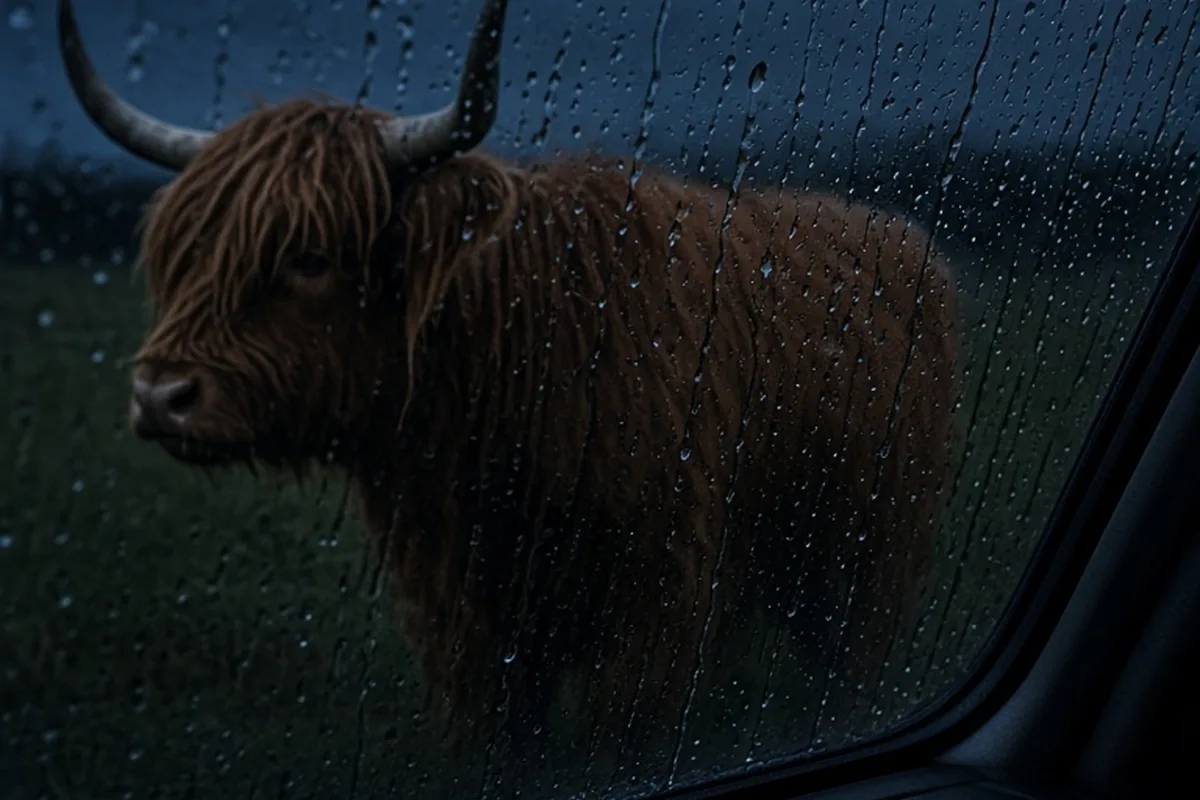
Yes, female Highland cows naturally have horns. Unlike some cattle breeds where only males grow horns or where animals are polled, both male and female purebred Highland cattle develop prominent horns starting in calfhood. A cow's horns typically grow longer, more slender, and curve upward and outward, whereas a bull's horns are thicker at the base and curve forward horizontally.
Highland cattle are widely recognized for their thick double coats, long fringes, and impressive headwear. When observing a herd grazing in a pasture, newcomers frequently assume that only the bulls possess large sets of horns. However, horn development is a standard genetic trait shared across both sexes in this historic Scottish landrace breed.
Understanding Horn Growth in Female Highland Cattle
In Highland cattle, the presence of horns is an innate breed characteristic driven by genetics rather than sex-linked dominance. Both heifers and bull calves begin developing horn buds within their first few months of life. As a female matures into a heifer and eventually a mature cow, these horns continue to grow steadily throughout her lifespan, serving as a permanent anatomical feature rather than a temporary display.
The growth rate of a cow's horns is influenced by age, nutrition, and overall health. During early development, horn tissue consists of a vascular, sensitive core covered by a hard keratinized sheath. Over several years, the horn structure hardens and develops growth rings that experienced handlers often use to estimate age or evaluate past periods of physical stress and calving cycles. Because horns never shed like deer antlers, any damage or uneven wear will remain visible over the animal's lifetime.
Key Physical Differences Between Cow and Bull Horns
While both sexes carry horns, distinct structural differences make it relatively straightforward to distinguish a mature female Highland cow from a mature bull. A female Highland cow's horns are noticeably more slender and elegant in their taper. They typically emerge from the poll, extend outwards, and make a graceful upward sweep toward the tips. In many mature breeding cows, the tips point almost straight up into the air or slightly backward, giving the cow a wide, open head profile.
In contrast, a Highland bull develops horns that are much thicker and heavier at the base, reflecting the animal's broader skull structure and greater neck musculature. Bull horns generally grow straight out from the sides of the head before curving slightly forward and level, or sweeping gently downward and forward in a powerful hook. Steers, or castrated males, present a third distinct shape: without testosterone to thicken the base early in life, their horns often grow exceptionally long, wide, and sweeping, sometimes combining the length of a cow's horns with an even wider span.
The Functional Purpose of Horns in Highland Environments
The horns of a female Highland cow evolved to fulfill critical survival functions in the rugged, unforgiving terrain of the Scottish Highlands. First and foremost, horns serve as a vital mechanism for thermoregulation. The inner horn core is filled with blood vessels that allow the cow to dissipate excess body heat in warmer weather and conserve warmth during extreme cold, helping the animal regulate internal temperature beneath its dense double coat.
Beyond climate adaptation, horns play an essential role in foraging and maternal protection. In winter conditions, a cow uses her horns to scrape away snow crust and clear dense heather, bracken, and brush to expose underlying grasses. When raising calves in open pastures or rough moorlands, a mother cow uses her horns as a formidable deterrent against natural predators like canines and large wildlife. Within the herd, horns also establish a peaceful, clear social hierarchy through subtle posturing, which minimizes serious physical fights among herd members.
Managing and Handling Horned Highland Cows Safely
Working around horned cattle requires practical awareness, respectful handling routines, and calm body language. Highland cows are famous for their gentle and docility-focused temperament, but their wide horn spread creates a substantial physical perimeter. Accidental contact can occur simply when a cow turns her head to brush away a fly, look behind her, or adjust her position while eating. Handlers must always maintain spatial awareness and avoid standing directly beside an animal's swinging radius.
Low-stress livestock handling techniques are the most effective way to manage a horned herd safely. Cows should be moved quietly using flight zones and points of balance rather than sudden pressure, shouting, or tight crowding. Establishing predictable feeding and handling routines helps cattle remain relaxed around people. When working with halter-trained show cattle or homestead animals, teaching them to respect personal space and keep their heads steady during grooming builds mutual trust and reduces handling hazards.
Infrastructure and Facility Design for Horned Cattle
Standard cattle facilities designed for hornless commercial breeds often create safety hazards or bottlenecks for Highland cows. Farm infrastructure must accommodate the wide horn spans of mature females, which can exceed three to four feet from tip to tip. Narrow raceways, standard squeeze chutes, and standard cattle trailers can cause horns to catch, potentially injuring the animal's neck, damaging the horn sheath, or trapping the cow.
When constructing or modifying facilities for Highland cattle, practical adaptations ensure smooth handling and livestock welfare:
Choosing horn-friendly equipment requires careful planning and higher initial considerations, but it prevents costly structural damage, reduces animal distress, and protects both livestock and agricultural workers during routine veterinary care.
- Widened alleyways and alleys: Ensure sorting lanes and curved handling alleys are at least 32 to 36 inches wide to prevent horns from catching on side rails.
- Parallel or drop-side head gates: Use open-front self-catch gates, scissor-style gates, or manual sweep gates instead of narrow V-shaped stanchions.
- Spacious round bale feeders: Install cradle feeders, tombstone rings, or open hay rings designed without narrow vertical bars where horns could get wedged.
- Wide-door stock trailers: Select livestock trailers with full-width rear openings, generous interior clearance, and adjustable partition gates.
Breeding Standards and Welfare Considerations Around Horns
In purebred Highland cattle registries worldwide, horns are an integral breed standard requirement. Breed societies in Scotland, North America, and Australia consider the shape, balance, and symmetry of the horns an essential metric of breed type and quality. Disbudding or dehorning Highland cows is generally discouraged or prohibited in registered show rings, as it alters the traditional heritage appearance that the breed standard aims to preserve.
For smallholders or commercial producers considering polled options, some crossbreeding programs produce naturally polled Highland-cross cattle by breeding with Angus or other naturally hornless genetics. However, when maintaining purebred Highland cattle, retaining intact horns alongside proper low-stress handling methods and customized infrastructure remains the preferred approach for animal welfare and historic breed preservation.
Frequently asked questions
Can a Highland cow lose or break a horn?
Yes, a Highland cow can break or crack a horn through physical trauma, catching it on fencing, or fighting. Because the inner horn core contains living blood vessels and nerves, severe breaks cause bleeding and require prompt veterinary cleaning, bandaging, and pain management.
Do Highland cows use their horns aggressively against people?
Highland cows are typically calm and docile, rarely using their horns aggressively toward humans without extreme provocation. However, a mother cow protecting a newborn calf can become protective, and inadvertent head turns can still cause injury if a handler stands within her sweep range.
At what age do female Highland cattle develop their full horn shape?
Highland heifers start showing visible horn growth within their first three to six months. The characteristic upward and outward curve becomes distinct around two to three years of age, with horns continuing to thicken and refine slightly throughout adulthood.
Can you trim or tip the horns of a female Highland cow?
Yes, owners sometimes lightly tip or blunt the very sharp outer keratin ends of a cow's horns to reduce accidental puncture risks. Tipping must be done cautiously by removing only the non-vascular tip to avoid cutting into the sensitive blood core.
Your next step
Evaluate your pasture gates, feeders, and handling chutes to ensure they provide adequate clearance for the wide upward horn span of female Highland cattle before introducing them to your property.