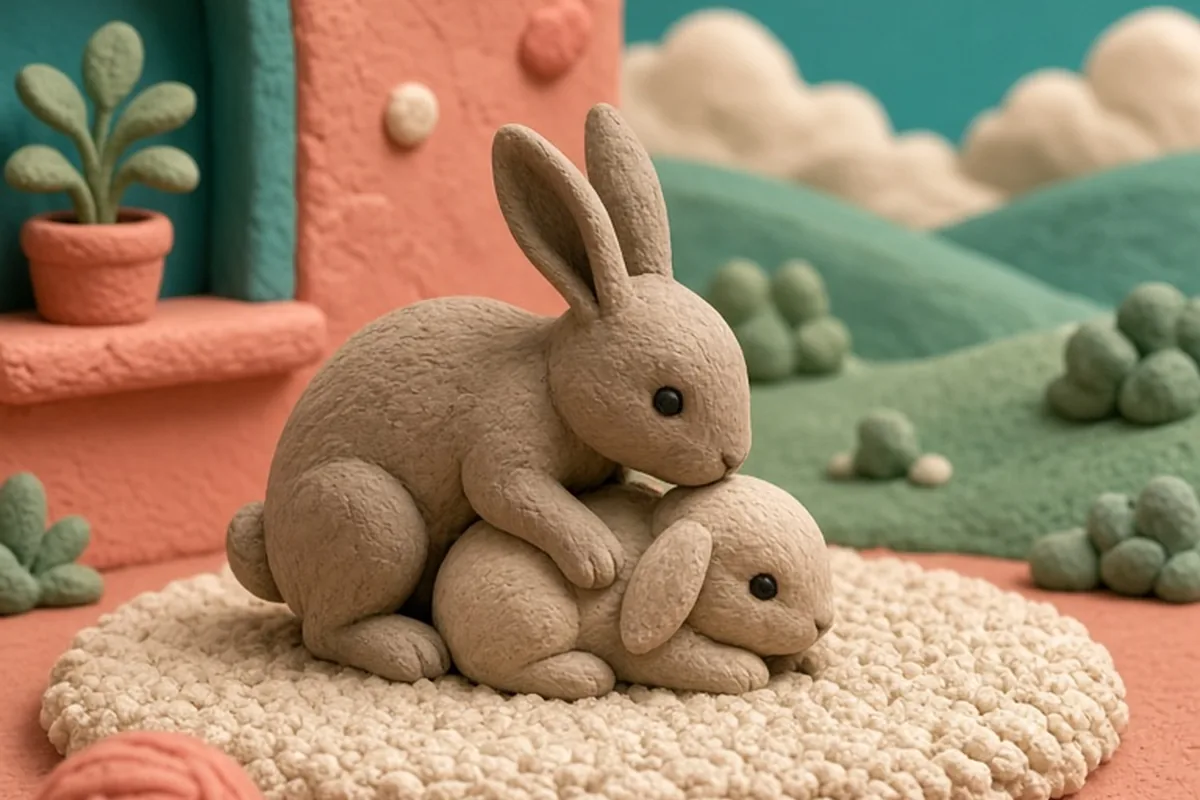
Yes, female rabbits frequently hump. While mounting is commonly associated with male mating behavior, female rabbits mount to establish social dominance, claim territory, communicate excitement, or respond to hormonal surges. Both spayed and intact does display this behavior toward other rabbits, toys, or human feet. Understanding the context helps owners differentiate between normal communication and signs of stress or impending conflict.
Many rabbit owners are surprised to see a female doe vigorously mounting a companion rabbit or a favorite cushion, assuming the behavior is exclusive to males. In reality, mounting is a versatile form of communication in lagomorph body language that serves several distinct social and physiological purposes.
Social Dominance and Establishing Group Hierarchy
Rabbits live in structured social groups where establishing a clear hierarchy is essential for peaceful coexistence. When a female rabbit mounts another rabbit, regardless of the other rabbit's sex, she is usually asserting social dominance rather than initiating mating. In wild warrens and domestic pairings alike, does use mounting to communicate rank, signaling that they expect grooming priority, first access to choice food dishes, and preferred resting territories.
For example, during rabbit bonding sessions, a female may repeatedly mount a newly introduced partner to test their boundaries. If the mounted rabbit calmly tolerates the interaction by staying still and lowering their head, the hierarchy is often settled without physical fighting. However, the limit of this interaction occurs when the subordinate rabbit refuses to submit, spinning around to bite or kick. Caregivers should observe these exchanges carefully and intervene only if mounting triggers fur-pulling, circling, or aggressive scuffles.
Hormonal Surges and the Reproductive Cycle in Intact Does
In unspayed female rabbits, mounting is heavily influenced by natural hormonal fluctuations. Unlike humans or dogs, female rabbits are induced ovulators who experience regular waves of heightened reproductive readiness. During these hormonal peaks, an intact doe experiences strong biological urges that manifest as restlessness, territorial chin-rubbing, nest-building, and mounting behavior directed toward companions or inanimate objects.
This hormonally driven behavior can fluctuate throughout the year, frequently peaking in spring and summer as daylight hours increase. For instance, an intact female might spend hours circling and mounting a large plush animal or a blanket while grunting softly. While providing a plush toy gives the doe a safe temporary outlet, persistent hormonal arousal can lead to chronic behavioral frustration and territorial irritability. Spaying provides a long-term solution by eliminating the hormonal spikes that drive this repetitive urge.
Stress, Overstimulation, and Emotional Expression
Mounting can also function as a displacement activity when a female rabbit feels overstimulated, anxious, or bored. Rabbits possess sensitive nervous systems, and sudden environmental changes—such as moving furniture, introducing unfamiliar scents, or disrupting their daily schedule—can cause elevated stress. When faced with emotional arousal that they cannot otherwise process, some female rabbits channel that excess energy into sudden mounting.
Consider a scenario where an owner hosts unfamiliar guests or brings home new pet supplies carrying the scent of another animal. A female rabbit may suddenly begin humping a nearby throw pillow or chasing a bonded partner to mount them repeatedly, even if they have lived together peacefully for months. In this context, humping acts as a coping mechanism to burn off nervous energy. Identifying and minimizing environmental stressors, providing quiet retreat spaces, and offering foraging enrichment like hay-stuffed cardboard tubes can help redirect this overstimulated energy toward calmer activities.
Distinguishing Harmless Mounting from Dangerous Conflict
Although mounting is a standard behavioral expression, it carries potential risks if it escalates into physical aggression. A mounting session is generally harmless when it lasts for only a few seconds at a time, occurs from the rear or flank, and ends with both rabbits returning to calm activities like grazing or grooming. In stable pairings, brief dominance mounting happens periodically without friction, reinforcing the social contract between the pair.
The danger arises when mounting occurs from the wrong angle or crosses into obsessive harassment. Reverse mounting—where the doe mounts another rabbit's face—carries a high risk of facial bites, genital injuries, and eye trauma. Furthermore, continuous mounting can exhaust the subordinate rabbit, prompting a defensive fight known as a bunny tornado, where both animals lock together kicking and biting. Owners should immediately separate the rabbits using a neutral barrier, such as a dustpan or a soft towel, if the mounted rabbit shows clear signs of distress, thumps repeatedly, or snaps back aggressively.
The Role of Spaying in Reducing Unwanted Mounting
Spaying is one of the most effective steps for managing persistent mounting in female rabbits. By removing the reproductive organs, spaying eliminates the primary source of estrogen and progesterone that fuels intense territorial and reproductive drives. Most female rabbits experience a noticeable reduction in the frequency and intensity of humping within four to eight weeks post-surgery, as lingering hormones gradually clear from their system.
However, it is essential to maintain realistic expectations regarding the procedure. While spaying reliably diminishes hormonally driven humping, it does not erase mounting that is motivated by social dominance or habitual play. A spayed doe in a bonded pair will still mount her companion occasionally to reaffirm her dominant status, particularly after a stressful event or a change in territory. Viewing spaying as a holistic health and behavioral foundation rather than an absolute switch allows caregivers to maintain appropriate management strategies.
Practical Management Techniques and Redirection Strategies
When a female rabbit directs persistent mounting toward human family members or companion pets, owners can implement gentle, consistent management techniques without resorting to punishment. Punishing a rabbit through yelling, clapping, or physical reprimands is ineffective and damages trust, as the animal cannot connect negative reactions with an instinctual behavior. Instead, gentle physical redirection works best: calmly placing a hand between the rabbit and your leg or sliding a soft barrier into place to interrupt the behavior.
Providing constructive behavioral alternatives helps satisfy the rabbit's physical energy. If a doe frequently attempts to hump feet or furniture, owners can offer a specific large plush toy that matches the rabbit's approximate size, allowing her to express the behavior safely without bothering other pets or humans. Pairing this with physical and mental enrichment—such as willow tunnels, digging boxes filled with shredded plain paper, and puzzle feeders—channels excess energy into natural foraging behaviors that reduce the urge to mount.
Monitoring Health and When to Consult a Veterinarian
While mounting is predominantly behavioral, sudden or dramatic changes in mounting habits can occasionally point to underlying medical concerns. An older female rabbit who suddenly starts mounting obsessively, displaying territorial marking, or acting unusually irritable may be experiencing reproductive tract changes if unspayed, or adrenal issues and urinary discomfort if spayed. Pain or physical discomfort anywhere in the body can alter a rabbit's baseline behavior, leading to increased restlessness and displacement mounting.
If an owner notices accompanied physical symptoms—such as decreased appetite, abnormal fecal output, strained urination, vaginal discharge, or uncharacteristic aggression—a prompt veterinary evaluation is warranted. Choosing an exotic animal veterinarian who specializes in small herbivores ensures an accurate diagnostic assessment. By ruling out medical issues first, caregivers can focus on behavioral modifications with confidence that their rabbit is physically sound.
Frequently asked questions
Can a spayed female rabbit still hump other rabbits or objects?
Yes, spayed female rabbits can still hump. While spaying removes reproductive hormones, mounting remains an important social tool for communicating dominance and working through excitement or stress.
Should I stop my female rabbit whenever she starts mounting?
You do not need to stop every instance of mounting. Allow brief, gentle dominance mounting between bonded rabbits as long as both animals remain calm, but intervene gently if the rabbit mounts the other's face or if it escalates into chasing and biting.
Why is my female rabbit humping my feet or legs?
Your rabbit is likely showing excitement, claiming you as part of her territory, or attempting to establish social dominance. You can gently redirect her attention using a treat, a favorite toy, or a soft cushion to establish comfortable personal boundaries.
How long after spaying does mounting behavior decrease?
Hormone levels drop gradually following surgery, so most owners observe a significant reduction in mounting within four to eight weeks. Some residual dominance mounting may continue as part of normal social communication.
Your next step
Observe the context of your rabbit's mounting behavior today, note whether it stems from social bonding or stress, and consult a rabbit-savvy veterinarian to discuss spaying or schedule a routine wellness check.