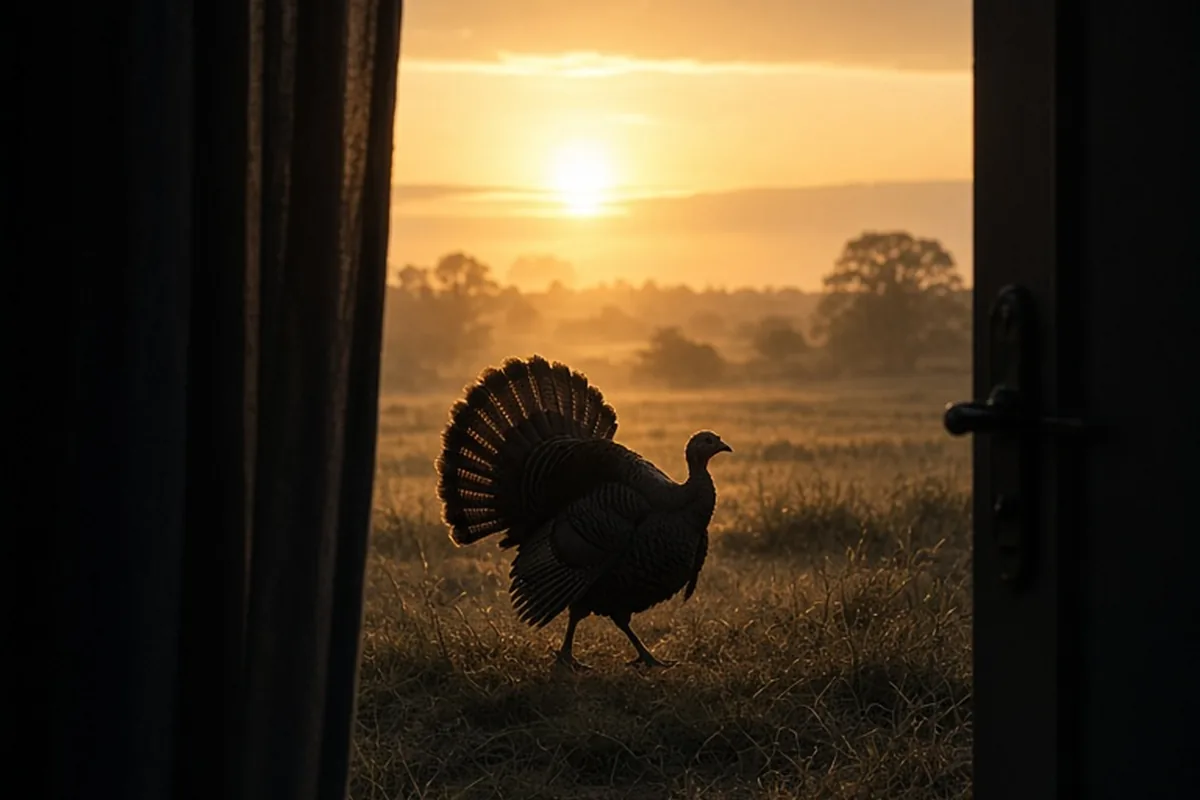
Yes, female turkeys do strut, although they do so much less frequently than males. While male turkeys strut primarily for courtship and reproductive displays, hens strut to establish social dominance, defend their territory, protect their young poults, or react to sudden excitement and agitation within their flock.
Many bird watchers and backyard poultry keepers assume that full-body feather puffing, fanned tails, and dropped wings belong exclusively to male turkeys. Observing a known egg-laying hen suddenly fan her tail feathers and march with stiff legs can be surprising, but this display is a normal part of the species' communication repertoire.
Why Female Turkeys Strut and What Triggers the Display
In wild and domestic turkey flocks, strutting functions as an emphatic visual statement of presence, confidence, and authority. While a tom relies on strutting as his primary courtship ritual throughout the spring breeding season, a hen deploys the behavior under distinct social circumstances. Most commonly, a female struts when negotiating social rank among other hens, encountering an unfamiliar bird, or reacting to novel stimuli in her immediate environment. The physical act of expanding her body size makes her appear larger and more formidable to rivals or potential threats.
Hormonal fluctuations also play a measurable role in female strutting. In the spring, when testosterone and estrogen levels shift during the onset of the laying cycle, hens often become more assertive. A dominant hen may puff out her contour feathers, drop her primary wing tips toward the dirt, and pace in circles around subordinate flock members. For instance, a keeper might notice an older matriarch hen strutting near a shared feed trough to deter younger pullets from eating until she has finished. While striking, this behavior is usually brief and resolves once the social boundary is acknowledged.
Key Differences Between Male and Female Strutting Displays
Although both sexes can execute the physical mechanics of a strut, the posture, intensity, and accompanying physiological cues differ significantly between toms and hens. A mature tom struts with an expansive, fully rounded tail fan that forms an unbroken semicircle, accompanied by deeply engorged caruncles and a snood that elongates several inches below his beak. His display involves rhythmic wing dragging that scrapes the ground, paired with an audible, low-frequency sound known as spitting and drumming.
A female strut, by contrast, tends to be more utilitarian and less ornate. A hen's tail fan is rarely as wide or symmetric, often showing gaps or an irregular arch due to shorter, less uniform rectrices. Her head remains lightly feathered rather than bare and pebbled, and her snood stays small, firm, and retracted above the bill. Furthermore, hens do not drum or produce the deep chest vibrations typical of males; instead, a strutting hen might emit sharp putts, aggressive purrs, or high-pitched vocalizations before returning to an ordinary foraging posture.
Decoding Social Hierarchy and Pecking Order in Turkey Flocks
Turkeys maintain a rigid, linear dominance hierarchy that governs access to roosting spots, nesting boxes, treats, and dust-bathing areas. In all-female flocks or mixed groups where toms are absent or passive, hens actively challenge one another to establish which bird leads the group. Strutting is the first line of communication in these disputes, serving as a non-violent posture test designed to settle disagreements before physical pecking or sparring begins.
When two hens of similar social standing encounter one another, one or both may inflate their plumage, raise their back feathers, and walk parallel to each other in a measured, tense cadence. Consider a scenario where three new hens are introduced to an established backyard run: the resident alpha hen will almost certainly puff her feathers and pace along the perimeter fence to signal ownership. In most cases, the subordinate bird lowers her head and steps aside, preventing physical confrontation. However, if neither bird yields, strutting can escalate into neck wrestling and face pecking, making close observation important during flock integration.
Maternal Defense and Protective Posturing Around Poults
Brood defense is another primary scenario where female strutting becomes pronounced. A mother hen leading a clutch of young poults is hyper-vigilant against anything she perceives as danger, ranging from curious barnyard fowl to dogs, wild birds, or human caretakers stepping too close to her nest. When alarmed, a mother hen transforms her body silhouette through defensive puffing to deter potential predators.
This protective posture closely mirrors a courtship strut but carries an entirely different behavioral intention. The hen spreads her tail, drops her wings to shield the ground where her poults are sheltering, and makes rapid hiss-like vocalizations or sharp alarm putts. For example, if a curious farm dog approaches a free-ranging hen and her brood, she will puff herself to twice her standard volume, stomp her feet, and charge directly at the intruder rather than retreating. Recognizing that this display stems from maternal protection helps owners give the hen space rather than misinterpreting her actions as random aggression.
Visual Sexing Guide: Avoiding Common Identification Mistakes
Because female turkeys can strut, vocalize assertively, and occasionally grow chest beards, rely on a combination of physical and behavioral markers rather than strutting alone when attempting to determine a bird's sex. Relying solely on a strut often leads poultry keepers to mistakenly classify assertive young hens as jakes or toms.
To accurately assess a turkey's biological sex, observe these anatomical traits together over time:
Head feathering: Hens possess fine, hair-like feathers extending up the back of the neck and over the crown, whereas toms develop predominantly bare, fleshy heads with large caruncles.
Breast feather coloration: In wild turkeys and standard bronze varieties, breast feathers on hens feature light buff, white, or brown tips, creating a softer, scalloped appearance, while males exhibit clean, dark black or iridescent metallic margins.
Beard presence and thickness: While roughly ten to twenty percent of hens can develop a chest beard, female beards are typically thin, wispy, and short, whereas mature male beards are dense, thick, and several inches long.
Dropping morphology: Adult male droppings are typically elongated and shaped like a letter J or spiral hook, whereas female droppings form compact, rounded piles due to their larger cloacal opening for egg passage.
- Head feathering: Hens possess fine, hair-like feathers extending up the back of the neck and over the crown, whereas toms develop predominantly bare, fleshy heads with large caruncles.
- Breast feather coloration: In wild turkeys and standard bronze varieties, breast feathers on hens feature light buff, white, or brown tips, creating a softer, scalloped appearance, while males exhibit clean, dark black or iridescent metallic margins.
- Beard presence and thickness: While roughly ten to twenty percent of hens can develop a chest beard, female beards are typically thin, wispy, and short, whereas mature male beards are dense, thick, and several inches long.
- Dropping morphology: Adult male droppings are typically elongated and shaped like a letter J or spiral hook, whereas female droppings form compact, rounded piles due to their larger cloacal opening for egg passage.
Managing Strutting and Assertive Behavior in Backyard Flocks
While strutting in female turkeys is a natural expression of social communication, sustained high-tension posturing can sometimes point to environmental stress, overcrowding, or excessive competition within the enclosure. When hens spend more time challenging each other than foraging and resting, overall flock productivity and welfare decline, leading to feather pulling or skin tears.
To minimize friction among assertive hens, ensure the housing setup provides ample space and enrichment. Distribute feeders and waterers across multiple distinct stations so that a single dominant bird cannot guard resources while strutting. Providing elevated roosts, visual barriers such as straw bales or plywood dividers, and plenty of clean bedding gives lower-ranking hens safe avenues to retreat without sparking an escalated chase. If an individual hen becomes persistently hostile toward weaker flock mates, separating her in a visual-contact isolation pen for two to three days can reset her social assertiveness without disrupting flock familiarity.
Seasonal and Environmental Influences on Turkey Behavior
Turkey behavior shifts substantially with the changing seasons, influencing how often both wild and domestic birds display dominance. In the late winter and early spring, lengthening daylight stimulates the endocrine system, increasing overall flock activity, territorial patrolling, and vocalizations. During this period, hens not only respond to the mating displays of toms but also actively settle nesting territory boundaries among themselves through short bouts of strutting.
As summer transitions into autumn, the intense hormonal surge subsides. Wild flocks often regroup into segregated bachelor bands and larger family units comprising multiple hens and their mature poults. During autumn flock reassembly, keepers and wildlife watchers may witness another brief uptick in female strutting as different family lines merge and establish a new winter social order. Recognizing these seasonal rhythms ensures that keepers interpret sudden behavioral shifts as normal biological adjustments rather than signs of disease or chronic distress.
Frequently asked questions
Can a female turkey grow a beard and still be a hen?
Yes, a noticeable percentage of female turkeys naturally grow beards on their upper breasts. These beards are generally thinner, softer, and shorter than male beards and do not prevent the hen from laying fertile eggs.
Does a hen strutting mean there are no toms in the flock?
Not necessarily, though strutting is more visible among hens when toms are absent. Hens strut in both mixed-sex and all-female flocks to settle internal pecking order or react to immediate environmental threats.
How can I stop my female turkey from acting aggressively toward me?
Avoid running away or cornering the hen when she puffs up, as both reactions can escalate her defensive instincts. Calmly stand your ground, use a rake or board as a neutral physical barrier if necessary, and offer food treats at ground level to rebuild positive associations.
Your next step
Take twenty minutes to observe your flock during morning feeding, noting which hens display puffed feathers and tail spreads to map their natural social hierarchy without interfering.